The countryside, where heritage still lives

The countryside, where heritage still lives

29/04/2026
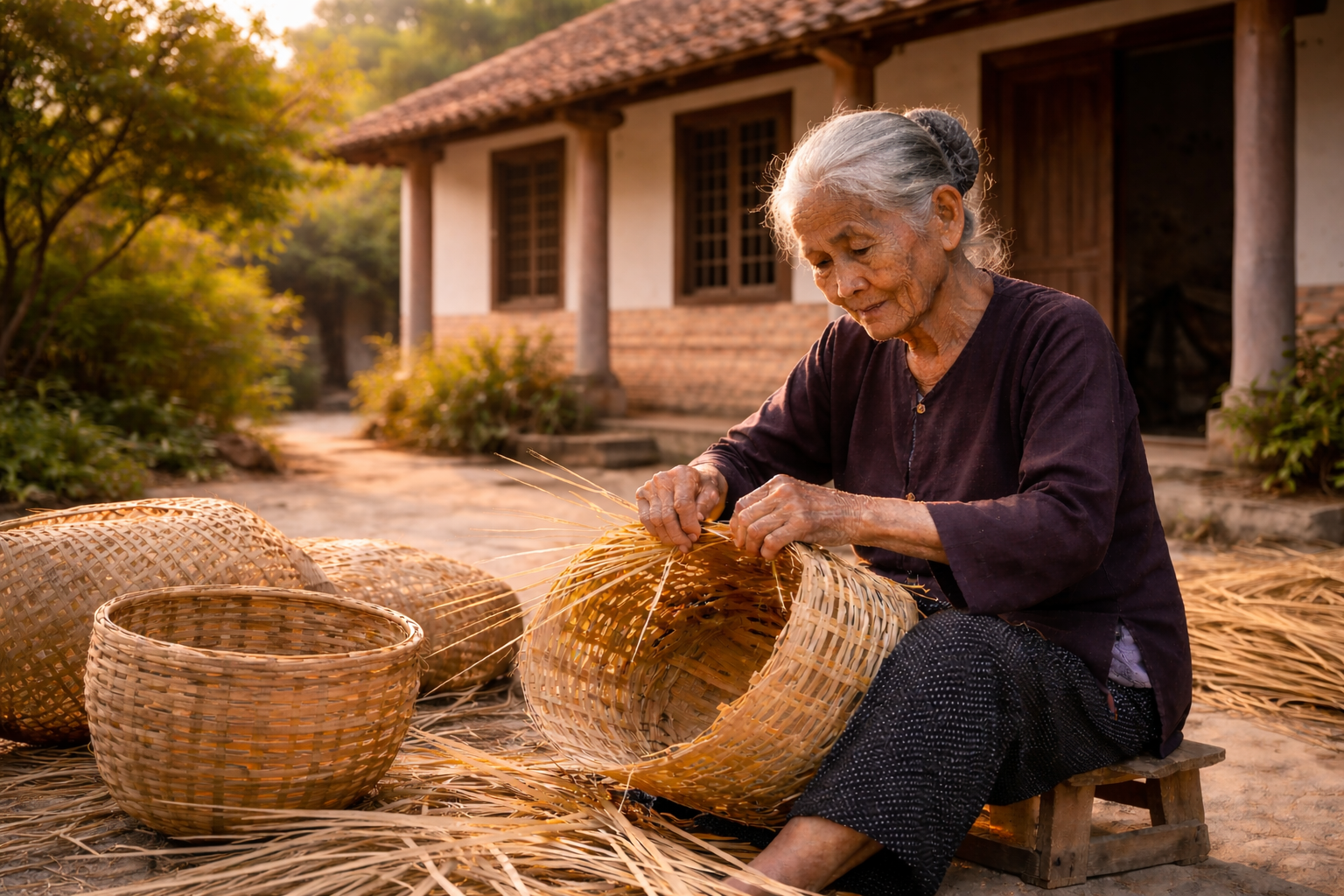
In Xích Lô’s Notebook, Lê Minh Hoan writes less as a policymaker than as a listener to the quiet rhythms of rural life. This piece lingers in the countryside—where memory is not something left behind, but something still being lived, in gestures, in people, in the texture of everyday life. From an old woman weaving bamboo baskets to the changing paths of a younger generation, the story draws us toward a simple yet enduring truth: keeping the village is not an act of nostalgia, but a way of holding on to the roots from which the future must grow.
  • ‘Bánh gai’ – Memories wrapped in black leaves

    ‘Bánh gai’ – Memories wrapped in black leaves

    In modern life, sometimes a single familiar flavor is enough to carry us back into the quiet depths of memory. In “Xích Lô’s Notebook”, Lê Minh Hoan writes with a gentle, unadorned voice—leading readers through familiar scenes of the countryside before settling on a simple truth: development does not mean losing one’s roots. This small story invites us to pause, and to reflect more deeply on rural life, culture, and the enduring journey of preserving Vietnamese identity.
  • In Pareto’s garden: The power of the essential few

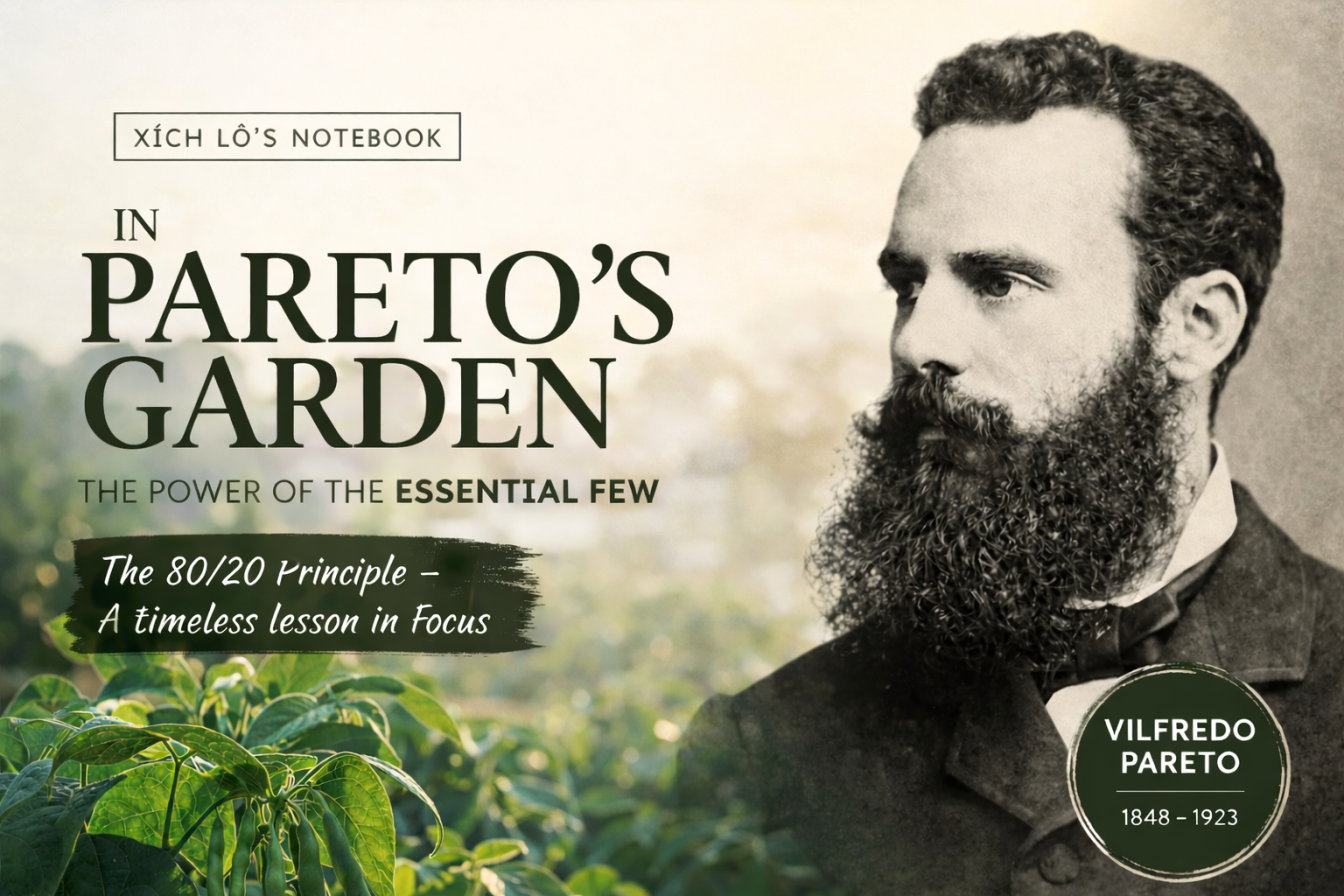
    In Pareto’s garden: The power of the essential few

    In his reflective “Xích Lô’s Notebook” series, Lê Minh Hoan revisits the story of Vilfredo Pareto—told through the simple image of a bean garden—to illuminate a profound insight. More than a statistical rule, the 80/20 principle emerges as a way of seeing: a reminder to look beyond the noise of abundance, to recognize what truly matters, and to act with clarity and intention.
  • Nature - The quiet teacher of the delta

    Nature - The quiet teacher of the delta

    In "Xích Lô’s Notebook" by Lê Minh Hoan, even the smallest moment—a rice seedling leaning in the wind—can open into something deeper. From there, nature quietly offers its lessons on how to live, if we are willing to pause and listen.
  • The lesson of the bending rice

    The lesson of the bending rice

    A quietly evocative fable by Lê Minh Hoan, featured in the “Xích Lô’s Notebook” series, draws from the familiar image of Viet Nam’s rice fields to illuminate a deeper philosophy of leadership and human conduct. Through the bending rice—heavy with grain—the author reflects on humility, attentive listening, and growth through lived experience, offering a gentle yet enduring lesson for those in public service and beyond.
  • The fisherman and the reef

    The fisherman and the reef

    Some stories begin not with action, but with a quiet sense of loss. This is one of them. “The fisherman and the reef,” a short fable by Lê Minh Hoan in the Xích Lô’s Notebook series, reflects on the fragile bond between people and nature—reminding us that what sustains life is often what we are most at risk of forgetting.
  • AI, the new storyteller of the Lotus land

    AI, the new storyteller of the Lotus land

    In the ceaseless rush of the digital age, some stories can only be told in stillness—told slowly, with the full weight of the human soul. Xích Lô’s Notebook invites you to pause, if only for a moment, and listen as a land begins to speak. Here, Dong Thap is not merely a place of lotus fragrance and drifting storks, but a place where people are learning to retell their home in the language of artificial intelligence (AI). It is a quiet story. Yet within it lies a larger question: How can identity be not only preserved, but carried far—reaching hearts that have never once arrived?
  • The shrimp and the quiet river

    The shrimp and the quiet river

    In a land where ponds meet the river and the river meets the sea, a shrimp begins to wonder where it truly comes from. This quiet fable invites readers to reflect on the roots of an industry—and the fragile balance between prosperity, responsibility, and the living waters that sustain it.