



 Some stories begin not with action, but with a quiet sense of loss. This is one of them. “The fisherman and the reef,” a short fable by Lê Minh Hoan in the Xích Lô’s Notebook series, reflects on the fragile bond between people and nature—reminding us that what sustains life is often what we are most at risk of forgetting.

The fisherman and the reef
(A fable of the sea, memory, and awakening)
Long ago, in a village held gently between land and a wide blue sea, there lived an old fisherman named Bien—whose name, in the language of his ancestors, meant the sea itself. He had given his life to the tides—to the pull of nets, the rhythm of oars, and the quiet miracle of dawn breaking over water. His back had curved with the years, shaped by wind and labor. His skin carried the color of sun and salt. But his eyes—his eyes still held the shimmer of first light on the sea, as though morning had never quite left him.
Each day before sunrise, Bien would row beyond the familiar shallows, out to a place few others bothered to remember. Beneath those waters lay an ancient coral reef, once called by his ancestors the heart of the sea.
There, the water ran clear as glass. Fish moved like drifting thoughts. And the corals—fragile, radiant—spread in quiet colors, like a garden the ocean had been tending long before memory began.
“Do not cast your nets without care,” he would tell the village children, “The coral is where the fish belong. If the home is lost, nothing returns.”
The children would laugh, nodding in the way children do—lightly, without weight. And as the seasons turned, his words settled into the past, where old voices often fade.
Then, slowly, the sea began to change.
Boats came, louder than the tide. Nets dragged across the seabed without pause. Some shattered the water with blasts; others sent currents through it, unseen but merciless. What drifted back was not always life, but the remains of it—broken coral, stunned fish, fragments that did not belong. Marine debris gathered where clarity once lived.
The reef grew pale. Then brittle. Then quiet. The fish were gone before anyone thought to notice. After that, Bien no longer went out to sea. He sat beneath the low roof of his home, turning an old hook between his fingers, his gaze resting somewhere beyond the horizon. If anyone asked, he would only say: “The sea once sang. Now, it weeps.”
It was never clear whether he spoke of the water— or of something within himself.
One evening, the storm came.
It rose without patience, without memory. Waves struck harder than anyone had believed possible, swallowing the sea wall, reaching into the village as though reclaiming something long denied. Houses near the shore were taken first.
When the storm passed, what remained was not only ruin—but a silence filled with recognition. Only then did the villagers remember the reef. The thing they had once called an obstacle had been, all along, a living threshold—a quiet force that broke the sea’s anger before it could arrive.
They went to Bien, carrying questions they could no longer ignore.
He listened, then lifted his hand toward the water. “No one builds a house upon sand and forgets what holds it steady,” he said, “The reef is what steadies the sea. We chose speed over balance. And in doing so, we unmade the ground beneath us.”
He paused, as though listening to something deeper than words. “If we are to go on,” he said at last, “we must learn not how to take—but how to remain.”
From that day, the village began again. They took less. They left more. Around the remnants of the old reef, they marked a place where the sea could be itself—a small sanctuary, fragile but real.
The children changed, too. Fish were no longer only something to catch, but something to watch, to wonder at—as if the sea had begun teaching them a different language.
And slowly, almost imperceptibly, the reef began to return.
Not as it once was— but as something still willing.
Tiny corals reached outward, pale and tentative. Small fish appeared at the edges, moving carefully, as though remembering a place they had not fully forgotten.
The sea did not sing again—not yet.
But if one listened closely, it no longer sounded like grief alone.
What remains beneath
There are those who believe the world is wide enough to forgive whatever we forget.
But there are quieter truths: that some things, once broken, do not return the same— and that some silences are not empty, but waiting.
We live, now, as those fishermen once did—casting wide, gathering quickly, forgetting what cannot be replaced.
Yet beneath all that we take, something still holds. Something that does not speak, and yet keeps us. And perhaps that is why the old man was called Bien— not because he belonged to the sea, but because, in the end, he never forgot how to listen to it.

The Department of Forestry and Forest Protection under the Ministry of Agriculture and Environment on June 9, launched “Reflections on Viet Nam’s National Parks”, a book by Le Minh Hoan, former Vice Chairman of the National Assembly and former Minister of Agriculture and Rural Development. More than a work about nature, the book has been described as an emotional journey through 36 national parks across Viet Nam, helping promote messages of biodiversity conservation, sustainable development, and appreciation for the country’s forests.

OCOP is more than a program for ranking products. It is a journey to awaken the soul of the countryside. Behind every star lies a world of identity, memory, and the quiet creativity of local communities. To imagine OCOP as a beauty pageant finale is to see it from another angle entirely: every product, like every person, deserves its own moment to shine. In that space, value is no longer measured by quality alone, but also by emotion, by memory, and by trust.

Durian in the Central Highlands was once a golden dream—until the market lost its trust. What followed became a turning point: farmers choosing to stand together, bound by a shared commitment to farm with responsibility and honor. No longer chasing short-term prices, they turned instead to transparency—keeping careful records, following standards, protecting their planting area codes. It was this simple promise that helped durian return to export markets—and, more importantly, restored trust in an entire region. A small story, perhaps, but one that speaks to a larger truth: sustainability begins with credibility.

In Xích Lô’s Notebook, Lê Minh Hoan writes less as a policymaker than as a listener to the quiet rhythms of rural life. This piece lingers in the countryside—where memory is not something left behind, but something still being lived, in gestures, in people, in the texture of everyday life. From an old woman weaving bamboo baskets to the changing paths of a younger generation, the story draws us toward a simple yet enduring truth: keeping the village is not an act of nostalgia, but a way of holding on to the roots from which the future must grow.
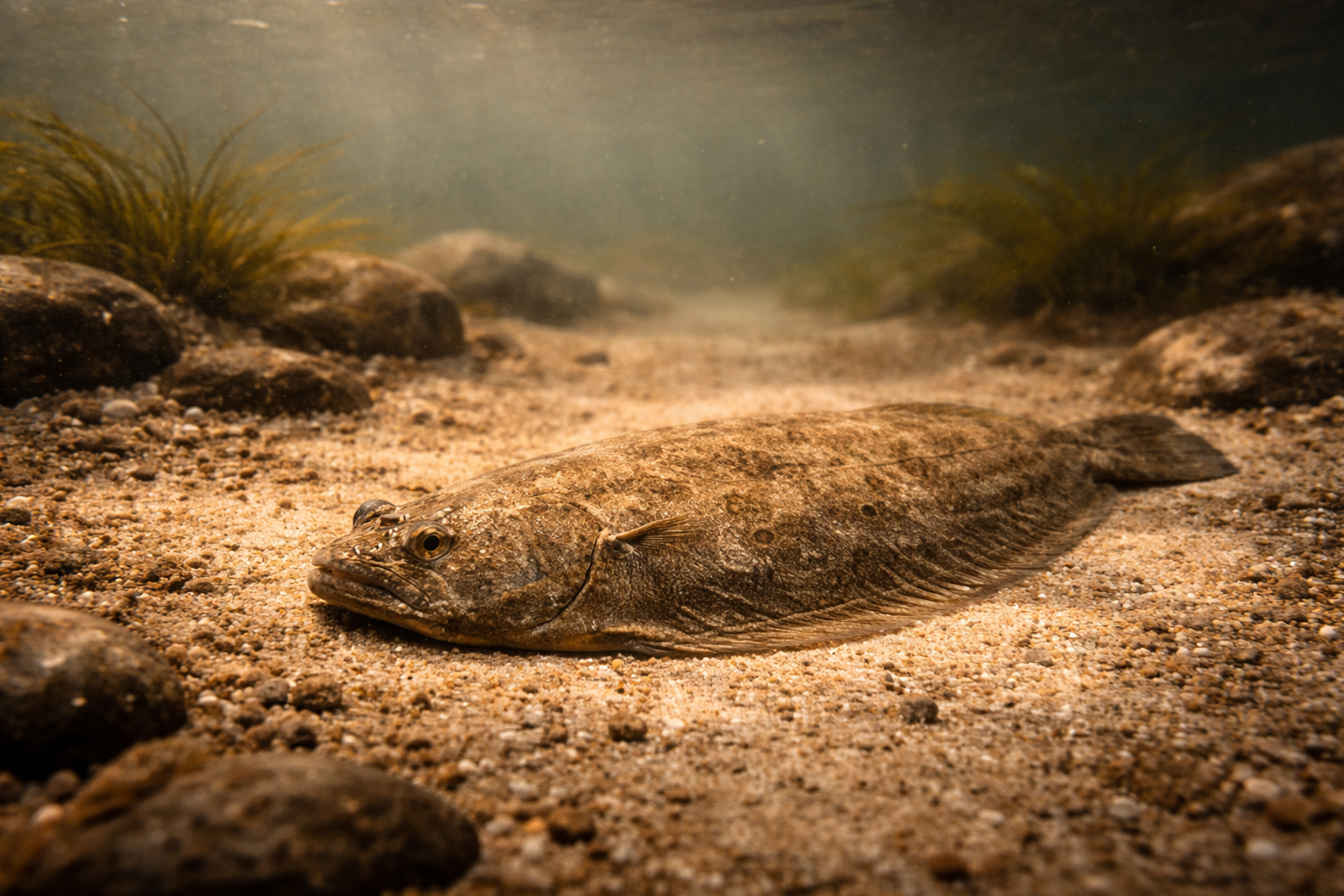
From the story of cá lưỡi trâu—a type of tongue sole, a flatfish that lives close to the riverbed—we are led to think of certain books that carry the same quiet presence. Some are neither loud nor conspicuous, yet once read, they linger, seeping gently into memory without our knowing. ‘Xích Lô’s Notebook’ feels much the same—unhurried, unassuming, yet perhaps capable of carrying us far, in a way that is deeply sincere.