



 The story of the silkworm spinning its thread evokes a simple yet profound truth: what endures is often shaped by quiet devotion. In a world that rarely grows still, there are those who work in silence, asking for no recognition, yet gently weaving beauty into the fabric of society. It is this persistence, this humility, that helps form the steady ground on which a community—and a nation—stands.
THE SILKWORM'S THREAD |
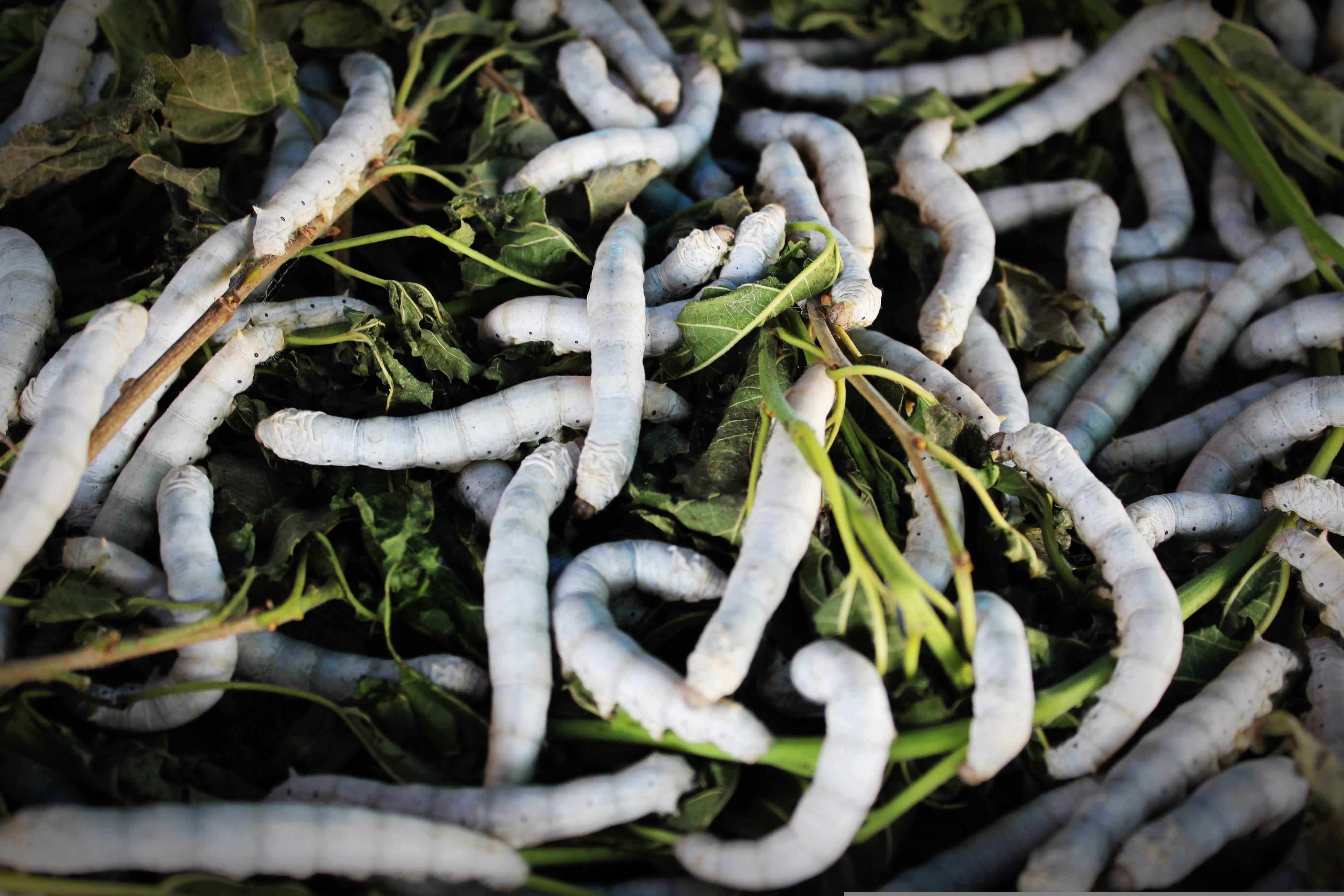
In the countryside of old, within a humble bamboo tray, tiny silkworms lay in stillness, feeding on mulberry leaves. They could not speak, made no sound, and never asked for anything. Given fresh green leaves, they would patiently spin fine, glistening threads, forming golden cocoons—only to offer the world soft, luminous silk.
The silkworm does not boast. It asks for no applause, no flowers, no medals. It simply does what must be done, what ought to be done, what is its nature to do. Quietly. Steadily. As if this, in itself, were the way of life entrusted to it by the natural order.
And in the silkworm, we begin to recognize so many around us: local officials who listen with care, without needing to be named; teachers in remote highlands who sow the seeds of learning without expecting return; farmers, workers—those who labor in silence, not for themselves, but so that the common good may take root, so that the community may grow warmer, the country a little more beautiful.
The silkworm has no need for a place upon a pedestal. It only softens the harshness of life, easing a little of its cold, adding a layer of gentleness—like a length of silk that cradles the human spirit. So too, countless individuals quietly offer their small part; and when woven together, they become a vast cloth—one that shelters and adorns the homeland.
At times, beauty does not lie in the light, but in what remains unseen. At times, the truest reward is not a medal, but the trust of the people, the quiet gratitude in the eyes of those who come after.
The silkworm’s story leaves us with something simple: to do what must be done, even when no one is watching, is itself a way of making the world more beautiful. Like the silkworm bowing as it spins its thread, like ripened rice bending under the weight of grain—these are images of humility, of devotion, of a way of life: quiet, enduring, leaving behind what lasts.

The Department of Forestry and Forest Protection under the Ministry of Agriculture and Environment on June 9, launched “Reflections on Viet Nam’s National Parks”, a book by Le Minh Hoan, former Vice Chairman of the National Assembly and former Minister of Agriculture and Rural Development. More than a work about nature, the book has been described as an emotional journey through 36 national parks across Viet Nam, helping promote messages of biodiversity conservation, sustainable development, and appreciation for the country’s forests.

OCOP is more than a program for ranking products. It is a journey to awaken the soul of the countryside. Behind every star lies a world of identity, memory, and the quiet creativity of local communities. To imagine OCOP as a beauty pageant finale is to see it from another angle entirely: every product, like every person, deserves its own moment to shine. In that space, value is no longer measured by quality alone, but also by emotion, by memory, and by trust.

Durian in the Central Highlands was once a golden dream—until the market lost its trust. What followed became a turning point: farmers choosing to stand together, bound by a shared commitment to farm with responsibility and honor. No longer chasing short-term prices, they turned instead to transparency—keeping careful records, following standards, protecting their planting area codes. It was this simple promise that helped durian return to export markets—and, more importantly, restored trust in an entire region. A small story, perhaps, but one that speaks to a larger truth: sustainability begins with credibility.
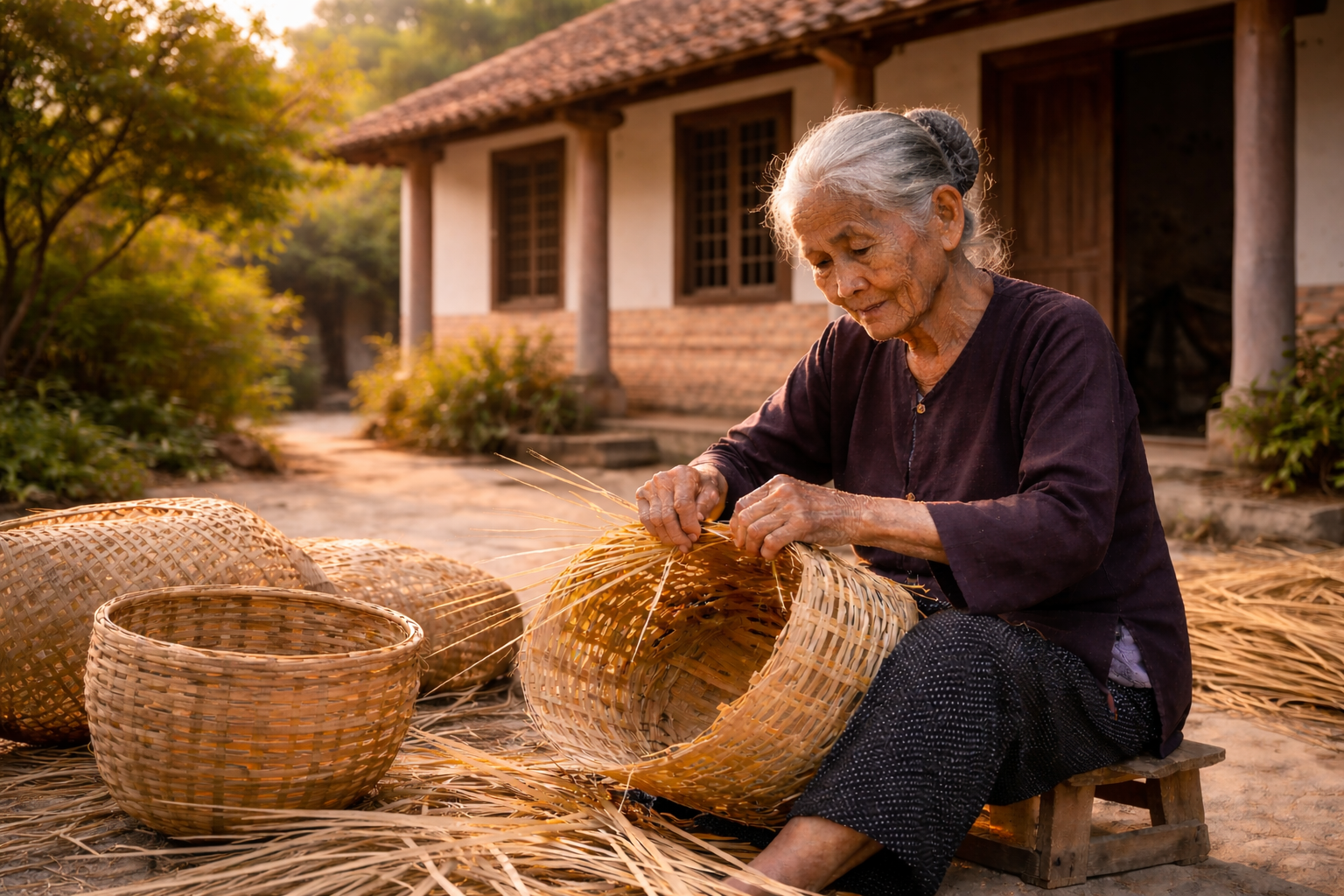
In Xích Lô’s Notebook, Lê Minh Hoan writes less as a policymaker than as a listener to the quiet rhythms of rural life. This piece lingers in the countryside—where memory is not something left behind, but something still being lived, in gestures, in people, in the texture of everyday life. From an old woman weaving bamboo baskets to the changing paths of a younger generation, the story draws us toward a simple yet enduring truth: keeping the village is not an act of nostalgia, but a way of holding on to the roots from which the future must grow.

From the story of cá lưỡi trâu—a type of tongue sole, a flatfish that lives close to the riverbed—we are led to think of certain books that carry the same quiet presence. Some are neither loud nor conspicuous, yet once read, they linger, seeping gently into memory without our knowing. ‘Xích Lô’s Notebook’ feels much the same—unhurried, unassuming, yet perhaps capable of carrying us far, in a way that is deeply sincere.