




 In "Xích Lô’s Notebook" by Lê Minh Hoan, even the smallest moment—a rice seedling leaning in the wind—can open into something deeper. From there, nature quietly offers its lessons on how to live, if we are willing to pause and listen.

NATURE - THE QUIET TEACHER OF THE DELTA |
It begins with a rice seedling
That morning, at first light, when the sun was still caught behind a row of bamboo, I stood by the edge of a field and noticed a single rice seedling leaning slightly to one side. The whole field was a uniform green, every plant standing straight—except for that one, tilting as if to sidestep an unseen wind.
I wondered to myself: How strange. Same soil, same water—why do the others stand tall, while this one leans?
Just then, a farmer passed by. Seeing me watching, he smiled gently and said, “It’s not leaning because it’s weak. It leans because the soil there is softer, the water a bit cooler. Plants live by nature. The earth and sky show them how.”
It sounded like a passing remark, but it settled deep within me. Perhaps in life, we often strain to stand straight according to someone else’s measure, forgetting that at any given moment, there may be a direction we are meant to lean. Nature never speaks loudly. But when we pause long enough, we begin to hear.
A patient teacher
Learning humility from bowing rice
When rice begins to form grain and bend under its own weight, it shows no pride. It knows its place, knows that fullness requires humility. The heavier the grain, the lower it bows. The more it holds, the more it yields. The more experience it carries, the more it listens.
No book teaches this lesson.
People of the countryside learn it simply by watching the rice each season.
Learning endurance from the tides
The waters of the Mekong do not rush. They rise and fall, ebb and flow—never the same from one day to the next, yet always finding their way back to the sea. Nature teaches us to move slowly but surely. The straight path is not always the one that leads us forward. Sometimes we must circle back, sometimes it feels like retreat—but in truth, we are gathering strength for what lies ahead.
Learning to bloom in one’s own season
The lotus does not bloom for praise, nor does it close for criticism. The water lilies in the fields are the same—when there is enough sun and wind, they open on their own, needing no reminder.
People, on the other hand, often rush—afraid of falling behind, afraid of being less than others.
Nature whispers softly: everyone has their own season to bloom. There is no need to compare. Late, but beautiful—that is enough.
Nature as a mirror of the human heart
A plant knows how to lean to avoid the wind; a person, too, should know how to step aside from harm.
Strength is not always rigidity. There are moments when we must turn away—from idle gossip, from harsh words, from emotions that fracture the heart.
The rice seedling bends to survive the wind. A person avoids what is harmful to preserve peace.
No forest is made of identical trees. The tall trees offer shade, the low ones hold the soil, vines weave their quiet cover. No one asks which tree matters most. Each fulfills its role, and the forest thrives.
Life is the same. When each person tends to their part and lives true to their nature, the world becomes a gentler place.
Nature teaches harmony, not rivalry
A river holds water, algae, moss, fish, mangroves—each life sustained by the other. Nothing lives alone.
People are no different. No one exists apart from community, from neighbors, from the place where life first took root. Unity sustains; division weakens. This is an enduring truth.
Nature speaks quietly: no one is strong forever. Strength comes from leaning on one another.
In closing: live as part of the earth and sky
Nature has no podium, no blackboard, no examinations. Yet its lessons are everywhere—scattered across fields, rivers, and gardens.
In the morning, a falling leaf teaches us to let go.
At noon, the still sun teaches us to pause.
In the evening, the receding tide teaches acceptance.
At night, the wind teaches lightness of heart.
Those who live in the riverlands understand these things deeply. But if we happen to forget, perhaps we need only stop beside a single rice seedling bending in the wind…
And in that quiet moment, nature may be waiting to remind us, gently:
Slow down a little. Soften a little.
And you may find yourself full—like a golden ear of rice, heavy with grain.

The Department of Forestry and Forest Protection under the Ministry of Agriculture and Environment on June 9, launched “Reflections on Viet Nam’s National Parks”, a book by Le Minh Hoan, former Vice Chairman of the National Assembly and former Minister of Agriculture and Rural Development. More than a work about nature, the book has been described as an emotional journey through 36 national parks across Viet Nam, helping promote messages of biodiversity conservation, sustainable development, and appreciation for the country’s forests.

OCOP is more than a program for ranking products. It is a journey to awaken the soul of the countryside. Behind every star lies a world of identity, memory, and the quiet creativity of local communities. To imagine OCOP as a beauty pageant finale is to see it from another angle entirely: every product, like every person, deserves its own moment to shine. In that space, value is no longer measured by quality alone, but also by emotion, by memory, and by trust.
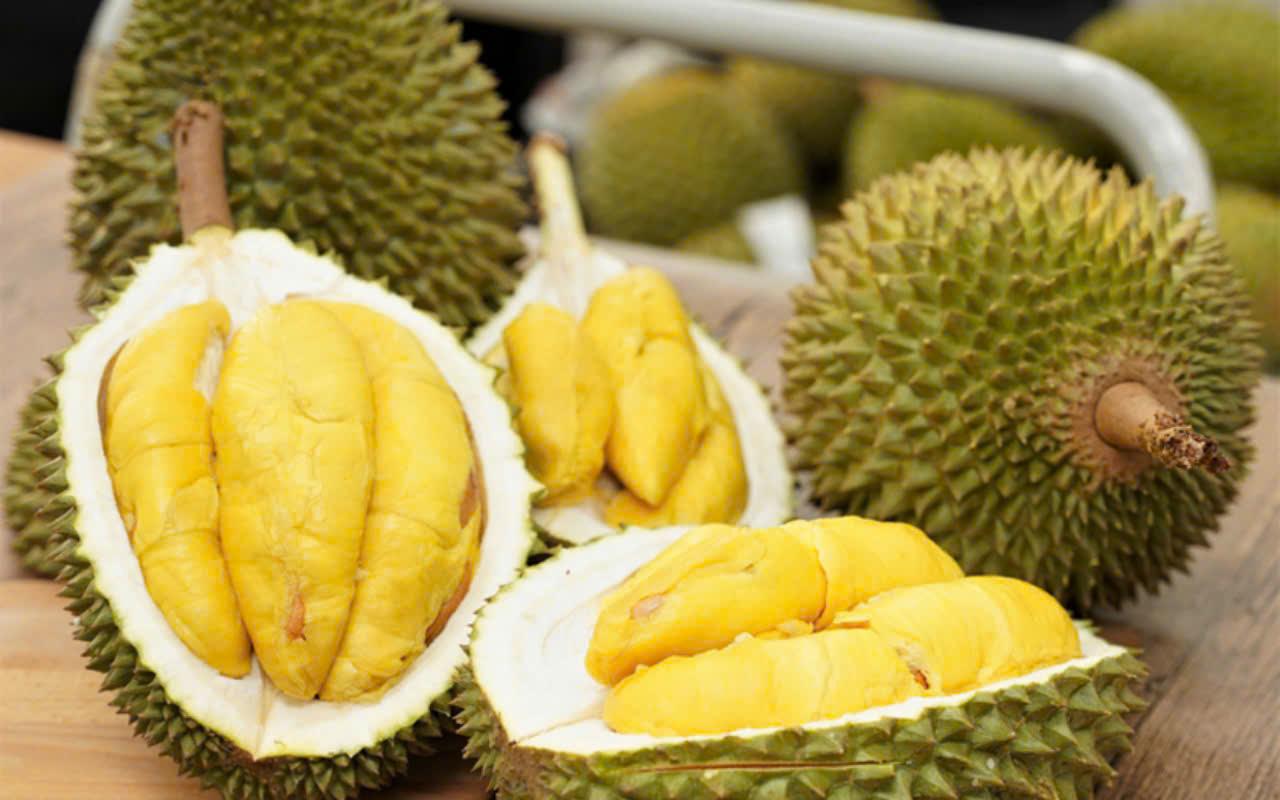
Durian in the Central Highlands was once a golden dream—until the market lost its trust. What followed became a turning point: farmers choosing to stand together, bound by a shared commitment to farm with responsibility and honor. No longer chasing short-term prices, they turned instead to transparency—keeping careful records, following standards, protecting their planting area codes. It was this simple promise that helped durian return to export markets—and, more importantly, restored trust in an entire region. A small story, perhaps, but one that speaks to a larger truth: sustainability begins with credibility.
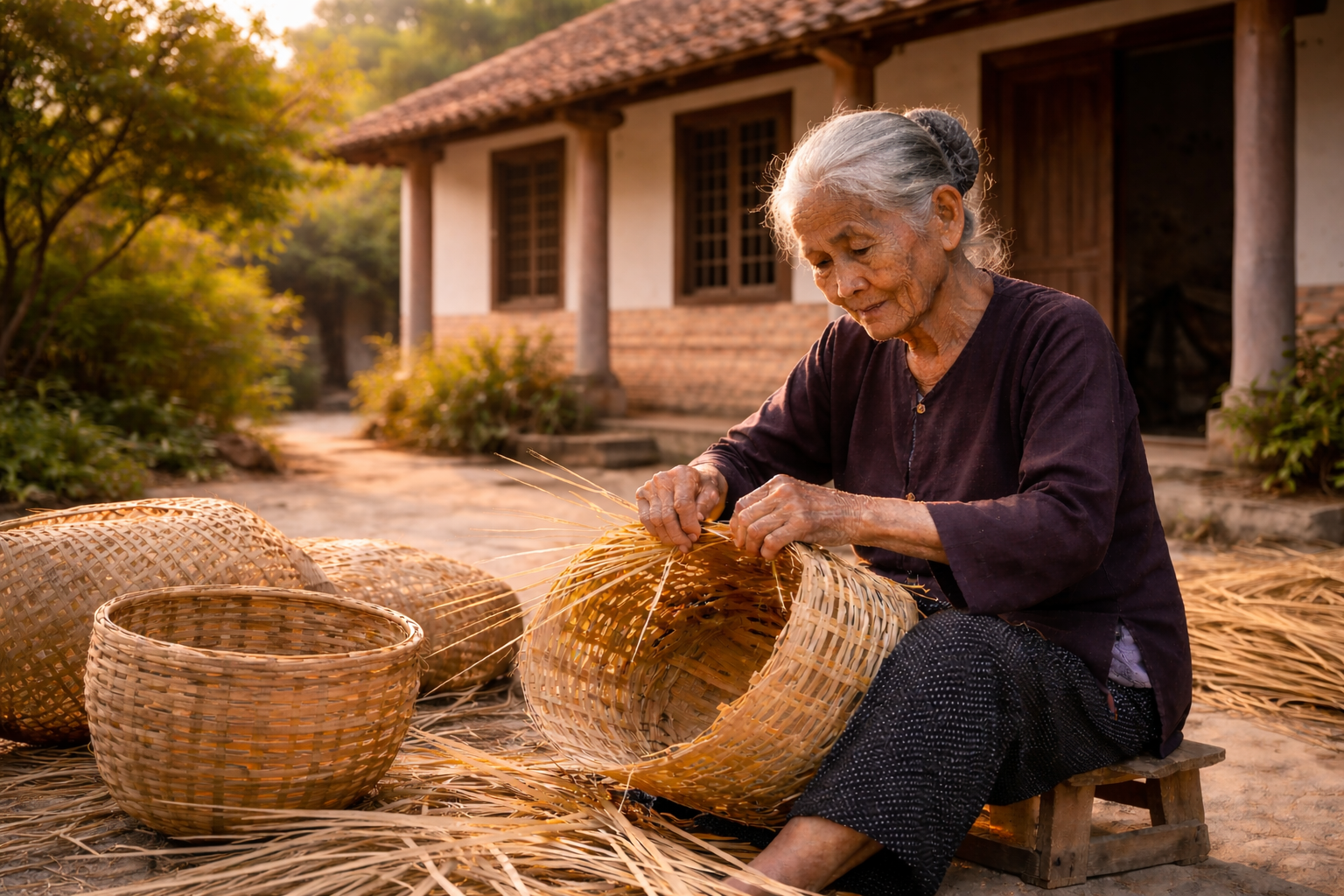
In Xích Lô’s Notebook, Lê Minh Hoan writes less as a policymaker than as a listener to the quiet rhythms of rural life. This piece lingers in the countryside—where memory is not something left behind, but something still being lived, in gestures, in people, in the texture of everyday life. From an old woman weaving bamboo baskets to the changing paths of a younger generation, the story draws us toward a simple yet enduring truth: keeping the village is not an act of nostalgia, but a way of holding on to the roots from which the future must grow.

From the story of cá lưỡi trâu—a type of tongue sole, a flatfish that lives close to the riverbed—we are led to think of certain books that carry the same quiet presence. Some are neither loud nor conspicuous, yet once read, they linger, seeping gently into memory without our knowing. ‘Xích Lô’s Notebook’ feels much the same—unhurried, unassuming, yet perhaps capable of carrying us far, in a way that is deeply sincere.