



 In the ceaseless rush of the digital age, some stories can only be told in stillness—told slowly, with the full weight of the human soul. Xích Lô’s Notebook invites you to pause, if only for a moment, and listen as a land begins to speak. Here, Dong Thap is not merely a place of lotus fragrance and drifting storks, but a place where people are learning to retell their home in the language of artificial intelligence (AI). It is a quiet story. Yet within it lies a larger question: How can identity be not only preserved, but carried far—reaching hearts that have never once arrived?

Once, in a conversation with young entrepreneurs in Dong Thap, someone asked: “If a traveler has never heard of our home—never known Go Thap, Tram Chim, or the flower village of Sa Dec—how do we make them curious enough to come?”
A young woman answered softly, almost shyly: “I would send photos. Beautiful ones. I would tell them about the lotus fields, the flocks of birds, the flowers that bloom all year, the seasonal fish when the floods arrive…”
I nodded, then asked again: “And after that? How do you help them feel this place? How do they sense the people here—the smell of lotus mud, the echo of folk chants at night festivals, the sweetness of a ripe mango picked in a backyard garden?”
She said nothing.
And that silence was understandable. Even many adults have never truly asked the question. Because tourism is not about selling scenery. It is about telling a story.
And today, a new storyteller has emerged: artificial intelligence (AI).
A land untold is a book still closed
What does Dong Thap really have?
No glittering skyline. No dramatic mountains. And yet, it leaves something behind in those who pass through: the lingering scent of lotus, the rise and fall of folk songs, the wide wings of storks against dusk-lit rice fields, the quiet kindness of its people, and meals so simple they feel like memory itself.
The truth is simple: The people of Dong Thap know this. The world does not.
There is pride—but not yet a way of telling that allows others to feel what lies beneath.
Artificial intelligence (AI) is not something distant or abstract.
It does not replace people.
It helps people speak—more clearly, more deeply, and to those who are ready to listen.
If AI became a companion
Imagine this: A young woman in Tokyo comes across a short AI-crafted film: “A day in the life of the red-crowned crane in Tram Chim”. The narration is soft. The images drift gently. Wind moves through melaleuca forests. Young birds call to one another. And at dusk, cranes stretch across the sky in a crimson arc above endless rice fields.
Her eyes begin to glisten.
In Hanoi, a young man scrolls through his phone. A short piece appears: “Come to Sa Dec—where flowers bloom in every season, and where an old artisan has shaped bonsai trees with his hands for sixty unbroken years.”
He pauses. Clicks. And then, without quite realizing why, he books a trip.
Elsewhere, a group of French visitors scans a QR code at the entrance to Go Thap. A voice begins—in their own language: “This was once the capital of the ancient Funan Kingdom. Beneath these layers of alluvial soil lie the footprints of generations long gone.”
From promotion to presence
Tourism once relied on billboards, television features, brochures, exhibitions, and carefully edited videos.
Those tools still matter. But they are no longer enough.
Today’s traveler does not want to be sold a destination. They want to feel it—personally. They do not trust advertisements. They trust sincerity. They want to hear a place speak in its own voice—through its people.
And this is where AI quietly steps in.
What AI illuminates, it does not replace
There is a common fear: “If we use AI, will we lose our authenticity?”
But consider this: What if AI helps a humble fish noodle vendor tell the story of her dish in a way that moves people?
What if it allows an 80-year-old man to share the history of Go Thap through short, living images?
What if it enables a flower cooperative in Sa Dec to present its work—clearly, beautifully—to the wider world?
Then nothing is lost. Instead, what was once unseen begins to shine.
Technology as a bridge, not a barrier
For those working in culture and tourism, AI offers quiet but powerful tools: to understand visitors—where they come from, what they seek, how they travel; to design experiences that feel personal, not generic.
For cooperatives and small household businesses, it offers something just as valuable: a voice. A way to write, to show, to connect—using nothing more than a phone, and perhaps a simple chatbot that never sleeps.
A beginning rooted in simplicity
This transformation does not require grand beginnings.
In each commune, young people can guide others in learning these tools.
In each district, simple guides can be created—digital tourism, as easy as cooking a pot of soup.
And slowly, a shared understanding may take root:
AI is not something distant.
It is simply a companion.
When a homeland learns to speak again
Perhaps one day, in Tokyo, Seoul, or Paris, someone will open their phone and hear a familiar melody: “Hò ơ… The wind carries me back to the fields of Dong Thap— Where rice grows clean, and lotus carries its quiet fragrance…”
And somewhere, a heart far from home will tremble.
Because that is what home is. Told in the language of the present. Shaped by the tools of the future. And yet—still carrying the soul of the past. If guided by the human heart, artificial intelligence may become the most remarkable storyteller a homeland could ever know.
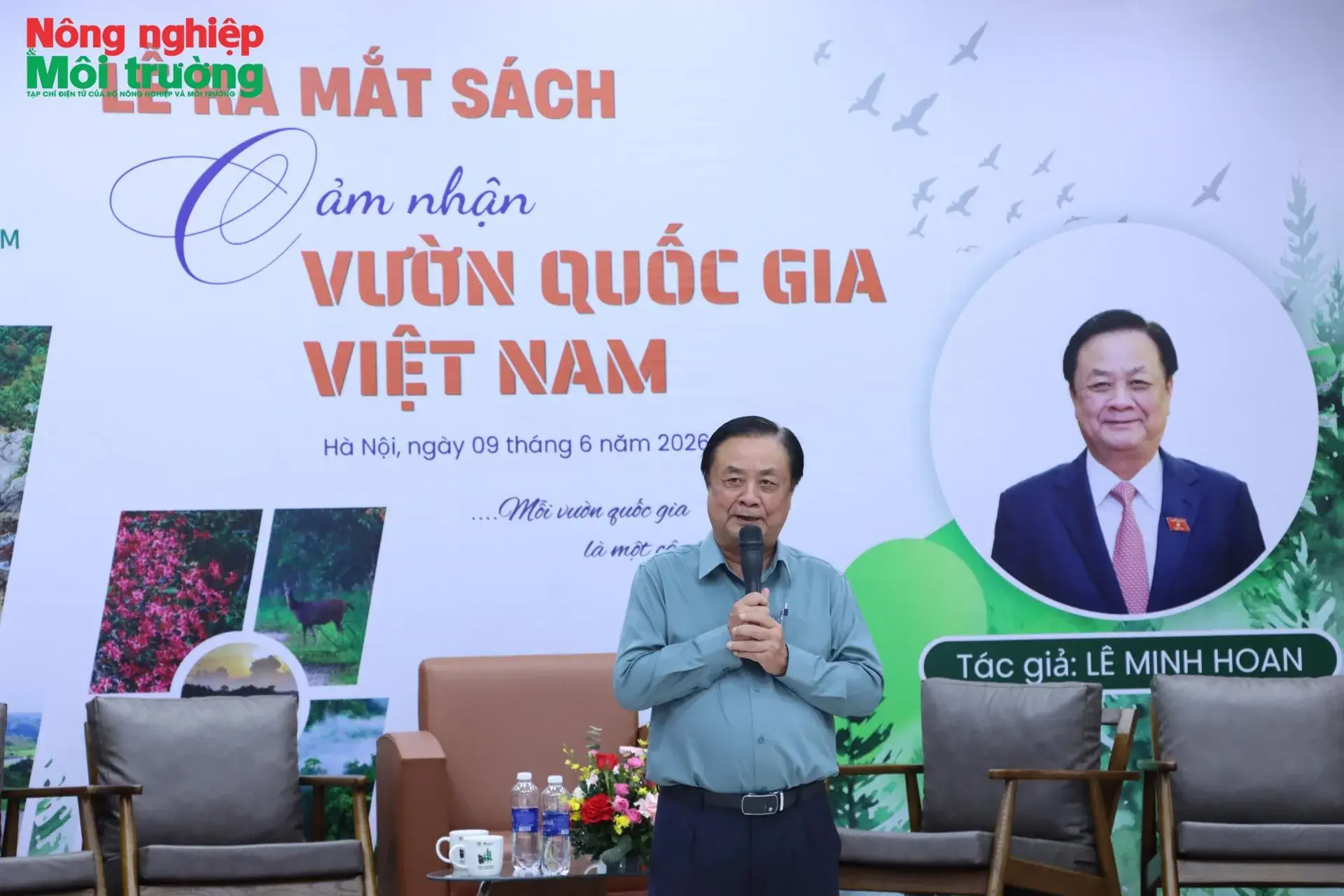
The Department of Forestry and Forest Protection under the Ministry of Agriculture and Environment on June 9, launched “Reflections on Viet Nam’s National Parks”, a book by Le Minh Hoan, former Vice Chairman of the National Assembly and former Minister of Agriculture and Rural Development. More than a work about nature, the book has been described as an emotional journey through 36 national parks across Viet Nam, helping promote messages of biodiversity conservation, sustainable development, and appreciation for the country’s forests.

OCOP is more than a program for ranking products. It is a journey to awaken the soul of the countryside. Behind every star lies a world of identity, memory, and the quiet creativity of local communities. To imagine OCOP as a beauty pageant finale is to see it from another angle entirely: every product, like every person, deserves its own moment to shine. In that space, value is no longer measured by quality alone, but also by emotion, by memory, and by trust.

Durian in the Central Highlands was once a golden dream—until the market lost its trust. What followed became a turning point: farmers choosing to stand together, bound by a shared commitment to farm with responsibility and honor. No longer chasing short-term prices, they turned instead to transparency—keeping careful records, following standards, protecting their planting area codes. It was this simple promise that helped durian return to export markets—and, more importantly, restored trust in an entire region. A small story, perhaps, but one that speaks to a larger truth: sustainability begins with credibility.
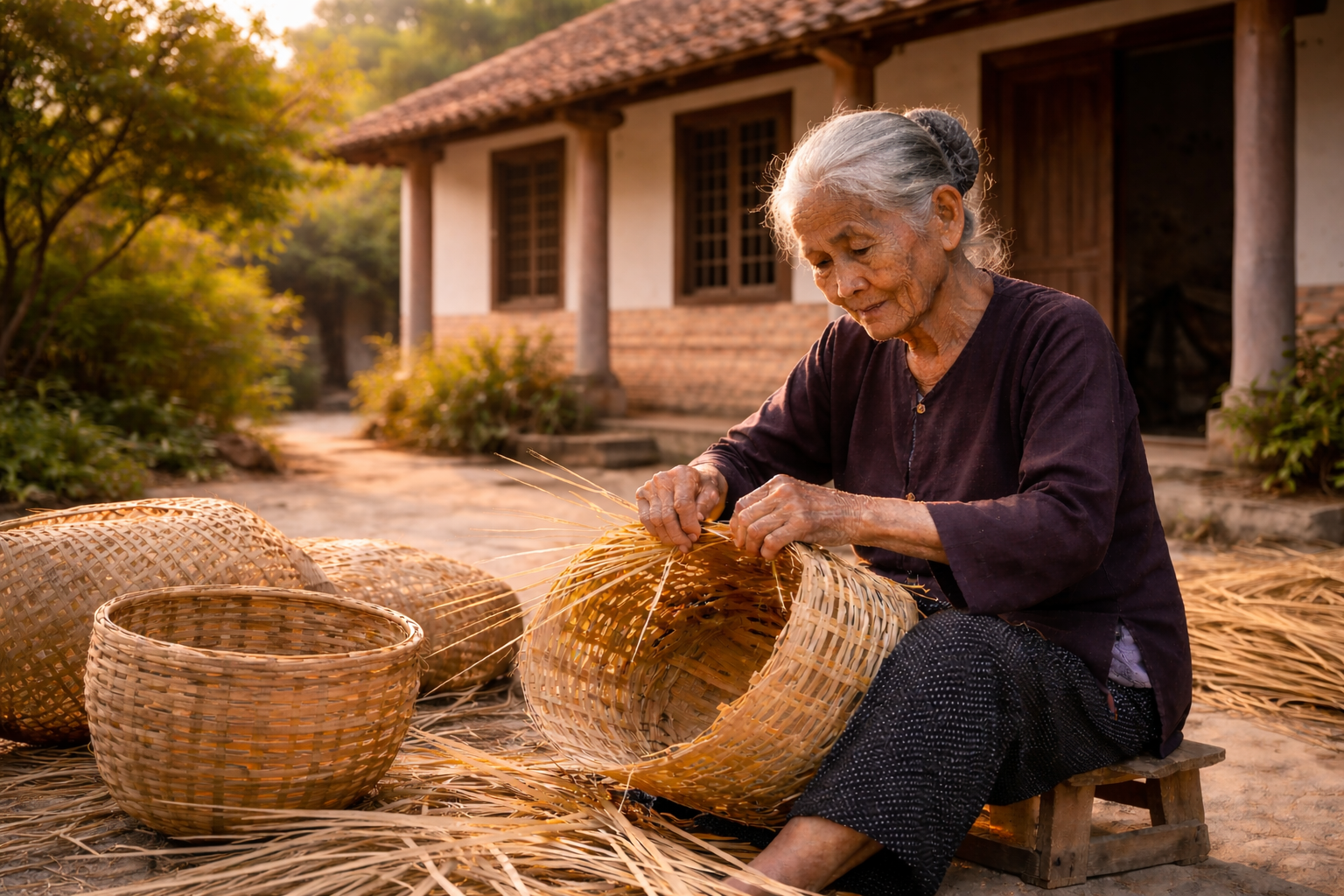
In Xích Lô’s Notebook, Lê Minh Hoan writes less as a policymaker than as a listener to the quiet rhythms of rural life. This piece lingers in the countryside—where memory is not something left behind, but something still being lived, in gestures, in people, in the texture of everyday life. From an old woman weaving bamboo baskets to the changing paths of a younger generation, the story draws us toward a simple yet enduring truth: keeping the village is not an act of nostalgia, but a way of holding on to the roots from which the future must grow.

From the story of cá lưỡi trâu—a type of tongue sole, a flatfish that lives close to the riverbed—we are led to think of certain books that carry the same quiet presence. Some are neither loud nor conspicuous, yet once read, they linger, seeping gently into memory without our knowing. ‘Xích Lô’s Notebook’ feels much the same—unhurried, unassuming, yet perhaps capable of carrying us far, in a way that is deeply sincere.