




 Viet Nam’s carbon market is entering its pilot phase, with initial foundations established in terms of the legal framework, data, trading infrastructure, and regulatory mechanisms. At the Viet Nam Carbon Forum 2026, held in August 2026, policymakers, experts, and representatives of relevant organizations emphasized the need to further improve emissions data, trading infrastructure, corporate carbon management capacity, and mechanisms for establishing price signals. These elements are essential to laying the foundation for a transparent, well-functioning, and efficient carbon market.
Better data, broader supply key to Viet Nam’s carbon market
Nguyen Tuan Quang, Deputy Director General, Department of Climate Change, Ministry of Agriculture and Environment

Responding to questions from delegates at the Forum, Nguyen Tuan Quang said greenhouse gas inventory data submitted by covered facilities to regulatory authorities must undergo verification before being used. Procedures for greenhouse gas inventorying, measurement, reporting, and verification of emission reductions have been specifically regulated, with covered facilities required to comply with guidance issued by the relevant sectoral authorities.
For example, facilities under the management of the Ministry of Industry and Trade must comply with regulations on greenhouse gas inventorying, measurement, reporting, and verification of emission reductions applicable to the industry and trade sector, while facilities in the construction sector must follow the corresponding sector-specific regulations. Accordingly, inventory data are submitted to authorized verification bodies for assessment in accordance with established procedures.
Nguyen Tuan Quang said regulatory authorities are currently reviewing whether the implementation and content of verification procedures comply with existing regulations. At the same time, the Ministry of Agriculture and Environment is developing an online greenhouse gas inventory reporting system to enable businesses to submit reports more quickly, accurately, and transparently, while facilitating data reconciliation by regulatory authorities.
Regarding supply for the carbon market, Nguyen Tuan Quang said three categories of carbon credits are currently eligible for trading on the carbon exchange: carbon credits issued by competent domestic authorities; credits generated under cooperative approaches established under Article 6.2 of the Paris Agreement; and credits issued under Article 6.4 of the Paris Agreement.
As the market develops, expanding the domestic supply of carbon credits is also being considered. According to Nguyen Tuan Quang, the recently issued national standard for forest carbon credits provides a basis for potentially increasing supply, thereby supporting trading activities and the domestic offsetting of emission allowances.
Trading infrastructure underpins carbon market operations
Nguyen Tuan Anh, Deputy Director, Hanoi Stock Exchange

According to Nguyen Tuan Anh, Viet Nam’s domestic carbon trading system officially began operations at the Hanoi Stock Exchange on June 29, 2026. Since its launch, the system has operated safely and smoothly, with synchronized data connectivity to the Vietnam Securities Depository and Clearing Corporation and the national registration system.
Through its connection with the national registration system, the Hanoi Stock Exchange receives data on tradable instruments, which at the current stage comprise greenhouse gas emission allowances for the 2025–2026 period. Data presented during the discussion showed that more than 510 million tonnes of CO₂ equivalent in allowances had been registered in the national registration system, involving 92 registered organizations, primarily in the iron and steel, cement, and thermal power sectors. In the first trading session on June 29, 2026, 1,210 allowances were traded, with a total value of more than VND 161 million.
Nguyen Tuan Anh noted that the carbon market has characteristics that distinguish it from other markets currently operated by the Hanoi Stock Exchange. For this market, the Exchange provides trading services based on product data supplied by the national registration system, including the type of tradable instrument, trading period, and volume.
An important feature is that accounts must complete the custody registration of the relevant allowances with the Vietnam Securities Depository and Clearing Corporation before the trading day. Once the information has been transmitted from the national registration system to the custody system, market participants can conduct transactions on the following trading day.
Under the current design, carbon transactions are conducted through negotiated trading, with transaction results recorded directly in the system. When the buyer has sufficient funds and the seller has sufficient allowances in its custody account, the transfer is completed through an immediate settlement mechanism.
Secure custody and settlement for carbon trading
Ta Thanh Binh, Chief Executive Officer, Vietnam Securities Depository and Clearing Corporation

Ta Thanh Binh said that following the issuance of Decree No. 29/2026 on the carbon credit exchange, the Vietnam Securities Depository and Clearing Corporation and the Hanoi Stock Exchange were assigned responsibility for organizing secondary-market operations for emission allowances and carbon credits. The Hanoi Stock Exchange is responsible for trading activities, while the Vietnam Securities Depository and Clearing Corporation handles post-trade custody and settlement.
In preparation for the system’s operation from June 29, 2026, the Corporation deployed the necessary technical infrastructure and conducted testing with market members to ensure accurate and stable operations. According to Ta Thanh Binh, the objective is to ensure that the system continues to operate effectively as the market expands and the number of transactions increases.
As of the time of the Vietnam Carbon Forum 2026 in August 2026, eight securities companies had registered as custody members, with 20 accounts belonging to market participants, including 14 accounts held by domestic organizations and six held by foreign organizations. The balance of allowances held in custody as of August 11, 2026, was 4,510 allowances.
Regarding the custody mechanism, Ta Thanh Binh said each market participant may open one custody account with a custody member. The Vietnam Securities Depository and Clearing Corporation and its custody members conduct periodic balance reconciliations to ensure that data remain accurate and consistent after each trading day.
For settlement, a key principle is that market participants must have sufficient balances of both tradable assets and funds before transactions are conducted. Accordingly, allowances are placed in custody before participants can submit trading orders for the following day. Settlement is currently conducted on a T+0 basis, meaning that the transfer of ownership and payment are completed on the same trading day. Settlement is carried out through a real-time gross settlement mechanism.
Ta Thanh Binh also noted that participating members need to carefully check information concerning the quotation unit and trading method to ensure that transactions are conducted safely and accurately. In the event of an error occurring on the settlement date, the transaction may be handled in accordance with applicable regulations; once settlement has been completed, the transaction is recorded in the system.
Businesses need stronger carbon management capacity
Pham Lien Anh, Head of the Advisory Program for Reform and Economic Research in Vietnam, Laos, and Cambodia, International Finance Corporation (IFC)

According to Pham Lien Anh, for the carbon market to operate effectively, businesses need to proactively establish core capabilities, beginning with emissions data, inventorying, reporting, monitoring, and verification. Businesses need to determine how much they emit and identify the main sources of their emissions, while also developing the capacity to measure, monitor, and report emissions data. This is one of the important prerequisites for businesses seeking to participate in the carbon market.
In addition to data, Pham Lien Anh said businesses need to develop carbon management capabilities and treat carbon as a strategic issue linked to production and business operations, competitiveness, and access to markets, particularly export markets, as well as credit and green finance.
According to her, when emission reductions are integrated into production and business operations, investment plans, and corporate strategies, the approach can gradually shift from a compliance-oriented mindset toward recognizing the value of carbon in the process of reducing emissions.
Another capability she emphasized is the ability to identify and develop emission-reduction projects linked to carbon credits. Once emission levels and emission sources have been identified, businesses need to determine which solutions and projects can help reduce emissions and potentially generate carbon credits, thereby creating an additional source of revenue.
Based on the experience she shared, identifying at an early stage the relationship between emission-reduction measures and their potential to generate carbon credits can help businesses make more informed choices about suitable markets. These may include the voluntary carbon market, compliance markets, credit transfers under Article 6.2 of the Paris Agreement, or Vietnam’s domestic carbon market.
Carbon prices need to send the right signal
Dr. Le Xuan Nghia, Director, Institute for Consultancy and Development

According to Dr. Le Xuan Nghia, the carbon market differs in important respects from a conventional investment market. Carbon prices not only reflect supply and demand but also play an economic role in incentivizing entities to reduce emissions and imposing costs on emission-generating activities. In this respect, the carbon market is an important component of the transition toward a green economy.
From this perspective, he argued that establishing an appropriate price signal is important to the market’s development. The allocation of allowances, demand for trading, and the ability of market participants to engage in transactions are all related to market liquidity and the formation of carbon prices.
He also noted that during the initial pilot phase, policymakers need to consider the objective of establishing an appropriately liquid market as the system moves toward full-scale operation. At that stage, the market should not only perform its trading function but also provide sufficiently clear economic incentives for market participants to pursue emission reductions.
According to Dr. Le Xuan Nghia, the ultimate significance of the carbon market lies in its ability to produce tangible effects on emission reductions. Price signals therefore need to be considered in relation to the long-term objectives of climate policy and the transition toward a green economy.
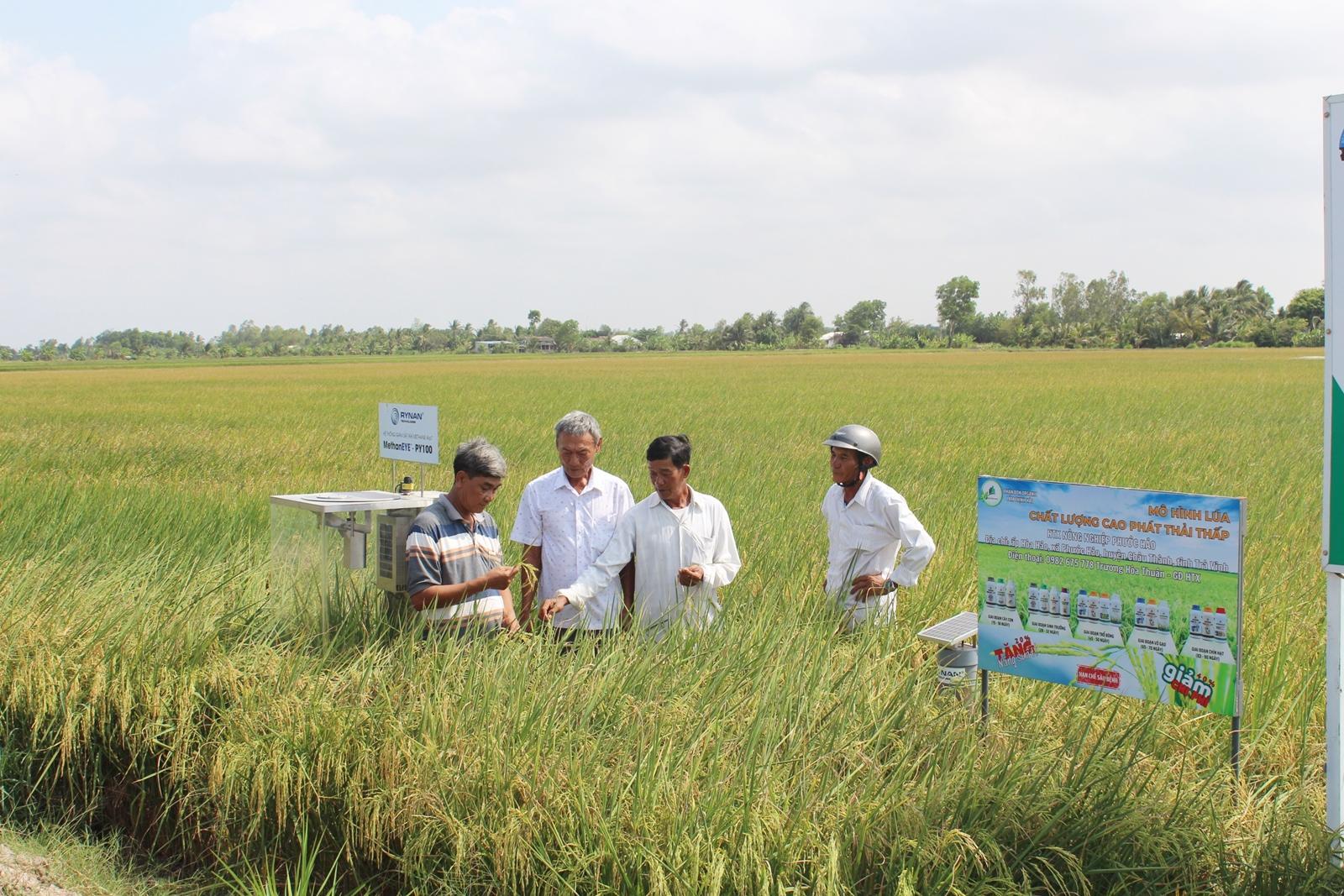
Viet Nam has significant potential to reduce methane emissions from rice production, but this potential does not automatically translate into carbon credits that can be sold in international markets. To generate real value, the rice value chain must overcome bottlenecks related to methodologies, water management, data, production organization, and benefit-sharing with farmers.

Decree No. 112/2026/ND-CP has established a legal framework for Viet Nam to engage in the international transfer of greenhouse gas emission reduction outcomes and carbon credits. But the distance between an environmentally beneficial activity and a credit eligible for international transfer remains considerable. To enter this market, businesses must overcome challenges involving technology, financing, data, additionality and project management capacity.

Carbon markets are becoming increasingly interconnected through cooperation mechanisms under the Paris Agreement and through voluntary carbon markets. As greenhouse gas emission mitigation outcomes can be transferred across borders, the quality, transparency, verifiability, and governance of those outcomes are becoming increasingly important. For Viet Nam, developing a domestic carbon market therefore cannot be separated from the question of how that market will connect with international flows of transactions and investment.
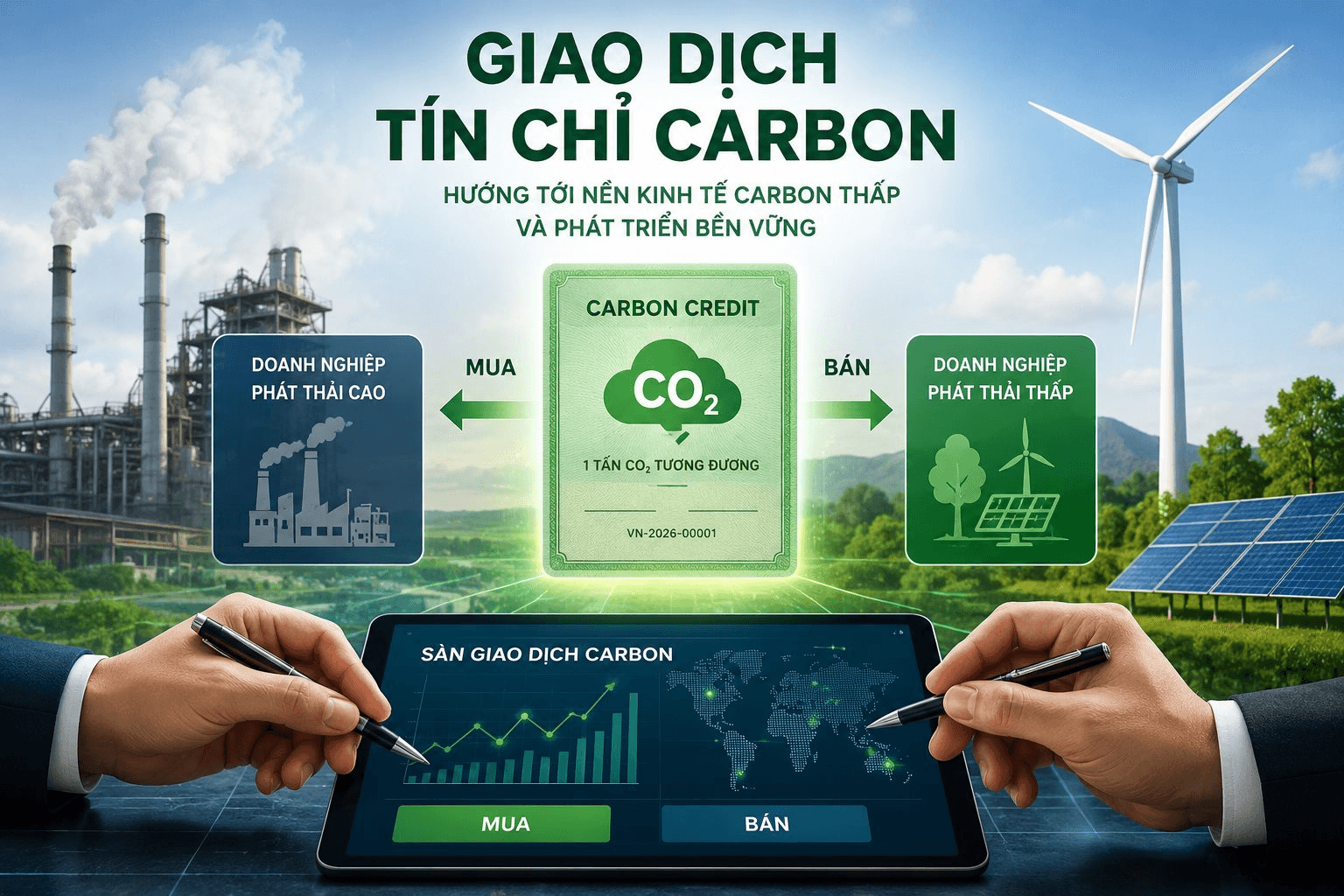
The centralized carbon exchange officially began operations at the Hanoi Stock Exchange (HNX) on June 29, 2026, marking a new phase for Viet Nam’s carbon market, as its institutional framework begins to be tested through actual trading. But putting an exchange into operation does not mean that a fully functioning market has already emerged. The exchange will prove its value only when carbon commodities enter circulation, supply and demand genuinely meet, prices generate meaningful economic signals, and trading is underpinned by reliable institutional infrastructure.

Viet Nam is entering a new phase in the development and pilot operation of its domestic carbon market, bringing greenhouse gas emissions increasingly into economic decision-making. The creation of this new market is not simply about establishing a mechanism for trading emissions allowances and carbon credits. More fundamentally, it is about creating an economic signal for emissions that can encourage businesses to adopt new technologies, use resources more efficiently and invest in emissions reduction.