




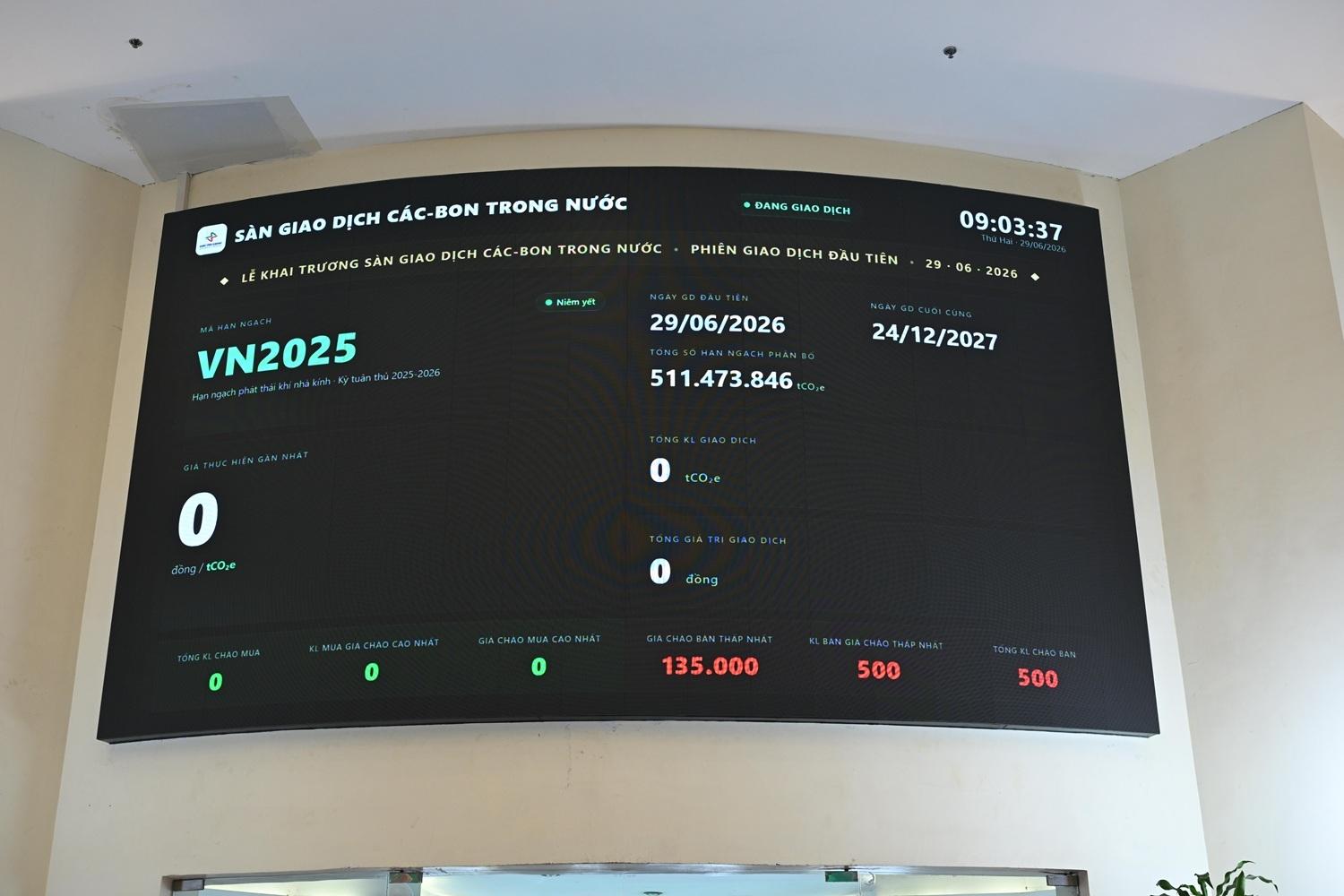
 The centralized carbon exchange officially began operations at the Hanoi Stock Exchange (HNX) on June 29, 2026, marking a new phase for Viet Nam’s carbon market, as its institutional framework begins to be tested through actual trading. But putting an exchange into operation does not mean that a fully functioning market has already emerged. The exchange will prove its value only when carbon commodities enter circulation, supply and demand genuinely meet, prices generate meaningful economic signals, and trading is underpinned by reliable institutional infrastructure.
An exchange alone does not make a market
The launch of the centralized carbon exchange marks an important institutional step. Greenhouse gas emission allowances and carbon credits now have a centralized trading venue, with rules governing eligible participants and trading arrangements. (1) This moves the market beyond an important threshold: instruments previously shaped primarily through policy and regulatory mechanisms are beginning to operate within a framework capable of generating actual market transactions.
But the question is no longer simply whether Viet Nam has an exchange. The more important question is whether the exchange can help create a functioning market.
The two are not the same. An exchange can provide the infrastructure and rules needed for transactions to take place. A market, however, begins to take shape only when there is sufficient supply of tradable commodities, participants willing to buy and sell, genuine demand for transactions, and enough trading activity to generate meaningful economic signals.
This distinction is particularly important for Viet Nam’s carbon market because its commodities do not emerge independently of climate policy. Greenhouse gas emission allowances are linked to the allocation of emission allowances, while carbon credits are linked to recognized emissions-reduction outcomes within the relevant regulatory framework. The law also defines different categories of eligible participants for trading these two types of commodities.(2)
As a result, the scale of the market cannot be created simply by expanding trading capacity. Behind the exchange must be an adequate supply of eligible commodities, a reliable system for validating them, and genuine economic demand for carbon commodities.
This is a defining feature of carbon markets. A carbon credit entering the market is not simply a unit to be bought and sold; it carries information about an emissions-reduction outcome and the rights associated with the use of that outcome under a particular mechanism. Likewise, an emission allowance has meaning only within an established system for allocating and managing emissions. The quality of the commodities is therefore a prerequisite for the quality of the market itself.
Early data indicate that the market is still laying its foundations. As of August 2026, the market had six trading members. Only an emission allowance had been listed for trading, while carbon credits had yet to appear on the centralized exchange.(1)
These figures are not, by themselves, sufficient to determine whether the market is succeeding or failing. They do, however, point to an important reality: the market is moving from the stage of building infrastructure to the more demanding task of establishing a flow of commodities and transactions.
This changes what should be expected of the exchange. The question is no longer simply whether the system operates reliably, but whether the exchange can gradually become a place where commodities, demand and prices converge.
A market may begin with only a handful of transactions. But to become an economic institution, it must go further: it must generate signals sufficiently credible for businesses to take carbon prices into account when assessing the cost of emissions, investing in technology and choosing emissions-reduction options.
That is the distinction between an exchange that is capable of operating and a market that is capable of functioning.
A market depends on the system behind every trade
A carbon transaction may appear on a trading system as nothing more than a commodity code, a price and a volume. Yet for that transaction to have real meaning, it must be supported by an institutional chain capable of validating the commodity, recording the transaction, settling payment, and updating the rights associated with the commodity.
Viet Nam’s domestic carbon market has been designed as an interconnected system involving entities allocated emission allowances or project owners generating carbon credits, the National Registry System, the Hanoi Stock Exchange, trading members, the securities depository and clearing system, and the settlement bank.(1) This interconnected structure turns an agreement between a buyer and a seller into a transaction that can be formally confirmed and completed.
The significance of the system does not lie in the number of institutions involved, but in its ability to ensure the consistency and integrity of information about the commodity throughout the transaction lifecycle.

This is particularly important for carbon commodities. An emission allowance or carbon credit cannot be accepted by the market simply because it appears on a trading screen. The system must ensure that the commodity being traded is valid, that its quantity is recorded accurately, that the entity holding the relevant rights is clearly identified, and that the outcome of the transaction is reflected consistently once settlement and transfer have been completed.
The capacity of the exchange should therefore not be judged solely by its ability to receive orders. The more meaningful test is whether the system can turn a transaction displayed on a trading screen into a properly grounded and verifiable change in the holder’s rights to the commodity.
Decree No. 29/2026/ND-CP established a dedicated legal framework for the domestic carbon exchange, providing the basis for organizing the market and defining the participation of relevant entities.(3) This reflects a broader reality: building a carbon market is not simply a matter of developing a technology platform; it requires an operational chain in which trading, custody and settlement are connected to the systems that govern the underlying commodities.
Trading members are an important link in that structure. Securities companies participating in the system must meet requirements relating to their operations, infrastructure and business processes, while also assuming responsibilities for providing trading services, monitoring trading activities and reporting.(1)
These functions become particularly important when the market is still new. Limited liquidity, a relatively small supply of commodities and limited experience among market participants mean that the quality of intermediation and the capacity to monitor transactions are themselves part of market confidence.
The same applies to technological infrastructure. The system currently operates through the HNX-WAN network and a remote order-entry channel using terminals provided by the exchange; an online trading channel has been identified as a future development.(1) Technology can create the capacity to trade. It cannot, by itself, establish the validity of a commodity, generate buying and selling demand, or substitute for confidence among market participants.
This is why the carbon exchange should be viewed as a component of market capacity, rather than merely as a technology platform. As the exchange develops, greater demands will be placed on the institutions supporting transactions: information must remain consistent, rights over commodities must be clear, settlement must be secure, and transfers must be verifiable.
A strong market begins with confidence that every transaction recorded on the exchange corresponds to a valid commodity and a corresponding right.
Without liquidity, prices struggle to become market signals
Viet Nam’s domestic carbon market currently uses negotiated trading. Participants agree on the commodity, price and volume before submitting the transaction to the system; the transaction is established once one party enters the order and the counterparty confirms it. Where no counterparty has yet been identified, an electronic negotiated-trading mechanism allows buy or sell offers to be posted to the system.(1)
This approach can help a new market begin generating transactions while the network of buyers and sellers is still developing. But it also raises a deeper question: do the prices being formed in the market adequately reflect supply and demand?
That question cannot be separated from liquidity.
A completed transaction does not automatically mean that its price has become a market signal. Prices become meaningful reference points when they emerge in an environment with a sufficient number of participants, adequate commodity supply and reasonably diverse buying and selling interests. When trading remains thin, a price may reflect the specific agreement reached by a small number of participants rather than the broader level of prices emerging from a deeper market.
This matters even more in a carbon market because price is not merely a way of valuing an individual transaction. Over time, carbon prices need to convey a sufficiently clear economic signal for businesses to weigh the cost of emissions against the cost of investing in emissions reductions.
When businesses begin to factor carbon prices into decisions about whether to change technologies, improve energy efficiency, switch fuels or invest in emissions-reduction solutions, prices begin to perform the role expected of a market signal.
Conversely, when transaction volumes are too low, prices risk becoming figures that reflect isolated trades rather than signals capable of influencing broader economic decisions.
Liquidity is therefore not merely a technical issue for exchange operators. It is one of the conditions required for carbon prices to become a policy instrument with meaningful economic impact.
At the current stage, negotiated trading can help the market generate its first transactions. But as commodity supply and the number of participants expand, the larger challenge will be to create an environment in which supply and demand can meet more frequently and prices can reflect market developments more effectively.
This is also why market development cannot stop at refining trading procedures. A procedure can define how an order is entered; only the market itself can determine whether there is sufficient supply, demand and confidence for those orders to appear regularly.
At that point, carbon prices may move beyond being transaction prices and begin to function as economic signals for emissions reduction.
The real test is whether the market can gain depth
The first trading session on June 29, 2026, was significant in a specific sense: it showed that the institutional design, commodities, trading system and supporting functions could be connected to produce an actual transaction. The VN2025 emission allowance was traded on the centralized carbon exchange, marking the start of centralized trading in Viet Nam’s domestic carbon market.(1)
But the first trading session cannot be the market’s final test.
The more important question is what happens after that milestone. Will the supply of commodities expand? Will carbon credits begin trading on the exchange? Will the number of participating entities increase? Will buying and selling become more frequent? And, most importantly, will trading develop enough depth to generate price signals that carry meaning for the wider economy?
These are the questions that will determine whether the market can move from operating a trading system to operating a market.
As of August 2026, the market had only one emission allowance listed for trading, while carbon credits had not yet been traded on the centralized exchange.(1) This indicates that considerable work remains ahead. At the same time, it should be understood in context: the market is still at an early stage, when the immediate tasks are to test the mechanism, refine operations, and gradually build both commodity supply and trading demand.
The issue, therefore, is not how many records the market can set in its first trading sessions. The more important question is what conditions are being created to enable trading to grow on a sustainable basis.
Commodity supply needs to expand, but with quality and validity. Participation needs to broaden, but with genuine demand. The trading system needs to be further developed, alongside strong management, custody and settlement arrangements. Most importantly, carbon prices need to gradually assume the role of an economic signal rather than remain simply the prices attached to individual transactions.
This is a process that cannot be completed by administrative decisions alone or by putting a technology system into operation. Markets grow when the economic incentives behind them grow.
The success of the carbon exchange, therefore, will not be determined by its launch date or its first trading session. It will be determined in the years ahead, when the exchange has enough commodities to support trading, enough participants to generate liquidity, and enough credibility for the prices formed there to begin influencing emissions-reduction decisions across the economy.
The exchange may be where the market first becomes visible. But only when commodities, demand and prices begin to move in a meaningful way can the market begin to create incentives for emissions reduction.
-----------------------------
References:
(1) Tran Trong Kien, Carbon trading system at the Hanoi Stock Exchange, presentation, Viet Nam Carbon Forum 2026: From policty to action, August 2026. The presentation covers the commodities traded, eligible participants, trading members, trading methods, the trading–custody–settlement model, trading infrastructure, and the results of the first trading session.
(2) Government of Viet Nam, Decree No. 06/2022/ND-CP of January 7, 2022, on the Mitigation of Greenhouse Gas Emissions and Protection of the Ozone Layer, as amended and supplemented by Decree No. 119/2025/ND-CP and Decree No. 83/2026/ND-CP.
(3) Government of Viet Nam, Decree No. 29/2026/ND-CP of January 19, 2026, on the Domestic Carbon Exchange.
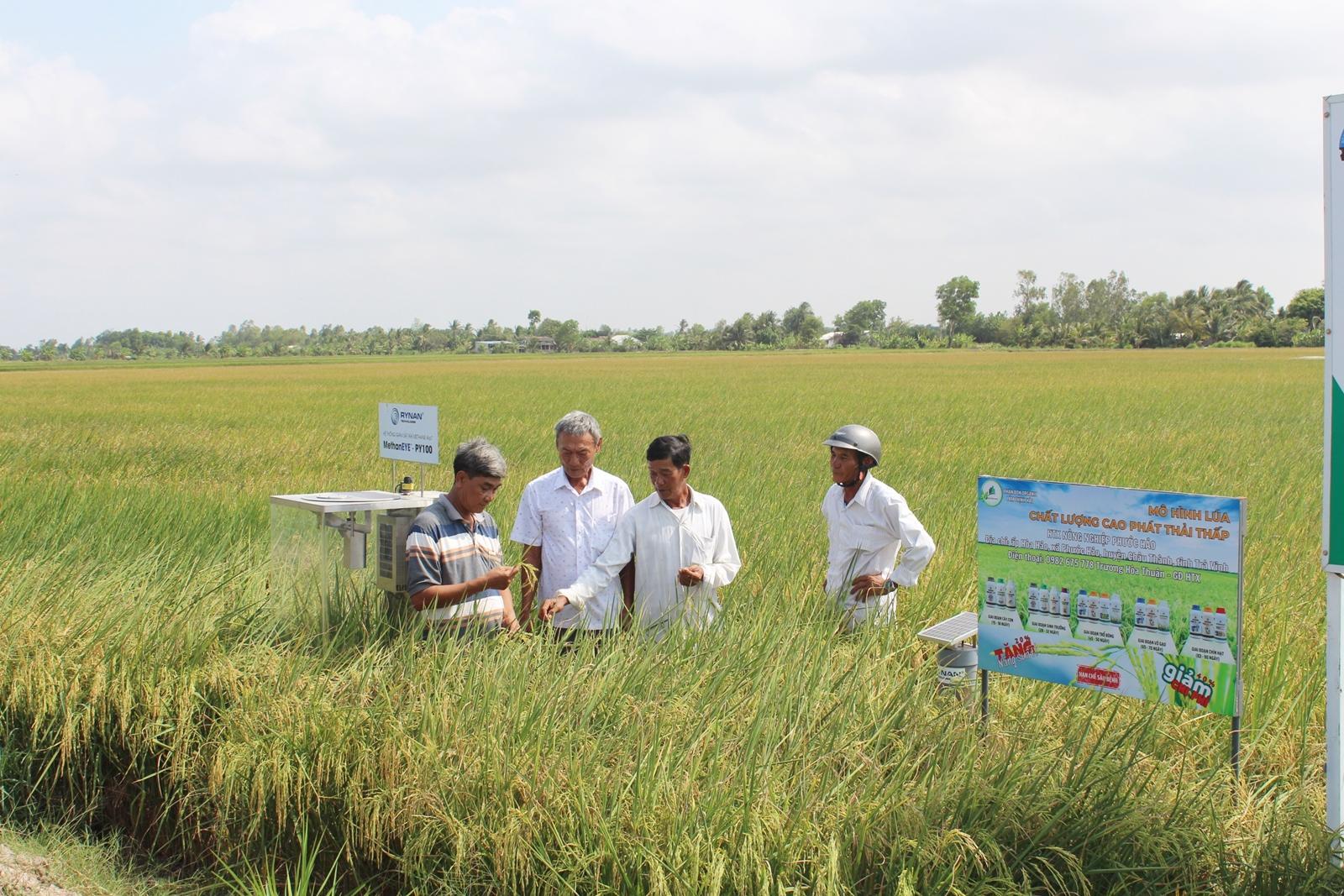
Viet Nam has significant potential to reduce methane emissions from rice production, but this potential does not automatically translate into carbon credits that can be sold in international markets. To generate real value, the rice value chain must overcome bottlenecks related to methodologies, water management, data, production organization, and benefit-sharing with farmers.

Decree No. 112/2026/ND-CP has established a legal framework for Viet Nam to engage in the international transfer of greenhouse gas emission reduction outcomes and carbon credits. But the distance between an environmentally beneficial activity and a credit eligible for international transfer remains considerable. To enter this market, businesses must overcome challenges involving technology, financing, data, additionality and project management capacity.
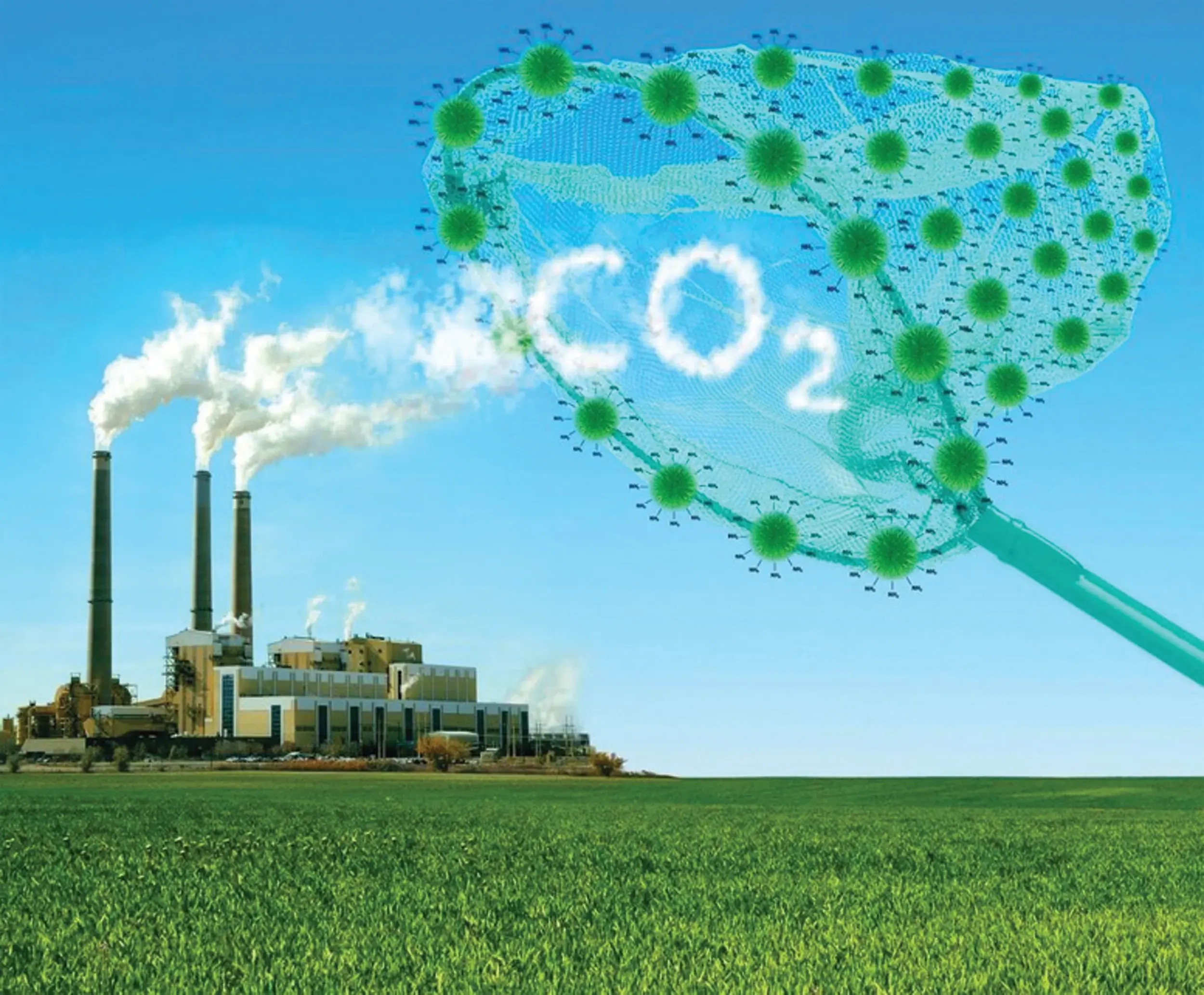
Carbon markets are becoming increasingly interconnected through cooperation mechanisms under the Paris Agreement and through voluntary carbon markets. As greenhouse gas emission mitigation outcomes can be transferred across borders, the quality, transparency, verifiability, and governance of those outcomes are becoming increasingly important. For Viet Nam, developing a domestic carbon market therefore cannot be separated from the question of how that market will connect with international flows of transactions and investment.

Viet Nam is entering a new phase in the development and pilot operation of its domestic carbon market, bringing greenhouse gas emissions increasingly into economic decision-making. The creation of this new market is not simply about establishing a mechanism for trading emissions allowances and carbon credits. More fundamentally, it is about creating an economic signal for emissions that can encourage businesses to adopt new technologies, use resources more efficiently and invest in emissions reduction.

Viet Nam’s carbon market is entering its pilot phase, with initial foundations established in terms of the legal framework, data, trading infrastructure, and regulatory mechanisms. At the Viet Nam Carbon Forum 2026, held in August 2026, policymakers, experts, and representatives of relevant organizations emphasized the need to further improve emissions data, trading infrastructure, corporate carbon management capacity, and mechanisms for establishing price signals. These elements are essential to laying the foundation for a transparent, well-functioning, and efficient carbon market.