



 Carbon markets are becoming increasingly interconnected through cooperation mechanisms under the Paris Agreement and through voluntary carbon markets. As greenhouse gas emission mitigation outcomes can be transferred across borders, the quality, transparency, verifiability, and governance of those outcomes are becoming increasingly important. For Viet Nam, developing a domestic carbon market therefore cannot be separated from the question of how that market will connect with international flows of transactions and investment.
Decree No. 112/2026/ND-CP on the international transfer of greenhouse gas emission mitigation outcomes and carbon credits has established a legal framework for three channels of international transfer: cooperation under Article 6.2, the Article 6.4 Mechanism, and independent carbon standards. (¹) But the legal framework is only a starting point. The broader challenge is how Viet Nam can deepen international integration, expand access to markets, capital, and technology, and at the same time ensure that international participation supports the country’s emissions mitigation objectives.
Carbon markets are no longer confined by national borders
If carbon markets were confined to individual economies, policy could focus primarily on developing market products, organizing trading, and regulating market participants. But as international cooperation mechanisms evolve, an emissions mitigation outcome generated in Viet Nam may be relevant to the mitigation objectives of a partner country. At the same time, domestic mitigation projects may require international capital, technology, and expertise from the outset.
Article 6 of the Paris Agreement provides a framework for countries to cooperate in achieving their emissions mitigation objectives. Article 6.2 provides a basis for bilateral and multilateral cooperation, while the Article 6.4 Mechanism establishes a centralized mechanism under the supervision of the United Nations Framework Convention on Climate Change (UNFCCC). Independent carbon standards provide another channel through which projects can access international markets. (¹)
Viet Nam is gradually bringing these channels within a unified regulatory framework. Decree No. 112/2026/ND-CP governs international transfers under Article 6.2, the Article 6.4 Mechanism, and independent carbon standards, while requiring relevant activities to be recorded in the National Registry System. (¹)
The significance lies not only in creating additional channels through which Viet Nam’s emissions mitigation outcomes can be transferred internationally. More importantly, this connectivity places the domestic market in an environment where standards, methodologies, data, and verifiability increasingly shape the value and credibility of those outcomes.
A project seeking access to international buyers or capital therefore needs to demonstrate more than the volume of emissions reduced. It must also provide a clear basis for how those outcomes were generated, how they are measured and verified, whether applicable additionality requirements are met, how they are recorded, and how rights over those outcomes are determined.
This shows how carbon markets are becoming increasingly linked to investment, technology, data, and cross-border climate governance, rather than serving simply as venues for carbon-credit transactions.
That connectivity also creates an additional avenue for mobilizing resources for Viet Nam’s emissions mitigation efforts. The International Finance Corporation’s (IFC) VN Enabling Decarbonization project focuses on creating an enabling environment for private investment in decarbonization. Its activities include supporting the legal and regulatory framework for voluntary carbon markets and Article 6 mechanisms, developing MRV regulations, formulating operating rules and guidance for a carbon exchange, and introducing a carbon market participation handbook to facilitate private-sector engagement. IFC says the integrated approach is intended to mobilize private capital for low-carbon solutions and improve the financial viability of participating entities by enabling additional revenue from carbon credits. (2)
International connectivity is therefore not something to be considered only after the domestic market has been fully developed. It is increasingly a consideration that needs to be incorporated into market design from the outset.
Integrating with global markets while advancing Viet Nam’s interests
When emissions mitigation outcomes are transferred internationally, the issue is not limited to the value of an individual transaction. An outcome transferred for use in another country may also affect how Viet Nam accounts for emissions mitigation toward its own climate objectives.
This is why the corresponding adjustment mechanism is important in the management of international transfers. It is intended to ensure that an emissions mitigation outcome transferred for use by another country is not also counted toward the mitigation objective of the transferring country. (¹)
Under Decree No. 112/2026/ND-CP, international transfer activities within its scope are recorded in the National Registry System. Where a corresponding adjustment applies, the transfer is considered in relation to Viet Nam’s emissions mitigation objectives. (¹)
The policy challenge, therefore, is not simply to expand the capacity for international transfers, but to determine how Viet Nam’s emissions mitigation resources can be used effectively through both domestic action and international cooperation.
This approach is reflected in the identification of priority categories of mitigation outcomes and in limits on international transfers in certain cases. According to the presentation on Decree No. 112, where a corresponding adjustment applies, the maximum transferable share is 90% for priority categories and 50% for encouraged categories, with the remainder available for domestic exchange. (¹)
These limits need to be viewed as part of the broader development of the carbon market. International transfers can help domestic projects gain access to additional capital, technology, and partners, while defining the share that may be transferred provides a basis for aligning market activity with Viet Nam’s national mitigation objectives.
This is particularly relevant to sectors requiring substantial capital and long investment horizons. Priority areas identified under the framework include clean energy, low-emissions transport, industrial emissions reduction, waste management, agriculture, and livestock. (¹)
An appropriate transfer mechanism can contribute to the economic value of such projects, while a unified management system provides a basis for tracking mitigation outcomes and maintaining consistency with national objectives.
The integration challenge must therefore be addressed through a policy environment that is transparent, clearly assigns responsibilities, and provides greater predictability. When procedures are clearly defined, data are managed systematically, and parties can anticipate their rights, obligations, and related costs, businesses will be better positioned to develop projects and engage with international partners.
Under the new framework, the Ministry of Agriculture and Environment is responsible for unified management of international transfer activities, issuing written approvals for international transfers, implementing corresponding adjustments, and operating the National Registry System. Sectoral ministries, the Ministry of Finance, the Ministry of Public Security, and provincial-level People’s Committees participate within their respective mandates. (¹)
This places international integration within a unified governance framework, creating a basis for expanding cooperation while maintaining national oversight of emissions mitigation outcomes.
At the same time, the domestic framework needs to be clear enough for international partners to understand, assess, and participate. This will be important in ensuring that Viet Nam’s long-term strength rests not only on its mitigation potential, but also on its ability to organize the market and build confidence among international partners.
This is ultimately a test of policy design: expanding international connectivity while maintaining Viet Nam’s capacity to manage and strategically use its emissions mitigation outcomes.
To participate internationally, Viet Nam must raise standards at home
The ability to connect with international markets will ultimately depend on the quality of the domestic market. The credibility of carbon credits abroad begins with how emissions mitigation outcomes are generated, measured, verified, and managed at home.
Decree No. 112/2026/ND-CP establishes requirements for independent carbon standards, including recognition of methodologies, transparency, additionality, avoidance of double counting, and the ability to share data with competent Vietnamese authorities. International transfer arrangements are also differentiated for management and recording purposes in the National Registry System. (¹)
These requirements extend beyond any individual transaction. They form part of the foundation for market quality as a whole. A carbon credit has value when the emissions mitigation outcome underlying it can be demonstrated clearly, consistently, and credibly.
Raising standards, therefore, means not only improving the quality of carbon credits but also improving the quality of the environment in which those credits are generated. This includes MRV capacity, the quality of validation and verification bodies, data management, and clarity over the rights and benefits of project participants.
The IFC’s presentation of its Handbook on Participation in Carbon Markets under Article 6 of the Paris Agreement and the Voluntary Carbon Market takes a similarly multidimensional approach to project preparation. According to Neeraj Joshi, project development needs to consider legal, commercial, technical, and stakeholder-related factors together. Issues such as additionality, sustainability, ownership of mitigation outcomes, and benefit-sharing should be addressed during project preparation. (3)
This suggests that international standards should not be viewed solely as requirements to be met when credits enter external markets. They can also serve as an impetus for improving market quality domestically, beginning at the project development stage.
Stronger MRV capacity, integrated data management, and clearer validation and verification procedures would put Vietnamese companies in a better position to meet the requirements of international partners. At the same time, regulators would have a stronger basis for monitoring mitigation outcomes and ensuring consistency in oversight.
This is also a key component of the IFC program in Viet Nam. Support for the legal framework for voluntary carbon markets and Article 6 mechanisms, MRV regulations, operating guidance for the carbon exchange, and a handbook for market participation all form part of a broader effort to create a more enabling environment for private-sector participation and investment in low-carbon solutions. (2)
International integration therefore does more than create a requirement to raise standards. It can also provide an impetus for Viet Nam to strengthen its domestic market.
Building a market that can attract international capital
Higher market quality provides the foundation for integration, but attracting capital requires a market in which investment decisions can be made with greater predictability.
For an emissions mitigation project, carbon-credit revenue is only one component of the overall financial equation. Investors must consider the scale and duration of investment, implementation costs, transaction costs, transfer requirements, and the prospects for generating revenue throughout the project life cycle.
This is also emphasized in the IFC’s presentation of its carbon market participation handbook. According to the presentation, financial viability assessments should take into account the expected carbon price, the share of outcomes that can be transferred, authorization and transaction costs, financial obligations, and other related costs. (3)
This means that market attractiveness depends not only on the price of a carbon credit, but also on whether businesses and investors can anticipate the full range of costs, obligations, and potential revenues associated with a project.
Predictability is therefore critical. Investors need clear information on procedures, institutional responsibilities, project requirements, the way mitigation outcomes are recorded, and the costs involved. A transparent management system can enable companies to prepare and implement projects with greater confidence.
Decree No. 112/2026/ND-CP establishes a division of responsibilities among the Ministry of Agriculture and Environment, sectoral ministries, the Ministry of Finance, the Ministry of Public Security, and provincial-level People’s Committees. The Ministry of Agriculture and Environment is responsible for unified management of international transfers, operation of the National Registry System, and relevant functions concerning transfer approvals and corresponding adjustments. (¹)
A clear governance structure therefore serves more than regulatory purposes. It also helps create an environment in which companies and investors can anticipate how a project will move through legal, technical, and market processes.
At a broader level, this is linked to the need to mobilize resources for the transition toward a low-carbon economy. The World Bank Group’s Vietnam Country Climate and Development Report identifies substantial investment needs for climate adaptation and emissions reduction and underscores the importance of private investment and external finance. It also highlights the role of carbon pricing instruments in supporting behavioral change and mobilizing resources for the transition. (4)
Against this backdrop, the carbon market should be viewed as part of the broader policy framework for financing the green transition. The value of a carbon credit lies not only in the final transaction, but also in its potential to improve the financial viability of projects that require substantial capital, new technologies, and long investment horizons.
This is where international connectivity can generate broader value for the domestic market. A transparent market, with high-quality products and clear rules, can do more than expand market access for carbon credits. It can also improve access to international capital, technology, and management expertise.
What makes a carbon market work?
Ultimately, the value of international integration should not be measured solely by the number of carbon credits transferred or the scale of international transactions. The more important question is whether the market can mobilize additional resources for emissions reduction, support investment, and contribute to the transformation of the economy.
That requires four elements to develop together: high-quality market products, genuine demand, reliable infrastructure and trust, and an economic incentive created by a meaningful carbon price.
Market products must be credible enough to be accepted internationally. Demand must be linked to concrete emissions reduction objectives. Infrastructure, data systems, and verification processes must be reliable enough to support transparent transactions. And carbon prices need, over time, to provide sufficient economic incentives for businesses to invest in emissions reduction solutions.
These are also the foundations for Viet Nam to participate more actively in international carbon markets while continuing to strengthen its domestic market. International integration is not simply about opening another channel for transactions with the outside world. It is also a process of strengthening institutions, improving market capacity, and mobilizing additional resources for low-carbon development.
When these foundations are developed together, the carbon market can better fulfill its broader role: turning the economic value of emissions reduction into resources for investment, technology, and the changes needed across the economy.
--------------------------------
References:
(1) Government of Viet Nam, Decree No. 112/2026/ND-CP dated April 1, 2026, on the International Transfer of Greenhouse Gas Emission Mitigation Outcomes and Carbon Credits, effective May 19, 2026; Nguyen Thanh Cong, Introduction to Decree No. 112/2026/ND-CP – Legal Framework for the International Transfer of Greenhouse Gas Emission Mitigation Outcomes and Carbon Credits of Viet Nam, Department of Climate Change, Ministry of Agriculture and Environment, August 2026. The presentation is cited for details on international transfer channels, corresponding adjustments, transfer limits, priority areas, and institutional responsibilities.
(2) International Finance Corporation (IFC), VN Enabling Decarbonization, Project No. 608608. The project supports development of Viet Nam’s carbon market framework, including the voluntary carbon market and Article 6 mechanisms, MRV regulations, operating rules and guidance for a carbon exchange, and a carbon market participation handbook for the private sector.
(3) Neeraj Joshi, International Finance Corporation (IFC), Handbook on Participation in Carbon Markets under Article 6 of the Paris Agreement and the Voluntary Carbon Market, presented in August 2026. References in this article to project assessment, additionality, sustainability, ownership, benefit-sharing, and financial considerations are based on Joshi’s presentation; the article does not purport to cite the full text of the handbook.
(4) World Bank Group, Vietnam – Country Climate and Development Report: Reconciling Economic Success with Climate Risks, 2022.
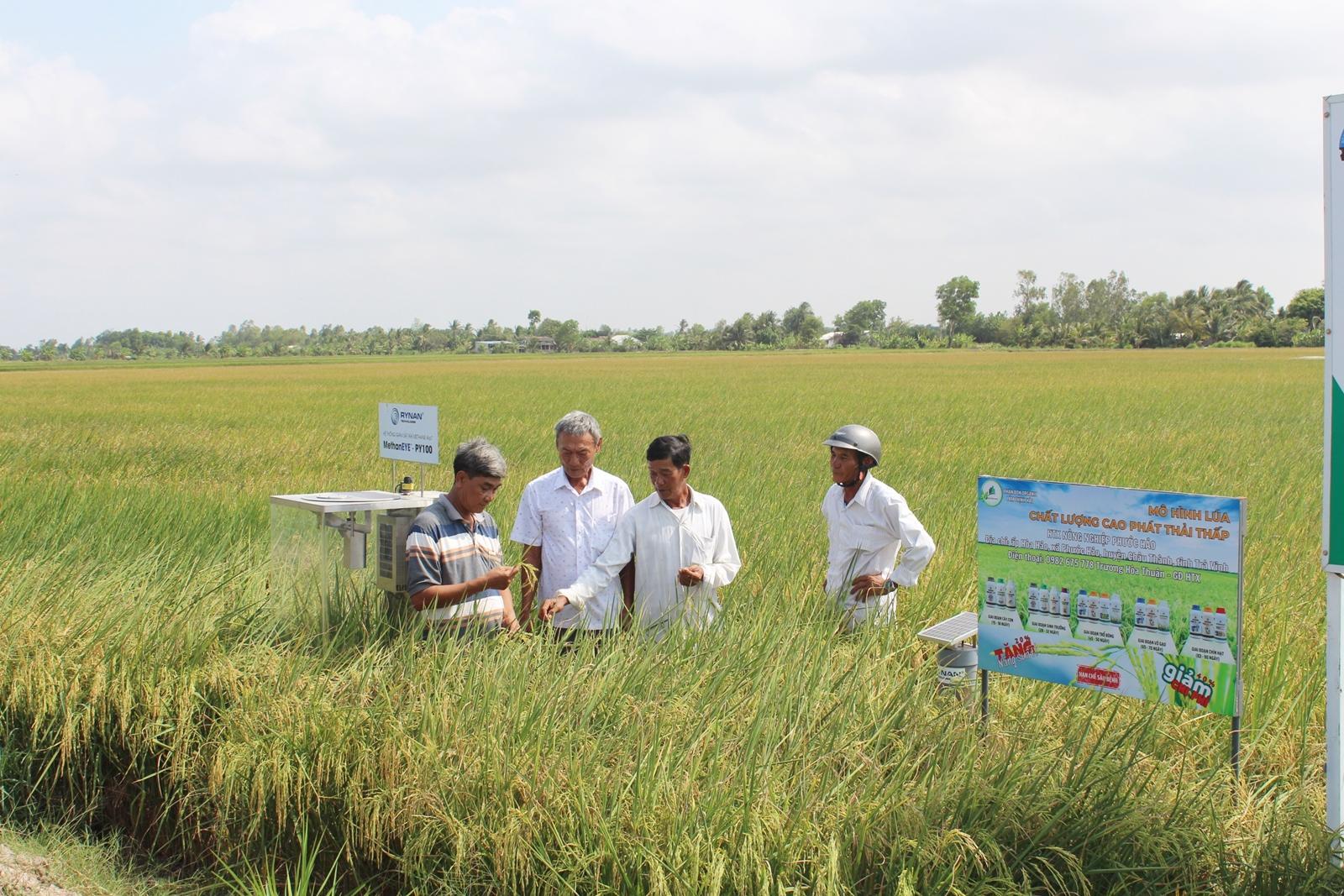
Viet Nam has significant potential to reduce methane emissions from rice production, but this potential does not automatically translate into carbon credits that can be sold in international markets. To generate real value, the rice value chain must overcome bottlenecks related to methodologies, water management, data, production organization, and benefit-sharing with farmers.

Decree No. 112/2026/ND-CP has established a legal framework for Viet Nam to engage in the international transfer of greenhouse gas emission reduction outcomes and carbon credits. But the distance between an environmentally beneficial activity and a credit eligible for international transfer remains considerable. To enter this market, businesses must overcome challenges involving technology, financing, data, additionality and project management capacity.
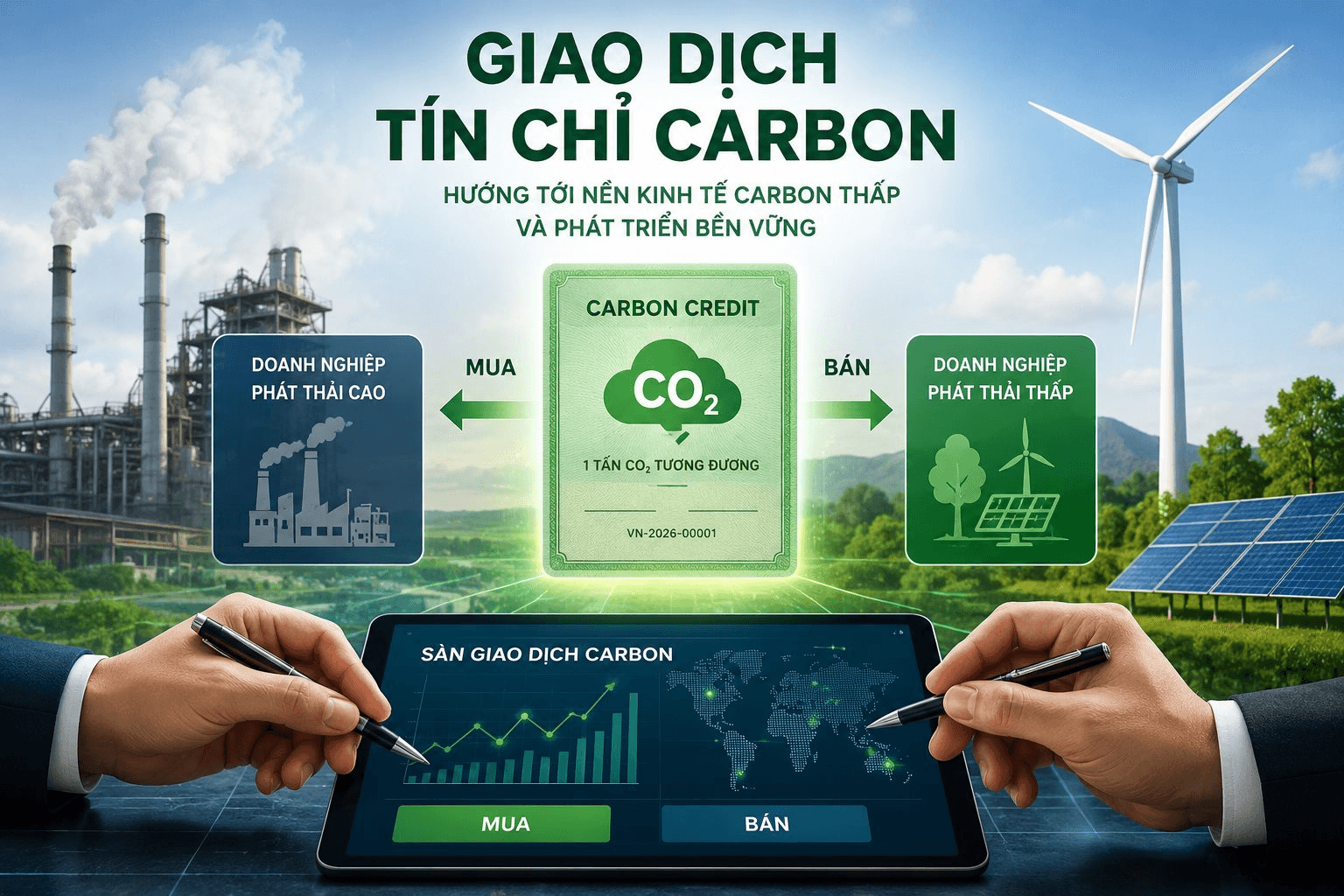
The centralized carbon exchange officially began operations at the Hanoi Stock Exchange (HNX) on June 29, 2026, marking a new phase for Viet Nam’s carbon market, as its institutional framework begins to be tested through actual trading. But putting an exchange into operation does not mean that a fully functioning market has already emerged. The exchange will prove its value only when carbon commodities enter circulation, supply and demand genuinely meet, prices generate meaningful economic signals, and trading is underpinned by reliable institutional infrastructure.

Viet Nam is entering a new phase in the development and pilot operation of its domestic carbon market, bringing greenhouse gas emissions increasingly into economic decision-making. The creation of this new market is not simply about establishing a mechanism for trading emissions allowances and carbon credits. More fundamentally, it is about creating an economic signal for emissions that can encourage businesses to adopt new technologies, use resources more efficiently and invest in emissions reduction.

Viet Nam’s carbon market is entering its pilot phase, with initial foundations established in terms of the legal framework, data, trading infrastructure, and regulatory mechanisms. At the Viet Nam Carbon Forum 2026, held in August 2026, policymakers, experts, and representatives of relevant organizations emphasized the need to further improve emissions data, trading infrastructure, corporate carbon management capacity, and mechanisms for establishing price signals. These elements are essential to laying the foundation for a transparent, well-functioning, and efficient carbon market.