




 Viet Nam is entering a new phase in the development and pilot operation of its domestic carbon market, bringing greenhouse gas emissions increasingly into economic decision-making. The creation of this new market is not simply about establishing a mechanism for trading emissions allowances and carbon credits. More fundamentally, it is about creating an economic signal for emissions that can encourage businesses to adopt new technologies, use resources more efficiently and invest in emissions reduction.
The key policy question, therefore, is not simply how to facilitate transactions involving one tonne of CO₂ equivalent, but how to ensure that a tonne of emissions carries a real cost and that a tonne of emissions reduced creates real value. This is why the carbon market must be viewed as part of a broader carbon-pricing framework that links emissions-reduction objectives with the transition to a new growth model.

Carbon pricing as a policy Instrument for emissions reduction
Greenhouse gas emissions are associated with a wide range of economic activities, yet the impacts they have on the climate, the environment and society are not always fully reflected in the cost of goods and services. When these costs are not adequately accounted for, production and investment decisions may fail to capture the broader costs borne by the economy and society.
Carbon pricing arises from precisely this challenge. In essence, it is a means of incorporating the cost of emissions into economic decision-making, thereby encouraging economic actors to choose lower-emission options. The main carbon-pricing instruments include carbon taxes and carbon-market mechanisms, including emissions trading systems.(1)
The significance of carbon pricing should therefore not be viewed simply in terms of imposing additional costs on businesses. More importantly, it changes how businesses assess costs in their production and investment decisions. Once emissions carry a price, a technology that consumes more energy and generates higher emissions must be assessed differently from an option that uses energy more efficiently and produces fewer emissions.
As a result, investment in emissions reduction is no longer merely a matter of environmental responsibility. It can become an economic decision, as the cost of investing in new technologies, fuels or production processes can be weighed against the costs a business may incur if it continues to operate with high emissions.
This is the fundamental significance of the price signal. Public policy does not directly prescribe which technology every business must adopt; rather, it creates an economic environment in which the cost of emissions becomes part of the decision-making process.
Around the world, carbon pricing is being adopted on an increasingly broad scale. According to the World Bank’s State and Trends of Carbon Pricing 2025, 80 direct carbon-pricing instruments in the form of carbon taxes and emissions trading systems are in operation, covering around 28% of global greenhouse gas emissions. These instruments generated more than US$100 billion in government revenue in 2024.(2)
These figures demonstrate that carbon pricing has become an important policy instrument for managing emissions. Yet its greatest value does not lie in revenue generation or market size. At its core is the process through which an element once treated as an “external cost” of economic activity is increasingly incorporated into the cost structure of production itself.
Once the cost of emissions is more clearly recognized, investment decisions are also assessed differently. An energy-efficient production line, a lower-emission energy source or an emissions-reduction solution can be evaluated not only in terms of upfront capital investment, but also in terms of future carbon-related costs that could be avoided.
For Viet Nam, this approach is particularly significant as emissions reduction has become a long-term requirement of the country’s development. The 2020 Law on Environmental Protection established a dedicated provision on the organization and development of the domestic carbon market, providing for the trading of greenhouse gas emissions allowances and carbon credits in accordance with Vietnamese law and the international treaties to which Vietnam is a party.(3)
Carbon pricing, therefore, is not a policy detached from economic development. Rather, it is a means of progressively translating emissions-reduction objectives into economic signals, ensuring that carbon considerations become part of business decisions on capital, technology and production.
Creating economic incentives through the carbon market
If carbon pricing creates a signal reflecting the cost of emissions, the carbon market provides a mechanism through which that signal can influence economic actors through supply, demand and the value assigned to carbon-market instruments.
Under Viet Nam’s market design, the carbon market has two basic categories of commodities: greenhouse gas emissions allowances and carbon credits. Allowances are allocated to facilities subject to emissions-management requirements, while carbon credits are linked to emissions reductions or removals generated by programs and projects that meet the requirements of the relevant mechanisms. Decision No. 232/QD-TTg approving the scheme for establishing and developing the carbon market in Viet Nam likewise identifies these two categories as fundamental components of the market.(4)
Although the two types of commodities differ in nature, they serve a common policy objective: creating economic incentives for emissions reduction.
For emissions allowances, the Government establishes an emissions limit and allocates allowances to facilities covered by the system. Businesses may operate within the amount of allowances allocated to them; if their emissions exceed the amount allocated, they must take measures to address the shortfall in accordance with applicable regulations. Conversely, when a business reduces emissions and uses fewer allowances than it has been allocated, the unused portion may become a valuable asset under the market mechanism.(1)
The important point is that every technology and production decision begins to incorporate another factor: the cost of carbon.
If investing in emissions reduction enables a business to lower allowance-related costs or reduce the need to acquire additional allowances, that investment can be assessed differently from the way it might have been in the past. The market mechanism does not prescribe a particular emissions-reduction solution; rather, it creates incentives for businesses to select options suited to their own circumstances and cost structures.
For carbon credits, the incentive works in the opposite direction. Projects involving reforestation, renewable energy, energy-efficiency improvements or other emissions-reduction and carbon-removal activities may generate carbon credits if they meet the requirements of the applicable mechanism, methodology and standard. In that case, emissions reductions can be translated into economic value.(1)
From a policy perspective, this is perhaps the most important feature of the carbon market: emissions can become a cost, while emissions reductions can become a source of value.
Such a mechanism creates incentives on both sides of the market. For large emitting facilities, emissions reductions can reduce the need to acquire additional allowances and lower compliance costs. For organizations, businesses and investors implementing emissions-reduction or carbon-removal projects, verified emissions reductions can become a source of value that helps mobilize finance and support reinvestment. The Department of Climate Change’s framework similarly places emitting businesses and carbon-credit developers within the same market ecosystem.(1)
The carbon market, therefore, is not simply a venue for trading a new commodity. Its significance lies in connecting the cost of emissions with the value of emissions reductions, thereby bringing environmental objectives closer to economic decision-making.
This, however, creates an important policy requirement: the price signal must be sufficiently meaningful to influence behavior. If the cost of emissions is too low, businesses may have little incentive to change technologies. If carbon-market instruments lack credibility, the market will struggle to establish meaningful prices. And if supply and demand are insufficient to generate genuine demand, the creation of the market may remain largely institutional rather than becoming a driver of economic transformation.
The success of the carbon market should therefore not be measured solely by the number of transactions. A more meaningful test is whether the market changes the way businesses make decisions and whether investment in emissions reduction becomes an economically competitive option.
That is when the carbon market can truly perform its role as a policy instrument: rather than simply requiring businesses to reduce emissions, the Government creates a mechanism that gives them economic incentives to identify and pursue emissions-reduction pathways suited to their circumstances.
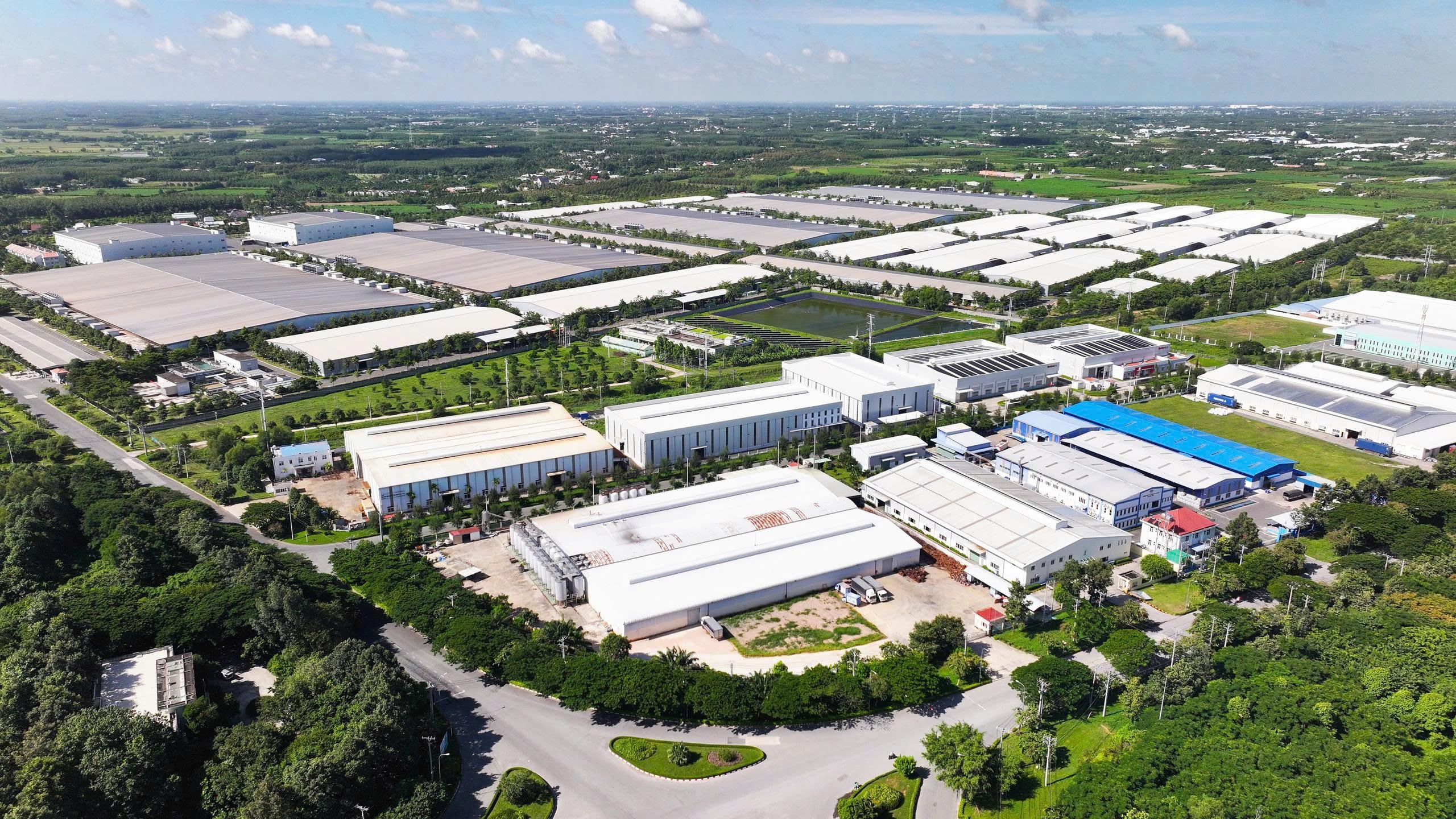
The carbon market and the transition to low-carbon growth
If the carbon market is viewed only as a tool for meeting emissions-reduction obligations, its broader policy significance can easily be overlooked.
The Scheme for establishing and developing the carbon market in Viet Nam identifies objectives that extend beyond emissions reduction, including supporting the implementation of Viet Nam’s NDC and net-zero target, achieving emissions reductions cost-effectively, developing a low-carbon economy, promoting the green transition, mobilizing financial resources, and enhancing competitiveness.(4)
This places the carbon market within a broader policy framework than environmental management alone.
An economy transitioning toward lower emissions requires substantial investment in technology, energy, infrastructure, and new modes of production. With resources always constrained, the challenge is not only how much emissions can be reduced, but also how reductions can be achieved and at what cost.
The carbon market can contribute to addressing this challenge by creating an economic signal that helps direct resources toward activities capable of delivering emissions reductions at an appropriate cost. When emissions reductions can generate economic value, the private sector has a stronger basis for participating in the transition rather than leaving the burden largely to public resources.
Conversely, carbon pricing also requires businesses to look beyond immediate production costs. An investment today in lower-emission technologies can help businesses prepare for increasingly stringent carbon-related requirements in the future. This is particularly important for an open economy deeply integrated into global supply chains.
Building a domestic carbon market can therefore also be understood as part of preparing businesses for changes in the wider business environment. As carbon considerations become increasingly relevant to investment decisions, production standards, and international trade, businesses that improve their emissions performance early may be better positioned to adapt to a low-carbon economy.
From this perspective, the value of the carbon market goes beyond creating a new trading channel. It lies in bringing the requirements of the green transition into the logic of economic activity. The Government can use market-based instruments alongside other regulatory tools to create additional incentives for businesses and investors to participate in emissions reduction.
At the same time, the establishment of a carbon market does not automatically produce a transition in the growth model. That outcome depends on whether carbon prices are capable of influencing investment decisions, whether emissions-reduction projects can mobilize resources, and whether the regulatory framework is sufficiently credible to generate meaningful market signals.
In other words, the ultimate objective is not simply to create another market, but to ensure that the carbon market becomes part of the broader transition of the economy.
Building the institutional foundations of the carbon market
Viet Nam is not starting from scratch. The 2020 Law on Environmental Protection established the legal basis for organizing and developing the domestic carbon market. Government Decree No. 06/2022/ND-CP subsequently provided detailed regulations on greenhouse gas emissions reduction and the organization and development of the carbon market, while Decree No. 119/2025/ND-CP amended and supplemented the framework for emissions management, allowance allocation, and the trading of emissions allowances and carbon credits.(3)(5)(6)
Decision No. 232/QD-TTg, issued on January 24, 2025, approved the Scheme for establishing and developing the carbon market in Viet Nam and set out a roadmap for completing the legal framework and market infrastructure, piloting the domestic carbon exchange through the end of 2028, and moving to official operation from 2029.(4)
Decree No. 29/2026/ND-CP on the domestic carbon exchange further regulates the registration, issuance of codes, transfer of ownership, custody, trading, and settlement of greenhouse gas emissions allowances and eligible carbon credits.(7)
Taken together, these measures show that the Government is progressively establishing the essential components of a new market: a legal framework, market commodities, participating entities, a registration system, and trading infrastructure.
But these are necessary conditions, not sufficient ones.
A market can be established through legislation and institutions, but it can only become effective if it generates credible economic signals. This requirement is particularly important for the carbon market because the commodities being traded are not conventional physical products. They represent either emissions rights or quantified emissions reductions or removals that must be measured, reported, verified, and recognized.
The challenge in the next stage, therefore, is not simply to continue refining regulations, but to ensure consistency between public administration and market activity; between measurement, reporting, and verification and the valuation of market instruments; and between compliance requirements and genuine demand from businesses.
This is also why it would be misleading to assume that establishing a carbon exchange will automatically create an effective market. An exchange is only one part of the market infrastructure. The value of the market will also depend on the quality of the commodities, genuine demand from buyers, transparency of information, and the confidence of market participants.
The objective of market development therefore cannot stop at completing institutional arrangements. The ultimate aim must be to establish a mechanism in which the carbon price is sufficiently clear and credible for businesses to recognize both the cost of emissions and the value of reducing them.
That is when the carbon market can move beyond being a policy framework on paper and become an instrument capable of influencing the real economy.
Once this institutional foundation is in place, the next question is no longer why the market is needed, but how it should be organized and operated so that price signals can emerge in a transparent, credible, and efficient manner.
That is the question at the heart of the next part of the series: the operation of Viet Nam’s carbon exchange.
----------------------------
References:
(1) Department of Climate Change, Ministry of Agriculture and Environment (2026), Carbon market in Viet Nam: Legal framework and operational roadmap, presentation by Nguyen Thanh Cong, Deputy Head of the Carbon Market Division, Viet Nam Carbon Forum 2026: From policty to action, August 2026.
(2) World Bank (2025), State and Trends of Carbon Pricing 2025, Washington, DC: World Bank.
(3) National Assembly of the Socialist Republic of Vietnam (2020), Law No. 72/2020/QH14 on Environmental Protection, November 17, 2020, Article 139.
(4) Prime Minister of the Government of Viet Nam (2025), Decision No. 232/QD-TTg approving the Scheme for Establishing and Developing the Carbon Market in Vietnam, January 24, 2025.
(5) Government of Viet Nam (2022), Decree No. 06/2022/ND-CP on Mitigation of Greenhouse Gas Emissions and Protection of the Ozone Layer, January 7, 2022.
(6) Government of Viet Nam (2025), Decree No. 119/2025/ND-CP amending and supplementing a number of articles of Decree No. 06/2022/ND-CP, June 9, 2025.
(7) Government of Viet Nam (2026), Decree No. 29/2026/ND-CP on the Domestic Carbon Exchange, January 19, 2026.
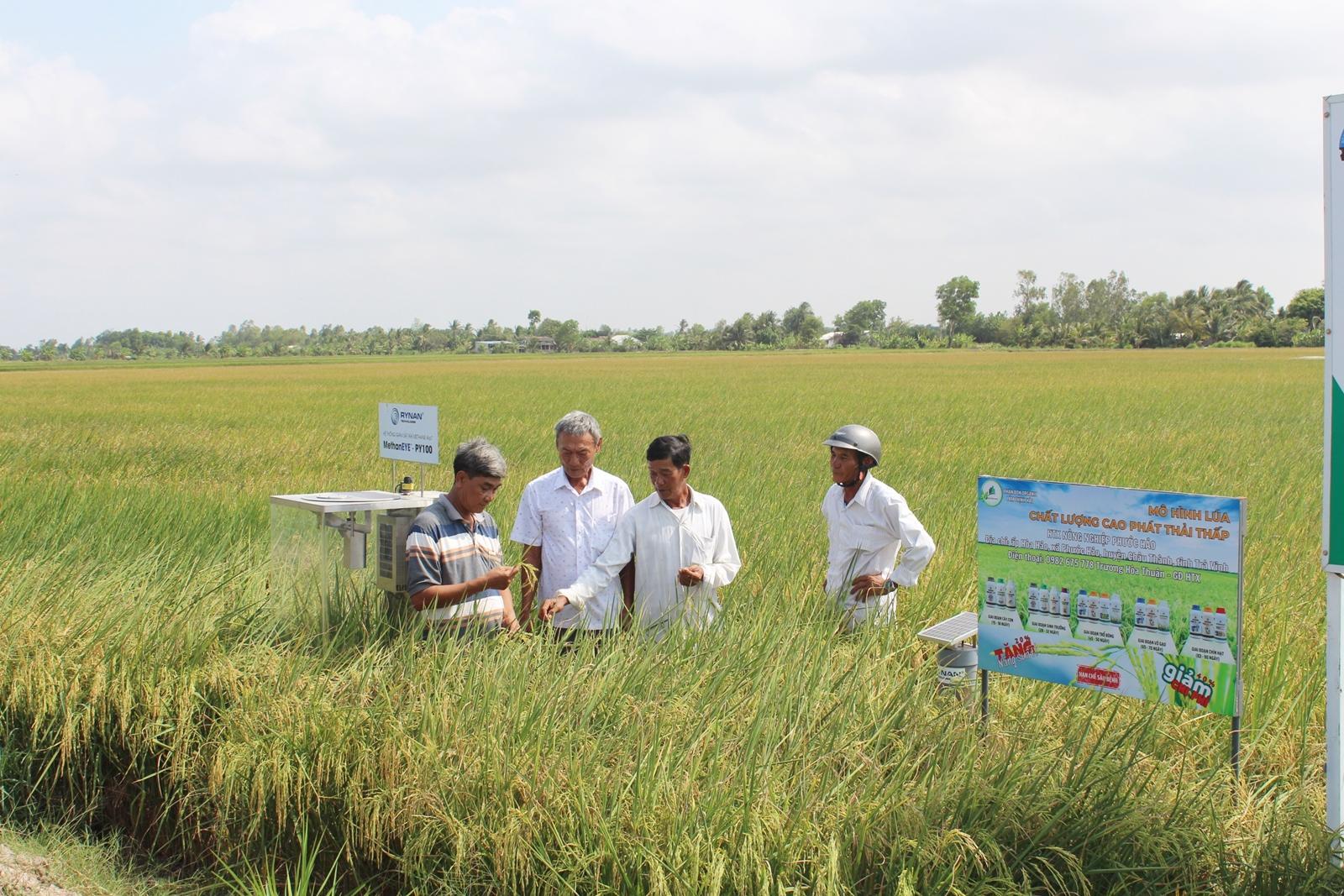
Viet Nam has significant potential to reduce methane emissions from rice production, but this potential does not automatically translate into carbon credits that can be sold in international markets. To generate real value, the rice value chain must overcome bottlenecks related to methodologies, water management, data, production organization, and benefit-sharing with farmers.

Decree No. 112/2026/ND-CP has established a legal framework for Viet Nam to engage in the international transfer of greenhouse gas emission reduction outcomes and carbon credits. But the distance between an environmentally beneficial activity and a credit eligible for international transfer remains considerable. To enter this market, businesses must overcome challenges involving technology, financing, data, additionality and project management capacity.
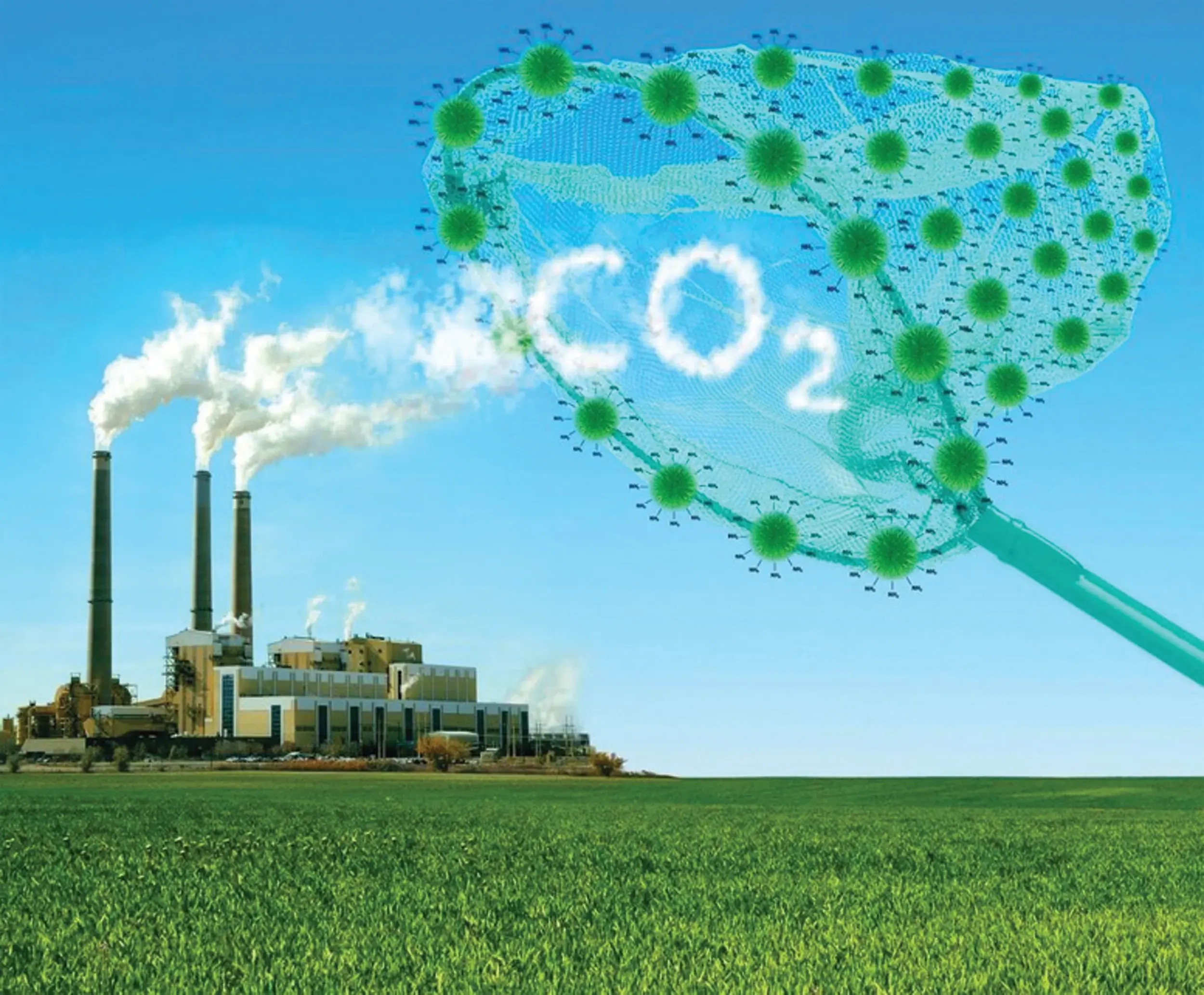
Carbon markets are becoming increasingly interconnected through cooperation mechanisms under the Paris Agreement and through voluntary carbon markets. As greenhouse gas emission mitigation outcomes can be transferred across borders, the quality, transparency, verifiability, and governance of those outcomes are becoming increasingly important. For Viet Nam, developing a domestic carbon market therefore cannot be separated from the question of how that market will connect with international flows of transactions and investment.
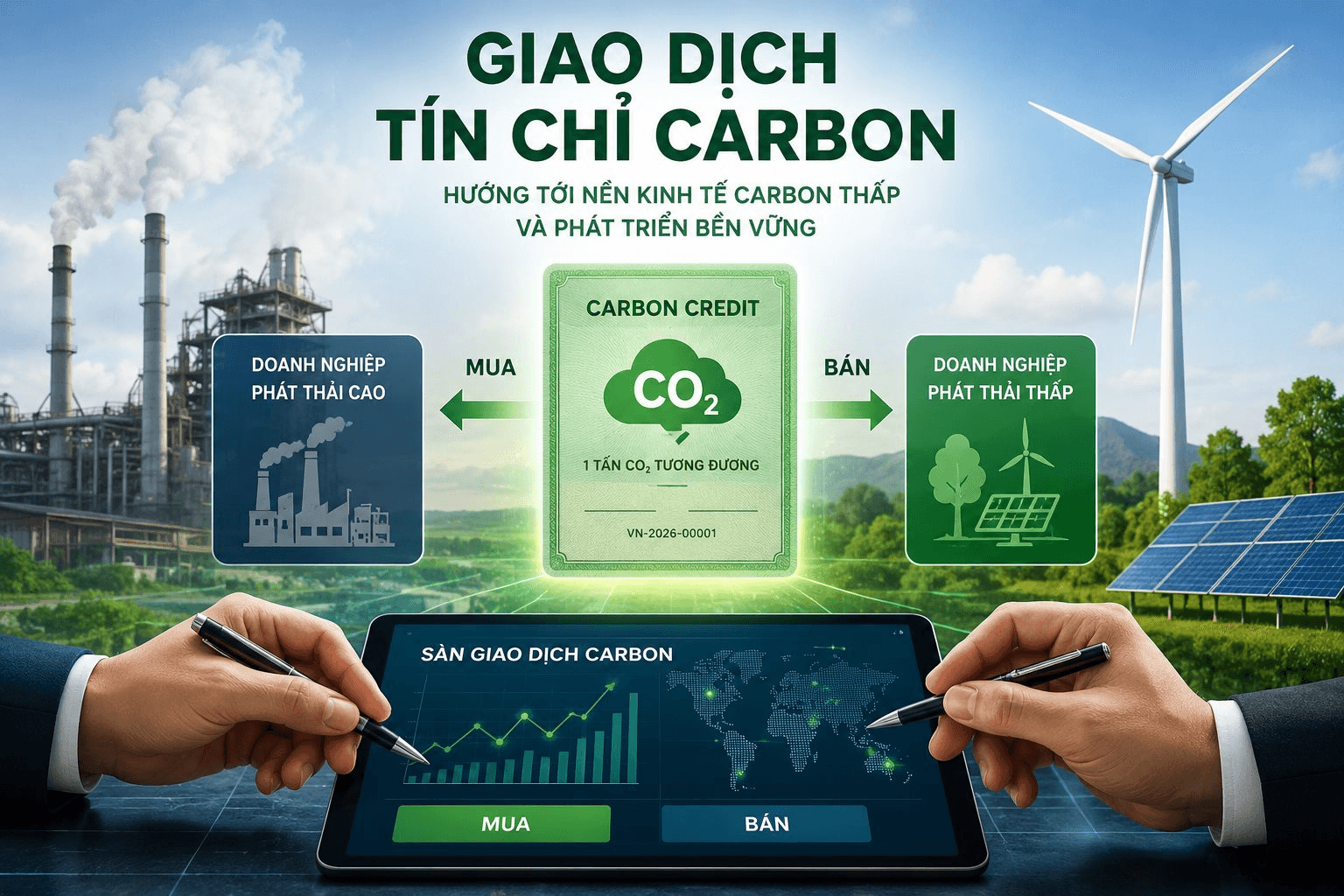
The centralized carbon exchange officially began operations at the Hanoi Stock Exchange (HNX) on June 29, 2026, marking a new phase for Viet Nam’s carbon market, as its institutional framework begins to be tested through actual trading. But putting an exchange into operation does not mean that a fully functioning market has already emerged. The exchange will prove its value only when carbon commodities enter circulation, supply and demand genuinely meet, prices generate meaningful economic signals, and trading is underpinned by reliable institutional infrastructure.

Viet Nam’s carbon market is entering its pilot phase, with initial foundations established in terms of the legal framework, data, trading infrastructure, and regulatory mechanisms. At the Viet Nam Carbon Forum 2026, held in August 2026, policymakers, experts, and representatives of relevant organizations emphasized the need to further improve emissions data, trading infrastructure, corporate carbon management capacity, and mechanisms for establishing price signals. These elements are essential to laying the foundation for a transparent, well-functioning, and efficient carbon market.