



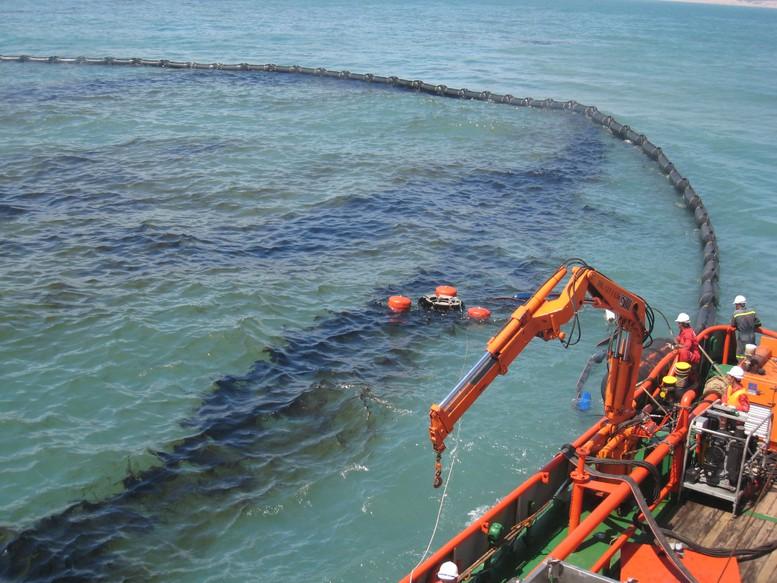
 When a traffic accident occurs, spilled fuel or chemicals can spread across the road, be washed by rainwater into drains, rivers and lakes, or seep deep into the soil and reach groundwater. In karst areas, fractures, sinkholes and underground cavities can carry pollutants rapidly to water abstraction points. The consequences extend beyond soil and water contamination: communities may lose access to clean water, public health may be threatened, and containment and remediation efforts can take years.
These are costly lessons that many countries have learned through environmental damage and threats to public health. When an accident occurs, rescuing people, protecting property and restoring traffic flows are immediate priorities. However, removing visible residues from the road is not enough. Pollutants that have seeped into the soil or been carried downstream can continue to cause harm. Effective prevention and response therefore depend heavily on the responsibilities, awareness and coordination of the relevant authorities.
At a road safety conference in Quang Ngai on October 30, 2026, the Viet Nam Environmental Incident Response Center highlighted environmental consequences of traffic accidents that are often overlooked. Building on that discussion, this article examines experience in Germany, France, Switzerland, the United States and the United Kingdom in preventing pollution along transport routes, offering lessons for Viet Nam to consider.
Germany uses road signs to protect water resources
The State Office for Geology, Raw Materials and Mining of Baden-Württemberg (LGRB) has noted that, in karst areas, pollutants can enter groundwater through natural pathways and travel rapidly toward water abstraction points. Some contaminants may remain trapped in fractures, rock cavities and infill materials before re-entering water flows at a later stage. This can prolong contamination even after the original spill has been contained. (1)
Assessing routes used to transport hazardous goods should therefore begin with several questions: What substances could be released if a vehicle overturns or leaks at a particular location? Where could rainwater carry them? Which water abstraction points lie downstream? Where could emergency responders intercept the flow? These questions directly link road safety to topography, hydrogeology, drainage infrastructure and emergency response capacity.
Under Germany's Road Traffic Regulations (Straßenverkehrs-Ordnung, StVO), Traffic Sign 269 prohibits vehicles carrying more than 20 liters of substances hazardous to water from entering a road section marked with the sign. The restriction has a specific scope: it identifies substances according to their potential to harm water resources, rather than focusing solely on fire and explosion risks. (2)
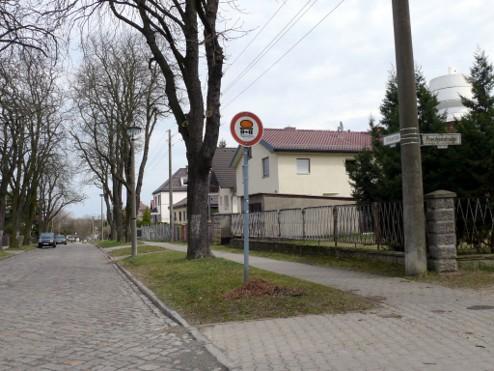
Sign 269 should be distinguished from Sign 354, a blue sign indicating a water protection area and warning drivers transporting substances hazardous to water to exercise particular caution. Guidance from the Bavarian Environment Agency identifies several factors that may warrant traffic restrictions, including routes near water abstraction facilities, vulnerable soil conditions and inadequate protective infrastructure along the road. Depending on the road section, authorities may consider installing Sign 269, providing alternative routes, imposing speed limits or introducing other restrictions. Decisions on the installation of Sign 269 should be coordinated with the authorities responsible for water protection. (3, 4)
France and Switzerland tailor restrictions to cargo and routes
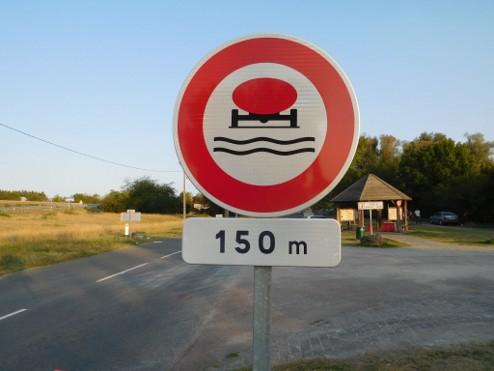
France uses Sign B18b to prohibit vehicles carrying specified categories of substances that may pollute water, in accordance with the classifications and threshold quantities set out in regulations governing the transport of dangerous goods. The restriction applies to vehicles required to display the relevant identification markings. Sign B18b is distinct from Sign B18a, which applies to explosive or flammable substances, and Sign B18c, which covers dangerous goods in general.(5)
Switzerland directly regulates road sections near protected water resources. Annex 2 of the Ordinance on the Transport of Dangerous Goods by Road (SDR) lists routes that vehicles carrying certain categories of goods, as defined under the European Agreement concerning the International Carriage of Dangerous Goods by Road (ADR), are prohibited from using.
These restrictions apply to specific road sections and categories of goods rather than to all hazardous-goods transport operations. The SDR also restricts the pumping or transfer of liquid fuels and other water-polluting liquids at locations where spills could enter surface water, groundwater or drainage systems.(6)
The United States and the United Kingdom factor emergency response into route planning
Under 49 CFR §397.71, when state or tribal authorities designate routes for non-radioactive hazardous materials, they must consider factors including water resources and environmentally sensitive areas, terrain and its influence on pollutant dispersion, the capacity to contain and clean up spills, and the location and capabilities of professional emergency response organizations. Alternative routes must also be assessed to demonstrate that a proposed route would be safer than the existing one. This requirement applies to route designation under the relevant authorities; it is not a blanket nationwide prohibition on hazardous-materials transport. (7)
The United Kingdom supplements transport safety requirements with equipment requirements for vehicles. For certain categories of goods covered by the ADR, the required equipment may include drain seals, collecting containers and shovels. Guidance from the Department for Transport emphasizes that drivers should not automatically be regarded as professional emergency responders. Where additional equipment is provided for initial response, users must be trained and should act only when it is safe and appropriate to do so. (8)
A key lesson from these examples is that route selection and emergency response arrangements must be considered together. An alternative route is worthwhile only if it reduces overall risks throughout the journey. Equipment carried on vehicles is effective only when it is appropriate for the cargo and users understand the limits of their responsibilities.
A transport corridor offers a starting point for Viet Nam
Viet Nam could begin by selecting a transport corridor regularly used to carry fuel or high-risk chemicals. The first step would be to develop an integrated map covering roads, surface water bodies, groundwater wells and abstraction points, water protection zones, stormwater inlets and outfalls, drainage systems, river crossings, residential areas and ecologically sensitive locations. In karst areas, identifying potential pollutant pathways requires input from hydrogeology specialists. Simply marking a fixed buffer distance on a map would not be sufficient.
The corridor could then be divided into sections for risk assessment and the selection of appropriate measures. Authorities would identify where alternative routes should be considered, where speed limits or additional protective infrastructure may be necessary, and where access points, spill containment materials and support stations should be established. Any proposed route change should be compared with available alternatives to ensure that risks are not simply transferred to other residential areas or water resources.
Emergency response capacity could be organized at three levels: vehicles carrying initial spill-control equipment appropriate to their cargo; supply points or response stations along the corridor; and professional response teams operating under clearly defined mobilization arrangements. Coordination mechanisms should link road management agencies with rescue and emergency services, environmental authorities, water supply operators and professional environmental incident response organizations.
Prevention must begin before an accident
International experience shows that identifying high-risk locations, coordinating with relevant technical agencies and installing restrictions or prohibitions on vehicles carrying specified types of goods do not necessarily require major investment. The essential tasks are to review transport routes, identify areas requiring protection, select appropriate road signs and provide alternative routes where necessary.
With coordination among transport and environmental authorities, water supply operators and technical experts, these measures can provide a practical and cost-effective approach to reducing environmental risks. Vietnam could adapt them to the conditions of individual transport corridors.
A further concern is the response to traffic accidents. On-site emergency teams often have to prioritize rescuing people, protecting property and clearing traffic obstructions. Visible pollutants left on the road may be removed, but substances that have seeped into the soil, entered groundwater or been carried by rainwater into rivers and lakes are not always adequately addressed.
At the same time, controls on polluting emissions and discharges from transport activities, particularly those involving waterway vessels and port operations, are not yet consistently enforced in accordance with existing regulations.
Viet Nam therefore needs to strengthen preventive measures along transport routes while ensuring the full implementation of environmental laws to protect the environment and public health.
--------------------------------------------------------
References
[1] Baden-Württemberg State Office for Geology, Raw Materials and Mining (LGRB), "Schutzfunktion der Grundwasserüberdeckung," LGRBwissen. The publication describes rapid pollutant pathways in karst areas and the potential for contamination to persist after the original source of pollution has ceased.
[2] Germany, Straßenverkehrs-Ordnung (StVO), Annex 2, Item 43, Traffic Sign 269: prohibition on using a marked road section when transporting more than 20 liters of substances hazardous to water.
[3] Germany, Allgemeine Verwaltungsvorschrift zur Straßenverkehrs-Ordnung (VwV-StVO), guidance on Traffic Sign 269 and coordination with water protection authorities.
[4] Bavarian Environment Agency (LfU), Merkblatt Nr. 1.2/6 – Beschilderung von Wasserschutzgebieten, March 2016, pp. 2–3.
[5] France, Arrêté du 24 novembre 1967 relatif à la signalisation des routes et des autoroutes, Article 4; Arrêté du 29 mai 2009 relatif aux transports de marchandises dangereuses par voies terrestres, Section 2.3.4.3.
[6] Switzerland, Ordonnance relative au transport des marchandises dangereuses par route (SDR), RS 741.621, Articles 12 and 13 and Annex 2; version effective January 1, 2025.
[7] United States, 49 CFR §397.71(b)(9), factors to be considered when states or tribal authorities designate routes for non-radioactive hazardous materials.
[8] UK Department for Transport, "ADR Instructions in Writing and Use of Electronic Documentation," sections on Equipment and Additional Equipment.
[9] Fridolin freudenfett (Peter Kuley), photograph of Traffic Sign 269 on Drössestraße, Berlin-Altglienicke, Wikimedia Commons, CC BY-SA 3.0.
[10] Cjp24, photograph of Traffic Sign B18b in Pouilly-sur-Loire, Wikimedia Commons, CC BY-SA 4.0.
Two days of technical discussions at Far Eastern Federal University in Russia highlighted the need to translate technologies and response plans into operational capability. The Viet Nam Environmental Incident Response Center (SOS) shared its experience in using a WebGIS digital mapping platform to link resource locations with equipment status and management responsibilities, helping maintain readiness through routine operations.
The 2026–2027 dry season is expected to bring increased risks of below-normal rainfall, high temperatures, drought, water shortages, and saltwater intrusion in several major agricultural production areas.
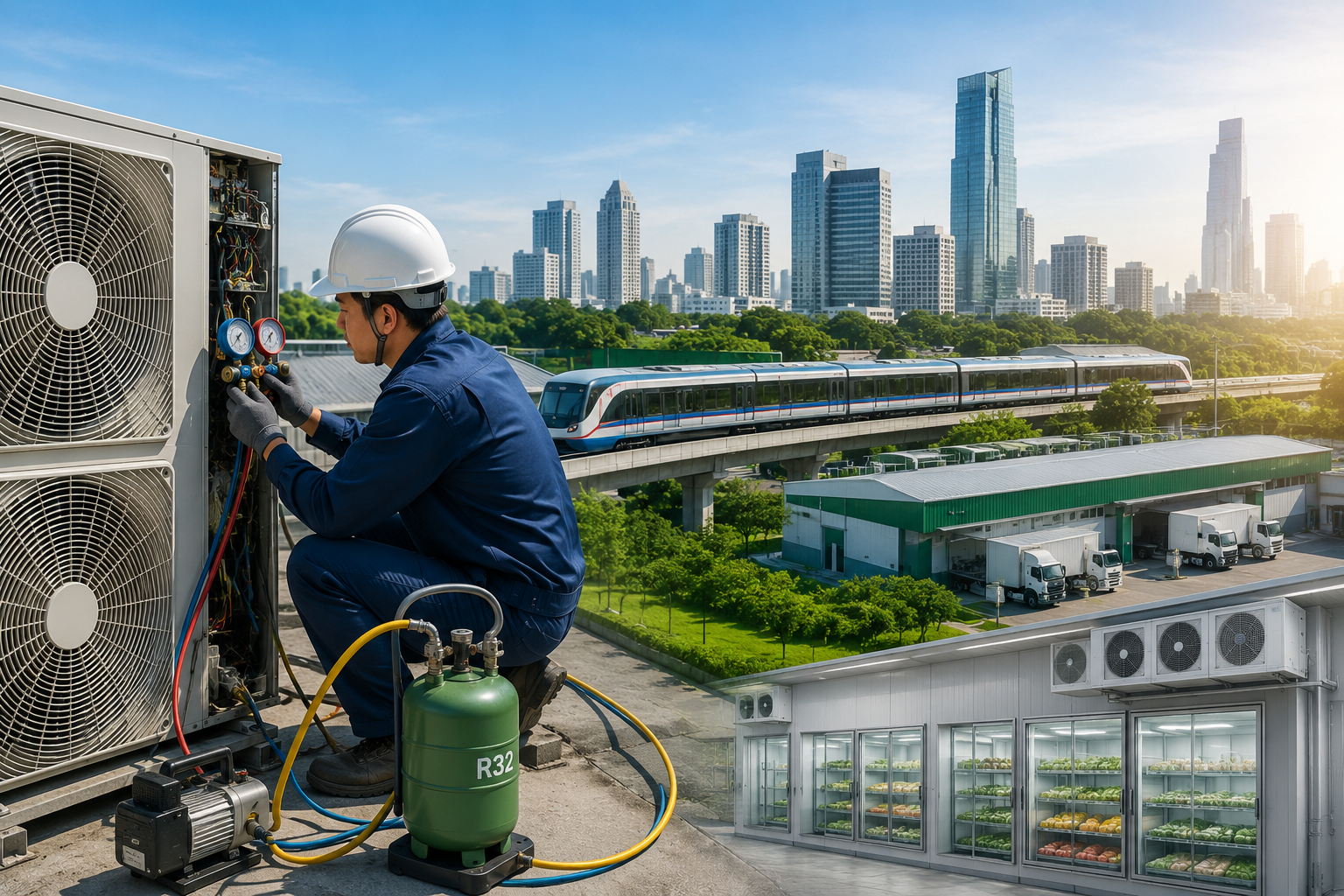
Experts, policymakers, representatives of international organizations, vocational education and training institutions, and businesses shared perspectives on Viet Nam’s roadmap for fulfilling international commitments, advancing technology transformation, developing green workforce capacity, and strengthening the management of controlled substances at the inception workshop of the sustainable management of controlled substances under the Montreal protocol project (SMS-MP) held in Hanoi on July 24.
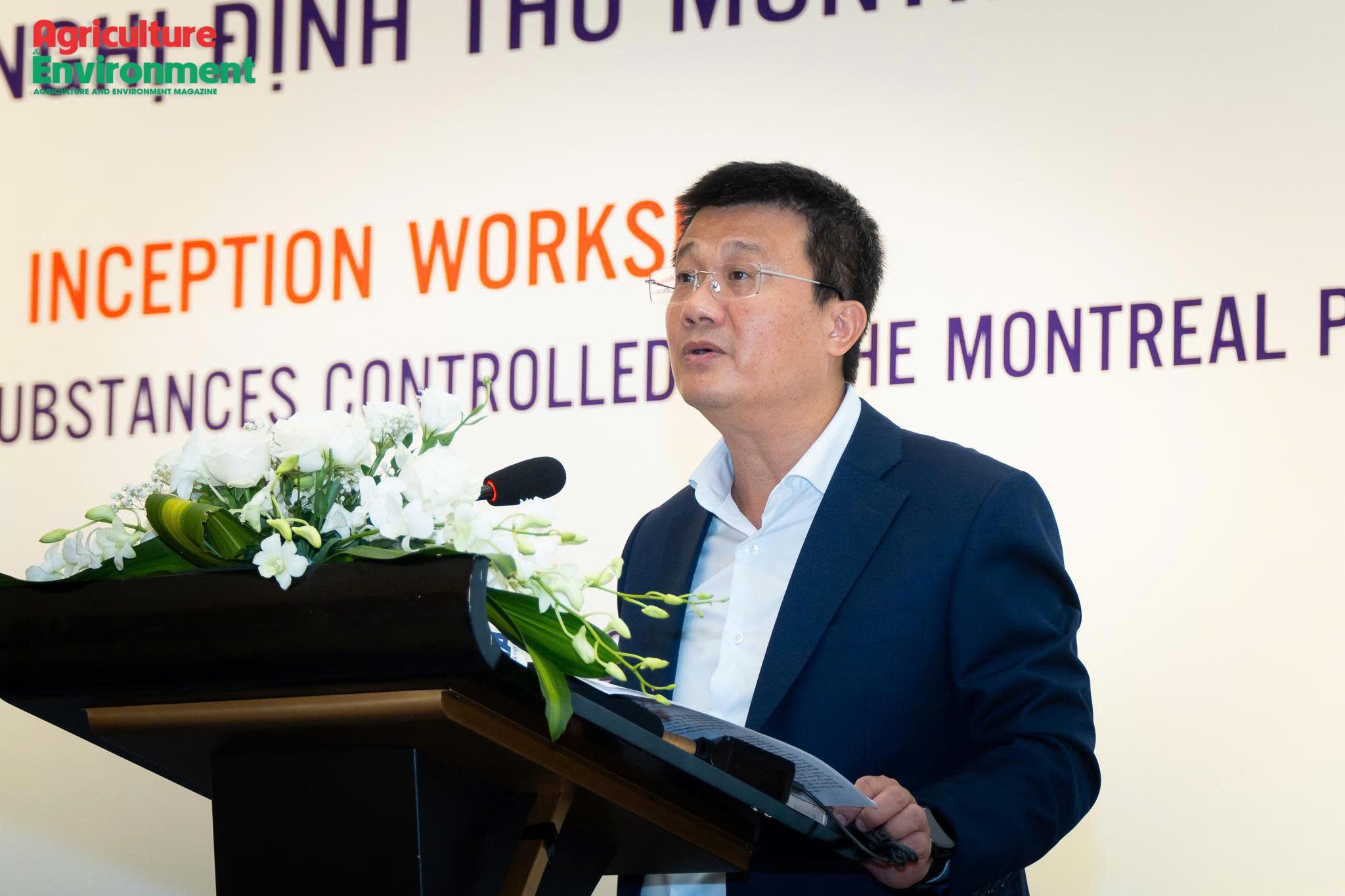
Climate-friendly, energy-efficient refrigeration technologies have become a key priority for Viet Nam as it implements its commitments under the Montreal protocol and the Kigali amendment. At the inception workshop on the sustainable management of Montreal protocol substances project (SMS-MP) on July 24, government agencies, international partners and businesses discussed coordinated measures on technology, policy and workforce development to support the country's transition.

During its participation in the 2026 Green Transformation Week (GX Week) in South Korea, a delegation from Viet Nam’s Ministry of Agriculture and Environment surveyed the Busan Resource Circulation Center (BRC) model. The experience highlights an approach to reintegrating waste into production chains, offering practical insights for Vietnam’s transition toward a circular economy.