



 Viet Nam has significant potential to reduce methane emissions from rice production, but this potential does not automatically translate into carbon credits that can be sold in international markets. To generate real value, the rice value chain must overcome bottlenecks related to methodologies, water management, data, production organization, and benefit-sharing with farmers.
From emission-reduction potential to carbon credits
Rice plays a particularly important role in food security, exports, and the livelihoods of millions of farming households in Vietnam. At the same time, flooded rice cultivation is a significant source of methane emissions. When rice fields remain continuously flooded, anaerobic conditions in the soil create an environment conducive to methane production by microorganisms. Changes in irrigation practices, reductions in seed and fertilizer use, improved straw management, and the adoption of appropriate farming practices can therefore generate three benefits simultaneously: lower emissions, reduced production costs, and improved production quality.
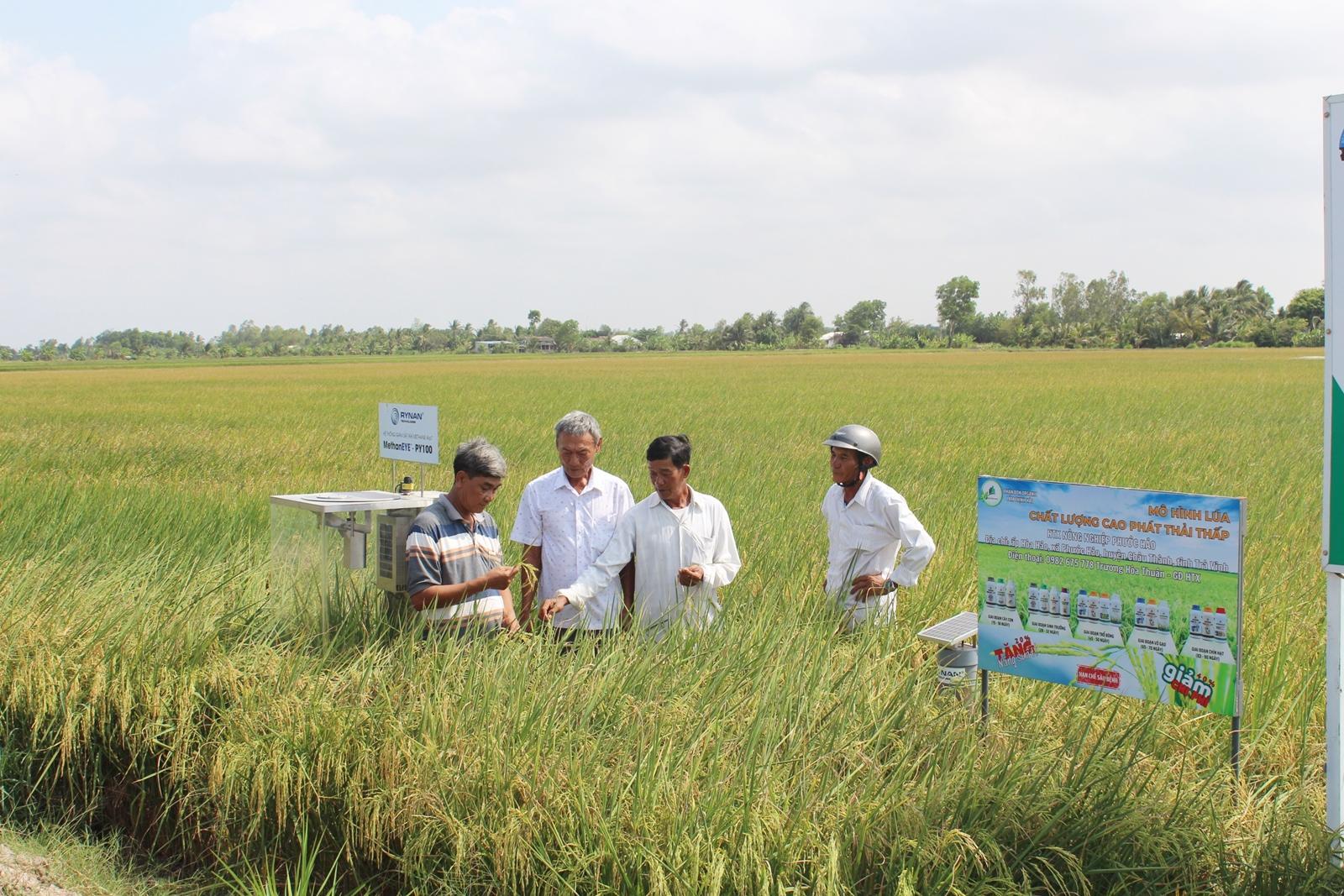
The project for sustainable development of one million hectares of high-quality, low-emission specialized rice cultivation associated with green growth in the Mekong Delta through 2030 has established a framework for reorganizing production. Its objective is not limited to reducing emissions, but also includes developing large-scale production areas, improving rice quality, reducing input costs, increasing farmers' incomes, and developing sustainable value chains.
The World Bank estimates that scaling up the one-million-hectare model could reduce emissions by approximately 10 million tonnes of CO2 equivalent by 2030. Information released by the Ministry of Agriculture and Environment in early 2026 indicated that the area participating in the project had exceeded 350,000 hectares by the end of 2025. These figures indicate that Viet Nam has a production-transformation program of sufficient scale to attract the attention of climate finance institutions and international buyers.
This distinction is important when discussing carbon credits from rice production. A low-emission farming practice can generate climate benefits, but to generate carbon credits, a project must define its project boundary, baseline, emission sources, monitoring methodology, and the amount of emission reductions that can be quantified and verified. The resulting reductions must then be validated, verified, registered, and issued under an appropriate mechanism. If international transfer is envisaged, the project must also meet Viet Nam's approval requirements under Decree No. 112/2026/ND-CP.
According to Bui Duc Minh, a doctoral researcher at Hanyang University in Seoul, Republic of Korea, Vietnam's large rice-growing area provides considerable potential for methane reduction. However, rice projects seeking registration and implementing measurement, reporting, and verification (MRV) systems must comply with applicable methodologies and international standards. In other words, the scale of production creates the potential, while data quality and the capacity to comply determine whether that potential can actually be converted into carbon credits.
Caution is also needed when estimating revenue by multiplying projected emission reductions by a reference carbon price. The actual volume of credits issued may be lower because of measurement uncertainties, risk discounts, buffer requirements, validation and verification costs, and benefit-sharing arrangements. Credit prices also vary according to the applicable standard, vintage, project quality, and buyer demand. Carbon credits should therefore be viewed as an additional source of revenue supporting the transition, rather than a promise of guaranteed profits.
Water, data, and the organization of production
Unlike many industrial projects with concentrated emission sources, rice projects are implemented across large numbers of fields and farming households. Differences in varieties, cropping calendars, fertilizer application, soil conditions, water supply and drainage capacity, and straw management create substantial variability. MRV systems must therefore be sufficiently rigorous to ensure accuracy while remaining cost-effective enough to avoid eroding most of the economic value of the credits.
Water management is the first condition. Alternate wetting and drying (AWD) can only be implemented when farmers have control over the timing of water supply and drainage. In practice, many households share irrigation infrastructure, irrigation schedules are organized at the area level, and drainage capacity depends on the location of individual fields. If one farmer follows the prescribed practices but neighboring fields or the canal system do not provide the necessary conditions, the resulting emission reductions may fall short of the project's design assumptions.
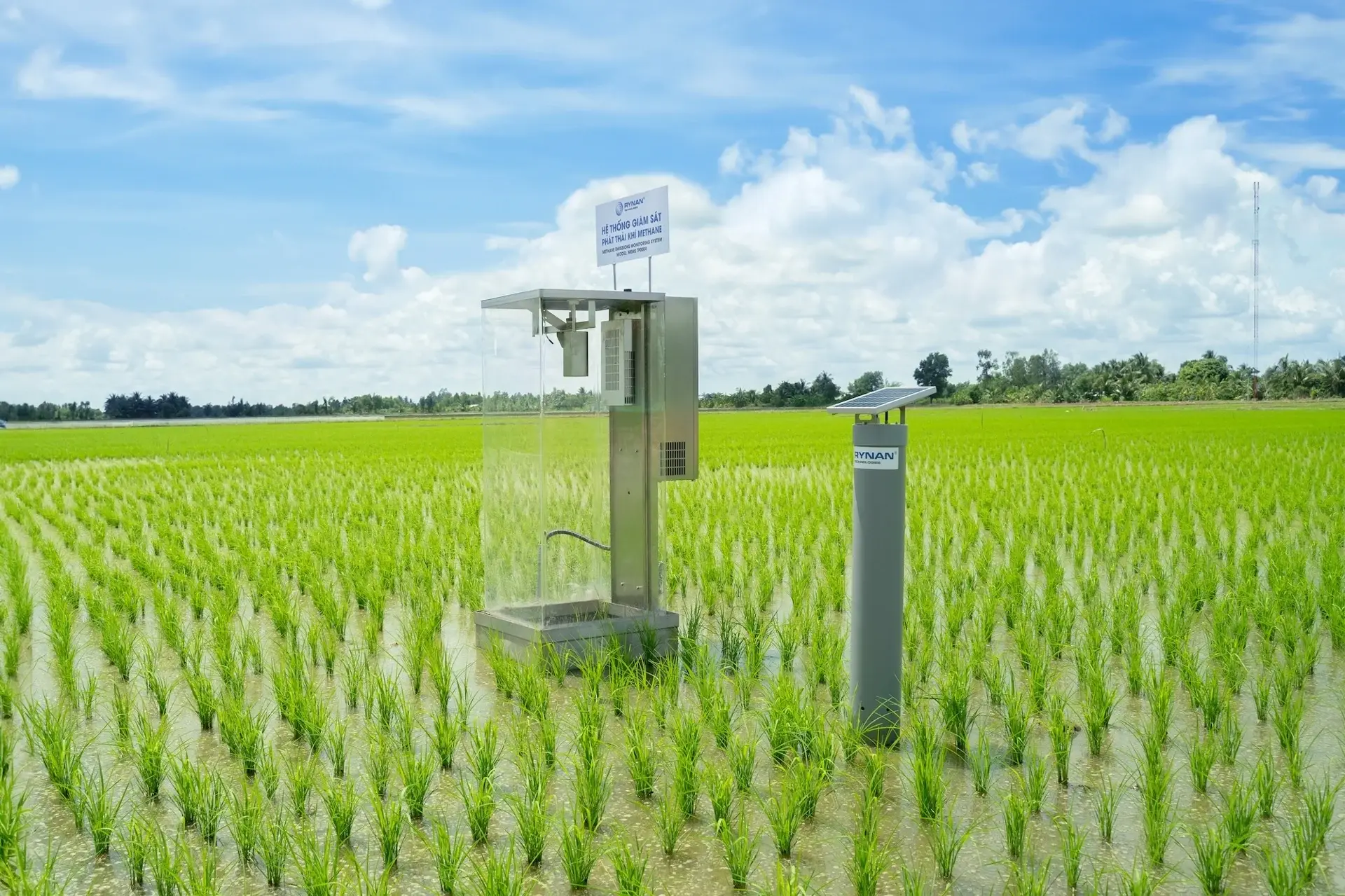
Data represents the next bottleneck. A program covering hundreds of thousands of hectares cannot rely indefinitely on fragmented manual record-keeping. The database must integrate information on individual fields, cropping seasons, varieties, agricultural inputs, water levels, straw management, yields, and abnormal changes. Digital tools, sensors, and remote sensing can provide support, but they cannot completely eliminate field surveys and cross-checking.
More importantly, data must be generated from the beginning of each cropping season according to a standardized procedure. If production has already been completed before records are collected for carbon-credit purposes, much of the evidence may no longer be reproducible. Enterprises or cooperatives need to determine in advance which indicators will be recorded by farmers, which will be measured using equipment, who will be responsible for verification, and how long the data will be retained. The integrity of a carbon credit begins with seemingly small records made in the field.
Bui Duc Minh noted that standards such as the Verified Carbon Standard (VCS) and Gold Standard establish methodologies for application across multiple countries rather than designing them specifically for Viet Nam. Viet Nam, meanwhile, has distinctive characteristics in terms of irrigation systems, land conditions, and production organization. Some international requirements may not yet be immediately achievable in certain areas. This suggests that the applicability of each methodology should be assessed according to local conditions, rather than selected simply because its technical specifications appear suitable.
The fragmented nature of production also creates an organizational challenge. Individual farmers cannot independently prepare project documentation, contract validation and verification services, and access international buyers. Cooperatives, value-chain enterprises, or project developers must aggregate production areas, provide guidance on farming practices, and manage data. However, if contracts lack transparency, farmers may implement most of the changes and bear production risks without knowing the credit price, deducted costs, or the share of benefits they will receive.
Rights to emission-reduction outcomes must therefore be clearly defined in value-chain agreements. Who owns the program? Who owns and is entitled to use the data? Who pays for MRV? Who is responsible if an individual household fails to comply? How will revenue be distributed? What happens if credits are not issued? These questions require clear answers. Farmers' consent cannot stop at signing up to participate in a model; it must be based on full information about their rights and obligations.
Carbon credits and the value of Vietnamese rice
For carbon credits from rice production to become commercially viable, Bui Duc Minh argues that Viet Nam needs a coordinated review not only of carbon-market regulations but also of agricultural, irrigation, land, and other relevant policies. This is a practical requirement because a carbon methodology may require changes to irrigation schedules, while implementation depends on irrigation infrastructure. A project may also require stable field-level data even as participating areas and farmers change from one cropping season to another.
Policy coordination must first ensure that emission-reduction objectives do not become detached from production objectives. Farmers will maintain new practices only when the economic returns and risks are sufficiently convincing. Models should therefore monitor emissions, yields, production costs, rice quality, labor requirements, and incomes simultaneously. If carbon targets are achieved only by increasing burdens or shifting risks onto producers, projects will be difficult to scale sustainably.
Mariam J. Sherman, World Bank Division Director for Viet Nam, Cambodia and Lao PDR, has described the one-million-hectare program as a flagship model for Viet Nam's green transition and as a potential reference for other low-emission agricultural initiatives. The value of the program should therefore not be reduced to the number of credits that may be sold. It also represents an opportunity to modernize production practices, improve the management of rice-growing areas, and strengthen the position of Vietnamese rice.
In the immediate term, priorities should include establishing a standardized MRV procedure that is easy to apply while maintaining sufficient reliability; investing in water-management infrastructure in areas with suitable conditions; developing verifiable digital databases; training cooperatives and technical personnel; and establishing transparent contract templates covering carbon rights and benefit-sharing. Projects should determine the applicable methodology and baseline data before implementation, rather than completing production first and then attempting to formalize the results retroactively.
For businesses, the challenge is not simply to purchase credits from farmers and resell them internationally. Enterprises must participate in developing production areas, secure markets for the rice, invest in technology, manage data, and assume responsibility for project integrity. For regulators, the task is to establish common standards, ensure transparency, and safeguard Viet Nam's remaining capacity to implement its NDC, while avoiding procedural costs that could undermine investment incentives.
A sound benefit-sharing mechanism must place farmers at the center. Those who directly change their farming practices should benefit not only from a share of carbon-credit revenue, but also from lower production costs, higher selling prices, technical services, and opportunities to participate in stable value chains. Carbon value is meaningful only when it contributes to improved livelihoods and strengthens the resilience of agricultural production to climate change.
Looking across the two parts of this series, Decree No. 112/2026/ND-CP has opened a pathway for Vietnamese enterprises and emission-reduction programs to engage in international cooperation. But the new legal framework is only the starting point. Part 1 showed that enterprises seeking to participate must master methodologies, MRV, additionality, financing, and rights to emission-reduction outcomes. Part 2 shows that in agriculture, these requirements are closely linked to irrigation infrastructure, fragmented production structures, and farmers' interests.
The overarching message of this series is that Viet Nam should not pursue the volume of carbon credits or expect an easy source of revenue. What needs to be built is the capacity to generate real emission reductions that are transparently measured, avoid double counting, and deliver equitable benefits. When data are sufficiently reliable, policies are well coordinated, enterprises have the necessary capacity, and farmers genuinely benefit, carbon credits can become a resource for the green transition while contributing to the higher value of Vietnamese agriculture in international markets.
Decree No. 112/2026/ND-CP has established a legal framework for Viet Nam to engage in the international transfer of greenhouse gas emission reduction outcomes and carbon credits. But the distance between an environmentally beneficial activity and a credit eligible for international transfer remains considerable. To enter this market, businesses must overcome challenges involving technology, financing, data, additionality and project management capacity.
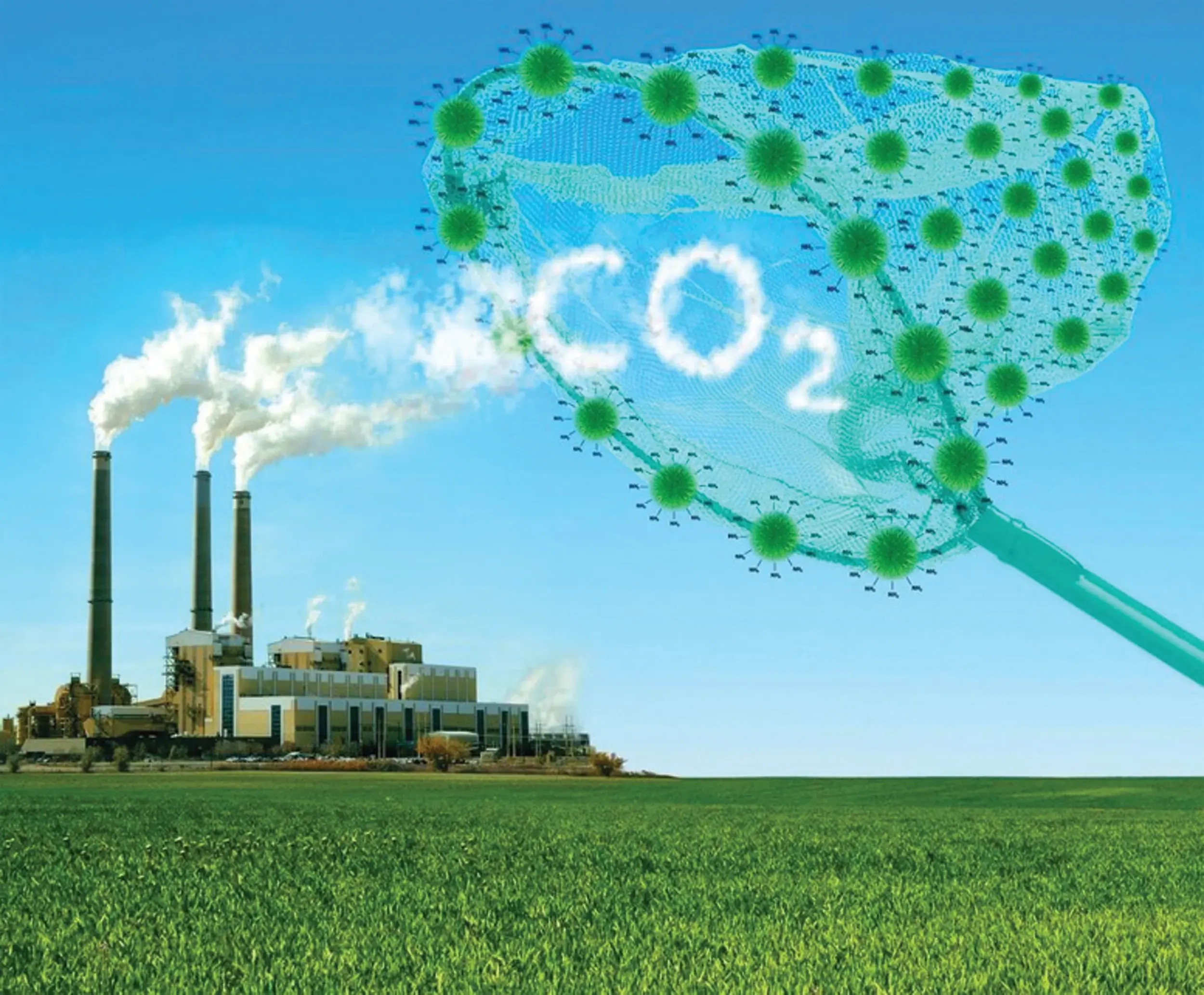
Carbon markets are becoming increasingly interconnected through cooperation mechanisms under the Paris Agreement and through voluntary carbon markets. As greenhouse gas emission mitigation outcomes can be transferred across borders, the quality, transparency, verifiability, and governance of those outcomes are becoming increasingly important. For Viet Nam, developing a domestic carbon market therefore cannot be separated from the question of how that market will connect with international flows of transactions and investment.
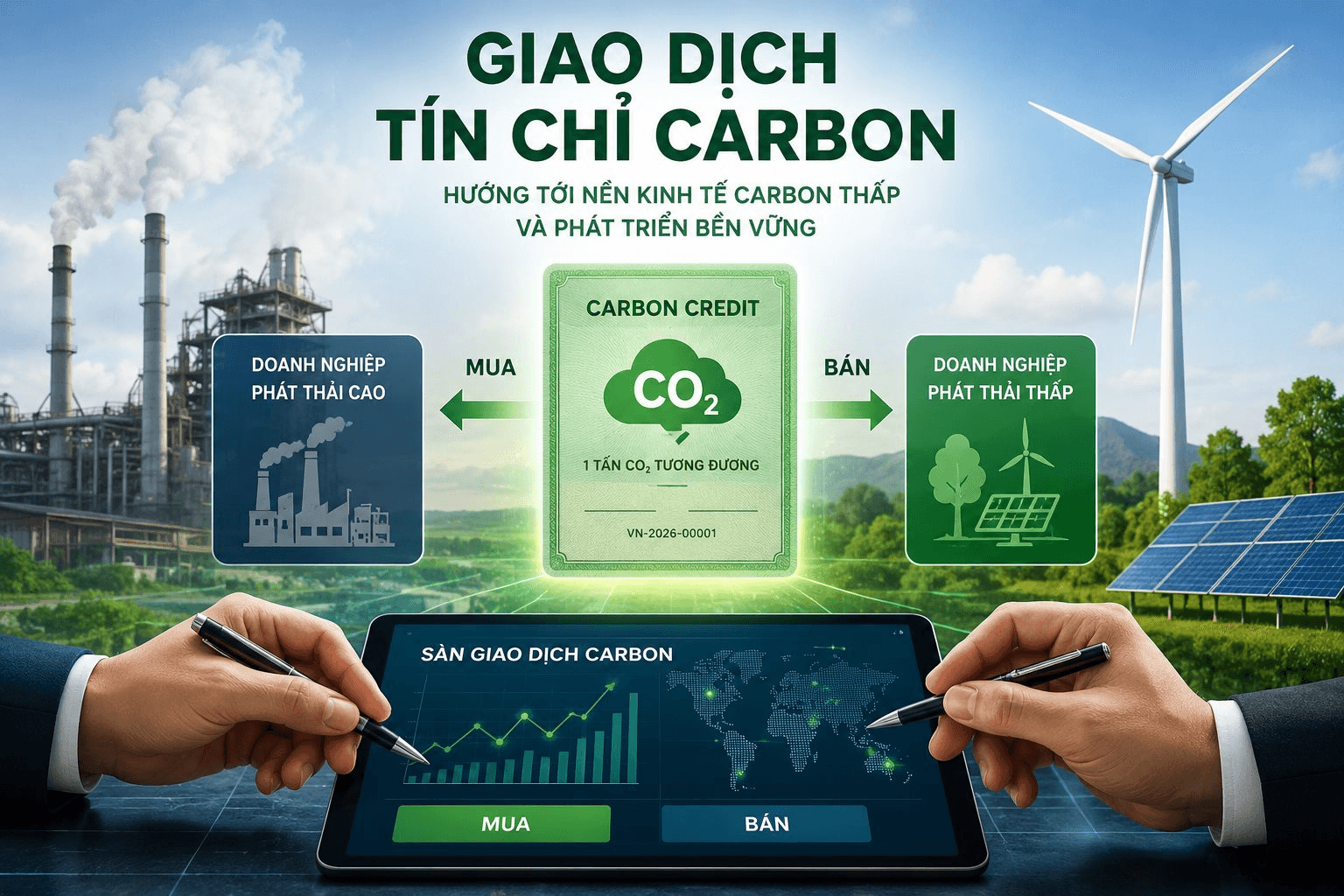
The centralized carbon exchange officially began operations at the Hanoi Stock Exchange (HNX) on June 29, 2026, marking a new phase for Viet Nam’s carbon market, as its institutional framework begins to be tested through actual trading. But putting an exchange into operation does not mean that a fully functioning market has already emerged. The exchange will prove its value only when carbon commodities enter circulation, supply and demand genuinely meet, prices generate meaningful economic signals, and trading is underpinned by reliable institutional infrastructure.
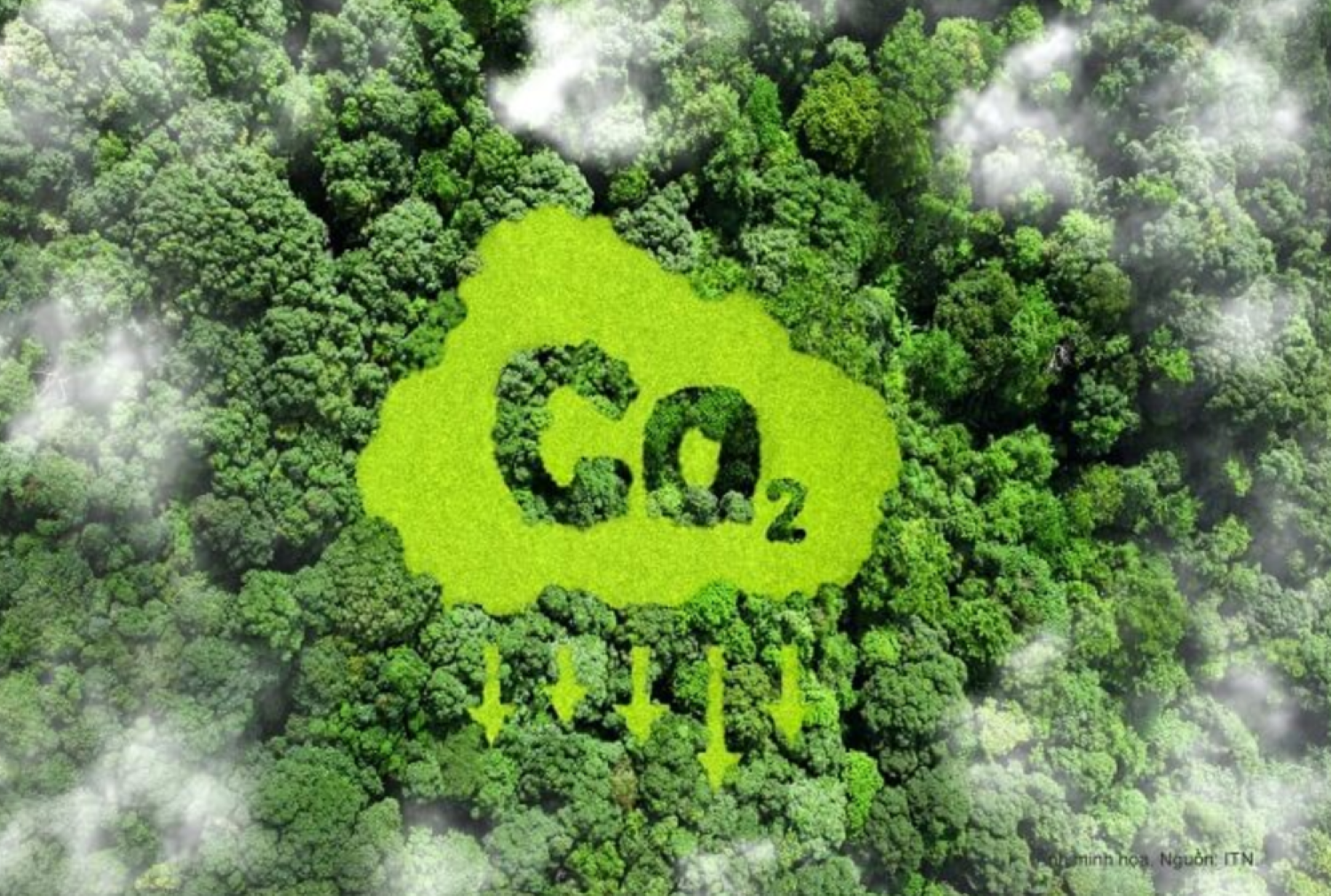
Viet Nam is entering a new phase in the development and pilot operation of its domestic carbon market, bringing greenhouse gas emissions increasingly into economic decision-making. The creation of this new market is not simply about establishing a mechanism for trading emissions allowances and carbon credits. More fundamentally, it is about creating an economic signal for emissions that can encourage businesses to adopt new technologies, use resources more efficiently and invest in emissions reduction.

Viet Nam’s carbon market is entering its pilot phase, with initial foundations established in terms of the legal framework, data, trading infrastructure, and regulatory mechanisms. At the Viet Nam Carbon Forum 2026, held in August 2026, policymakers, experts, and representatives of relevant organizations emphasized the need to further improve emissions data, trading infrastructure, corporate carbon management capacity, and mechanisms for establishing price signals. These elements are essential to laying the foundation for a transparent, well-functioning, and efficient carbon market.