



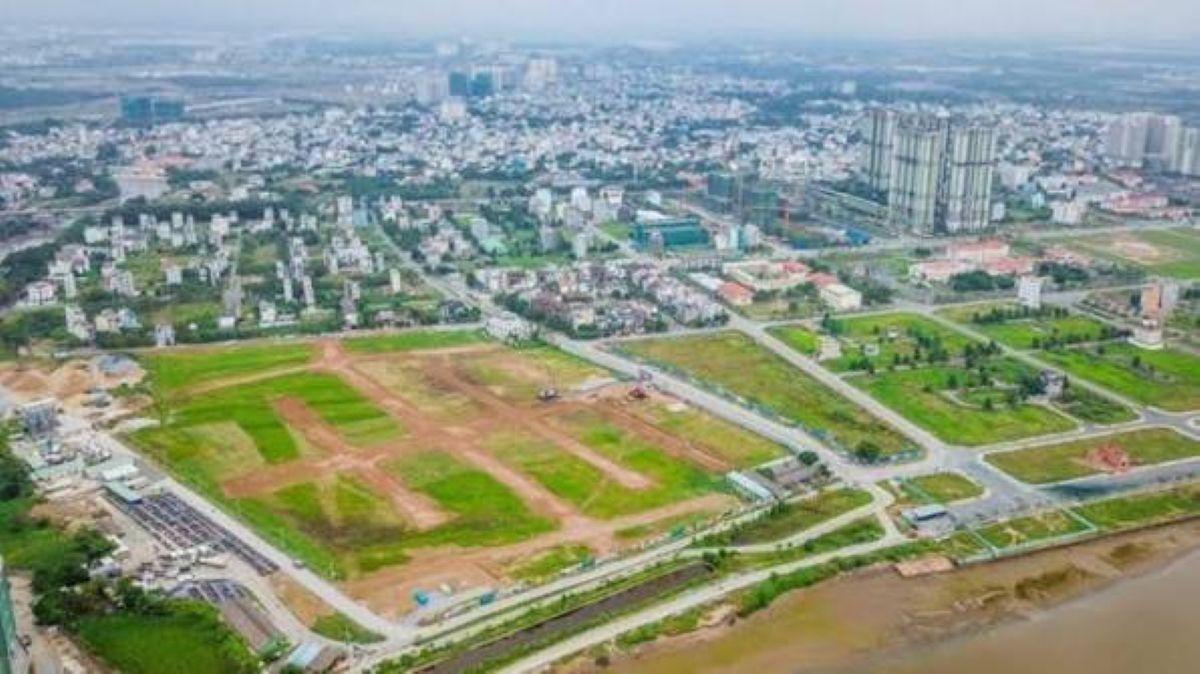
 Land resources can become a driver of development only when they are systematically assembled, managed, and utilized through transparent, efficient, and sustainable processes. As Viet Nam advances its digital transformation, the application of technology and the development of an integrated land database are creating opportunities to modernize land governance. A study by Truong Do Thuy Linh, Le Ngoc Lam, and Do Thi Tam examines the current state of land fund development in Viet Nam, identifies the factors influencing this process, and proposes measures to improve land management and utilization in the digital era.
A whole-of-cycle approach to land fund development
The study conceptualizes land fund development as an integrated process comprising three components: land fund formation, land fund management, and land fund utilization. This approach extends the scope of land fund development beyond land recovery or the preparation of cleared sites for investment projects.
Land funds can be formed through land recovery in accordance with approved land-use master plans and land use plans; negotiated transfers of land use rights; the mobilization of public land under State management; and other legally prescribed mechanisms, including land conversion and land exchange. Once established, land funds must be properly managed and utilized through land allocation, land leasing, auctions of land use rights, and other appropriate mechanisms.
These three components are closely interconnected. The effectiveness of land fund formation directly influences the feasibility of subsequent utilization options, while sound management helps ensure that land is used for its intended purposes, waste is minimized, and the value of land resources is maintained. Improving land fund development therefore requires a comprehensive approach rather than isolated interventions at individual stages.
The study highlights the role of digital technologies and land data in strengthening governance across this entire process. Integrating cadastral data, land-use planning information, remote sensing imagery, and land information systems provides management authorities with a stronger basis for assessing current land-use conditions, identifying unused or underutilized areas, and evaluating the development potential of different locations.
Technologies such as geographic information systems (GIS), land information systems (LIS), big data analytics, and artificial intelligence (AI) can support spatial analysis and assessments of land location, infrastructure connectivity, and planning orientations. Access to more comprehensive information can help improve the selection of land fund formation and utilization options and strengthen the quality of decision-making.
Importantly, digital transformation should extend beyond the digitization of cadastral records. Its value lies in the ability to standardize, integrate, share, and effectively use data throughout the land fund development process. These capabilities provide a foundation for greater transparency, improved interagency coordination, and more effective oversight of land use.
Mobilizing land resources for socio-economic development
The study's findings demonstrate the considerable scale and importance of land fund development in Viet Nam. During the 2014–2023 period, the State recovered approximately 1.18 million hectares of land for 25,362 projects, of which more than 1.07 million hectares were used for socio-economic development projects. These land resources provided an important basis for infrastructure development, urban development, and projects across various economic sectors.
Alongside land recovery, land allocation, land leasing, and auctions of land use rights have become important mechanisms for land fund utilization. According to the study, approximately 104,554 hectares were put up for auction during this period, generating more than VND 390.3 trillion in revenue for the State budget.
Land-related revenue also highlights the growing importance of land management and resource utilization. Revenue from land increased from VND 69.58 trillion in 2014 to VND 202.94 trillion in 2023. This trend reflects the substantial contribution of land resources to public finances and socio-economic development.
In addition to documenting the scale of land recovery and utilization, the study highlights the role of local land fund development organizations. Such organizations have been established in most provinces and cities and have gradually taken on a range of important responsibilities, including compensation, support and resettlement, land fund formation, management of recovered land, and the organization of auctions of land use rights.
These specialized organizations provide institutional focal points for implementing interconnected tasks that require coordination among management authorities, investors, and land users. With appropriate organizational structures, adequate resources, and stronger professional capacity, they are better positioned to contribute to the effective implementation of land policies.
Taken together, these findings demonstrate how land fund development helps mobilize land resources in support of socio-economic development. The study places these results in the context of emerging demands, as growing land-use requirements, technological advances, and increasing expectations for transparent governance call for more professional implementation arrangements.
Multiple factors shape land fund development
No single factor determines the effectiveness of land fund development. Policies and planning establish the guiding framework; natural conditions and local socio-economic characteristics shape the potential of individual areas; while organizational capacity, financial resources, and community participation directly influence the feasibility of implementation.
To examine these relationships, the authors reviewed 19 studies published between 2006 and 2025, identifying 60 factors that influence land fund development in Viet Nam. These factors were classified into nine groups: policy, planning, natural conditions, economic factors, social factors, finance, management, implementation, and community consultation.
A key contribution of this synthesis is its consideration of these factors as interrelated elements that can be organized into three distinct but interconnected layers.
The foundational layer comprises policy, planning, and natural conditions, which establish strategic direction and the basic conditions for land fund formation. The operational layer consists of management, implementation, and community consultation, all of which influence implementation progress, stakeholder consensus, and overall effectiveness. The third layer, which underpins resource mobilization and utilization, encompasses economic, social, and financial factors that affect capital mobilization, land valuation, benefit sharing, and the sustainability of land fund development.
This framework clarifies the links among institutions, resources, and implementation arrangements. Even when a land fund development plan is aligned with planning objectives, its implementation still depends on adequate financing, management capacity, and public acceptance. Similarly, technology can deliver meaningful benefits only when data are standardized, coordination mechanisms are clearly established, and information is effectively incorporated into decision-making.
In the context of digital transformation, land databases and management technologies play a connecting role across these three layers. Better-updated and more accessible information provides management authorities with a basis for assessing policy implementation, cross-checking plans, identifying land-use potential, and monitoring progress. Public disclosure of information also creates opportunities for residents and other stakeholders to participate in oversight, thereby strengthening transparency and accountability in land governance.
Digital infrastructure must be matched by institutional capacity
Based on its assessment of the current situation and SWOT analysis, the study proposes five groups of solutions to improve the effectiveness of land fund development in the digital era. These solutions combine institutional improvements, data modernization, stronger organizational capacity, more effective financial resource mobilization, and broader community participation.
First, strengthening the institutional and policy framework is essential to ensuring the coordinated implementation of land fund formation, management, and utilization. The study recommends further improving relevant legal provisions, clarifying implementation mechanisms, refining land finance policies, and developing land valuation methods based on market principles. Simplifying administrative procedures for land recovery, compensation, site clearance, and auctions of land use rights would also help improve project implementation timelines.
Second, developing a digital land database is identified as a priority. The system should be established as a unified and integrated platform that enables data connectivity and information sharing among management authorities. The application of GIS, LIS, remote sensing, big data analytics, and AI in assessing current land-use conditions, evaluating development potential, and selecting appropriate land fund development options would improve the quality of information available for management. Making land data publicly accessible through digital platforms would also help create a more transparent information environment for residents, businesses, and investors.
Third, the capacity of land fund development organizations needs to be strengthened. Further consolidating the organizational system toward more professional and effective operations should go hand in hand with training and capacity-building in technical expertise and digital skills for staff. Improving coordination among management authorities and relevant stakeholders is equally important, given that land fund development is an intersectoral process involving multiple parties.
Fourth, financial mechanisms should be improved to mobilize and utilize diverse sources of funding, including the State budget, land development funds, credit, and capital mobilized from non-state sources. Land fund utilization through auctions of land use rights, land leasing, and public-private partnerships is also identified as a means of mobilizing resources to support development.
Finally, information transparency and community participation should be recognized as integral components of modern land fund governance. Public disclosure of information through digital platforms, stronger consultation mechanisms, and opportunities for community oversight of land-use planning, land recovery, and land fund development can facilitate implementation and help strengthen social consensus.
These five groups of solutions are closely interconnected and mutually reinforcing. Modern databases must operate within an appropriate institutional framework; implementation organizations need adequate professional capacity and financial resources; and transparency must be supported by effective information disclosure and meaningful community participation. This approach demonstrates that digital transformation in land fund development is not simply a matter of investing in technology, but also involves coordinated improvements in governance and implementation arrangements.
The study by Truong Do Thuy Linh, Le Ngoc Lam, and Do Thi Tam brings together three important dimensions: the current state of land fund development, the factors influencing the process, and proposed directions for improvement in the context of digital transformation. By organizing 60 influencing factors into nine groups and identifying the relationships among the foundational, operational, and resource and utilization layers, the study provides a useful reference for policy formulation and implementation at the local level.
As Viet Nam continues to advance digital transformation and mobilize resources more effectively for development, land fund governance based on integrated data, a clear institutional framework, and community participation will become increasingly important. When land fund formation, management, and utilization are organized as parts of a unified process, land resources can serve not only the immediate needs of individual projects but also contribute more sustainably to long-term socio-economic development.
Sources: This article is based on the study “Land fund development in the digital era: Situation and solutions” by Truong Do Thuy Linh, Le Ngoc Lam, Do Thi Tam, published in the Science Journal of Agriculture and Environment, Special issue on Land management in the digital era, July 2026.

Dien Bien and Lai Chau provinces have extensive natural forest areas and are home to various non-timber forest product (NTFP) species with significant economic and medicinal value. A study by researchers from the Forestry Economics Institute, Viet Nam Academy of Forest Sciences, examines the cultivation of these products under forest canopy in the two provinces and identifies the conditions needed to make more effective use of the multi-purpose value of forest resources.

By integrating ALOS-2 PALSAR-2 radar data, Sentinel-2 satellite imagery, and field survey data, a study by Nguyen Viet Luong developed a forest biomass distribution map with an overall accuracy of 83.29% for the study area within Nui Chua National Park. The results estimate that forest vegetation across the 25,209-hectare study area contains approximately 1.36 million metric tons of carbon, equivalent to nearly 4.98 million metric tons of CO₂. The findings provide an additional scientific basis for forest ecosystem monitoring, management, and conservation.

Saltwater intrusion is increasing the need to identify crop varieties that can tolerate changing irrigation water salinity, particularly in the Mekong Delta. A study by researchers at Can Tho University examined the responses of two mustard varieties to different salinity levels and assessed associated changes in soil chemical properties. The findings provide additional scientific evidence to guide vegetable variety selection and irrigation water management in agricultural areas affected by saltwater intrusion.

Surveys along 17 transects across six habitat types recorded 256 Lepidoptera species at Pu Huong Nature Reserve in Nghe An Province, including 66 species newly recorded for the study area. The findings expand the biodiversity record for an ecologically important forest landscape in western Nghe An and provide further insights into species distribution and the ecological roles of this insect group in forest ecosystems.

A survey of 312 small and medium-sized enterprises (SMEs) in Phu Tho Province found a gap between businesses' awareness of the benefits of environmental, social, and governance (ESG) practices and their organizational capacity to implement them. The findings highlight the importance of internal resources, leadership commitment, and local policy support, as well as the need to tailor assistance to the specific conditions of different sectors.