Can Tho mangrove forests as a “green shield” for wave attenuation and sediment deposition: First field-based experimental evidence

Can Tho mangrove forests as a “green shield” for wave attenuation and sediment deposition: First field-based experimental evidence

19/12/2025
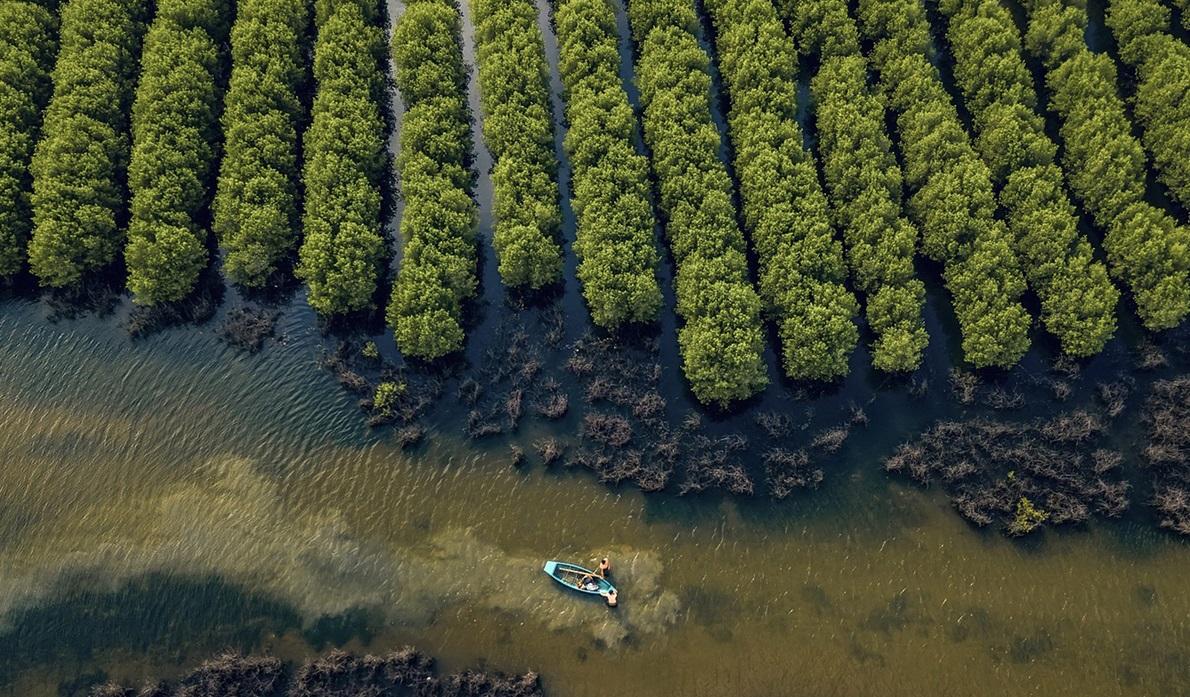
In the context of accelerating climate change, sea-level rise, and increasingly severe coastal erosion in the Mekong Delta, field-based scientific evidence on the coastal protection functions of mangrove forests (MF) has become critically important for shoreline planning and management. Recently, a research team comprising Ly Trung Nguyen, Danh Tinh, and Le Thanh Khang from the College of the Environment and Natural Resources, Can Tho University, completed a large-scale field study in coastal mangrove forests located in the former Soc Trang province, now administratively part of Can Tho city.
  • Aquatic plants improve water quality and shrimp yields in shrimp–rice systems

    Aquatic plants improve water quality and shrimp yields in shrimp–rice systems

    In the U Minh Thuong area (formerly Kien Giang province, now part of An Giang), the shrimp–rice system has long been regarded as a key production model. Yet in recent years, the system has been under pressure due to salinization, soil degradation, and continuous shrimp farming, all of which have contributed to declining yields and deteriorating water quality. A research team from Can Tho University conducted a field trial using two native aquatic plant species — Nan tuong (Scirpus littoralis) and Co nuoc man (Paspalum vaginatum) — in shrimp ponds. Their findings show that these plants can improve water conditions and increase black tiger shrimp productivity by 14–21%, offering a promising biological management approach for shrimp–rice systems in the Mekong Delta.
  • Turning rubber wastewater into a resource: The promise of struvite recovery

    Turning rubber wastewater into a resource: The promise of struvite recovery

    A research team from the Institute of Materials Science, Vietnam Academy of Science and Technology (VAST)—including Le Thi Hai Ninh, Pham Thi Hai Thinh, Nguyen Duc Nui, and Duong Van Nam—has carried out a study on phosphorus recovery from natural rubber processing wastewater using the struvite precipitation method.
  • Reducing CO₂ across the coffee value chain: New findings from Lam Dong

    Reducing CO₂ across the coffee value chain: New findings from Lam Dong

    The study “Reducing CO₂ emissions from the coffee value chain toward sustainable agriculture” was conducted by the research team including Thai Phuong Vu, Nguyen Thi Mong Quynh, Nguyen Khuong Duyen, Tran Thi Que Tran, and Nguyen Thi Cam Tien from the Faculty of Environment, Ho Chi Minh City University of Natural Resources and Environment. This research is of significant importance as Vietnam’s coffee sector plays a key role in agricultural export while facing increasing pressure to mitigate greenhouse gas (CO₂) emissions across the entire value chain—from cultivation and harvesting to processing and consumption.
  • Exploring the fish assemblage of Bai Tu Long Bay and Ha Long Bay: New records of 48 species and alarming signals for biodiversity

    Exploring the fish assemblage of Bai Tu Long Bay and Ha Long Bay: New records of 48 species and alarming signals for biodiversity

    During 2023–2024, a research team from the Institute of Biology (Vietnam Academy of Science and Technology – VAST), in collaboration with the Graduate University of Science and Technology (VAST) and the Center for Technology and Nature Conservation, carried out an extensive survey to document the fish species composition in freshwater bodies, as well as tung and ang (karst sinkhole lakes and semi-enclosed lagoons) on the islands of Bai Tu Long Bay and Ha Long Bay. This represents one of the few dedicated studies on these semi-isolated karst water systems—often considered “forgotten biological refugia” within the World Heritage landscape.
  • Exploring 42 stream fish species in Dong Chau – Khe Nuoc Trong: First comprehensive biodiversity assessment released

    Exploring 42 stream fish species in Dong Chau – Khe Nuoc Trong: First comprehensive biodiversity assessment released

    A large-scale study conducted by researchers Nguyen Dinh Tao, Dang Van Dong, and Le Hung Anh of the Institute of Biology, Vietnam Academy of Science and Technology (VAST), and the Graduate University of Science and Technology (VAST) has produced the first integrated assessment of stream fish diversity in the Dong Chau – Khe Nuoc Trong Nature Reserve in Quang Tri province.
  • Science, technology, and digital transformation: Breakthrough pathways to unlock capital and land bottlenecks in contract farming

    Science, technology, and digital transformation: Breakthrough pathways to unlock capital and land bottlenecks in contract farming

    Government Decree No. 98/2018/NĐ-CP, which sets out policies to encourage cooperation and linkages in agricultural production and marketing, has been the most important legal foundation, enabling nearly 3,000 linkage projects to be approved over six years. Yet in-depth analyses show two systemic constraints still holding back progress: legal and practical obstacles to land consolidation for large-scale production, and limited access to credit for cooperatives.
  • Coffee by-products: Unlocking new value from an overlooked resource

    Coffee by-products: Unlocking new value from an overlooked resource

    Coffee is one of the most widely consumed beverages in the world. Depending on the processing method, various by-products are generated, yet these materials remain substantially underutilized in Vietnam. Recognizing this gap, a research team from Nong Lam University, Ho Chi Minh City, and Quy Nhon University conducted a study titled “Coffee by-products: Chemical composition and potential applications in food processing.” By compiling and analyzing the characteristics of key by-products—coffee pulp, mucilage, husk, parchment, silver skin, and spent coffee grounds—the authors identified noteworthy levels of dietary fiber, polyphenols, caffeine, and multiple antioxidant compounds. Based on these findings, the study evaluates potential applications in beverage development, extraction of bioactive compounds, enzyme production, and food processing, thereby opening pathways to add value to coffee by-products in Vietnam.
  • Decoding flash floods with GeoAI in Vietnam’s Northern Highlands - Part 2: Modelling extremes and what the maps reveal

    Decoding flash floods with GeoAI in Vietnam’s Northern Highlands - Part 2: Modelling extremes and what the maps reveal

    Following the data-building and field-validation groundwork outlined in Part 1, this second installment, led by Le Nhu Nga and colleagues at the Institute of Mechanics, Vietnam Academy of Science and Technology, examines how three machine-learning models were tested against the complexities of Vietnam’s mountainous terrain. Each algorithm offered a different path to decoding the nonlinear interactions that drive flash-flood formation—yet the performance gap between them also reflected the physical realities of steep slopes, fractured bedrock, and highly variable extreme rainfall.
  • Decoding flash floods with GeoAI in Vietnam’s Northern Highlands - Part 1: From policy frameworks to data frontiers

    Decoding flash floods with GeoAI in Vietnam’s Northern Highlands - Part 1: From policy frameworks to data frontiers

    Flash floods in Vietnam’s northern mountains are not only tallied in annual disaster statistics, they shape the land, livelihoods, and planning decisions across entire districts. As climate change intensifies extreme rainfall, the demand for reliable and accessible hazard maps becomes urgent. A research team from the Institute of Mechanics, Vietnam Academy of Science and Technology (VAST) has demonstrated that Geospatial Artificial Intelligence (GeoAI) can meet this demand, producing high-precision, data-driven maps of flash flood risk for the northern communes of Tuyen Quang province, an area once part of Ha Giang’s rugged highlands.
  • An eco-friendly solution for domestic wastewater treatment

    An eco-friendly solution for domestic wastewater treatment

    From familiar plants such as okra, jute, Malabar spinach, and aloe vera, a research team from Kien Giang University has explored a new pathway to improve the treatment of domestic wastewater—one of the major pollution sources, accounting for more than 30% of all wastewater generated today. The study found that okra extract, a natural and readily available plant-based coagulant substance, achieved a chemical oxygen demand (COD) removal efficiency of 64.18%, reduced turbidity by more than 89%, and significantly enhanced nitrogen and phosphorus removal when combined with PAC. These findings suggest strong potential for using plant-derived coagulant substances in small-scale household and community wastewater treatment models.
  • Building the institutional framework for electronic land use certificates in Vietnam’s digital transformation era

    Building the institutional framework for electronic land use certificates in Vietnam’s digital transformation era

    As Vietnam advances toward digital government and modern natural resource management, the land sector has emerged as a pioneering field requiring institutional, technological, and data governance reforms. A research group from the Department of Land Management under the Ministry of Agriculture and Environment, including experts Nguyen Khac The, Dinh Hong Phong, and Tran Van Tien, has conducted the study “Legal basis and requirements for institutional improvement in the implementation of electronic certificates of land use rights and ownership of assets attached to land.”
  • Part 2: Alternate wetting and drying (AWD) - A key pathway to low-emission rice production in Vietnam

    Part 2: Alternate wetting and drying (AWD) - A key pathway to low-emission rice production in Vietnam

    Traditional flooded rice cultivation in Vietnam ensures stable yields but consumes tens of billions of cubic meters of water and emits tens of millions of tons of methane (CH₄) annually. As Vietnam commits to achieving net-zero emissions by 2050, the research and application of the Alternate Wetting and Drying (AWD) irrigation technique have opened a new pathway, reducing irrigation water use by 20-50% and cutting greenhouse gas emissions by nearly half.
  • Part 1: Water use efficiency - The foundation of Vietnam’s green agricultural transition

    Part 1: Water use efficiency - The foundation of Vietnam’s green agricultural transition

    In the context of climate change, increasing water scarcity, and the urgent need to reduce greenhouse gas (GHG) emissions, improving water use efficiency in rice cultivation has become both a scientific priority and a central policy task. From field-level irrigation studies to standardized scientific water management procedures, Vietnam is gradually shaping a resource-efficient, low-emission agriculture, laying the groundwork for green transformation and sustainable development.
  • Developing an off-season organic vegetable model: A new pathway for upland farmers to adapt to climate change

    Developing an off-season organic vegetable model: A new pathway for upland farmers to adapt to climate change

    Leveraging the cool microclimate of Van Son, an upland commune, a research team from the Vietnam National University of Agriculture—Nguyen Thi Ngoc Dinh, Nguyen Trong Tuynh, Nguyen Hong Hanh, and Ly Van Duong—successfully piloted an off-season organic production model for tomatoes and radishes based on a value chain approach, both certified under the Vietnamese organic standards. The results show productivity and economic returns exceeding expectations, opening opportunities for more stable incomes for farmers. At the same time, the model helps lay the foundation for a sustainable production–consumption chain, strengthening local capacity to adapt to climate change and evolving market demands.
  • Scientific research paper: Assessing the variations of surface water resources in Da Lat under climate change context

    Scientific research paper: Assessing the variations of surface water resources in Da Lat under climate change context

    Amid increasing climate change impacts and rapid urbanization, the study “Assessing the variations of surface water resources in Da Lat under climate change context”, conducted by Pham The Anh, Truong Thanh Canh, Bui Xuan An, and Le Thi Thanh Quynh, analyzes long-term meteorological and hydrological data (1993-2024) to clarify the trends in streamflow, rainfall, and temperature across four main river basins of Da Lat. The findings provide scientific evidence to support the management and planning of surface water resources toward adaptation and sustainable development.
  • Ecological pathways to address riverbank erosion in An Giang: Study identifies key plant species for riparian protection

    Ecological pathways to address riverbank erosion in An Giang: Study identifies key plant species for riparian protection

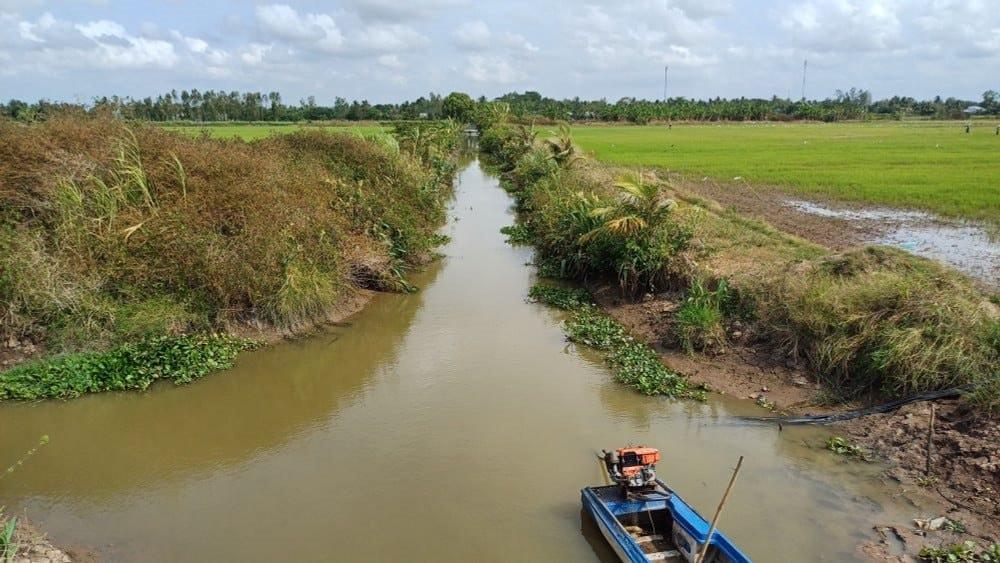
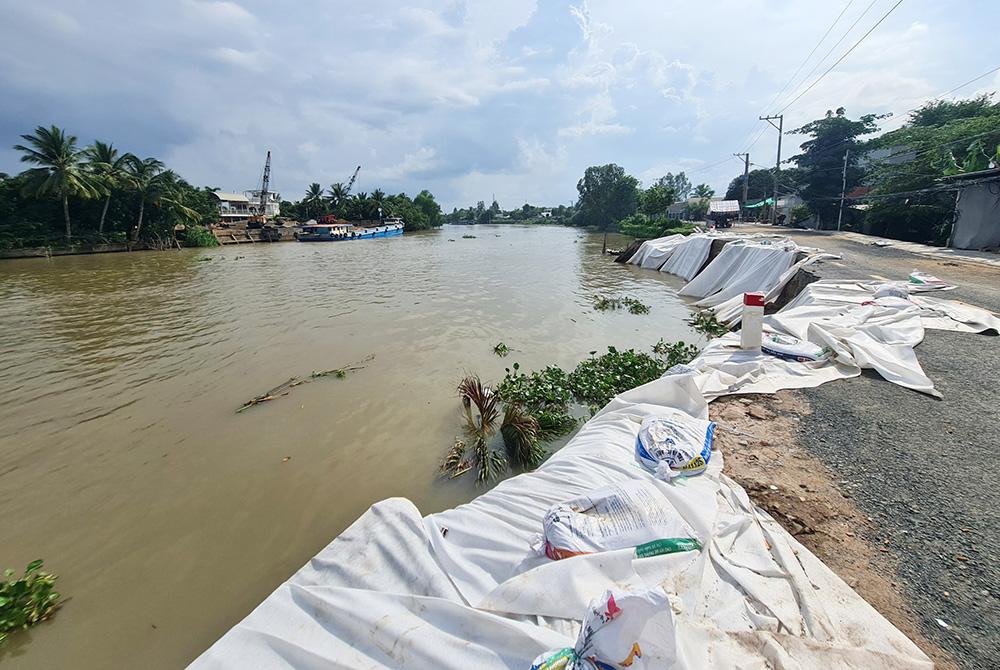
    Amid increasingly complex riverbank, canal, and stream erosion in An Giang province, a research team led by Nguyen Thi Ly and Doan Thi Lien from the Hanoi University of Natural Resources and Environment conducted an assessment of riparian vegetation in acid sulfate soil areas to identify plant species capable of stabilizing riverbanks and adapting to local hydrological conditions. Through field surveys, community structure analysis, and species-selection criteria using the Analytical Hierarchy Process (AHP), the study proposes four promising groups of plant species for integration into ecological erosion-control models.
  • Current situation and proposed solutions to minimize environmental pollution from agricultural production in Hanoi

    Current situation and proposed solutions to minimize environmental pollution from agricultural production in Hanoi

    In Hanoi’s development context, agriculture remains a foundational sector, ensuring food security and providing livelihoods for millions of suburban workers. However, alongside rapid urbanization, agricultural production has created many challenges in environmental protection in rural areas of Hanoi. Researchers Dinh Thi Hai Van and Nguyen Thanh Lam (Faculty of Natural Resources and Environment, Vietnam Academy of Agriculture) conducted a study to analyze the current situation of environmental pollution caused by agricultural production and propose solutions to reduce it.