news
Scientific research paper: Assessing the variations of surface water resources in Da Lat under climate change context

Scientific research paper: Assessing the variations of surface water resources in Da Lat under climate change context

04/02/2026
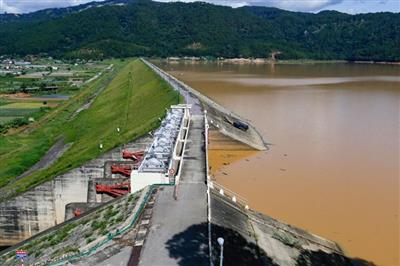
Amid increasing climate change impacts and rapid urbanization, the study “Assessing the variations of surface water resources in Da Lat under climate change context”, conducted by Pham The Anh, Truong Thanh Canh, Bui Xuan An, and Le Thi Thanh Quynh, analyzes long-term meteorological and hydrological data (1993-2024) to clarify the trends in streamflow, rainfall, and temperature across four main river basins of Da Lat. The findings provide scientific evidence to support the management and planning of surface water resources toward adaptation and sustainable development.
  • Transforming aquaculture sludge into organic fertilizer: A new path for sustainable agriculture

    Transforming aquaculture sludge into organic fertilizer: A new path for sustainable agriculture

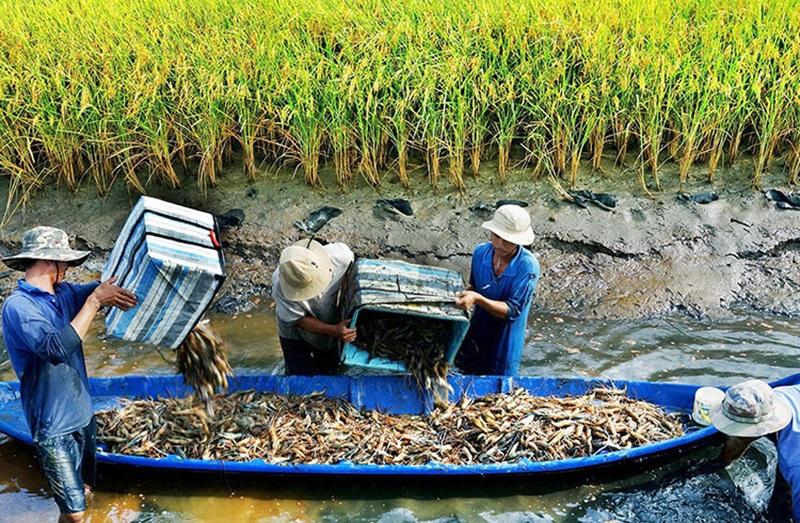
    From what is often considered a valueless by-product, sludge generated from seafood processing plants and shrimp ponds, a research team comprising Nguyen Thi Bach Kim, Le Hoang Viet, and Nguyen Vo Chau Ngan (Can Tho University) has demonstrated its potential as a feedstock for organic fertilizer production. Analytical results indicate that seafood processing sludge (SPS) possesses more favorable characteristics for composting compared to shrimp pond sludge (ShPS), thereby opening new opportunities for circular agriculture.
  • Conservation of plant genetic resources: Five years of scaling up and promoting sustainable utilization

    Conservation of plant genetic resources: Five years of scaling up and promoting sustainable utilization

    The research team from the Plant Resources Center (National Plant Gene Bank), comprising Le Thi Loan, Pham Hung Cuong, Doi Hong Hanh, Duong Thi Hanh, Nguyen Thi Hoa, Nguyen Thi Thuy Hang, and Nguyen Thi Bich Thuy, has recently reported a five-year (2020-2024) overview of ex-situ conservation of plant genetic resources in Vietnam. By the end of 2024, the system held 28,790 seed samples representing 125 species across five major crop groups, 3,041 vegetatively propagated samples, and 659 in-vitro conserved samples.
  • Application of artificial intelligence and remote sensing in forest monitoring: A new approach from Do Cong Ba’s research

    Application of artificial intelligence and remote sensing in forest monitoring: A new approach from Do Cong Ba’s research

    Amid the global challenges of forest degradation and climate change, the application of digital technology in forest resource management is increasingly recognized as an inevitable trend. The research by Do Cong Ba (Tan Trao University, Tuyen Quang province), published in the Proceedings of the 2nd National Scientific Conference on “Agricultural and Rural Environment and Sustainable Development,” focuses on analyzing the potential applications of artificial intelligence (AI) and remote sensing in forest monitoring. Agriculture & Environment Magazine is pleased to present this study to readers, providing an objective perspective on emerging approaches, from deforestation detection and wildfire prediction to supply chain transparency via blockchain, and exploring practical implementation prospects in Vietnam.
  • Conversion of water hyacinth into activated carbon for the removal of Tetracycline from water: Laboratory-scale findings

    Conversion of water hyacinth into activated carbon for the removal of Tetracycline from water: Laboratory-scale findings

    A research team at Nguyen Tat Thanh University has developed a method to convert water hyacinth, an invasive aquatic species, into activated carbon with the capacity to adsorb Tetracycline (TC)—a contaminant of emerging concern in aquatic environments. Experimental results showed that the activated carbon derived from water hyacinth exhibited a specific surface area of 630.46 m²·g⁻¹ and an adsorption capacity of 108.2 mg·g⁻¹, suggesting its applicability in wastewater treatment processes.
  • Converting coffee grounds into activated carbon for antibiotic removal from wastewater

    Converting coffee grounds into activated carbon for antibiotic removal from wastewater

    In the context of antibiotic residues in aquatic environments becoming a global concern, the search for effective, low-cost, and environmentally friendly treatment solutions is increasingly urgent. A Vietnamese research team from Nguyen Tat Thanh University, Ho Chi Minh City University of Natural Resources and Environment, the Institute of New Technology, and the Institute of Applied Research and Green Technology Transfer has introduced a novel approach: transforming spent coffee grounds into activated carbon with a high surface area, capable of removing up to 92% of tetracycline from water. The study not only addresses the challenge of antibiotic contamination but also illustrates the potential of circular economy practices in agricultural waste management.
  • Animal cloning technology using somatic cell nuclear transfer: Research orientation and application in livestock production in Vietnam

    Animal cloning technology using somatic cell nuclear transfer: Research orientation and application in livestock production in Vietnam

    Animal cloning is the process of producing genetically identical individuals without undergoing conventional fertilization. The successful creation of cloned animals has opened up numerous potential applications in basic research, medicine, and agriculture.
  • Restorative selection of the Cai hoa vang glutinous rice variety: A three-year effort to revive Thanh Hoa’s signature rice

    Restorative selection of the Cai hoa vang glutinous rice variety: A three-year effort to revive Thanh Hoa’s signature rice

    The Cai hoa vang glutinous rice variety is a well-known specialty of Thanh Hoa province, appreciated for its opaque white grains, characteristic aroma, and sticky texture when cooked—qualities that give it high economic value. However, after many years of traditional cultivation and informal seed exchange, the variety has shown signs of segregation and genetic degradation, resulting in unstable yields and inconsistent grain quality. This trend threatens not only production efficiency but also the preservation of an important local germplasm resource.
  • Bridging science and policy: Vietnam advances One Health governance

    Bridging science and policy: Vietnam advances One Health governance

    At the launch of the Research to Policy (R2P) Technical Working Group on July 28 in Ha Noi, the Ministry of Agriculture and Environment, together with international partners, delivered a clear message: Viet Nam is advancing the institutionalization of the One Health approach, grounded in scientific evidence and multisectoral dialogue. R2P is more than just a technical mechanism—it represents a new interface where science informs policy, and where research-based evidence serves as the foundation for systemic solutions linking human, animal, and environmental health.
  • Building a real-time information and flash floods, landslides early warning system in mountainous and midland areas of Vietnam

    Building a real-time information and flash floods, landslides early warning system in mountainous and midland areas of Vietnam

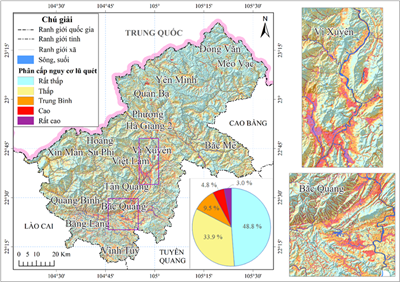
    Flash floods, while small in scale, can be highly destructive. This article introduces a web portal for early warnings about flash floods and landslides, integrating real-time rainfall data, weather predictions, and SEAFFGS results. The system sends automatic alerts via email or Zalo and helps forecasters, authorities, and citizens monitor and respond to these natural disasters, reducing potential damage.
  • Scientific-technological research significantly contributes to the advancement of resource and environmental management

    Scientific-technological research significantly contributes to the advancement of resource and environmental management

    Scientific-technological research is intrinsically linked to the evolution and refinement of strategies for sustainable development in these domains. Scientific inquiry serves as a crucial step in the acquisition, analysis, and processing of information, thereby furnishing invaluable insights for governmental entities. This aids in the formulation of policies, establishment of guidelines, and delineation of strategic frameworks tailored to address practical exigencies at various developmental junctures of the nation.
  • Promoting Green Innovation in Vietnam

    Promoting Green Innovation in Vietnam

    In recent years, green innovation, a key focus for Vietnam, has been reflected in national development strategies, government action plans, international cooperation activities, investment attraction, as well as scientific and technological research.
  • The feasibility and willingness of manufacturers and importers in Vietnam to participate in the Extended Producer Responsibility program

    The feasibility and willingness of manufacturers and importers in Vietnam to participate in the Extended Producer Responsibility program

    Extended Producer/Importer Responsibility (EPR) is an environmental strategy/policy which the responsibility of manufacturers for their products is extended to the disposal stage of the product’s lifecycle. In practice, EPR involves manufacturers taking primary responsibility for the proper management of waste products, including waste collection, pre-treatment (such as sorting, cleaning, and pre-processing), and recycling/disposal of those waste products. EPR systems allow manufacturers to extend their responsibilities by contributing the necessary financial resources or directly/indirectly carrying out waste collection, processing/recycling activities, and supporting operational processes from the community. EPR can be implemented individually or in combination.
  • An overview of research on flood monitoring & warning systems: Global vs Vietnam

    An overview of research on flood monitoring & warning systems: Global vs Vietnam

    Based on the research conducted under Project Code: TNMT.2021.02.03, numerous flood monitoring & warning systems are currently operational and utilized by national disaster management authorities globally. However, in Vietnam, the early warning system for significant flood hazards in small river basins have not yet satisfactorily met the increasingly stringent societal demands. The lead time for flood warnings is currently limited to 3-6 hours for small river basins, lacking precise forecasts regarding timing, location, intensity, and extent of occurrence. Consequently, the focus remains primarily on qualitative risk alerts rather than quantitative assessments.
  • Health Risks in Children Exposed to Water Contaminated by Paper Production Industries

    Health Risks in Children Exposed to Water Contaminated by Paper Production Industries

    Water pollution is a serious and escalating public health concern, affecting approximately 2 billion people worldwide who lack access to clean and safe drinking water, according to the United Nations World Water Development Report
  • Comprehensive work session on early completion of draft amendments to some provisions of decress detailing mineral law.

    Comprehensive work session on early completion of draft amendments to some provisions of decress detailing mineral law.

    On the morning of February 16th, in Hanoi, the Vietnam Mineral Authority reported to Deputy Minister of the Ministry of Natural Resources and Environment, Tran Quy Kien, on the implementation of the draft "Decree amending and supplementing some provisions of Decrees detailing the Mineral Law."
  • Reality survey to support the review of water resource law (amendment)

    Reality survey to support the review of water resource law (amendment)

    A delegation from the National Assembly's Committee on Science, Technology, and Environment, led by Ms. Nguyễn Thị Lệ Thủy, Deputy Head of the Committee on Science, Technology, and Environment, visited and conducted a field survey in Long An province to serve the assessment of the proposed amendments to the Water Resource Law. The National Assembly is expected to provide its initial feedback during the 5th session in May 2023 and review the law for approval during the 6th session in October 2023.
  • Conference on "forecasting meteorological and hydrological trends and natural disasters in 2023"

    Conference on "forecasting meteorological and hydrological trends and natural disasters in 2023"

    On April 11th, in Hanoi, the National Center for Meteorological and Hydrological Forecasting organized a conference on "Forecasting meteorological and hydrological trends and natural disasters in 2023." Mr. Hoang Duc Cuong, Deputy Director General of the General Department of Meteorology and Hydrology, attended and chaired the conference.