



 In his reflective “Xích Lô’s Notebook” series, Lê Minh Hoan revisits the story of Vilfredo Pareto—told through the simple image of a bean garden—to illuminate a profound insight. More than a statistical rule, the 80/20 principle emerges as a way of seeing: a reminder to look beyond the noise of abundance, to recognize what truly matters, and to act with clarity and intention.
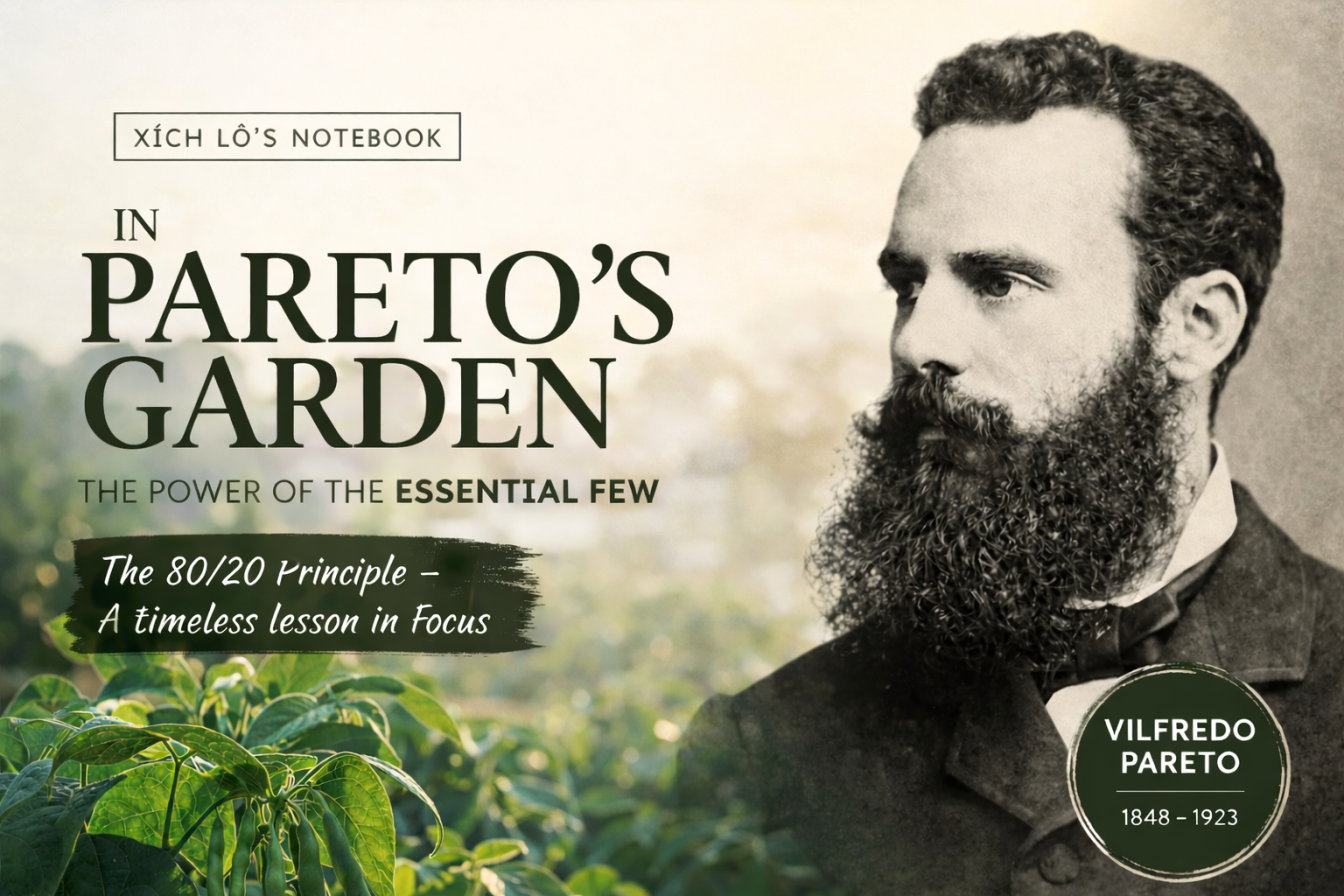
IN PARETO 'S GARDEN: THE POWER OF THE ESSENTIAL FEW |
It was a quiet summer morning in the Italian countryside. On a small plot behind his garden, a middle-aged man bent low, carefully picking young bean pods. Now and then, he paused, frowning slightly, as if he had just noticed something curious.
That man was Vilfredo Pareto—one of Italy’s most brilliant thinkers at the end of the nineteenth century. But here, he was not standing at a lectern, chalk in hand, nor debating economics in a grand hall. He was doing something utterly ordinary: tending a garden.
Yet Pareto did not garden as others do. He gardened to observe, to reflect. And on that particular morning, standing among the bean plants, he murmured to himself: “How strange… Out of a hundred plants I’ve grown, only about twenty produce nearly all the healthy, fine pods.”
It was not a passing remark. It set in motion an entirely new line of thought. He began to take notes—not only about beans, but about the distribution of income, wealth, and land ownership in Italy at the time.
He began to see a pattern—persistent, almost uncanny. Around 20 percent of people held 80 percent of the wealth. Around 20 percent of causes led to 80 percent of outcomes.
From that observation emerged a principle—uneven, universal, and enduring. Later generations would call it the Pareto Principle, more commonly known as the 80/20 rule.
From bean plants to a way of thinking
Pareto once observed: “What matters most is often found in the minority. What is most numerous is often the noisiest, yet the least effective.” He did not argue for dismissing the majority. Rather, he urged us to recognize what is essential—the driving forces, the elements that truly make a difference.
People are often busy, but not always effective. Pareto chose the opposite path: to be still, to observe, and then to act with precision.
The world, in time, proved him right.
- In business: 20 percent of products generate 80 percent of revenue.
- In education: 20 percent of what we learn shapes 80 percent of essential skills.
- In human resource management: 20 percent of key employees account for 80 percent of an organization’s value.
- In marketing: 20 percent of loyal customers generate 80 percent of profits.
- In personal life: 20 percent of focused time can get 80 percent of the work done.
Look more broadly, and the same pattern appears—in innovation, leadership, communication, agriculture, and programs such as OCOP (One Commune One Product). The principle is always there, quietly at work.
There is no shortage of scattered projects. No shortage of programs designed to look good on paper. But Pareto seems to remind us: “Do not try to do many things just to be seen. Do the right things, in the right place, to be remembered”.
In public administration: do not gather a hundred tasks—choose twenty that truly matter and can create ripple effects.
In agricultural entrepreneurship: do not create a hundred products—choose twenty that carry the soul of a homeland into the hearts of consumers.
In training and education: do not overload. Offer the right tools, the right ways of thinking, the right inspiration.
If Pareto were alive today…
Perhaps he would not deliver long theoretical lectures. He might simply walk quietly through a lotus pond, a mango orchard, or a village where fish sauce is still made by hand.
Then, with a gentle smile, he would say to his students:
“Life is like a garden of beans. It is not by planting more that you harvest better fruit. Care for the right plants, and every season will bear.”
“Twenty percent may seem small. But if it is the essence, it can elevate everything else.”
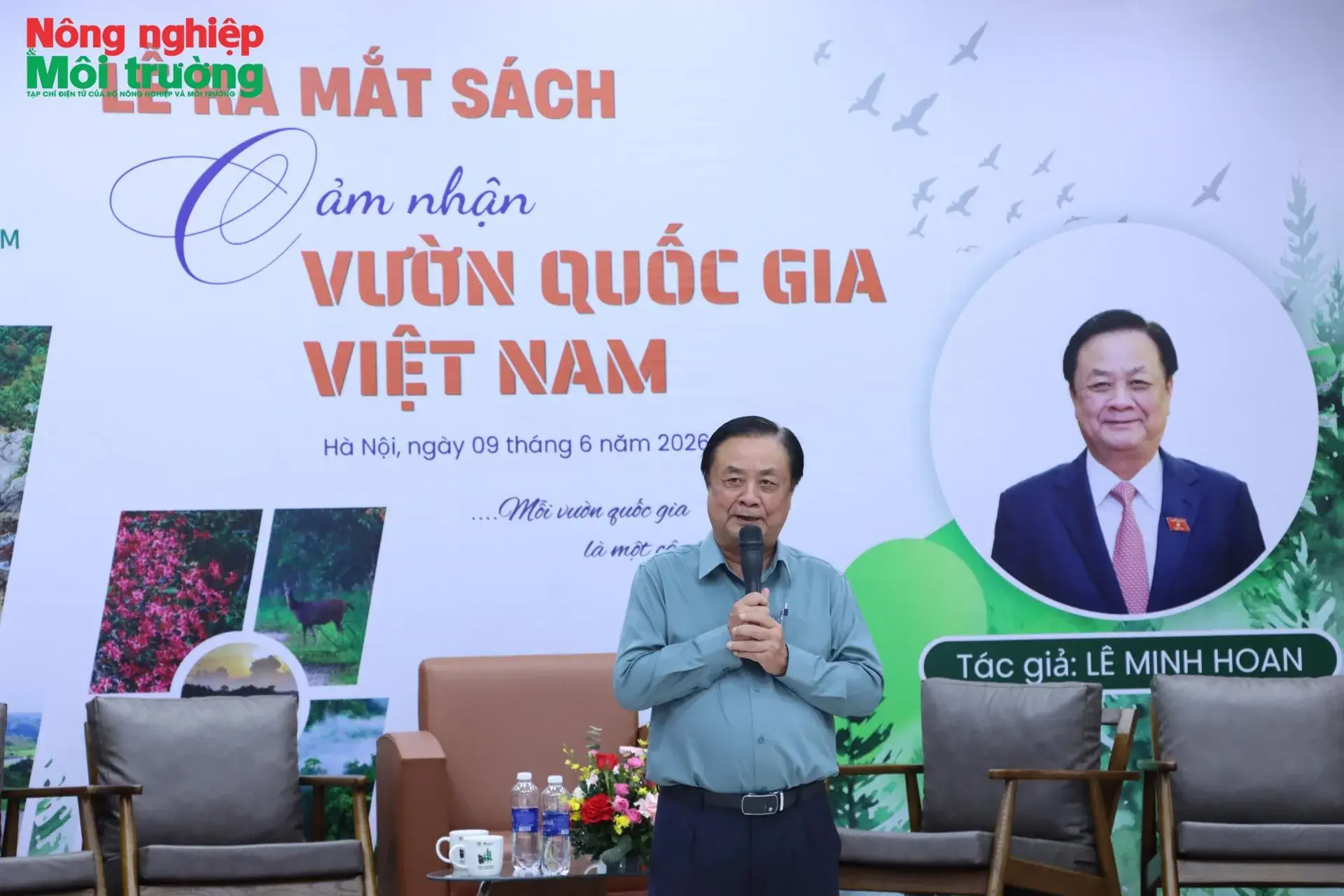
The Department of Forestry and Forest Protection under the Ministry of Agriculture and Environment on June 9, launched “Reflections on Viet Nam’s National Parks”, a book by Le Minh Hoan, former Vice Chairman of the National Assembly and former Minister of Agriculture and Rural Development. More than a work about nature, the book has been described as an emotional journey through 36 national parks across Viet Nam, helping promote messages of biodiversity conservation, sustainable development, and appreciation for the country’s forests.
OCOP is more than a program for ranking products. It is a journey to awaken the soul of the countryside. Behind every star lies a world of identity, memory, and the quiet creativity of local communities. To imagine OCOP as a beauty pageant finale is to see it from another angle entirely: every product, like every person, deserves its own moment to shine. In that space, value is no longer measured by quality alone, but also by emotion, by memory, and by trust.
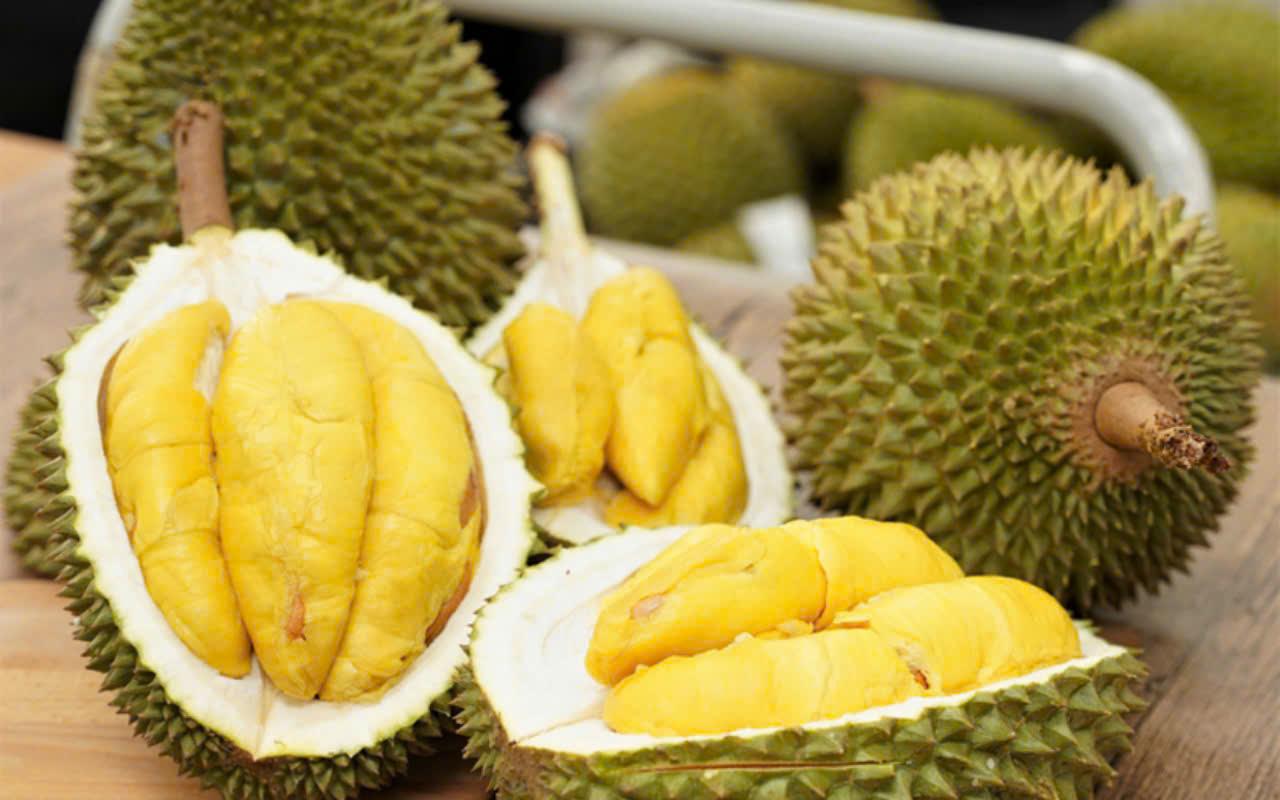
Durian in the Central Highlands was once a golden dream—until the market lost its trust. What followed became a turning point: farmers choosing to stand together, bound by a shared commitment to farm with responsibility and honor. No longer chasing short-term prices, they turned instead to transparency—keeping careful records, following standards, protecting their planting area codes. It was this simple promise that helped durian return to export markets—and, more importantly, restored trust in an entire region. A small story, perhaps, but one that speaks to a larger truth: sustainability begins with credibility.
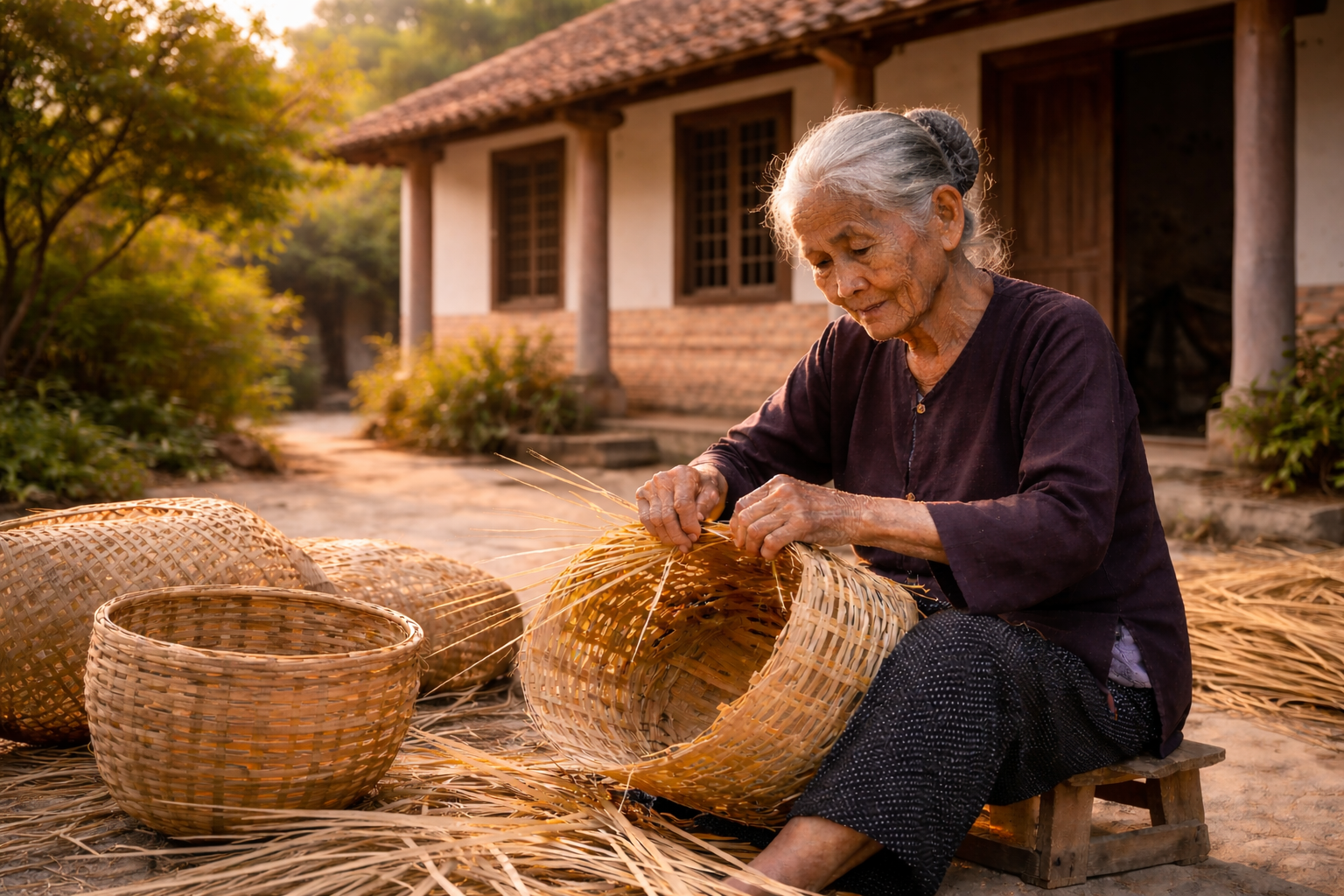
In Xích Lô’s Notebook, Lê Minh Hoan writes less as a policymaker than as a listener to the quiet rhythms of rural life. This piece lingers in the countryside—where memory is not something left behind, but something still being lived, in gestures, in people, in the texture of everyday life. From an old woman weaving bamboo baskets to the changing paths of a younger generation, the story draws us toward a simple yet enduring truth: keeping the village is not an act of nostalgia, but a way of holding on to the roots from which the future must grow.

From the story of cá lưỡi trâu—a type of tongue sole, a flatfish that lives close to the riverbed—we are led to think of certain books that carry the same quiet presence. Some are neither loud nor conspicuous, yet once read, they linger, seeping gently into memory without our knowing. ‘Xích Lô’s Notebook’ feels much the same—unhurried, unassuming, yet perhaps capable of carrying us far, in a way that is deeply sincere.