




 Climate change is one of the most urgent global issues, and Vietnam is among the countries most vulnerable to its impacts. Extreme climate events, such as tropical cyclones, flooding, saltwater intrusion, and sea-level rise, pose direct threats to coastal lowlands, affecting livelihoods, economic development, and national security. Identifying effective solutions to respond to climate change is therefore essential. Among the breakthrough technologies expected to play a decisive role is artificial intelligence (AI).
The study titled “Challenges of climate change: The role of AI and digital transformation in sustainable governance” was conducted by a research team from the Viet Nam Institute of Meteorology, Hydrology and Climate Change (IMHEN) under the Ministry of Agriculture and Environment. The team is led by Assoc. Prof. Dr. Pham Thi Thanh Nga, Director of IMHEN, with co-authors Dr. Nguyen Dang Mau, Dr. Dang Quang Thinh, Dr. Truong Ba Kien, Dr. Nguyen Thanh Bang, and Dr. Tran Thanh Thuy. The study examines the challenges climate change poses to Vietnam’s sustainable development and explores how artificial intelligence can become a critical tool for climate forecasting and risk management.
Climate change and challenges to sustainable development
Climate change is not only raising global temperatures but also transforming natural ecosystems, affecting societies, and putting pressure on economies worldwide. According to the Intergovernmental Panel on Climate Change (IPCC), global temperatures have risen by approximately 1.1°C above pre-industrial levels, and extreme weather events are occurring with greater frequency and intensity. In Vietnam, these impacts are especially pronounced in coastal regions such as the Mekong River Delta and the Red River Delta, where rising sea levels threaten millions of people and significantly reduce agricultural productivity.
One of the most pressing challenges for Vietnam is the increasing frequency and severity of natural disasters. Heavy rainfall, tropical cyclones, flooding, and drought have intensified in recent years, causing substantial losses in property and human lives. In 2024, super typhoon Yagi vividly illustrated the escalation of extreme weather events, resulting in economic losses equivalent to 0.7% of GDP and affecting millions of people.
Sea-level rise further threatens coastal lowlands that support a large share of Vietnam’s agricultural land and population. The Mekong River Delta—producing more than 50% of the country’s rice output and 70% of its aquaculture—faces severe risk of widespread inundation should sea level rise by one meter.
Beyond natural hazards, national infrastructure is also under mounting pressure. Major cities such as Hanoi and Ho Chi Minh City experience increasingly severe flooding during periods of intense rainfall, disrupting transportation, housing, and urban drainage systems. These conditions impede national progress toward sustainable development and make achieving Vietnam’s international commitment to net-zero emissions by 2050 more challenging than ever.
AI applications in climate forecasting and climate-change management
Artificial intelligence (AI) is emerging as a transformative tool for addressing complex climate-related challenges. AI can enhance meteorological and hydrological forecasting capacity, strengthen early-warning systems, and support the development of more accurate predictive scenarios, enabling governments and communities to prepare more effectively.
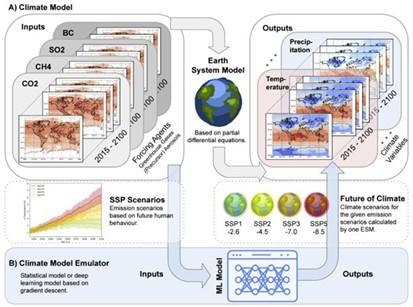
Traditional dynamical climate models require substantial computing resources and long processing times, whereas AI can dramatically accelerate simulations and reduce computational costs. For example, advanced machine-learning-based systems—such as QuickClim and ACE—can generate climate simulations significantly faster than conventional numerical models while maintaining or improving accuracy. AI also supports the rapid development of climate-change scenarios, allowing researchers to examine and compare thousands of emissions pathways—an approach that was once impractical using solely traditional modeling frameworks.
AI for resource management and climate-smart agriculture
One of the most notable applications of AI lies in climate-smart agriculture. AI can forecast crop yields, monitor drought conditions, optimize irrigation management, and support pest and disease control. Tools such as AI for Climate-Smart Agriculture (CSA) help farmers improve productivity while reducing climate-induced risks.''

In Vietnam, AI has been applied to develop inundation maps under sea-level-rise scenarios, improving the accuracy of impact assessments. These maps can be integrated into WebGIS platforms, enabling government agencies to access real-time geospatial information and make timely, evidence-based policy decisions.
Challenges in applying AI for climate forecasting in Vietnam
Despite its significant potential, AI adoption in climate-change forecasting and management in Vietnam faces several challenges:
- Data and computing infrastructure: Meteorological, hydrological, and remote-sensing data remain fragmented and insufficiently standardized. High-performance computing (HPC) infrastructure is not yet adequate to support large-scale deep-learning applications.
- Human resources: Vietnam has a limited pool of interdisciplinary experts trained in meteorology, hydrology, data science, and AI.
- Legal and institutional frameworks: Regulatory mechanisms for data access, sharing, and protection are still incomplete, constraining the effective use of AI in climate-risk management.
Solutions to strengthen AI applications in climate-change management
To fully leverage AI’s potential, Vietnam must implement coordinated measures in data infrastructure, computing capabilities, human-resource development, and institutional reform. Key priorities include:
Investing in digital infrastructure: Vietnam should expand high-performance computing systems and establish open, interoperable data platforms to support AI-based research and applications.
Developing human resources: Strengthening interdisciplinary training programs that combine meteorology, hydrology, data science, and AI is essential.
Improving the legal framework: Comprehensive regulations are needed to facilitate data access and ensure data security for AI-supported climate forecasting and risk management.
AI offers major opportunities to address climate-change challenges and promote sustainable development in Vietnam. However, for AI to become a strategic tool in climate governance, the country must overcome constraints related to data availability, infrastructure, human resources, institutional mechanisms, and international cooperation. Once these elements are aligned, AI will serve as a foundational instrument for climate forecasting, early warning, and risk management—ultimately contributing to Vietnam’s long-term sustainable development.
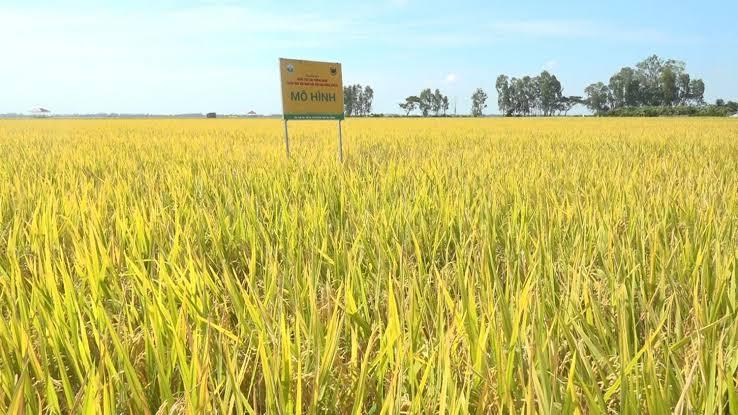
Whether rice paddy fields are inundated or dry produces distinct signatures in radar imagery. Building on this characteristic, researchers from the Southern Institute of Water Resources Research and the Vietnam National Space Center, Viet Nam Academy of Science and Technology, tested a method for detecting inundation in rice paddy fields in An Giang Province, providing an additional source of data for monitoring water regimes and estimating methane emissions from rice cultivation.
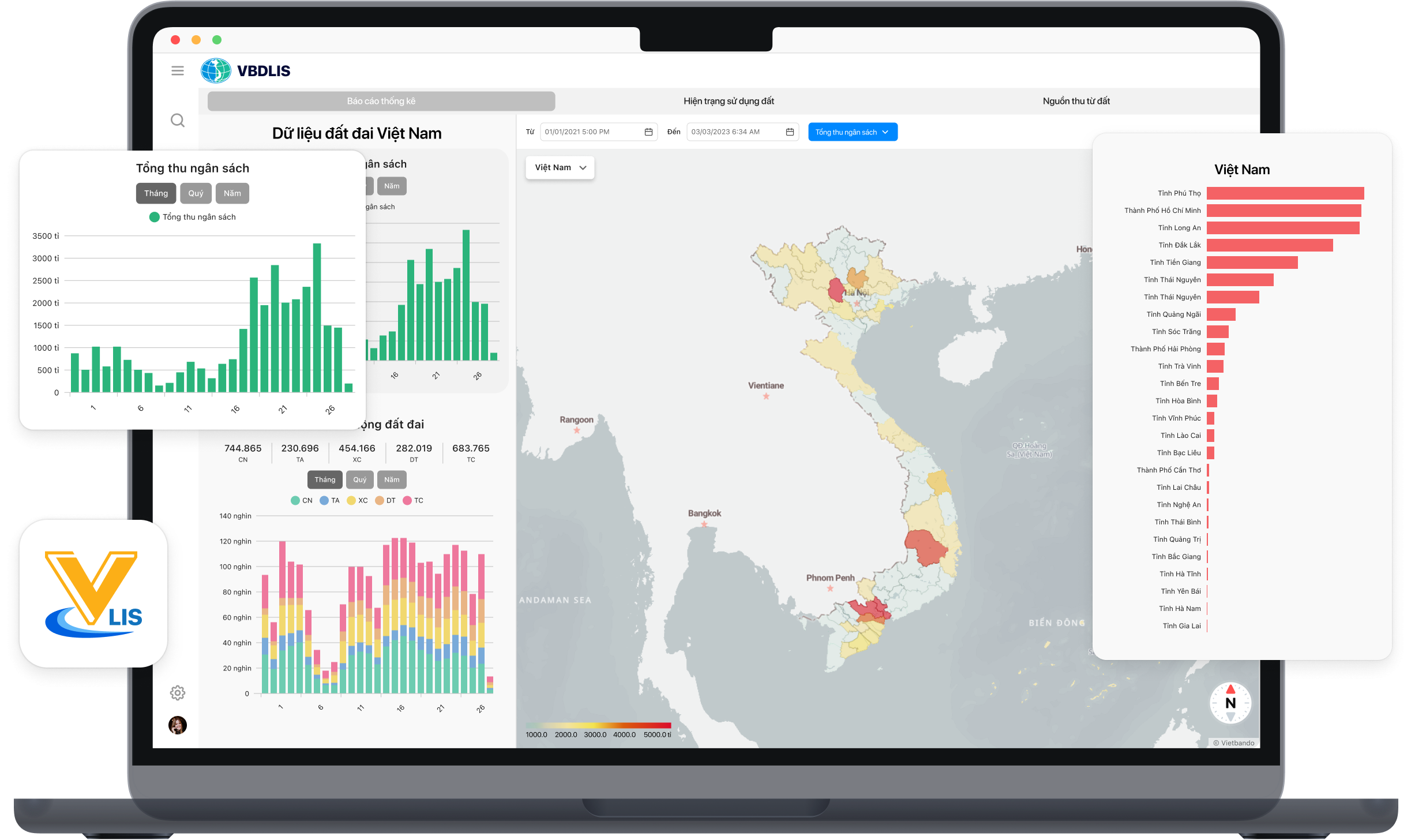
A land database can fully realize its value only when its data are accurate, complete, clean, up to date, and capable of being connected to and shared across the state management system. A study by Nguyen Dinh Trung of Vietnam National University of Agriculture and Nguyen Quang Thi of Thai Nguyen University of Agriculture and Forestry shows that applying VBDLIS in Nghe An province provided substantial support for organizing, reviewing, supplementing, synchronizing, and utilizing land data during the campaign to enrich and clean the national land database.

As digital transformation becomes a new driver of development, Vietnamese researchers have proposed a planning information system model that applies Geographic Information Systems (GIS) and artificial intelligence (AI) in Vinh Long Province. The research contributes to modernizing planning administration while introducing a new approach to digital government and data-driven governance in Viet Nam.

Using waste ethylene-vinyl acetate (EVA) shoe soles and vulcanized rubber—materials traditionally considered difficult to recycle—a research team from the School of Materials Science and Engineering at Hanoi University of Science and Technology has successfully developed a fully recycled composite material, creating potential new applications in green manufacturing and sustainable industrial production. The study not only contributes to addressing industrial waste challenges but also highlights Vietnam’s growing research and innovation capacity in sustainable materials and the circular economy.
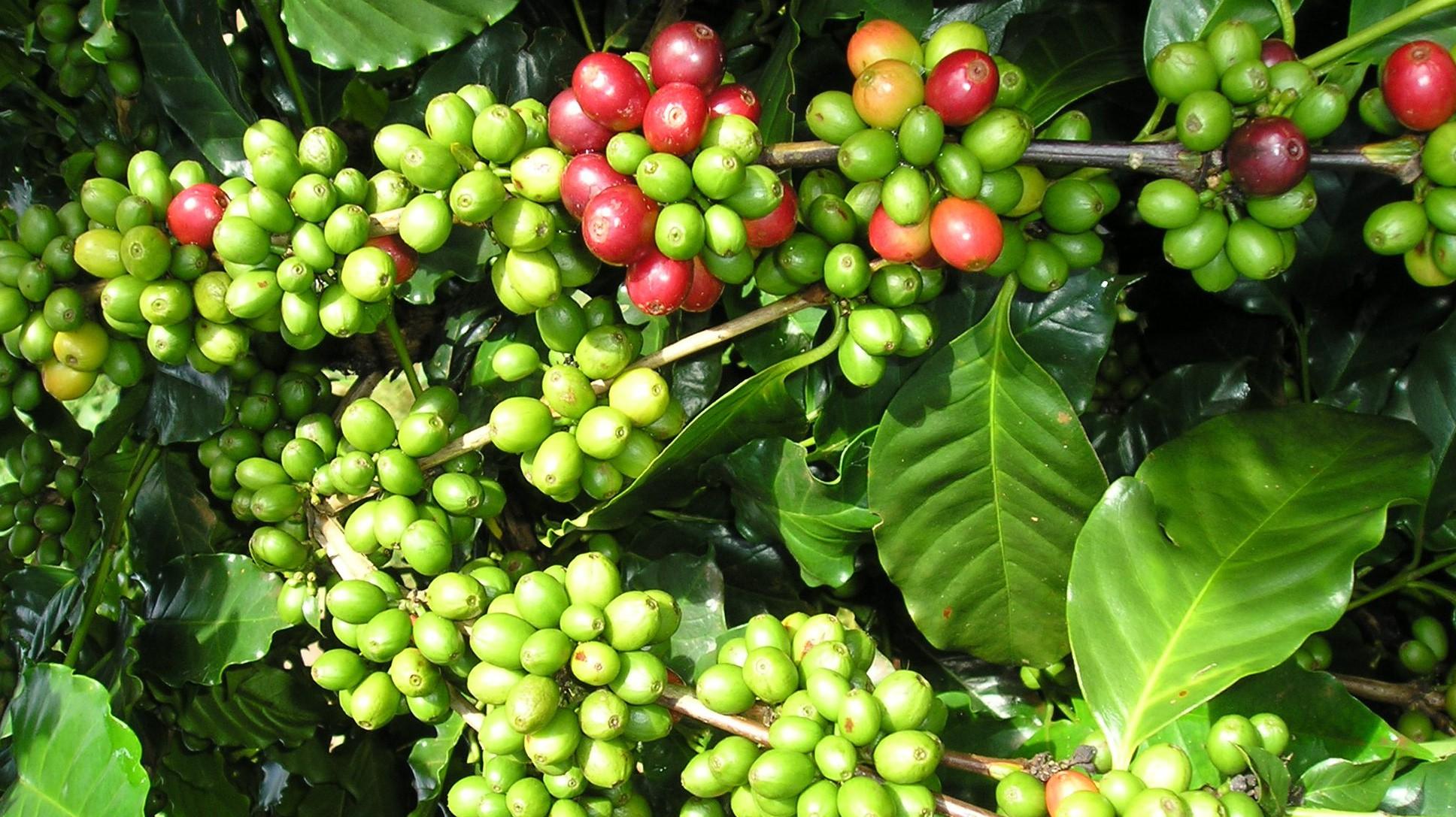
The research project entitled “Development of a suitability map for Arabica coffee cultivation on sloping land in Dien Bien province using remote sensing data, GIS technology, and the analytic hierarchy process (AHP)” conducted by Dinh Xuan Hung, Bui Tuan Hai, and Nguyen Ngoc Sang of the Institute of Water Resources Planning represents a scientifically and practically significant study in the context of ongoing agricultural restructuring toward sustainable production systems that are better adapted to natural conditions and capable of utilizing land resources more efficiently in Viet Nam’s Northern midlands and mountainous region.