




 As climate change accelerates saltwater intrusion across many of Viet Nam’s major rice-growing regions, the need to develop rice varieties capable of adapting to saline conditions has become increasingly urgent. Systematic evaluation of the morphological and agronomic characteristics of newly bred salt-tolerant rice lines is considered a key step in screening and selecting suitable planting materials for production.
Against this backdrop, a research team from Vietnam National University, Hanoi; the Agricultural Genetics Institute; and the National Center for Testing Plant Varieties and Products conducted a study to assess the morphological and agronomic characteristics of newly developed salt-tolerant rice lines. The findings provide initial scientific data to support the screening and selection of promising rice lines for further research and evaluation.
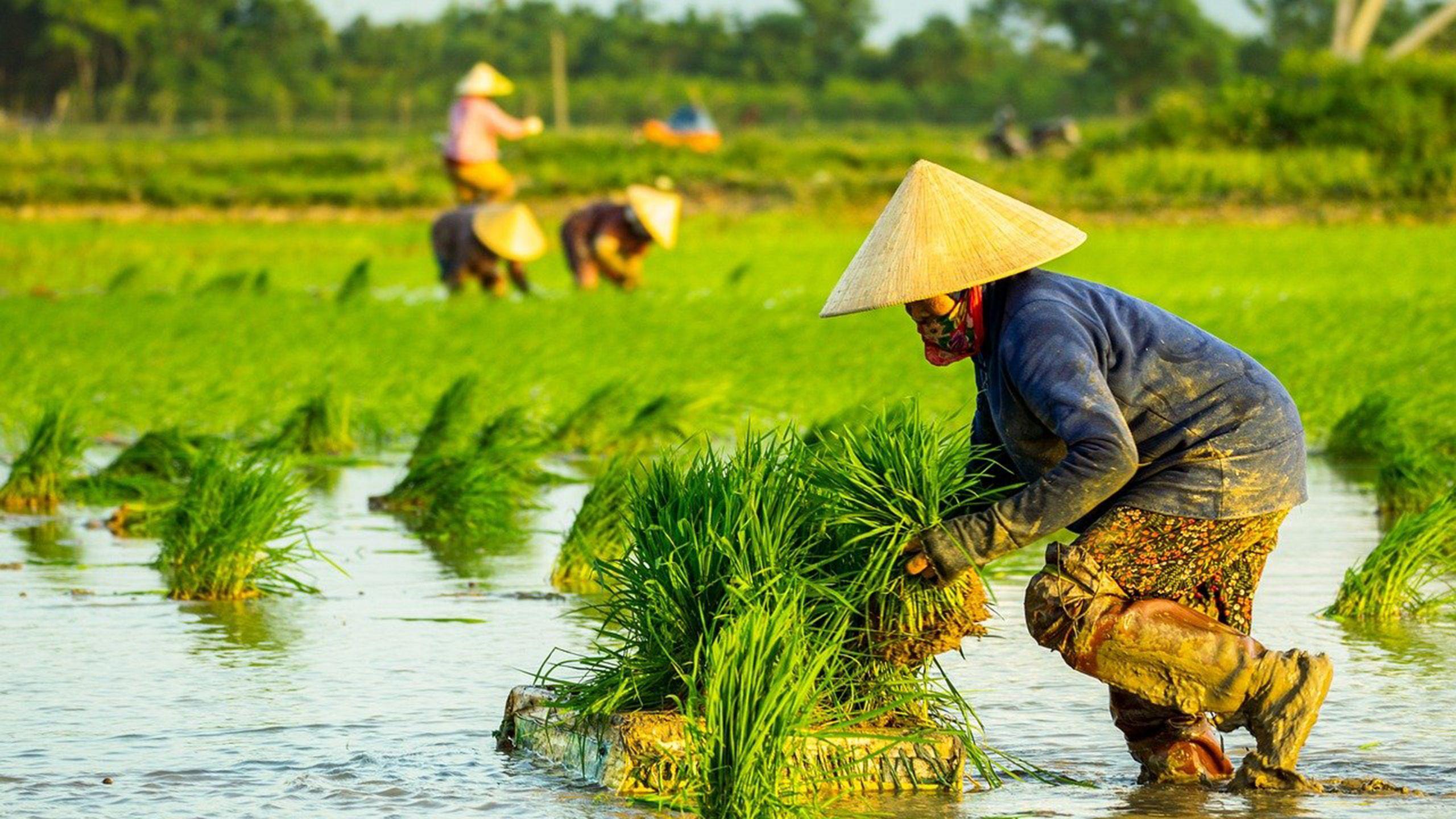
Salinity intrusion increases pressure on rice production
Rice is Viet Nam’s staple food crop and plays a central role in ensuring food security and supporting agricultural economic development. From a period of frequent food shortages prior to the 1980s, Viet Nam has emerged as one of the world’s leading rice exporters, with exports reaching 8.2 million tonnes in 2023, ranking third globally after Thailand and India.
Rice production, however, is increasingly affected by climate change. Rising sea levels and changes in rainfall patterns have intensified saltwater intrusion, particularly in coastal delta regions such as the Mekong Delta and the Red River Delta. According to the 2023 report of the Intergovernmental Panel on Climate Change (IPCC), salinity intrusion is directly affecting cultivated areas and rice yields, posing major challenges to agricultural production and food security.
In this context, genetic improvement aimed at developing salt-tolerant rice varieties is regarded as one of the sustainable solutions. Numerous studies in Viet Nam have focused on integrating stress tolerance with grain quality to meet both production and market demands. Marker-assisted pure-line breeding techniques have been applied to introduce the Saltol locus—an important locus associated with salt tolerance—into widely cultivated rice varieties, including Bac Thom No. 7 in the Red River Delta.
At the same time, efforts have been made to exploit salt-tolerant genetic resources from local rice varieties. Previous studies have identified the Trang Cut rice variety as having high salt tolerance at both the germination and seedling stages, along with favorable yield components and resistance to major pests and diseases under field conditions. Based on these characteristics, Trang Cut and Bac Thom No. 7 were selected as parental lines in breeding programs aimed at developing new salt-tolerant rice lines for the Red River Delta.
Six salt-tolerant rice lines in 2024 field trials
From hybrid populations derived from crosses between Trang Cut and Bac Thom No. 7, rice lines at the BC3F4 generation were selected for field evaluation. The study, titled “Assessment of morphological and agronomic characteristics of newly bred salt-tolerant rice lines,” focused on six rice lines, coded PT1 through PT6, with Bac Thom No. 7 used as the control variety.
The trials were conducted during the spring and summer–autumn cropping seasons of 2024 at an experimental field in An Thanh commune, Hai Phong city, on Red River alluvial soil under irrigated rice cultivation conditions. The field experiments followed a randomized complete block design, with plot sizes of 10 square meters and three replications. Planting density, fertilizer application, and crop management practices were applied uniformly across all treatments.
Evaluation criteria included morphological traits, agronomic characteristics, yield components, theoretical yield, actual yield, and the incidence of major pests and diseases under field conditions. Observations and classifications followed the national standard TCVN 13381-1:2023 and evaluation guidelines of the International Rice Research Institute (IRRI, 2013). Collected data were processed using Microsoft Excel 2010 and analyzed using one-way analysis of variance with Minitab version 16.
Conducting evaluations across two cropping seasons allowed researchers to monitor the stability of morphological, agronomic, and yield-related traits of the new salt-tolerant rice lines under field cultivation, providing a basis for further analysis and selection in subsequent stages of the study.
Stable morphological and agronomic traits across two seasons
Assessment of morphological traits of the six newly bred salt-tolerant rice lines and the Bac Thom No. 7 control during the 2024 spring and summer–autumn seasons showed certain differences among lines, while also reflecting morphological stability under field conditions. In the spring season, plant height ranged from 110 to 125 cm; in the summer–autumn season, plant height declined to 105–115 cm, or 5–20 cm shorter than in spring.
Lines PT3 and PT4 had plant heights comparable to the control variety Bac Thom No. 7, reaching 110–113 cm in spring and 105–107 cm in summer–autumn, which was 2–10 cm shorter than the remaining lines. Lines PT1, PT2, PT5, and PT6 were taller than the control in both seasons. Other morphological traits, including leaf color, plant type, and leaf orientation, were relatively uniform across all lines and the control variety. All lines had medium-green leaves, compact plant architecture, and erect stems and leaves, rated at score 1 on the classification scale.
Regarding husk color, lines PT3 and PT4 had light brown husks similar to Bac Thom No. 7, while lines PT1, PT2, PT5, and PT6 had light yellow husks. This difference was consistently observed in both cropping seasons.
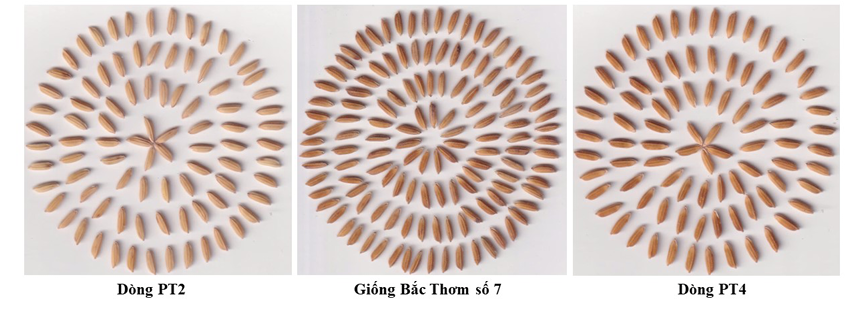
Evaluation of agronomic characteristics showed that all lines and the control variety belonged to the short-duration group. In the spring season, growth duration ranged from 125 to 135 days; in the summer–autumn season, it ranged from 108 to 115 days. Lines PT3 and PT4 had the shortest growth duration, at 125–128 days in spring and 108–110 days in summer–autumn, similar to the control variety. The remaining lines had longer growth durations than the control by 2–7 days in spring and 3–5 days in summer–autumn.
Other agronomic indicators, including seedling vigor, field uniformity, heading duration, and panicle exertion, were rated at high levels. In both seasons, all lines and the control variety showed good seedling vigor (score 1), high field uniformity (score 1), heading periods lasting 4–6 days, and complete panicle exertion, all rated at score 1. Prior to harvest, none of the lines lodged; stem strength was rated at score 1, shattering resistance was high (score 1), and leaf senescence was rated at a moderate level (score 5), as upper leaves turned yellow before harvest.
Overall, the results indicated that the newly bred salt-tolerant rice lines exhibited stable morphological and agronomic characteristics across two cropping seasons. Lines PT3 and PT4 showed close similarity to the control variety Bac Thom No. 7, while lines PT1, PT2, PT5, and PT6 differed in plant height, husk color, and growth duration.
Yield components and resistance to pests and diseases
Evaluation of yield components in the spring season of 2024 showed that panicle length ranged from 23.7 to 29.7 cm. Although differences of 1.1–6 cm were recorded among lines, these differences were not statistically significant at the 95% confidence level. The number of panicles per hill ranged from 5.3 to 6.3, with no statistically significant differences among lines.
The total number of grains per panicle ranged from 158.7 to 201.7. Lines PT1, PT2, PT3, and PT4 recorded the highest grain numbers per panicle, ranging from 181.7 to 201.7 grains, significantly higher than the control variety at the 95% confidence level. The spikelet sterility rate in the spring season ranged from 10.5% to 19.5%, with Bac Thom No. 7 having the lowest sterility rate and line PT6 the highest. The 1,000-grain weight ranged from 18.5 to 21.5 g. Lines PT5 and PT6 recorded the highest 1,000-grain weight, at 21–21.5 g, significantly higher than the remaining lines and the control at the 95% confidence level.
In the summer–autumn season, panicle length ranged from 22.9 to 29 cm, approximately 1 cm shorter than in spring. Line PT1 recorded the longest panicles, about 6 cm longer than Bac Thom No. 7, with a statistically significant difference at the 95% confidence level. The number of panicles per hill ranged from 5.3 to 6.0, with no statistically significant differences among lines. Total grains per panicle for lines PT1, PT2, PT3, and PT4 ranged from 171.3 to 186.7, higher than the control variety and statistically significant at the 95% confidence level. Spikelet sterility rates ranged from 9.7% to 18.6%, with Bac Thom No. 7 having the lowest sterility rate and PT6 the highest. Line PT6 continued to record the highest 1,000-grain weight, with a statistically significant difference compared with the control.
Regarding resistance to pests and diseases, during the spring season of 2024, all lines and the control variety, under conditions with plant protection chemicals applied, showed very light to light infestation levels in the field, rated at scores of 0–3. Lines PT3 and PT6 showed light incidence of bacterial leaf blight. The control variety Bac Thom No. 7 recorded higher levels of pest and disease incidence than the tested lines, though still at light levels, including bacterial leaf blight, sheath blight, leaf folder, stem borer, and brown planthopper. Rice blast appeared at very low levels during the tillering stage across all lines and the control.
In the summer–autumn season, pest and disease incidence ranged from light to moderate, corresponding to scores of 1–5. The control variety Bac Thom No. 7 again recorded higher levels of infestation than the tested lines, with bacterial leaf blight at a moderate level and brown planthopper rated at scores of 3–5.
Actual yields highlight promising rice lines
Results from the assessment of theoretical yield and actual yield during the spring and summer–autumn seasons of 2024 showed clear differences between the tested lines and the control variety Bac Thom No. 7. In the spring season, theoretical yield ranged from 5.5 to 7.5 tonnes per hectare, with Bac Thom No. 7 recording the lowest theoretical yield. Only line PT2 recorded a theoretical yield higher than the control, with a statistically significant difference at the 95% confidence level.
In the summer–autumn season, theoretical yield ranged from 5.2 to 7.0 tonnes per hectare, 0.3–0.5 tonnes per hectare lower than in spring. In this season, lines PT1 and PT2 recorded higher theoretical yields than the control, with statistically significant differences at the 95% confidence level. Although some lines recorded high grain numbers per panicle or high 1,000-grain weights, elevated sterility rates meant that differences in theoretical yield were not always statistically significant.
For actual yield, all tested rice lines recorded higher yields than the control variety in both seasons. In the spring season, actual yield ranged from 5.1 to 6.9 tonnes per hectare. Lines with light yellow husks—PT1, PT2, PT5, and PT6—recorded higher yields than those with light brown husks. Among them, lines PT1 and PT2 recorded the highest yields, exceeding the control variety by 27.5–35.3%.
In the summer–autumn season, actual yield ranged from 4.9 to 6.0 tonnes per hectare. Similar to the spring season, lines PT1 and PT2 again recorded the highest yields, exceeding the control by 16.3–22.4%, with statistically significant differences at the 95% confidence level. The remaining lines also outperformed the control but with smaller yield margins.
Overall results from the two cropping seasons in 2024 showed that all newly bred salt-tolerant rice lines recorded higher actual yields than Bac Thom No. 7. Among them, lines PT1 and PT2 demonstrated clear yield advantages in both the spring and summer–autumn seasons, while maintaining good resistance to major pests and diseases under field conditions. Based on these results, lines PT1 and PT2 were selected for continued cultivation and evaluation in subsequent cropping seasons and in other ecological regions to assess their adaptability under production conditions.
Potential for new salt-tolerant rice lines
The study provided field-based experimental data on morphological and agronomic traits, yield components, resistance to pests and diseases, and yield performance of newly bred salt-tolerant rice lines across two consecutive cropping seasons. Conducting evaluations in both the spring and summer–autumn seasons of 2024 made it possible to observe the stability of these traits under different growing conditions.
Based on the results, the study clarified differences between the newly bred salt-tolerant rice lines and the control variety Bac Thom No. 7, while identifying lines that showed advantages in actual yield and resistance to major pests and diseases under field conditions. These findings provide a scientific basis for continued monitoring and evaluation of promising rice lines in subsequent cropping seasons and across different ecological zones, within the scope defined by the study.
In addition, the results contribute data to ongoing research on breeding salt-tolerant rice on the Bac Thom No. 7 genetic background, particularly in examining the relationship between morphological and agronomic traits and yield performance under actual production conditions.

A scientific study by An Giang University, Vietnam National University, Ho Chi Minh City, and the An Giang Center for Rural Clean Water and Environmental Sanitation has demonstrated the potential of water lettuce (Pistia stratiotes) for treating piggery wastewater under natural conditions. The findings show that treatment performance varies with the initial biomass density and the pollutant being targeted. The approach offers a low-cost, environmentally friendly biological treatment option with potential for application by pig farms and household producers in Viet Nam.
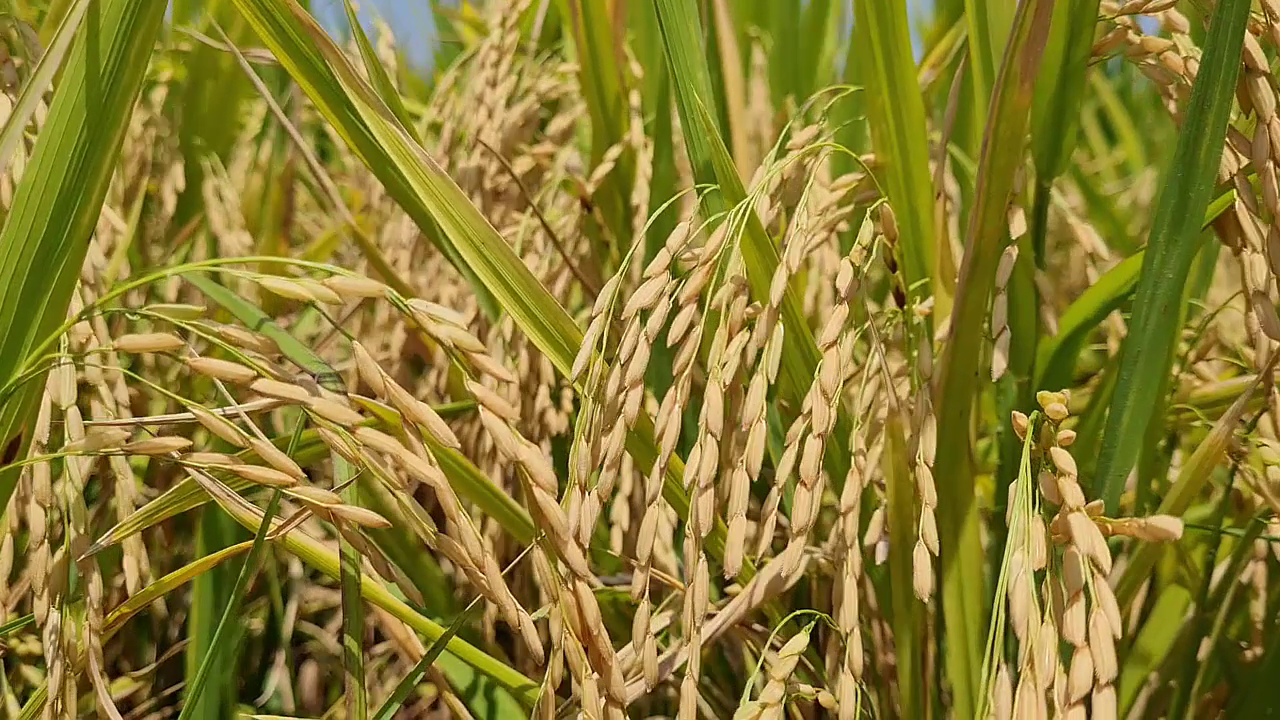
A study of 180 local rice accessions conserved at the Plant Resources Center revealed diversity in subspecies classification and grain quality traits. Within this germplasm collection, researchers identified eight accessions with promising characteristics, including aroma, low amylose content, and low to intermediate gelatinization temperatures, providing additional genetic resources for conservation and the breeding of high-quality rice varieties.
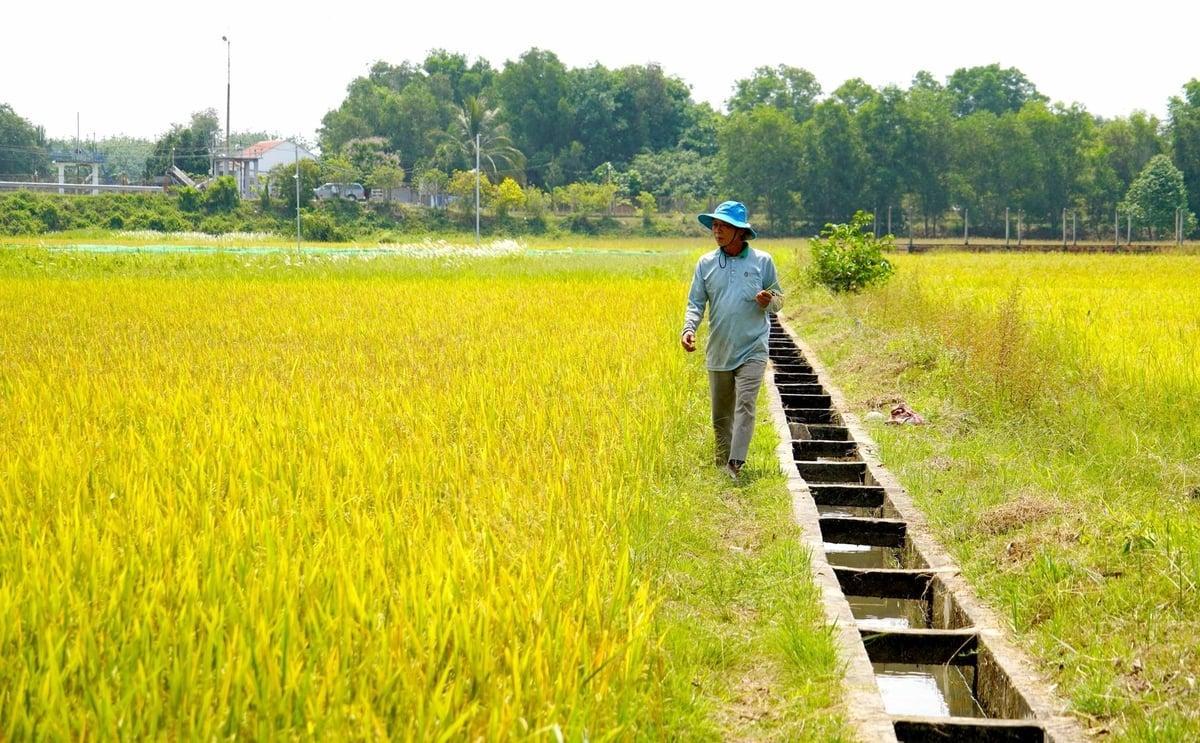
In low-lying areas of the former Cu Chi district, located in northwestern Ho Chi Minh City, seasonal flooding occurs alongside agricultural production and urbanization, creating various pressures on soil quality and its capacity for recovery. A study by Nguyen Thi Oanh, Phan Lieu, Truong Vinh Hai, and Tran Minh Tien found clear differences in soil health among rice cultivation, vegetable farming, and fruit orchards, with distinct patterns of chemical and biological degradation. The integration of multiple indicators through Principal Component Analysis (PCA) not only helped identify these differences but also provided a scientific basis for guiding soil management and restoration measures in peri-urban agricultural wetlands.
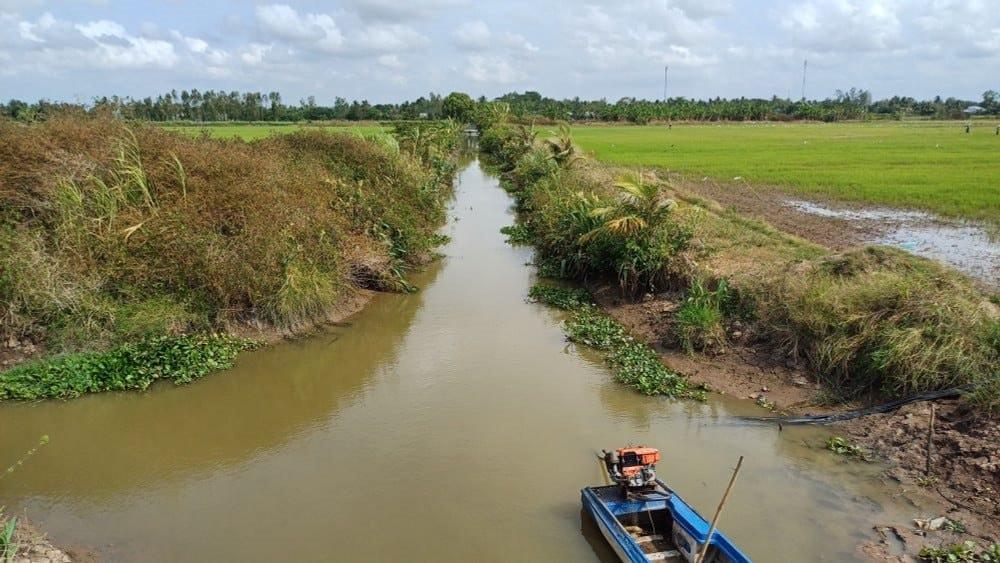
Saline intrusion is posing growing challenges to agricultural production in the lower Hau River region, where agricultural land use is closely linked to water availability. A study conducted in the former Soc Trang province, now part of Can Tho city, assessed saline intrusion risk to agricultural land use in 2024 under the RCP 4.5 and RCP 8.5 climate change scenarios for 2030 and 2050. The results show that the area of rice cultivation affected by higher salinity levels tends to increase, providing an additional scientific basis for land use planning and the selection of appropriate adaptation-oriented farming systems.
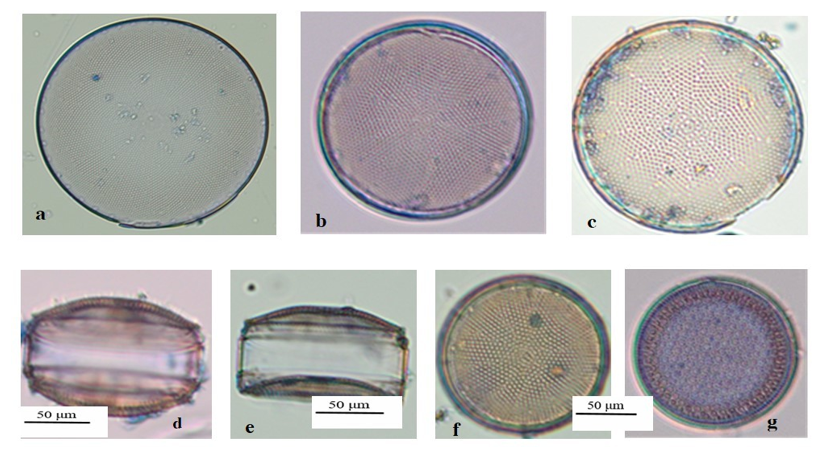
A study of phytoplankton samples collected from various marine areas of Viet Nam between 2015 and 2025 identified 21 species belonging to the genera Coscinodiscus and Coscinodiscopsis. Notably, Coscinodiscus reniformis and Coscinodiscopsis sp. were recorded and described in detail based on their cellular morphological characteristics, providing additional data for the identification and taxonomic classification of these diatom groups in Vietnamese waters.