



 In the highlands of Northern Viet Nam, ancient Shan tea trees not only provide raw materials for distinctive tea products but also preserve valuable genetic resources, indigenous knowledge, and the livelihoods of ethnic minority communities.
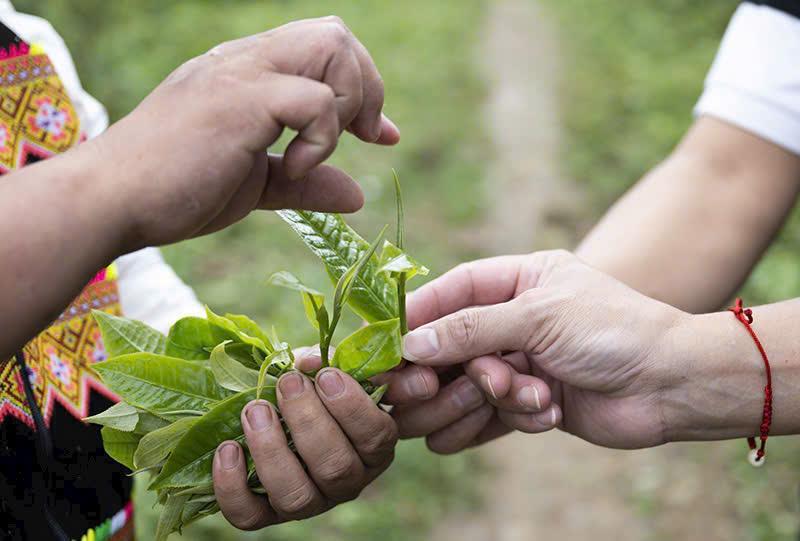
The study “Enhancing the value of ancient tea in association with genetic resource conservation and sustainable livelihoods in Khong Lao commune, Lai Chau province,” conducted by MSc. Tran Thi Mai Phuong, Director of the UNESCO Center for Research, Conservation and Promotion of Eastern Cultural Heritage Values, was presented in a scientific article published in the Journal of Environment in 2026. The study highlights an approach of particular relevance: using market value as a resource for conservation while ensuring that local communities benefit from the resources they help preserve.
An indigenous resource in the highlands of Northwestern Viet Nam
Located in Lai Chau Province in Northwestern Viet Nam, Khong Lao commune is characterized by mountainous terrain and is home to several ethnic minority communities. Approximately 600 tea trees more than 100 years old remain in Xin Chai and Ta Leng villages, at elevations ranging from approximately 1,300 to 1,800 meters above sea level. The population is closely associated with tea harvesting and the livelihoods of approximately 11 Hmong households, whose communities have contributed to maintaining the tea trees under the harsh environmental conditions of the highlands.
The study employed a case-study approach, using information collected in 2026. Field surveys were conducted from December 2025 to September 2026, combining observations in the tea-growing area with information obtained from local residents, Xin Chai Cooperative, and enterprises involved in tea processing and commercialization. Production, procurement, and market data from Phuong Nam Holdings through the ANNVIESHAN brand were also used. Key indicators were cross-checked and verified against multiple sources before being incorporated into the analysis.
Tea shoots are harvested manually, primarily according to the one-bud-two-leaves or one-bud-three-leaves standard, and are subsequently processed into green tea, black tea, and white tea. Average output was recorded at approximately 4 kg of fresh tea shoots per tree per harvest. With approximately 600 trees, the population could provide about 2,400 kg of fresh tea shoots per harvest. Based on a processing ratio of approximately 5 kg of fresh tea shoots to 1 kg of dried tea, the equivalent output would be approximately 480 kg of dried tea per harvest, or about 1,440 kg per year with three harvests. These figures represent estimated output under stable harvesting conditions rather than a fixed production level for every year.
The purchasing price for fresh tea shoots at the time of the study was approximately VND 60,000 per kilogram. Accordingly, the raw-material value of the entire population could reach approximately VND 144 million per harvest and approximately VND 432 million per year if three harvests were maintained. Producing 1 kg of dried tea requires approximately 5 kg of fresh tea shoots, corresponding to a raw-material value of approximately VND 300,000. Meanwhile, dried tea produced locally is priced from around VND 1 million per kilogram, while finished commercial products marketed under the ANNVIESHAN brand can reach approximately VND 1.8 million per kilogram.
The final product price is equivalent to approximately six times the value of the fresh tea shoot input converted to 1 kg of dried tea. This should not, however, be interpreted as a profit margin, because the difference also covers processing costs, losses, labor, transportation, expert services, quality control, packaging, management, and market development. What the study seeks to clarify is that a substantial share of the added value emerges after the raw-material stage, highlighting the need to organize the tea value chain in a way that allows part of this value to flow back to the tea-growing area and local communities.
Current market outlets remain below the potential supply of raw materials. The enterprise is currently purchasing an amount of fresh tea shoots equivalent to approximately 200 kg of dried tea per harvest, or about 41.7% of the estimated 480 kg of dried tea equivalent that the entire population could produce per harvest. This gap indicates that expanding production needs to be accompanied by market expansion. If the raw-material supply increases rapidly while market outlets remain unstable, the risks may ultimately be transferred to local people, who provide the labor required to harvest and maintain the tea trees.
Since 2021, Khong Lao has developed approximately 22 hectares of new tea plantations using indigenous tea genetic materials. This area could increase supply, expand livelihood opportunities, and reduce harvesting pressure on ancient trees. However, the study emphasizes that expanding the cultivated area does not necessarily mean that genetic resources are being adequately conserved. If propagation materials are collected from only a small number of mother trees without assessing genetic diversity, the new plantations may retain only part of the genetic diversity of the original population.
This is also an important scientific limitation that needs to be recognized when introducing Khong Lao tea to international markets. The study did not conduct direct genetic analyses of the approximately 600 trees and therefore does not provide sufficient evidence to determine the level of genetic diversity, relationships among individual trees, or the representativeness of the genetic materials used to establish the 22 hectares of new tea plantations. Studies of Camellia sinensis var. assamica in other localities only demonstrate the need for further research; they cannot be used to infer the genetic characteristics of the Khong Lao population.
From market value to long-term conservation
Conversely, stable markets can generate additional income, encourage local people to maintain tea trees, and provide cooperatives and enterprises with opportunities for reinvestment. Commercialization, however, does not automatically result in conservation. Higher prices may encourage overharvesting, while uncontrolled expansion of plantations may narrow the genetic base. Product development therefore needs to be embedded in a governance mechanism that balances the management of mother trees, genetic materials, harvesting standards, product quality, and the equitable distribution of economic benefits.
The first proposed solution is to establish a comprehensive inventory of the approximately 600 ancient tea trees. Each tree or group of trees should be identified and documented in terms of location, morphological characteristics, growth condition, productivity, raw-material quality, and harvesting history. Such a database would shift conservation management from a general population-level approach based primarily on numbers toward individual-tree monitoring. It would also provide a basis for selecting mother trees and assessing changes in the population over time.
The next step is to assess the genetic diversity of the Khong Lao population itself. The use of appropriate molecular markers or DNA sequencing approaches could help identify individual trees and genetic groups that should receive priority for conservation, while also assessing relationships between mother trees and the newly established plantations. Once direct evidence is available, propagation programs would have a scientific basis for selecting representative genetic materials and reducing the risk that expansion of the cultivated area could lead to genetic erosion.
The study also proposes combining in situ conservation of the mother-tree population with controlled propagation for the 22-hectare plantation area. Propagation materials should not be selected indiscriminately based solely on productivity or morphological characteristics. Tracking the origin of planting materials, maintaining multiple mother-tree lineages, and conducting periodic assessments would allow the new plantations to meet production objectives while helping preserve the characteristics of the local tea population. This is critical to making the raw-material production area part of a conservation strategy rather than simply a commodity-producing area.
At the value-chain level, linkages among farming households, Xin Chai Cooperative, and enterprises need to be strengthened. The cooperative could organize the raw-material production area, provide guidance on harvesting standards, manage tree records, oversee traceability, and coordinate production planning. Enterprises could focus on processing, quality control, brand development, and market expansion. A clear division of responsibilities would help align production with market demand while increasing the accountability of each stakeholder for the tea resources.
Another important issue is increasing the share of value that returns to the raw-material production area. This does not necessarily have to be achieved solely by raising the price paid for fresh tea shoots. It could also involve technical training, raw-material grading, quality-based premiums, development of primary processing services, and the creation of additional local employment. Part of the value generated along the chain should be allocated to mother-tree management, propagation, conservation, and landscape maintenance. When local people receive commensurate benefits, livelihoods can become a practical incentive for conservation.
The ISO 22000 system currently applied in production and processing should also be linked to traceability of raw materials. The objective is to identify products by production area, harvesting lot, and groups of trees supplying the tea shoots. For international markets, traceability not only supports quality control but also provides evidence of origin, product identity, and the provenance of the product. This provides a foundation for Khong Lao ancient tea to access market segments that place importance on transparency, social responsibility, and biodiversity conservation.
The study therefore proposes an integrated development mechanism encompassing genetic resource conservation, mother-tree management, raw-material production area development, sustainable harvesting, processing and quality control, traceability, brand development, market expansion, equitable distribution of economic benefits, livelihood improvement, and reinvestment in conservation. Markets generate value, but governance mechanisms determine whether that value returns to the community and the resource base.
The Khong Lao case conveys a message that extends beyond a single tea-growing area in Viet Nam: indigenous resources can be conserved sustainably only when the communities that safeguard them occupy an equitable position within the value chain. Although the findings on production, prices, and commercialization reflect local conditions during the study period, the study points toward an approach that connects genetic-resource science, community knowledge, and markets, allowing Viet Nam's ancient tea resources to be recognized not merely as commercial products but as products grounded in conservation responsibility and inclusive development.

The rapid development of electric mobility is supporting Viet Nam’s energy transition and helping reduce emissions from the transport sector. However, the environmental performance of this transition depends not only on the number of electric vehicles (EVs) in use but also on how vehicles and batteries are managed at the end of their useful lives. Before the volume of end-of-life batteries increases substantially, Vietnam is studying models for the collection, reuse, remanufacturing, and recycling of end-of-life vehicles and EV batteries, with a view to establishing a circular value chain.
While the international community continues to seek common ground on a global legally binding instrument to end plastic pollution, the question for Viet Nam is not only when the Global Plastics Treaty will be adopted, but, more importantly, how prepared the domestic economy, businesses, and governance systems are for the new requirements it may entail.

A scientific study by An Giang University, Vietnam National University, Ho Chi Minh City, and the An Giang Center for Rural Clean Water and Environmental Sanitation has demonstrated the potential of water lettuce (Pistia stratiotes) for treating piggery wastewater under natural conditions. The findings show that treatment performance varies with the initial biomass density and the pollutant being targeted. The approach offers a low-cost, environmentally friendly biological treatment option with potential for application by pig farms and household producers in Viet Nam.
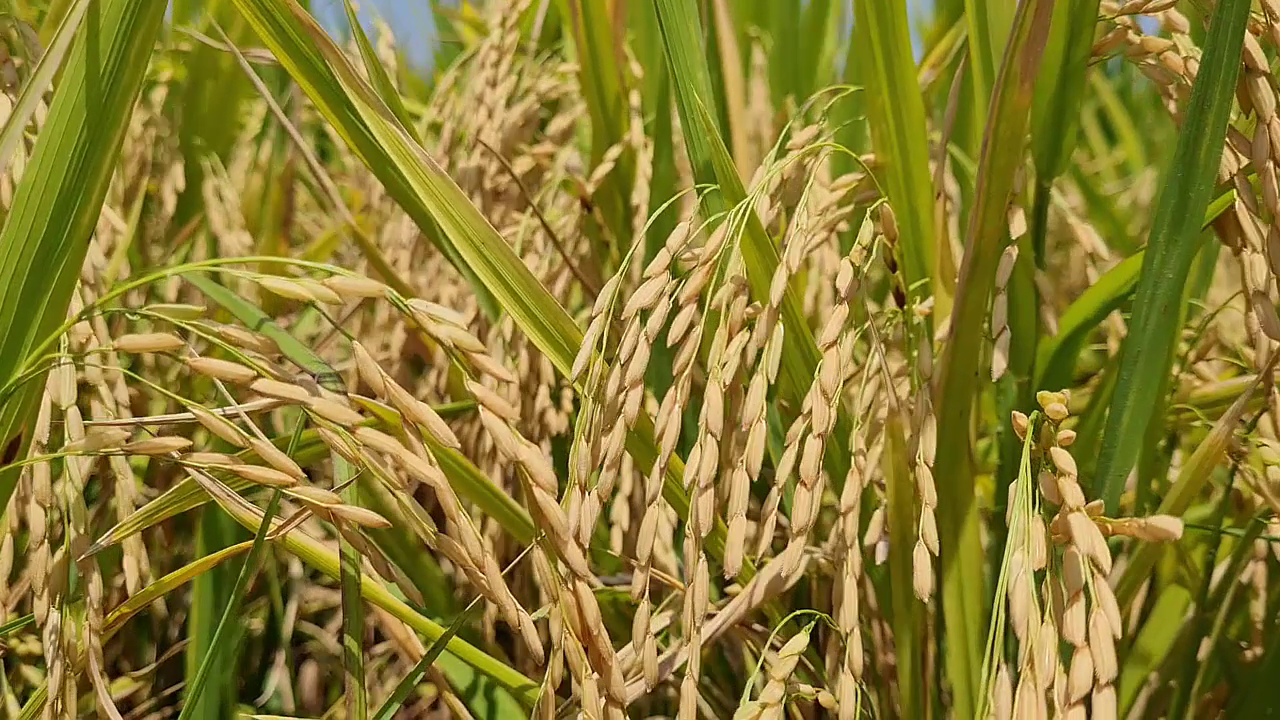
A study of 180 local rice accessions conserved at the Plant Resources Center revealed diversity in subspecies classification and grain quality traits. Within this germplasm collection, researchers identified eight accessions with promising characteristics, including aroma, low amylose content, and low to intermediate gelatinization temperatures, providing additional genetic resources for conservation and the breeding of high-quality rice varieties.

Scientists from the Vietnam Academy of Science and Technology (VAST) have successfully developed a process for extracting and purifying glucose oxidase (GOx) and characterizing its key properties using a fungal strain isolated from soil in a Vietnamese rice-growing area. The findings provide a scientific basis for exploring indigenous microbial resources and offer prospects for gradually developing domestic sources of valuable enzymes for applications in the food industry, biosensors, and environmental technology.