



 On June 23 in Hanoi, the Ho Chi Minh National Academy of Politics, in coordination with the Central Policy and Strategy Commission, the Central Theoretical Council, and the Viet Nam Academy of Science and Technology, held a scientific workshop on “Quantum technology in a new era – Global trends, opportunities and challenges for Viet Nam.”
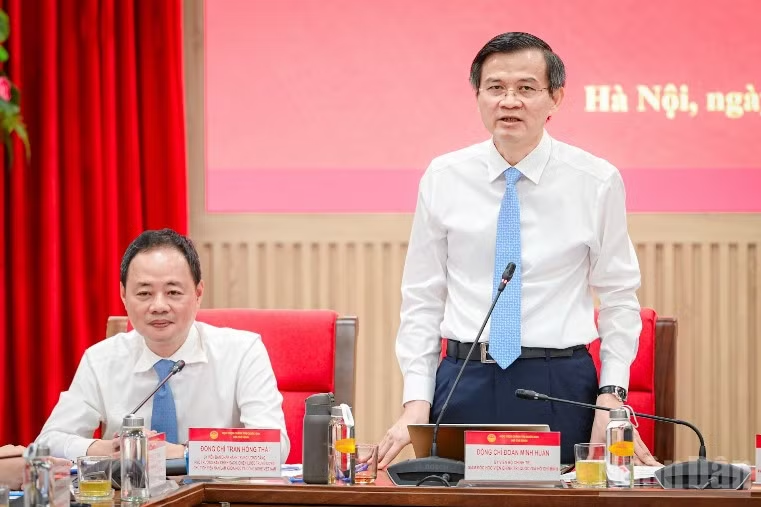
The workshop was co-chaired by Politburo member Doan Minh Huan, Director of the Ho Chi Minh National Academy of Politics, along with Party Central Committee members Tran Hong Thai, Deputy Head of the Central Policy and Strategy Commission and Chairman of the Viet Nam Academy of Science and Technology; Nguyen Kim Son, Deputy Head of the Central Policy and Strategy Commission; and Le Hai Binh, Standing Deputy Director of the Ho Chi Minh National Academy of Politics.
Opening the workshop, Politburo member Doan Minh Huan said Viet Nam is entering a new stage of development requiring higher productivity, better quality, stronger competitiveness, and greater national self-reliance. In that context, science and technology, innovation, and digital transformation have become key drivers for transforming the growth model and improving national governance capacity.
He said Politburo Resolution No. 57-NQ/TW calls for breakthroughs in strategic thinking, institutions, human resources, infrastructure, and implementation mechanisms, while emphasizing early identification and preparation for emerging technologies with far-reaching impacts. Against that backdrop, quantum technology should receive early attention as a new technological frontier with the potential to drive major breakthroughs and significantly reshape science and industry.
According to Doan Minh Huan, quantum technology is a new, highly specialized, and rapidly evolving field with major strategic potential in basic research, applied research, technical development, and technology governance. He said such development should ultimately serve people and strengthen national strategic autonomy. He noted that quantum technology is classified as a strategic technology under Politburo Resolution No. 57. Early assessment of trends, opportunities, and challenges, along with preparation of the necessary conditions for future development, is therefore essential.
Doan Minh Huan emphasized that the workshop reflected the urgent need to connect theoretical research, cadre training, and strategic policy advisory work with modern scientific and technological knowledge. He said quantum technology is no longer solely a matter for laboratories or research communities, as it could significantly affect development models, competitiveness, workforce quality, national self-reliance, and Viet Nam’s international standing.
In his keynote remarks, Tran Hong Thai said quantum technology is a highly challenging field in terms of science, infrastructure, human resources, and implementation. Many areas of quantum technology worldwide remain at the research and experimental stage, he said. However, many countries already regard it as a strategic technology because of its direct implications for digital sovereignty, information security, and public trust in national digital infrastructure.
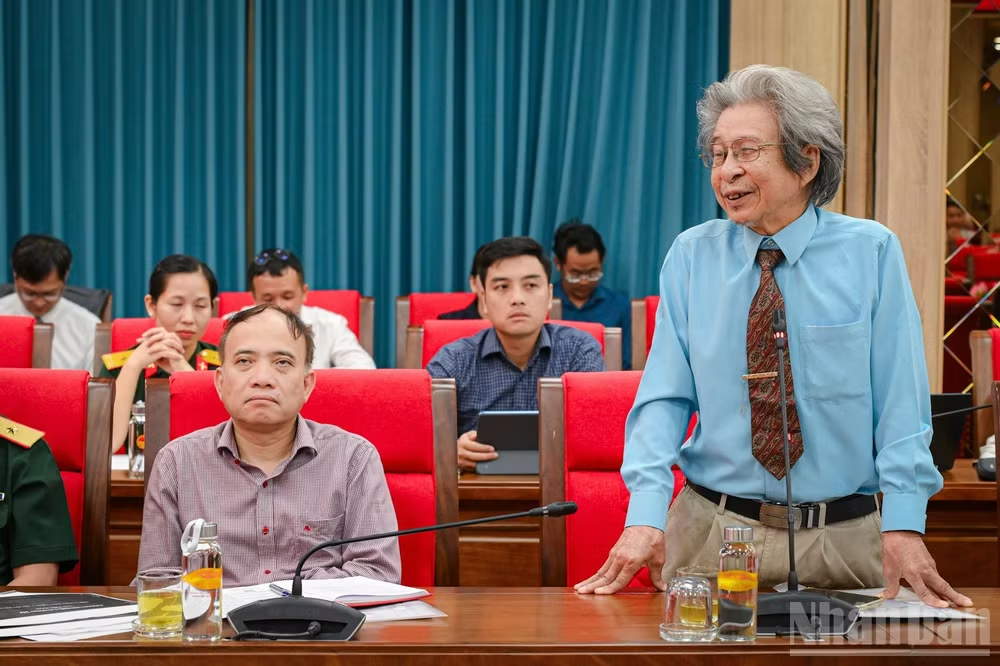
Tran Hong Thai said quantum technology could create new capabilities in measurement, sensing, simulation, computing, and materials. These capabilities could support fundamental science as well as applications in defense, security, telecommunications, finance, healthcare, energy, natural resources, environment, and high-tech industries.
He stressed that the workforce needed for quantum technology cannot be developed within months or through short-term training. It requires interdisciplinary expertise spanning physics, mathematics, computer science, cryptography, photonics, materials science, electronics, control systems, metrology, software engineering, and data science, along with contributions from social sciences and humanities.
Tran Hong Thai said Viet Nam must prepare early by establishing research groups and laboratories and engaging both domestic and international experts. The country should be proactive but avoid rushing—without attempting full-scale competition with major powers, yet without remaining on the sidelines.
He said Viet Nam should build awareness early, strengthen its foundational capacity, and focus on areas that can generate capabilities suited to national conditions.
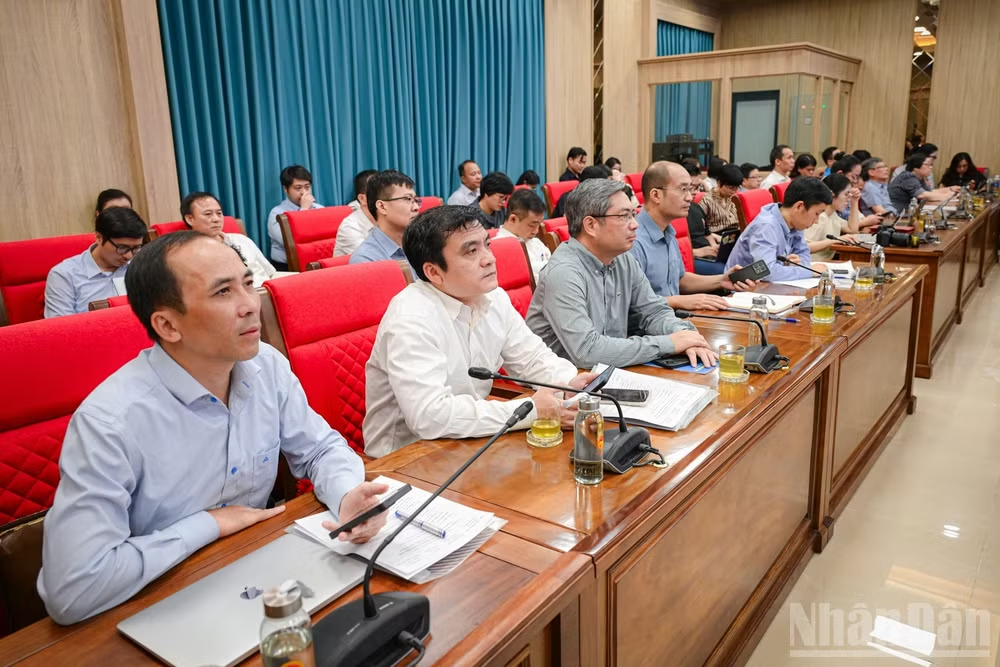
The workshop heard three presentations on the following themes: Quantum technology in a new era – vision and international experience; Current status, bottlenecks, and requirements for quantum technology development in Viet Nam; and objectives, tasks, solutions, and key priorities for the next phase.
Participants focused on clarifying major global development trends in quantum technology and their implications for Viet Nam. Discussions also identified the foundations Viet Nam already possesses, the conditions that remain lacking, and the issues requiring early attention to support development of this strategic technology.
The workshop proposed approaches suited to Viet Nam’s practical conditions and offered multiple solutions regarding priority areas in quantum technology, resource mobilization, workforce development, and financial mechanisms to ensure long-term, substantive, and effective development.
It also put forward solutions for governance of quantum technology development, promotion of breakthrough applications, and safeguards for security, safety, strategic autonomy, and national interests.
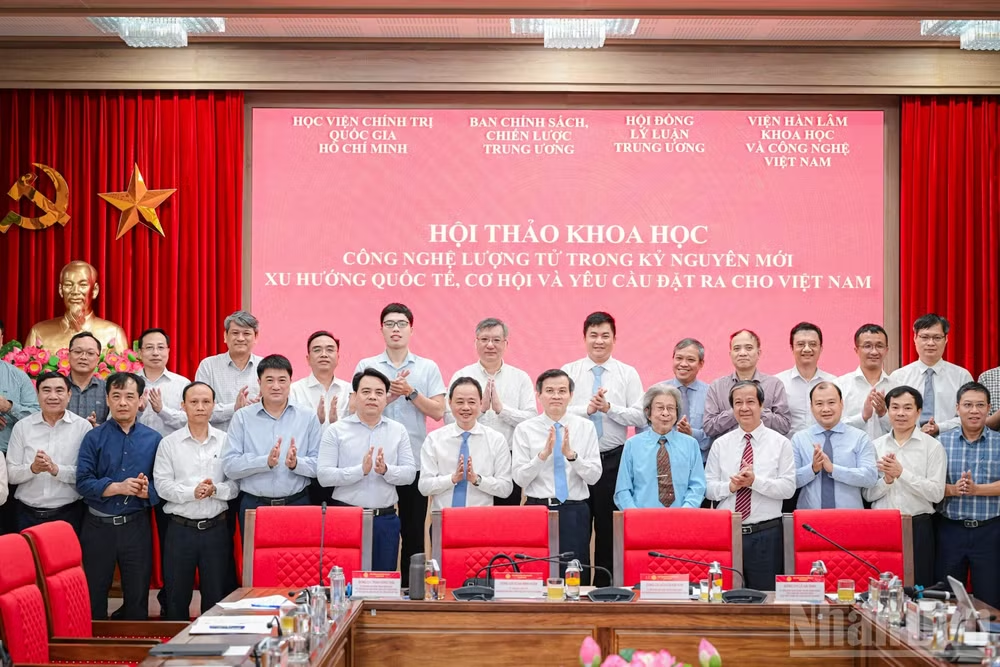
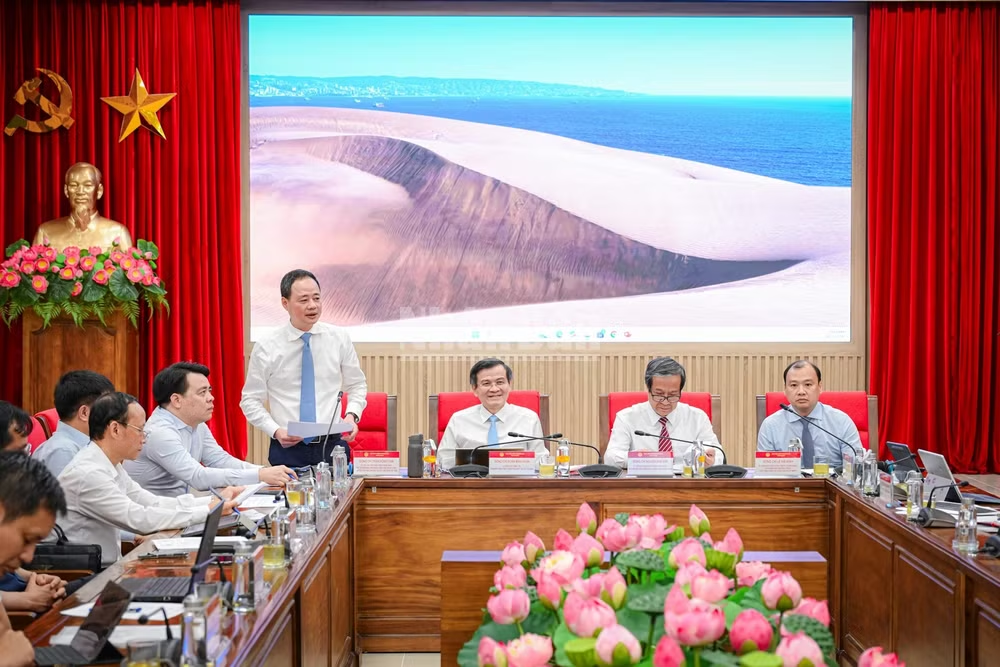
Delegates took part in the workshop on quantum technology. (Photo: Bao Long)
Concluding the workshop, Tran Hong Thai thanked scientists, experts, regulatory agencies, research institutes, universities, and businesses for their in-depth discussions and constructive contributions.
Based on the workshop’s discussions, he called for further refinement of the approach to quantum technology as a strategic technology ecosystem. He said the concept should not be narrowly confined to quantum computing, but should also avoid becoming so broad that resources are spread too thin.
He stressed the need to prioritize several areas suited to Viet Nam’s near-term conditions, particularly post-quantum cryptography and data security; sensing and measurement; photonics, materials, and components; simulation, algorithms, and software; artificial intelligence for scientific research; and interdisciplinary workforce training.
He also called for the design of coordination and implementation mechanisms with clear focal agencies, shared infrastructure, testing platforms, end-user institutions, business participation, and phased evaluation criteria.
At the same time, he urged broader international cooperation with trusted partners, global experts, and overseas Vietnamese specialists, linking such cooperation with workforce training, knowledge transfer, infrastructure access, technical standards, and the development of domestic technological self-reliance.
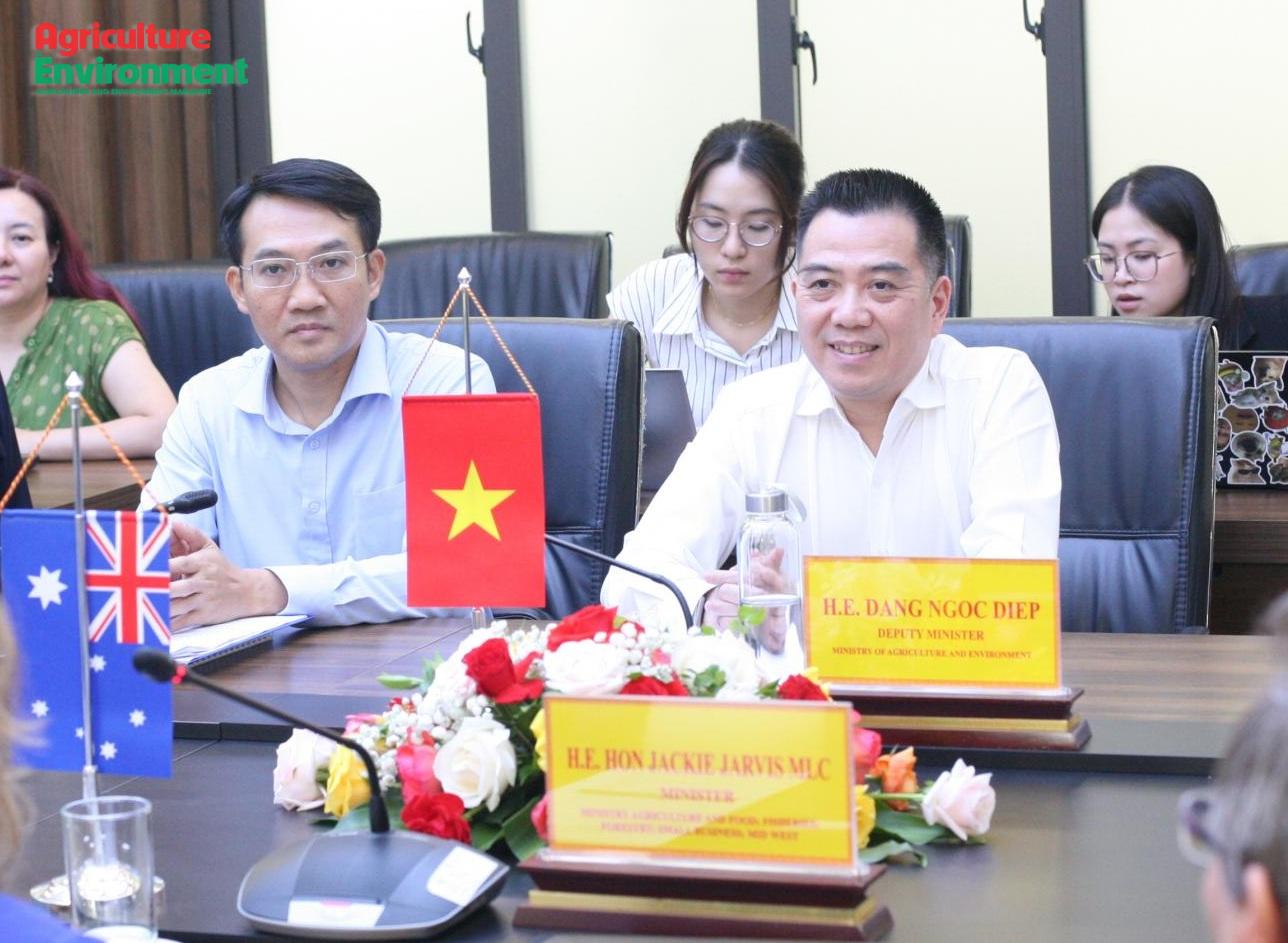
The September 24 meeting between Deputy Minister of Agriculture and Environment Dang Ngoc Diep and Hon Jackie Jarvis MLC, Western Australia’s Minister for Agriculture and Food; Fisheries; Forestry; Small Business; and the Mid West, highlighted scope for expanding Viet Nam-Australia cooperation beyond trade in agricultural, forestry and fishery products to science and technology, climate change adaptation, biosecurity and the marine economy. The two sides also discussed strengthening business links, addressing technical issues and turning areas of potential into concrete cooperation programs.
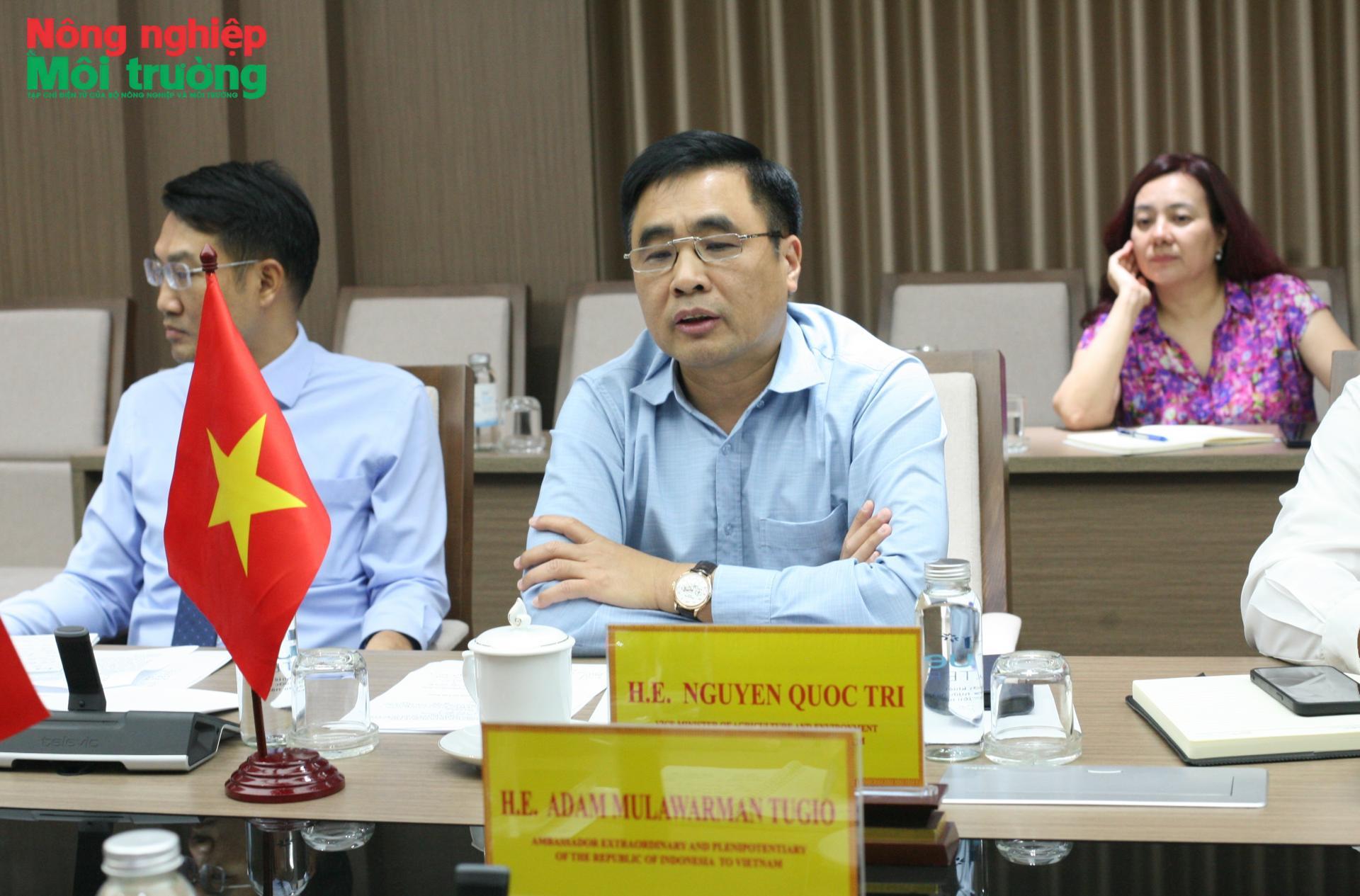
A meeting between Deputy Minister of Agriculture and Environment Nguyen Quoc Tri and Indonesian Ambassador to Viet Nam Adam Mulawarman Tugio on September 22 highlighted the specific market issues shaping agricultural cooperation between the two countries. From Halal products and fisheries to livestock and veterinary vaccines, expanding bilateral trade is closely tied to standards, quarantine requirements, technical dossiers and business connections.
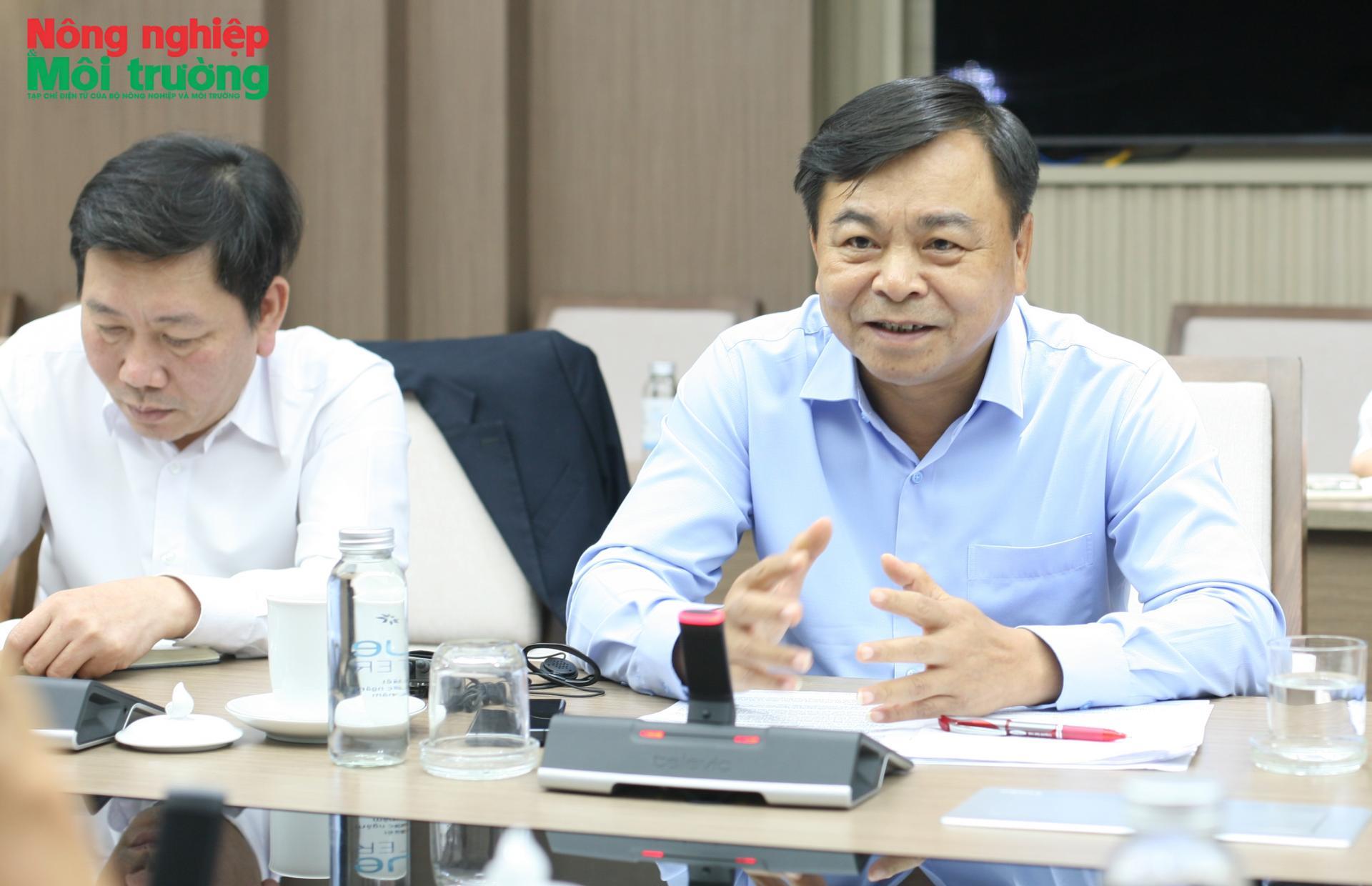
Deputy Minister of Agriculture and Environment Nguyen Hoang Hiep met with a World Bank (WB) delegation on September 9 to discuss the AgriConnect initiative. The meeting focused on ways to better connect public investment, policy and private capital to the development of agricultural value chains.
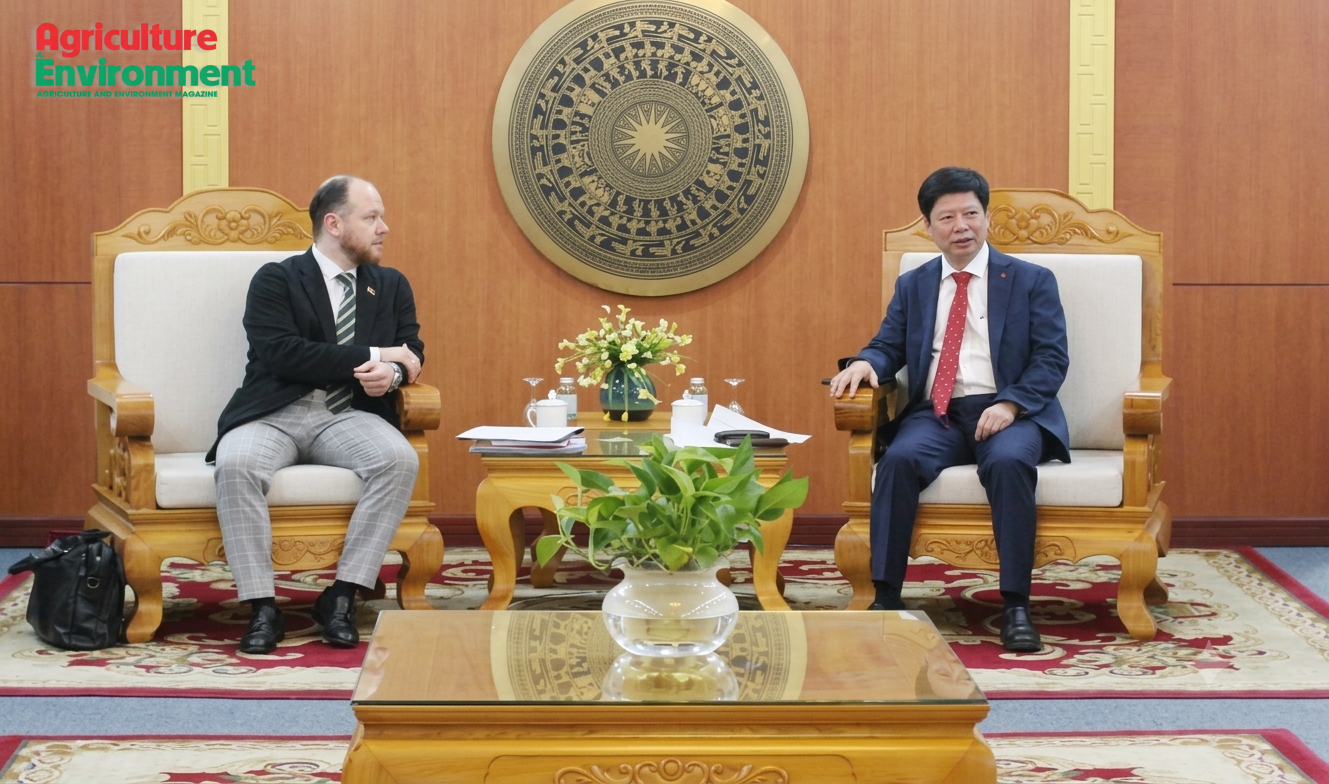
The licensing of four Belarusian companies to export boneless beef to Viet Nam, with the first shipment entering the Vietnamese market in April 2026, marks a concrete result in efforts to address market-access procedures between the two countries. In the opposite direction, the number of Vietnamese companies authorised to export meat and seafood to the Eurasian Economic Union (EAEU) is only about one-sixth the number of Belarusian companies authorised to export to Viet Nam, pointing to further scope for addressing technical barriers and expanding market opportunities for Vietnamese agricultural products.
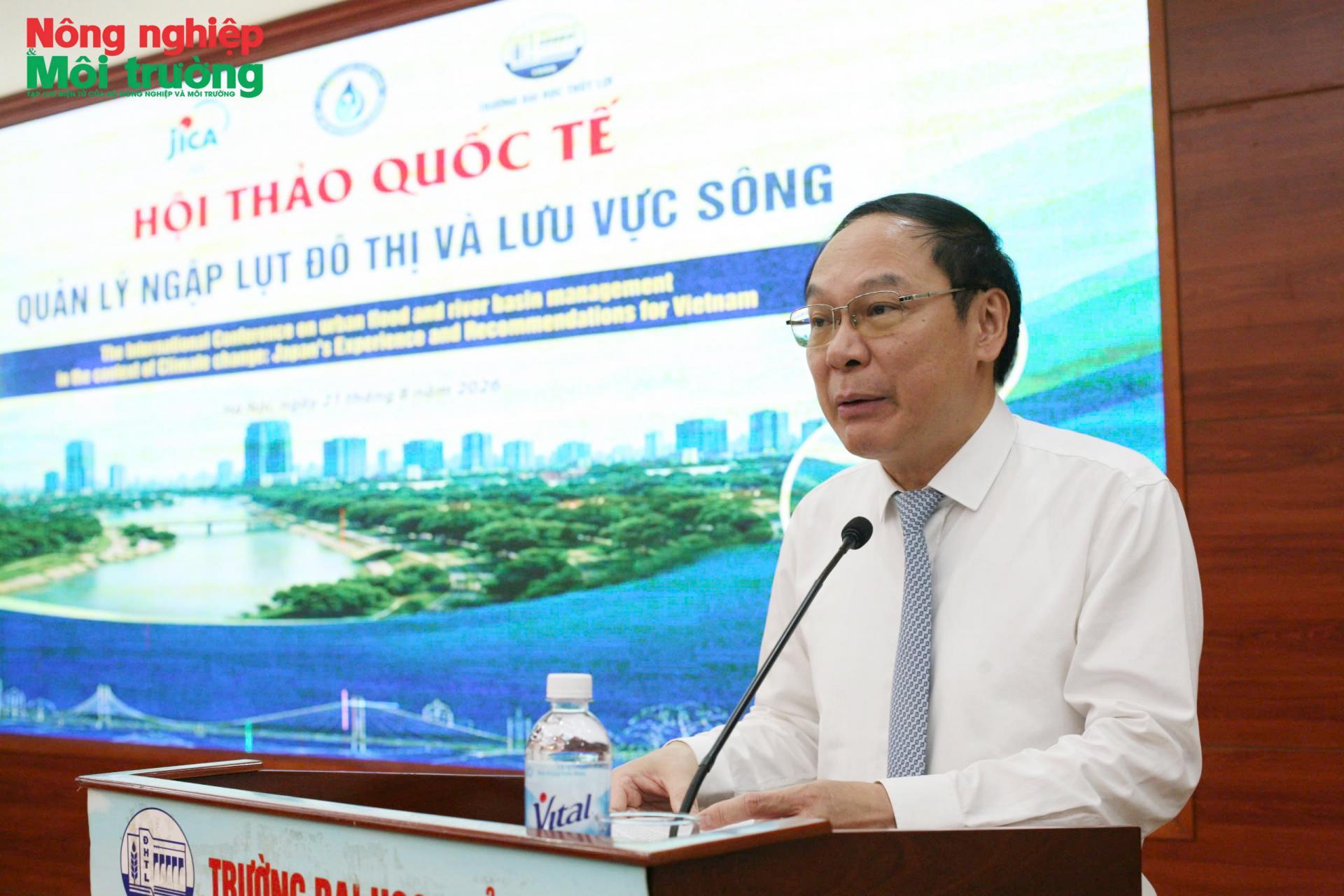
Urban flooding is increasingly influenced by a combination of heavy rainfall, river flows, tides, water-storage capacity, land use and urban spatial planning. At the international conference on “Urban flood and river basin management in the context of climate change: Japan’s experience and recommendations for Viet Nam”, held in Hanoi on August 21, Deputy Minister of Agriculture and Environment Le Cong Thanh said the issue should be addressed as part of integrated water resources management, urban planning and disaster risk governance, rather than being treated solely as a drainage problem within individual cities.