



 As organic farming and safe agricultural production gain momentum, botanical plant protection products are increasingly being viewed as a promising alternative to conventional chemical pesticides. Drawing on more than half a century of research, a review by Nguyen Thi Lan Huong, Dang Thi Thanh Le, and Vuong Dang Le Mai from Thuyloi University and University of Transport Technology highlights Viet Nam’s rich plant resources and their potential for developing a new generation of biological plant protection products.

Folk remedies return to the fields through science
For decades, chemical pesticides dominated agricultural production, while traditional practices using plants to repel pests and diseases gradually faded from use. Today, growing demand for safer agriculture and lower environmental impacts is driving renewed scientific interest in botanical plant protection products.
The study shows that Viet Nam possesses an exceptionally diverse pool of biologically active plants. According to data compiled by the authors, the country is home to around 13,200 terrestrial plant species, many of which have the potential to control plant pests and diseases.
The use of plants for pest control has long existed in Vietnamese folk knowledge. Local communities traditionally used custard apple seeds, jicama seeds, and Stemona tuberosa to eliminate lice and aphids, while wormseed and pomegranate were used to treat parasitic worms. Other plants, including Derris spp. and several indigenous toxic species, were even used in fishing because of their naturally occurring bioactive compounds.
According to the research team, Viet Nam’s first scientific study on the insecticidal effects of plants was published in 1960. However, systematic research on botanical plant protection products only regained momentum in the 1980s. Familiar plants such as chinaberry, Derris spp., Artemisia spp., jicama, and pond apple were gradually evaluated for their ability to control pests on vegetables and staple crops.
One of the study’s notable findings comes from large-scale screening efforts conducted between 2007 and 2014 by researchers from the Plant Protection Research Institute, the Institute of Chemistry, and the University of Düsseldorf in Germany. During this period, scientists collected and screened 571 plant species across various ecological regions of Vietnam. The results identified 48 species with insecticidal activity against Spodoptera litura and 147 species showing antifungal activity against dangerous plant-pathogenic fungi.
The authors argue that this growing body of data provides an important scientific foundation for developing domestically produced biological plant protection products, particularly as organic agriculture expands and demand rises for alternatives to synthetic pesticides.
Natural compounds showing strong pest and disease control potential
Another highlight of the study is its detailed overview of natural compounds extracted from Vietnamese plants that have demonstrated significant pest-control potential.
According to the authors, many plants commonly found in daily life contain compounds of considerable value to the plant protection sector. Neem contains azadirachtin; Sophora spp. contain matrine; Derris spp. are rich in rotenone; turmeric contains curcumin; and betel leaves contain eugenol along with several antifungal compounds.
A number of experimental formulations have already produced promising results both in laboratory settings and field trials.
Studies cited in the paper show that extracts from Artemisia spp. once achieved up to 100% control efficiency against cabbage caterpillars on cruciferous vegetables. Extracts derived from jicama seeds also proved highly effective against several vegetable pests. Meanwhile, compounds isolated from turmeric, garlic, black pepper, and betel leaves demonstrated strong inhibitory effects against anthracnose and gray mold pathogens.
More recent research points to a growing trend of combining advanced technologies with botanical materials. Nano-formulations derived from turmeric, for example, achieved more than 80% effectiveness in controlling anthracnose disease in lychee orchards in Bac Giang Province - now part of Bac Ninh Province following Viet Nam’s recent administrative merger. Another product, the botanical plant protection product CASAI 1CS — produced from extracts of brown algae and capsaicin from chili peppers — recorded control efficiencies above 70% against red spider mites and diamondback moths in organic farming models.
According to the authors, the value of botanical plant protection products lies not only in their pest-control performance, but also in their rapid biodegradability, lower residue levels, and reduced risk of resistance development among pests.
At the same time, the study notes that most current achievements remain limited to experimental or small-scale production. Commercialization continues to face significant obstacles, including research costs, extraction technologies, and the challenge of stabilizing active compounds for industrial production.
Botanical plant protection products gain ground in agriculture
Botanical plant protection products are no longer confined to small-scale organic farms or experimental production models. They are gradually establishing a clearer presence in Viet Nam’s agricultural market.
According to data compiled by the authors, Viet Nam had registered 189 botanical plant protection products for use by 2024, accounting for roughly 18% of all biological plant protection products approved nationwide. Most of these products are based on five key active ingredients: matrine, azadirachtin, saponin, rotenone, and eugenol.
The study notes that Viet Nam currently leads the ASEAN region in the number of registered biological plant protection products, representing more than 60% of the region’s total. Within this segment, botanical products are attracting increasing attention as demand grows for safer agricultural production and lower chemical residues in food products.
In recent years, plant-based formulations have been applied to control pests and diseases on vegetables, tea, fruit trees, and industrial crops. Products derived from neem, garlic, chili, cinnamon, betel leaves, and eucalyptus have shown encouraging and relatively stable performance under practical farming conditions.
The study also reports that biological plant protection products used in Viet Nam during the 2020–2025 period averaged around 0.27 kilograms of active ingredient per hectare, equivalent to approximately 18% of the country’s total pesticide consumption. Although the proportion remains modest, it reflects a gradual shift toward more environmentally friendly crop protection solutions.
Notably, many domestic enterprises have begun investing in biological pesticide production technologies, including botanical formulations. Viet Nam currently has 72 manufacturers producing biological plant protection products in various forms, including liquid solutions, water-dispersible granules, nano-biological products, and plant-extract formulations.
However, the researchers caution that most botanical plant protection products circulating in Viet Nam still depend heavily on imported raw materials or active ingredients. Many products remain limited to local repackaging or formulation rather than fully domestic production technologies.
Strong potential, but production technology remains a bottleneck
According to the authors, a considerable gap still exists between Viet Nam’s abundant plant resources and its ability to develop a large-scale botanical plant protection industry.
Despite possessing a rich diversity of biologically active plants — including Azadirachta indica, Derris spp., Sophora spp., Artemisia spp., Eucalyptus spp., Melaleuca spp., soapberry, and betel — the number of successfully commercialized products remains limited. Many studies have produced promising laboratory results, yet scaling up for industrial production has proven far more difficult.
The study identifies the high cost of extraction technologies and active-compound stabilization as major barriers to commercialization. In addition, the effectiveness of botanical products is often influenced by raw material quality, storage conditions, and manufacturing processes, making product standardization particularly challenging.
The research also points out that Viet Nam still has relatively few large-scale or state-funded research programs dedicated to botanical plant protection products. Several formulations tested in field conditions have struggled to sustain long-term production or achieve broader market adoption.
To build a sustainable botanical plant protection industry, the authors recommend prioritizing the screening of resource-rich plant species that are easy to cultivate, inexpensive to exploit, and suitable for domestic production conditions. At the same time, they stress the importance of investing in extraction and preservation technologies while strengthening international cooperation to gain access to advanced technologies.
As green agriculture and organic farming become increasingly important worldwide, the study is seen not only as a valuable scientific review, but also as a roadmap for harnessing Viet Nam’s native plant resources to develop environmentally friendly plant protection products domestically.
This article is based on the research paper “Research potential of plants in Viet Nam as botanical plant protection products” by Nguyen Thi Lan Huong, Dang Thi Thanh Le, and Vuong Dang Le Mai of Thuyloi University and University of Transport Technology, published in Issue No.1/2026 of The Science Journal of Agriculture and Environment. |
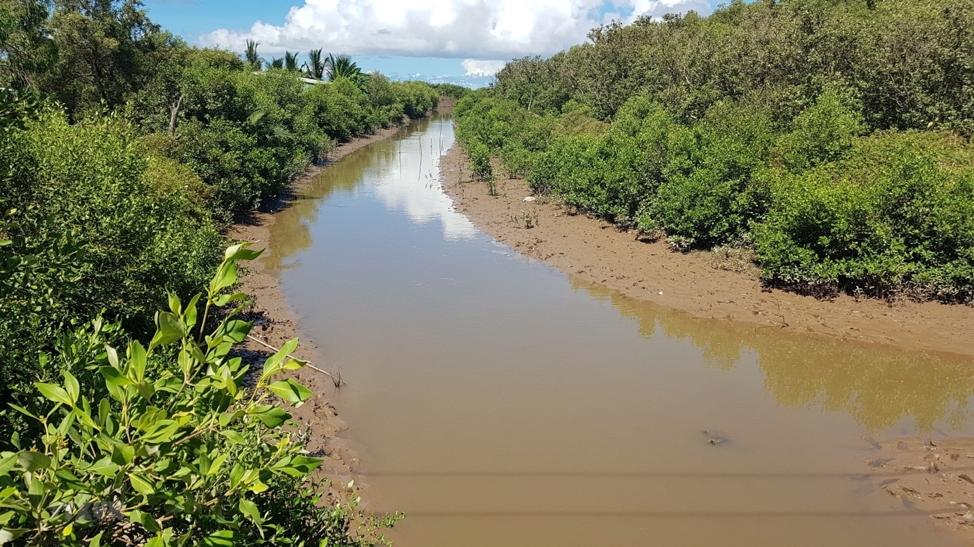
In the context of accelerating climate change, sea-level rise, and increasingly severe coastal erosion in the Mekong Delta, field-based scientific evidence on the coastal protection functions of mangrove forests (MF) has become critically important for shoreline planning and management. Recently, a research team comprising Ly Trung Nguyen, Danh Tinh, and Le Thanh Khang from the College of the Environment and Natural Resources, Can Tho University, completed a large-scale field study in coastal mangrove forests located in the former Soc Trang province, now administratively part of Can Tho city.

In the context of rapidly increasing municipal solid waste (MSW) generation in urban areas, digital transformation is opening significant opportunities to improve the efficiency of waste collection, transportation, treatment, and recycling. The study conducted by Phan Thi Hai Luyen and Pham Quang Dung (Vietnam National University of Agriculture) provides a comprehensive overview of digital technologies—including the Internet of Things (IoT), Artificial Intelligence (AI), Big Data, Geographic Information Systems (GIS), and smart management models—together with a SWOT analysis assessing the feasibility of applying such technologies in Vietnam. Findings indicate that digital transformation can deliver substantial improvements, although challenges remain in terms of infrastructure, investment costs, and public awareness.
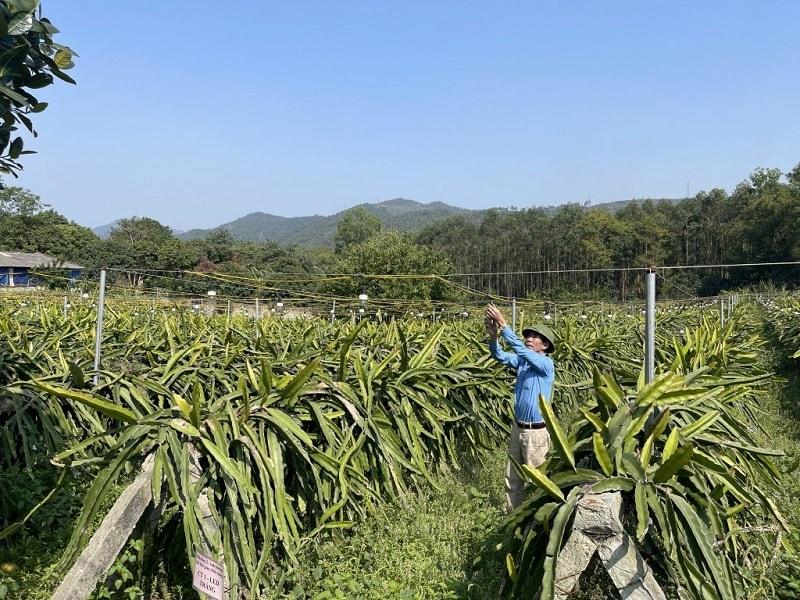
In recent years, agriculture has continued to play an important role in Quang Ninh’s local economic structure and remains a key source of livelihoods for tens of thousands of farming households. Beyond its economic contribution, the sector underpins rural employment and social stability across many districts. However, the development of key agricultural product value chains in the province still faces persistent challenges, including fragmented small-scale production, aging fruit orchards, unstable consumption markets, and increasing risks associated with climate change.
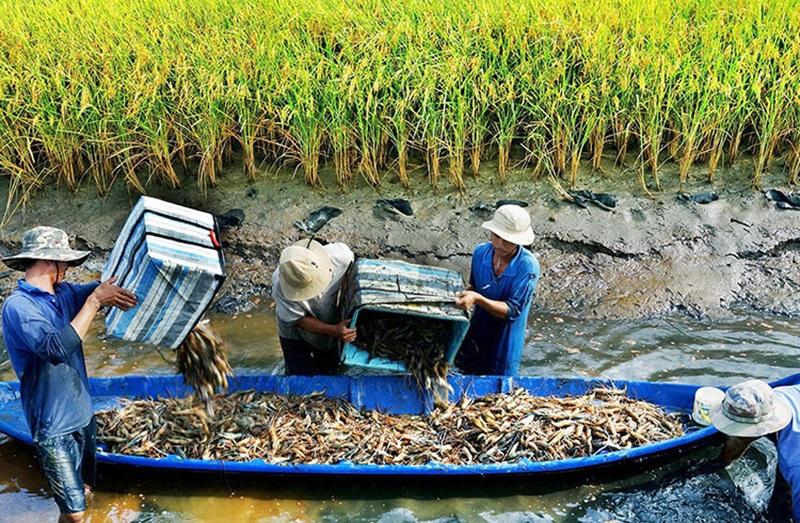
In the U Minh Thuong area (formerly Kien Giang province, now part of An Giang), the shrimp–rice system has long been regarded as a key production model. Yet in recent years, the system has been under pressure due to salinization, soil degradation, and continuous shrimp farming, all of which have contributed to declining yields and deteriorating water quality. A research team from Can Tho University conducted a field trial using two native aquatic plant species — Nan tuong (Scirpus littoralis) and Co nuoc man (Paspalum vaginatum) — in shrimp ponds. Their findings show that these plants can improve water conditions and increase black tiger shrimp productivity by 14–21%, offering a promising biological management approach for shrimp–rice systems in the Mekong Delta.
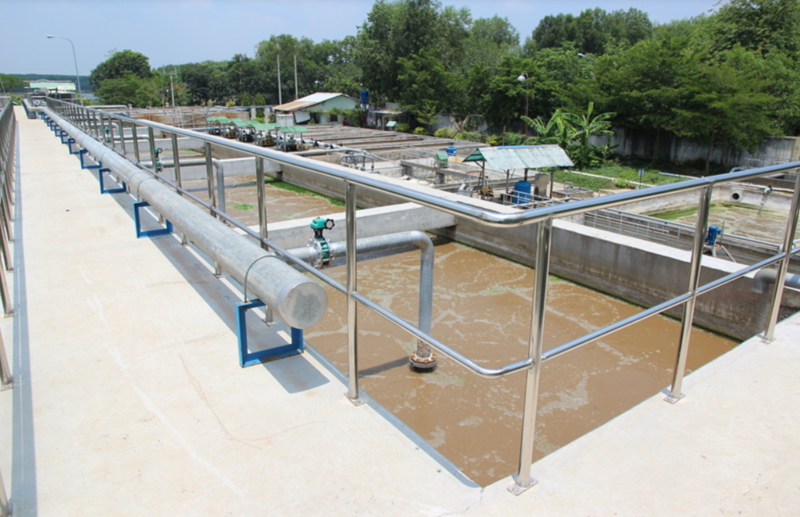
A research team from the Institute of Materials Science, Vietnam Academy of Science and Technology (VAST)—including Le Thi Hai Ninh, Pham Thi Hai Thinh, Nguyen Duc Nui, and Duong Van Nam—has carried out a study on phosphorus recovery from natural rubber processing wastewater using the struvite precipitation method.