




 A conference titled “Artificial intelligence, digital technology and intellectual property protection in cinema” was held on June 30 in Da Nang as part of the 4th Da Nang Asian Film Festival (DANAFF IV).
The event brought together researchers, technology experts, legal specialists, policymakers, and business representatives from Viet Nam and abroad to examine the impact of artificial intelligence (AI) on the film industry, while discussing measures to strengthen copyright protection and support the sector’s development in the digital era.

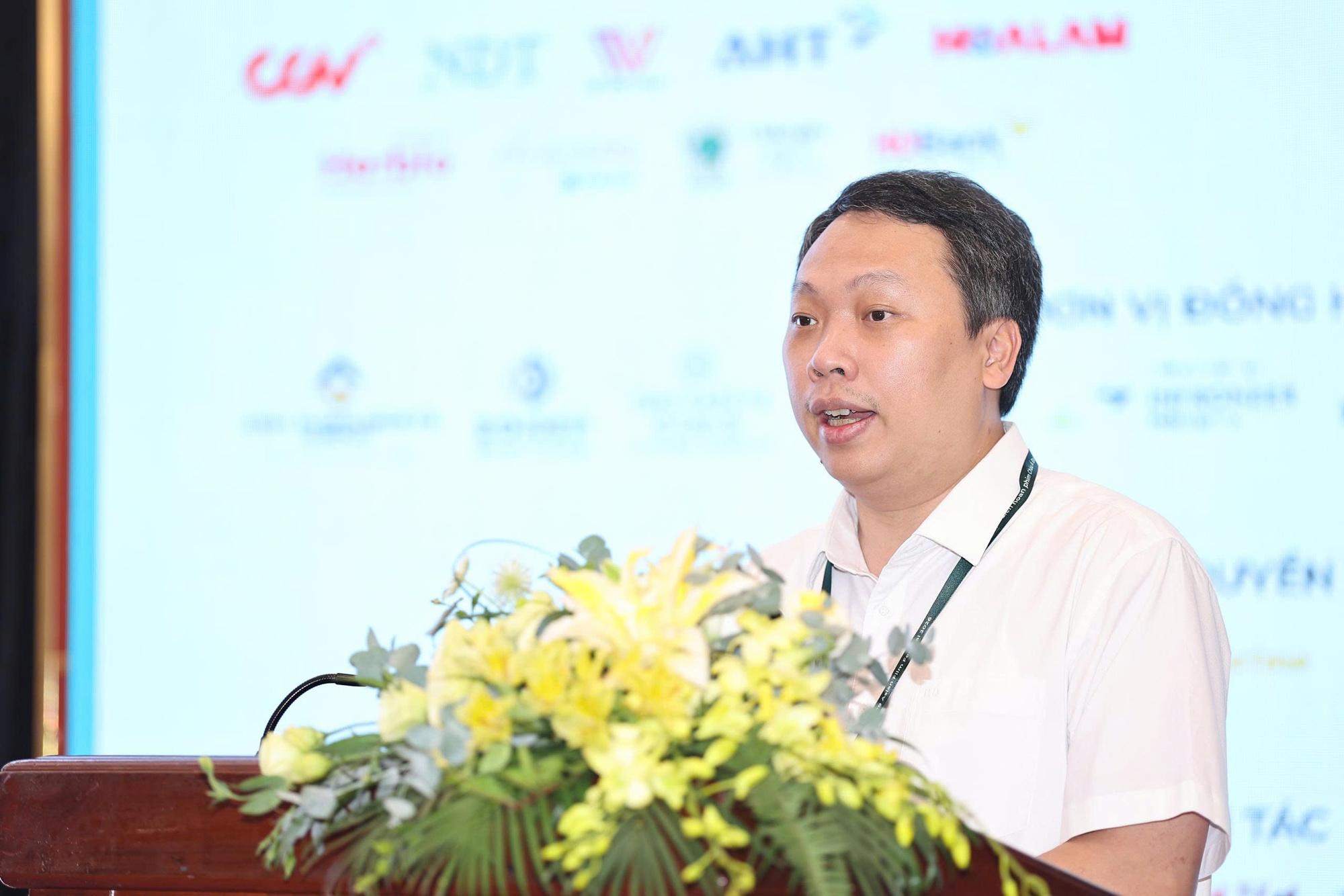
Speaking at the conference, Nguyen Huy Dung, Deputy Minister of Culture, Sports and Tourism, said the event was not simply about a new technology, but about the future of Vietnamese cinema. He said the key question was how Viet Nam would create, distribute, protect creative value, and enforce rights in an era when content can be generated, copied, edited, and disseminated at unprecedented speed.
Deputy Minister Nguyen Huy Dung said the pressure to innovate is becoming increasingly clear as Viet Nam pursues broader national development goals. Viet Nam’s Strategy for the Development of Cultural Industries to 2030 aims for cultural industries to contribute 7% of GDP, while the National Target Program on Cultural Development has allocated substantial resources, with total funding for 2025–2030 projected at more than 120 trillion VND (about $4.6 billion). “This means culture must become a core driver of rapid and sustainable national development, and cinema plays a particularly important role in that strategy,” he said.
According to Deputy Minister Nguyen Huy Dung, Viet Nam’s box office revenue reached nearly 5.6 trillion VND in 2025, with more than 70 million tickets sold. Vietnamese films accounted for around 62% of the theatrical market. More than 50 Vietnamese films were released in 2025, the highest annual figure in about a decade, indicating that the country’s film sector has grown into a significant creative industry with expanding audiences, stronger revenue streams, and increasing legal responsibilities.
However, average cinema attendance in Viet Nam remains at only about 0.7 visits per person annually, lower than in some regional markets such as Malaysia at 1.0 and Singapore at 1.3 visits per person.
Deputy Minister Nguyen Huy Dung said Vietnamese cinema could grow substantially if it improves content quality, digital distribution, promotion, copyright protection, and audience experience.
At the same time, AI is rapidly reshaping both production costs and creative capabilities across the global film industry. International studies project the AI market in filmmaking could grow from more than $3 billion in 2024 to over $20 billion in the early 2030s. AI is increasingly being used in script development, storyboarding, pre-production, post-production, visual effects, dubbing, subtitling, restoration, audience analysis, and marketing. Tasks that previously required months of work, large teams, and significant budgets can now be completed faster, at lower cost, and with greater personalization.
Citing a regional example, Deputy Minister Nguyen Huy Dung said China’s short-film market reached around $7 billion in 2024 and is expected to continue growing rapidly, with AI-generated content accounting for an increasing share.
In the first quarter of 2026 alone, about 128,000 short films were released in China, most of them AI-generated. Yet a notable paradox has emerged: films featuring real human actors, though far fewer in number, attracted significantly higher viewership. Speed cannot replace emotion. Legal disputes have also emerged after actors discovered their likenesses had been replicated without consent, prompting regulators to introduce new rules.
“This presents a vivid picture of both the opportunities and risks AI brings,” he said. “The question for Viet Nam is what lessons we should learn—and what pitfalls we should avoid.”
AI lowers barriers to filmmaking
Deputy Minister Nguyen Huy Dung emphasized viewing AI merely as a tool to make films faster and cheaper captures only part of the picture. The more significant shift, he said, is that as the cost of content creation falls sharply, the cost of verifying origin, ownership, accountability, and maintaining market trust rises substantially.
In the past, falsifying a scene, voice, face, music track, or film clip required advanced technical expertise. Today, ordinary users can generate highly convincing content. Likewise, copyright infringement has evolved.
Previously, infringement often meant copying an entire film. Today it may involve clipping, remixing, summarizing, transforming content, training AI models, creating digital replicas of actors, or using voices and images without the knowledge, consent, or compensation of those involved.
Deputy Minister Nguyen Huy Dung said the central issue is not whether AI should be adopted, but which problems in Vietnamese cinema AI should solve, how effectiveness should be measured, whose rights must be protected, and how enforcement should be organized.
He proposed a policy framework built around one major transformation, three enduring principles, five priority action areas, and one implementation requirement.
That major transformation, he said, is that cinema is moving from an era of limited tools to one of expanded creative capability.
For decades, filmmaking required expensive equipment, highly specialized labor, studios, post-production facilities, distribution networks, and large marketing budgets. Digital technology lowered some of those barriers. AI is expected to reduce them even further. Small teams can test ideas more quickly. Independent producers can generate more visual options. Vietnamese films can be dubbed, subtitled, and promoted across more markets. Film archives can be restored. Marketing campaigns can better understand audiences through data.
“This is a major opportunity,” Deputy Minister Nguyen Huy Dung said. “But opportunity does not automatically translate into competitiveness. Technology creates possibilities. Competitiveness emerges when we identify the right problems, use the right data, establish the right processes, and measure outcomes effectively.”
Deputy Minister Nguyen Huy Dung said the first phase of AI development focused on what machines could do. The next phase, he said, will focus on what humans choose to delegate to machines, what should remain human-led, and how value creation should be measured. “For Vietnamese cinema, this is the critical point,” he said. “We are not adopting AI simply to prove that we also have AI. We are using AI to address real bottlenecks: high production costs, long timelines, limited market data, weak audience analytics, copyright violations, underdeveloped international distribution, underutilized film heritage, and shortages of talent combining artistic, legal, and technological expertise.”
Deputy Minister Nguyen Huy Dung also called for a shift in mindset—from “making films” to “building cinematic assets.”
A film’s lifecycle, he said, does not end when it leaves theaters. It continues across digital platforms, television, education, tourism, character merchandising, music, gaming, and international cultural exchange. “If a film is viewed only as a standalone work, we risk overlooking its long-term value,” he said. “But if we see it as an intellectual property asset, then scripts, music, visuals, characters, actors, production data, distribution rights, and exploitation rights must be managed from day one.”
Deputy Minister Nguyen Huy Dung then outlined three principles that should remain unchanged despite rapid technological disruption.
The first principle, he said, is that human creativity remains the foundation of filmmaking. Cinema is ultimately about human stories. Technology can generate images, sound, settings, and movement, but it cannot replace lived experience, cultural memory, pain, joy, empathy, nuanced observation, or the social responsibility of creators. “A good film is not simply a sequence of beautiful images,” Deputy Minister Nguyen Huy Dung said. “It must connect with real life, raise meaningful questions, evoke genuine emotions, and leave lasting reflections with audiences.” He said discussions about AI in cinema should not begin with fear that machines will replace humans, nor with the simplistic assumption that new tools automatically produce great works.
AI can expand human creative capacity, he said, but people must retain the authority to choose, control, take responsibility, and receive fair value for their contributions.
This is particularly important for directors, screenwriters, actors, cinematographers, editors, composers, production designers, post-production specialists, and many other professionals across the industry. As voices can now be cloned, faces replicated, and visual styles learned by algorithms, creators’ rights can no longer be protected through outdated contracts and legacy industry practices alone.
Deputy Minister Nguyen Huy Dung said the film industry should establish new standards on consent, transparency, attribution, compensation, and takedown mechanisms when rights are violated. “AI may reduce production costs, but it must not devalue creative labor,” he said. “AI may expand visual possibilities, but it must not weaken human rights.”
He proposed four guiding principles for the use of human likenesses, voices, and creative data in AI systems: consent, transparency, fair compensation, and accountability. Without all four, he said, meaningful protection of creators’ rights would remain difficult.
The second principle is that intellectual property forms the foundation of trust in the creative market. Deputy Minister Nguyen Huy Dung said many still view intellectual property primarily as a legal issue handled by lawyers at the end of production. That approach, he said, is no longer viable.
In the digital era, intellectual property must be treated as core market infrastructure. Without it, producers cannot confidently make long-term investments, artists struggle to receive fair compensation, legitimate platforms face unfair competition from infringing content, and audiences have difficulty distinguishing authentic content from manipulated material.
Viet Nam has repeatedly seen infringing websites shut down only for new versions to quickly reappear. Film reviews, summaries, clips, livestreams, unauthorized file sharing, redubbed content, ad-supported piracy, domain changes, and server migration have become increasingly common. “If we address violations one case, one link, or one website at a time, we will always remain behind,” Deputy Minister Nguyen Huy Dung said. He called for a shift from reactive enforcement toward system design that makes infringement harder to sustain, harder to monetize, and harder to repeat.
The third principle, Deputy Minister Nguyen Huy Dung said, is that data has become the core asset of digital cinema. Digital cinema is not merely about streaming films online. It encompasses an entire value chain measured, connected, and managed through data—from scripts, filming locations, cast, permits, and production schedules to post-production, distribution, box office revenue, OTT platforms, marketing, audience feedback, copyright management, infringement complaints, and long-term archive utilization.
Without data, stakeholders cannot accurately understand market dynamics. Without standardized data, each organization reports differently, each platform stores information differently, and each locality manages information differently. Without rights data, disputes become more likely as films move across multiple distribution channels. Without provenance data, AI-generated or AI-modified content becomes difficult to verify.
Deputy Minister Nguyen Huy Dung said this aligns with the draft decree on digital cultural infrastructure currently being developed by the Ministry of Culture, Sports and Tourism. The decree aims to establish a National Digital Cultural Database, with film data forming a key component.
The system would enable standardized, interconnected, and shared datasets to support both state management and industry development. Deputy Minister Nguyen Huy Dung said such infrastructure would provide the foundation for a healthier, more transparent, and more competitive film ecosystem.
Building data and rights infrastructure
Building on these three principles, Deputy Minister Nguyen Huy Dung outlined five priority action areas for Viet Nam’s film industry.
The first priority, he said, is to build a comprehensive data infrastructure and rights protection system for Vietnamese cinema. The Deputy Minister urged policymakers to view cinema as part of a national cultural data ecosystem rather than as an isolated creative sector. Within this ecosystem, regulators would do more than process applications and issue licenses. Their role would include setting standards, connecting datasets, monitoring content flows, evaluating policy effectiveness, and creating conditions for healthy market development.
The draft decree on digital cultural infrastructure includes provisions for a National Digital Cultural Database, shared digital platforms, and data-sharing mechanisms among agencies and organizations. Deputy Minister Nguyen Huy Dung said the film sector should leverage this common infrastructure instead of building fragmented standalone systems that consume resources and reduce interoperability.
At the national level, the Ministry of Culture, Sports and Tourism plans to develop shared infrastructure covering film data, copyright data, box office data, infringement data, filming-location data, archival film data, and interoperability standards.
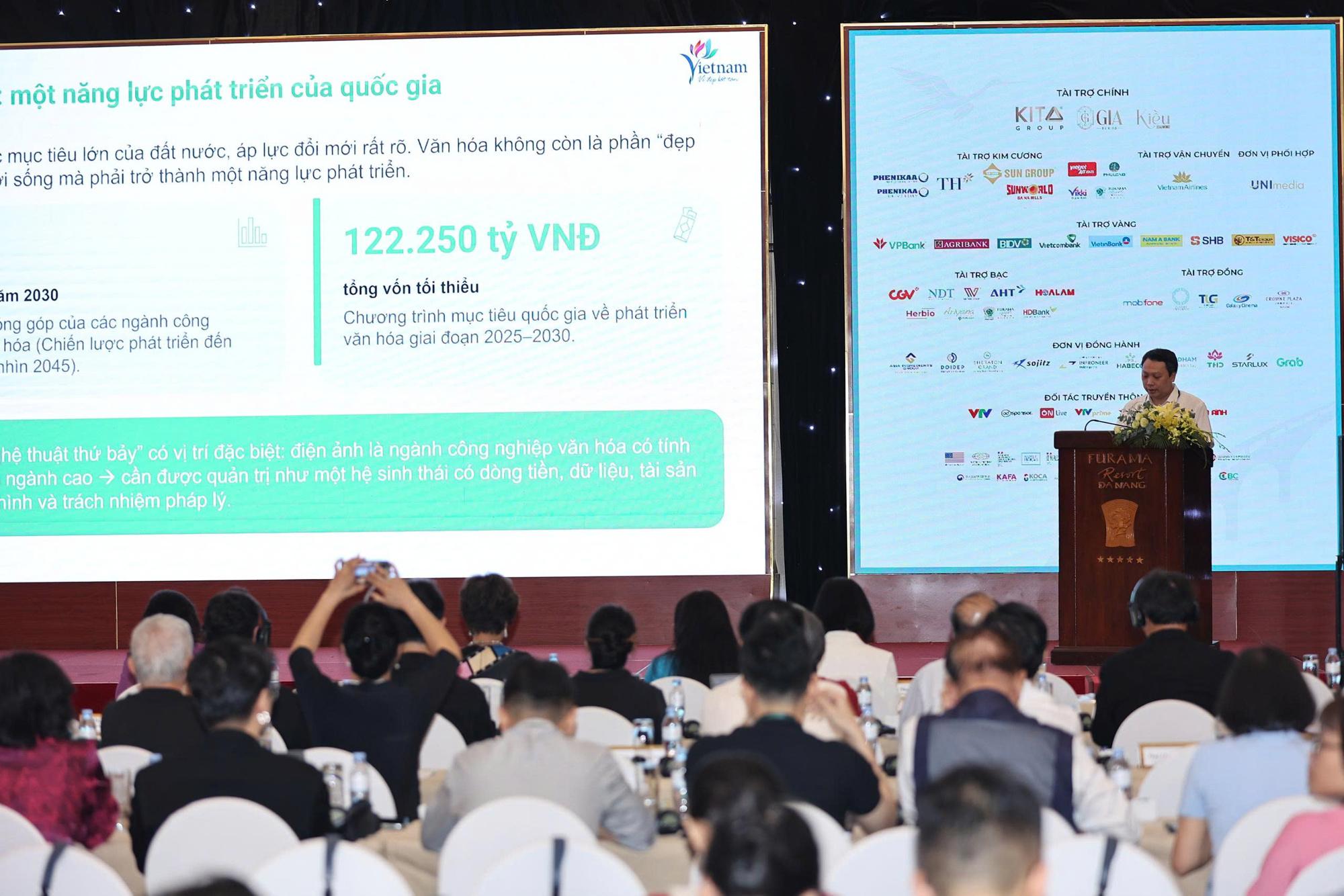
At the local level, all 34 provincial-level localities should maintain structured data on filming locations, support procedures for production crews, cultural and historical resources, tourism assets, human resources, and related services. Producers, cinemas, OTT platforms, social media platforms, technology companies, professional associations, training institutions, support funds, investors, and creative communities should all participate in this ecosystem.
Under such a system, each film would have a digital profile, each right would be traceable, each transaction would leave a record, and each violation could be detected and addressed more efficiently.
Deputy Minister Nguyen Huy Dung proposed three concrete projects for priority implementation. The first is a near real-time box office and distribution data system to improve market transparency and provide stronger evidence for policymaking and support funds. The second is a digital map of studios and filming locations, allowing localities to actively attract productions rather than passively waiting for film crews. The third is a rights database and content fingerprinting system to support licensing, legal distribution, and infringement detection.
Regarding filming-location mapping, Deputy Minister Nguyen Huy Dung said Viet Nam is at the right stage to implement such a project. He cited the example of Kong: Skull Island, much of which was filmed in Trang An. In 2024, Ninh Binh welcomed 8.7 million visitors, up 30% year on year, while tourism revenue rose by more than 40%. He also cited “Mua Do” (“Red Rain”), released in 2025, which drove visitor numbers to the Quang Tri Ancient Citadel to record highs, even after the 50-hectare film set had been dismantled. Deputy Minister Nguyen Huy Dung noted that in the United Kingdom, every pound invested in film-location mapping and film tourism generates roughly 20 pounds in tourism spending.
The Cinema Department is currently developing a filming-location information portal that will allow localities to upload images and support services. Deputy Minister Nguyen Huy Dung said the next step could be adding an interactive map, standardizing data fields related to filming conditions, permits, and support contacts, and linking the system with Viet Nam’s national tourism platform. Cinema, he said, can help attract visitors, turning filming locations into long-term tourism assets.
Deputy Minister Nguyen Huy Dung also stressed the urgency of digitizing and restoring film heritage. At the current pace, Viet Nam’s large archive of film reels could take decades to digitize fully. “Film heritage will not wait for us,” he said. “Every deteriorating reel means a piece of memory is lost.” AI can assist in image recognition, visual cleanup, audio restoration, metadata generation, classification, and making film heritage more accessible to younger audiences through new formats.
However, digitization involves more than scanning film. It also requires rights management, metadata governance, preservation systems, and selective use so heritage can return to public life as educational material, creative inspiration, and a strategic cultural asset.
Integrating IP protection from day one
The second priority is integrating intellectual property protection from the earliest stages of production. Deputy Minister Nguyen Huy Dung said copyright issues in traditional filmmaking were often addressed at the end of the production process, when producers reviewed music, images, archival materials, actor contracts, and distribution rights shortly before release. In the AI era, that approach carries significant risks. Rights management must begin on the first day of a project, not after production is complete.
For film projects using AI, documentation should clearly specify where input data comes from, which elements are AI-generated, which are human-created, whether external likenesses, voices, styles, archives, or music are used, whether consent has been obtained, the scope of that consent, the target markets, duration of use, compensation mechanisms, and how derivative rights will be allocated.
Professional associations, producers, and regulators should work together to develop new contract templates tailored to AI-era production. These contracts are particularly important for digital replicas of actors, cloned voices, personal likenesses, music, training data, prompts, character design, visual effects, and digital-platform exploitation. Clear contracts reduce disputes, strengthen investor confidence, and better protect creators experimenting with new technologies.
Deputy Minister Nguyen Huy Dung said Viet Nam should also consider adopting emerging global standards for content provenance. Technologies such as digital watermarking, digital signatures, provenance metadata, C2PA standards, and content fingerprinting are advancing rapidly worldwide.
Viet Nam does not need to build every system from scratch, he said. Instead, it should identify suitable standards early and adopt them consistently. Behind-the-scenes images, teaser clips, trailers, excerpts, released films, and AI-generated or AI-edited content should all carry appropriate provenance information. This would provide digital evidence in the event of disputes rather than relying solely on verbal explanations.
From anti-piracy campaigns to continuous enforcement
The third priority, Deputy Minister Nguyen Huy Dung said, is transforming anti-piracy efforts from short-term campaigns into continuous operational capability.
Viet Nam has made significant efforts to combat copyright infringement, but violations in digital environments continue to evolve rapidly and remain driven by strong financial incentives.
Today’s infringement extends far beyond illegal full-film copies. It includes camcorder recordings inside cinemas, films cut into hundreds of short clips, reviews or summaries exceeding fair quotation limits, unauthorized rebroadcasts on cross-border platforms, AI-modified content designed to evade detection, and unlicensed reuse of characters, soundtracks, or dialogue. When one site is blocked, another appears. When one domain is shut down, another is created. As long as infringing business models retain access to advertising, payment systems, servers, distribution channels, and users, piracy remains profitable.
Deputy Minister Nguyen Huy Dung said anti-piracy efforts should therefore be organized as a continuous operational function supported by data, technology, interagency coordination, and measurable performance indicators.
He suggested tracking practical metrics such as average response time from detection to takedown request, average platform response time, recurrence rates of infringing content, number of blocked domains, number of disrupted advertising and payment channels, cases escalated to administrative or criminal action, reductions in traffic to piracy sources, and increases in legitimate revenue following enforcement actions.
When such metrics are measurable, anti-piracy efforts cease to be campaign-driven and instead become part of market governance. This would also reassure legal platforms, theaters, producers, and artists that compliance is being meaningfully protected.
Deputy Minister Nguyen Huy Dung said the sector should establish a digital fingerprint repository for film works, fast-track takedown mechanisms, warning lists for major infringing sources, and stronger coordination with telecom operators, advertising networks, payment intermediaries, and cross-border digital platforms. Public awareness also remains essential. He said consumers need to understand that consuming pirated content free of charge is not harmless; it weakens the very creative ecosystem audiences depend on.
The draft decree on digital cultural infrastructure also proposes a Digital Copyright and Digital Asset Exchange integrated into the National Digital Cultural Database. Deputy Minister Nguyen Huy Dung said early participation by the film sector in such a platform could make licensing, transactions, and infringement enforcement far more systematic than the current case-by-case approach.
Turning strategy into execution
The fifth priority area, Deputy Minister Nguyen Huy Dung said, is effective implementation—assigning the right people to the right tasks and measuring results using the right indicators. Each stakeholder in the film ecosystem has a distinct role to play. Regulators should focus on establishing data standards and legal frameworks so the market can operate more efficiently, rather than waiting to resolve issues case by case.
Authorities overseeing intellectual property and technology should progressively clarify emerging legal questions, particularly those involving rights related to voices, likenesses, and digital replicas in AI environments. Digital platforms should become more proactive in labeling AI-generated content and improving response mechanisms for infringement complaints.
Producers should begin integrating rights information and AI usage logs into workflows at an early stage rather than leaving compliance reviews until the end.
Artists and professional associations should help develop new contract templates suited to AI-era production instead of relying on outdated agreements.
Deputy Minister Nguyen Huy Dung said Vietnamese technology companies also have significant opportunities in this space, including content fingerprinting, film restoration, filming-location mapping, and infringement detection.
Training institutions also have an important role. He cited an example from Thai Nguyen University of Information and Communication Technology, where collaboration with private companies enabled nearly 10,000 students to participate in the co-production of the 3D animated film De Men: Adventure to Muddy Hamlet, turning the university into a practical training environment.
For the public, Deputy Minister Nguyen Huy Dung said awareness may be even more important than regulation. Paying for legal content, he said, directly supports the growth of the film industry audiences want to see.
AI cannot replace Viet Nam’s storytellers
Deputy Minister Nguyen Huy Dung said Vietnamese cinema has a major advantage: it possesses Vietnamese stories, Vietnamese people, Vietnamese culture, Vietnamese history, and a new generation of increasingly discerning audiences.
“AI cannot tell Vietnam’s stories for us,” he said, “But AI can help us tell those stories better, faster, and to wider audiences—provided we master the technology and protect creative value.”
A strong film industry, he said, should not be measured solely by a few blockbuster films. It should also be measured by transparent markets, respect for creators, investor confidence, compliant platforms, responsible data sharing, preserved heritage, effective enforcement against infringement, appropriate use of technology, and better service for audiences.
Deputy Minister Nguyen Huy Dung said he hopes that in the near future, Vietnamese cinema can be evaluated using concrete and measurable indicators. Once such indicators exist, policy moves beyond paperwork. Policy becomes action. Action delivers results. Results build trust. Trust becomes the foundation for sustainable development.
Deputy Minister Nguyen Huy Dung noted that discussions about technology in cinema have traditionally centered on international examples—what Hollywood is doing, what South Korea is doing, what Europe is doing, and what global platforms are doing. Those examples remain useful, he said, but Viet Nam must now begin telling its own story. That story, he said, should be one in which technology strengthens rather than dilutes cultural identity; AI empowers rather than weakens creators; copyright protection accelerates rather than slows market development; and state management enables innovation rather than standing apart from it.
“Cinema in the AI era is not a race between humans and machines,” Deputy Minister Nguyen Huy Dung said, “It is a competition between systems that can execute effectively and those that remain stuck in anxiety or rhetoric.”
He said that if Viet Nam identifies the right challenges, measures outcomes accurately, protects rights effectively, assigns responsibilities appropriately, and follows through, Vietnamese cinema can enter a new stage of development—more creative, more equitable, more transparent, more competitive, and better positioned to contribute to the country’s cultural industries.
“The question is no longer whether technology will change cinema. It already has,” Deputy Minister Nguyen Huy Dung said.
“The real question is whether we allow that transformation to unfold on its own, or whether we work together to build a digital film ecosystem with Vietnamese identity, market discipline, professional standards, and global ambition.”
“If we get it right, AI will not diminish the essence of cinema—it will strengthen the capabilities of Vietnamese cinema. Intellectual property will not slow creativity—it will ensure creativity is fairly rewarded. Digital transformation will no longer be a slogan but will be reflected in faster workflows, clearer contracts, quicker enforcement, and films that reach wider audiences.”

The September 24 meeting between Deputy Minister of Agriculture and Environment Dang Ngoc Diep and Hon Jackie Jarvis MLC, Western Australia’s Minister for Agriculture and Food; Fisheries; Forestry; Small Business; and the Mid West, highlighted scope for expanding Viet Nam-Australia cooperation beyond trade in agricultural, forestry and fishery products to science and technology, climate change adaptation, biosecurity and the marine economy. The two sides also discussed strengthening business links, addressing technical issues and turning areas of potential into concrete cooperation programs.

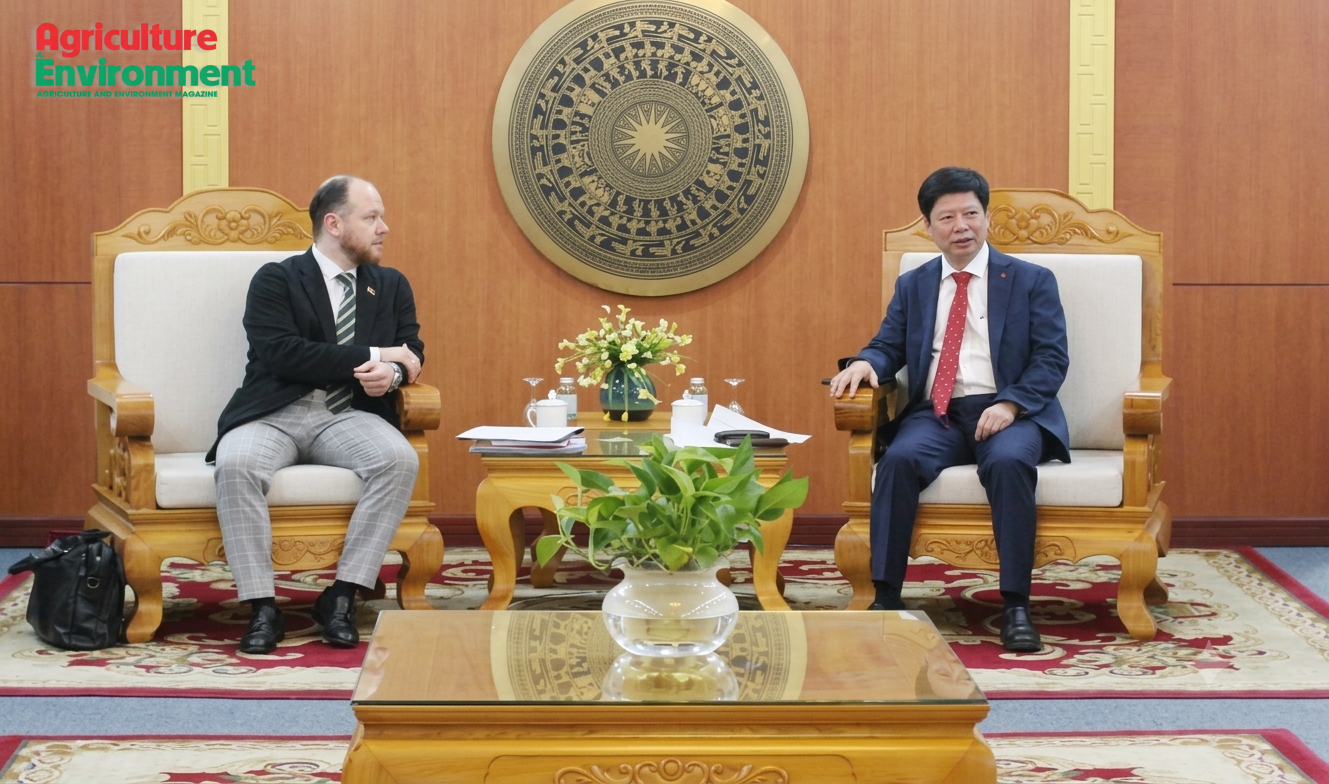
A meeting between Deputy Minister of Agriculture and Environment Nguyen Quoc Tri and Indonesian Ambassador to Viet Nam Adam Mulawarman Tugio on September 22 highlighted the specific market issues shaping agricultural cooperation between the two countries. From Halal products and fisheries to livestock and veterinary vaccines, expanding bilateral trade is closely tied to standards, quarantine requirements, technical dossiers and business connections.

Deputy Minister of Agriculture and Environment Nguyen Hoang Hiep met with a World Bank (WB) delegation on September 9 to discuss the AgriConnect initiative. The meeting focused on ways to better connect public investment, policy and private capital to the development of agricultural value chains.
The licensing of four Belarusian companies to export boneless beef to Viet Nam, with the first shipment entering the Vietnamese market in April 2026, marks a concrete result in efforts to address market-access procedures between the two countries. In the opposite direction, the number of Vietnamese companies authorised to export meat and seafood to the Eurasian Economic Union (EAEU) is only about one-sixth the number of Belarusian companies authorised to export to Viet Nam, pointing to further scope for addressing technical barriers and expanding market opportunities for Vietnamese agricultural products.
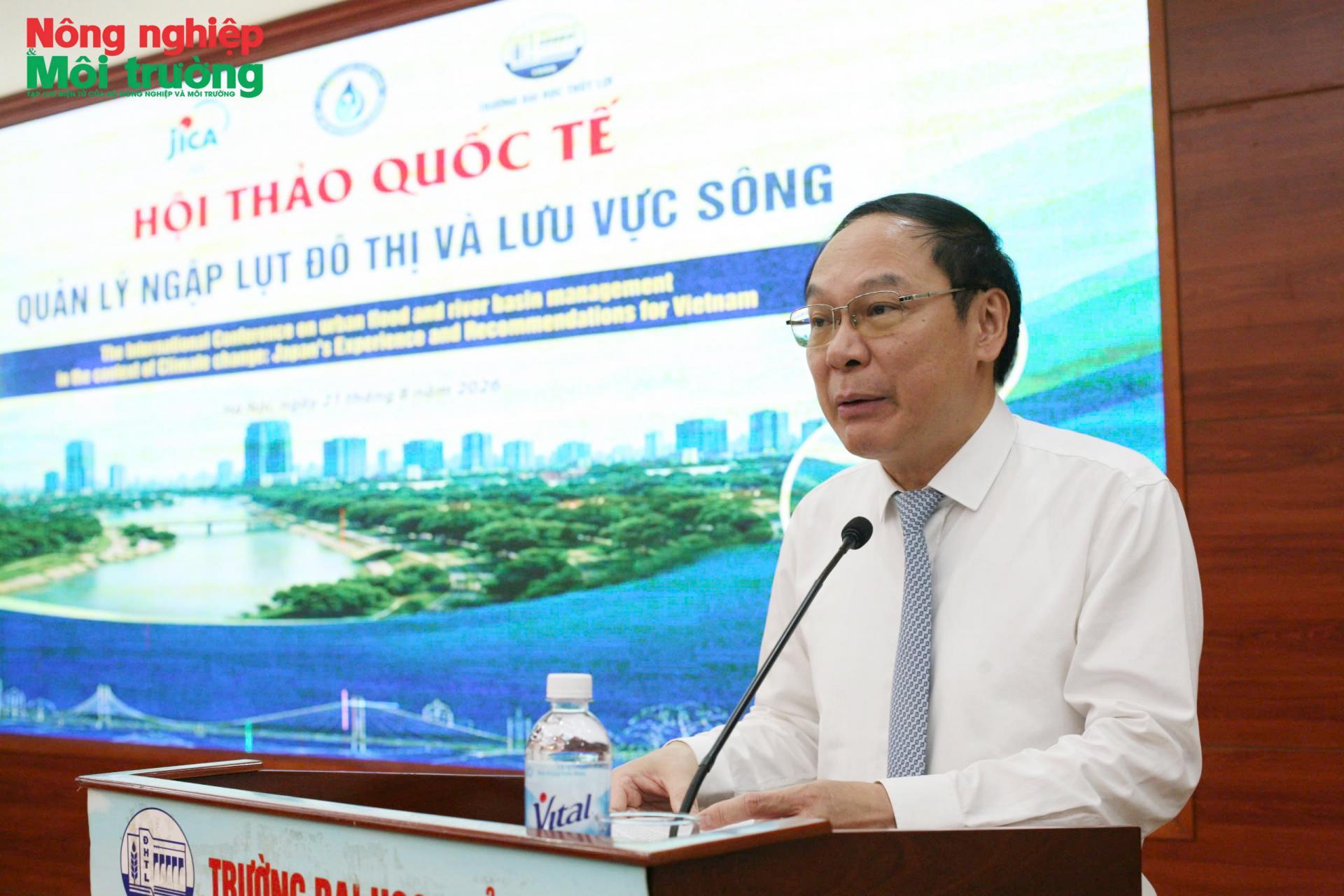
Urban flooding is increasingly influenced by a combination of heavy rainfall, river flows, tides, water-storage capacity, land use and urban spatial planning. At the international conference on “Urban flood and river basin management in the context of climate change: Japan’s experience and recommendations for Viet Nam”, held in Hanoi on August 21, Deputy Minister of Agriculture and Environment Le Cong Thanh said the issue should be addressed as part of integrated water resources management, urban planning and disaster risk governance, rather than being treated solely as a drainage problem within individual cities.