



 As riverbank erosion becomes increasingly severe in the Mekong Delta, many localities have begun piloting nature-based riverbank protection solutions that utilize locally available materials and minimize hard-engineering interventions in river flows. However, evaluating the effectiveness of these solutions remains challenging, particularly when international assessment frameworks do not fully align with the socio-ecological conditions of the delta region.
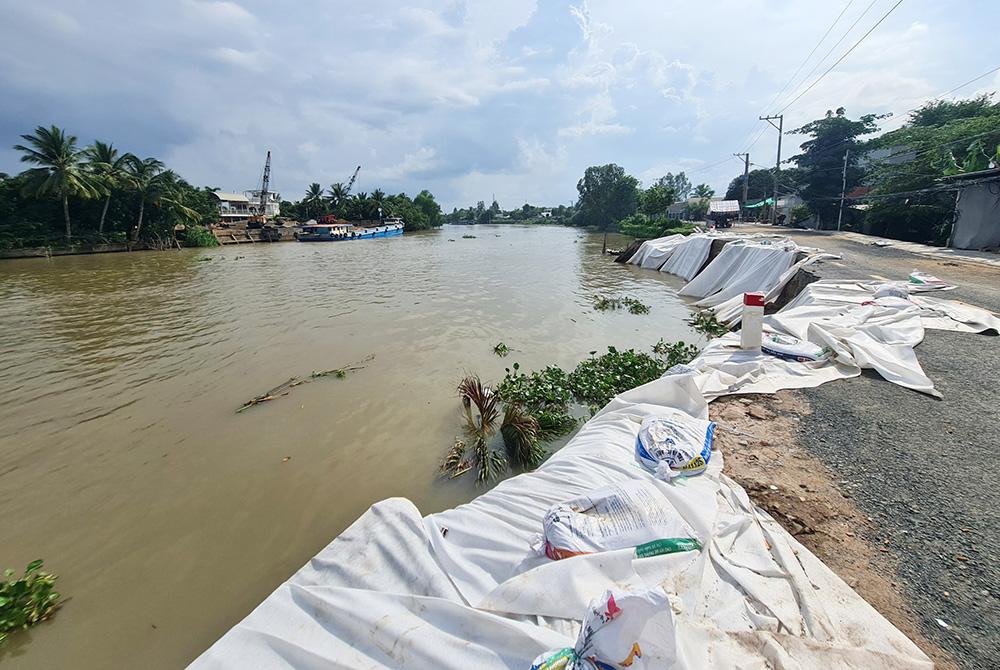
Based on field surveys conducted in An Giang Province, a research team from Can Tho University, led by Cu Ngoc Thang, Tran Van Ty, and Nguyen Thanh Binh, attempted to refine the IUCN Global Standard through Exploratory Factor Analysis (EFA). The study streamlined the assessment criteria and identified three key factors influencing the long-term sustainability of nature-based riverbank protection solutions.
An Giang faces growing pressure from riverbank erosion
In recent years, riverbank erosion has emerged as one of the major environmental challenges facing the Mekong Delta. In An Giang province, located in the upstream section of the Mekong River system, erosion has not only resulted in the loss of agricultural land but has also threatened transport infrastructure, housing, and the livelihoods of riverside communities. Under conditions of climate change, altered hydrological regimes, and increasing development pressures, the need for sustainable riverbank protection measures has become increasingly urgent.
According to the research team, conventional riverbank protection structures constructed with concrete or other hard-engineering materials may provide immediate stabilization benefits, but they can also generate unintended consequences, including altered flow dynamics, disrupted sediment deposition, and the transfer of erosion risks to adjacent areas. These limitations have contributed to growing interest in Nature-based Solutions (NbS) for river management and climate adaptation.
Several nature-based riverbank protection solutions have recently been piloted in An Giang Province. The study focused on evaluating three types of interventions: tire revetments, geotextile sandbag revetments, and Melaleuca pile revetments. These approaches share common characteristics, including the use of locally available materials, reduced reliance on rigid hydraulic structures, and the potential to enhance ecological resilience compared to conventional engineering approaches.
The tire revetment system utilizes used vehicle tires connected with bolts and combined with gabions and Melaleuca piles to stabilize riverbanks, followed by soil covering and grass planting on the surface. The geotextile sandbag revetment system consists of sand- or gravel-filled geotextile bags arranged according to engineering design over a geotextile base layer and subsequently covered with coconut-fiber mesh and vegetation. The Melaleuca pile revetment relies on rows or clusters of bamboo or Melaleuca piles installed along the riverbank to reinforce soil structure.
Beyond assessing erosion-control performance alone, the research raised a broader question: whether these interventions genuinely conform to the principles of nature-based approaches under internationally recognized standards. To address this issue, the authors adopted the International Union for Conservation of Nature (IUCN) Global Standard for Nature-based Solutions as the analytical framework.
The IUCN framework comprises eight criteria and 28 indicators, covering dimensions ranging from societal challenges and Design at Scale to biodiversity conservation, governance, financing, and Adaptive Management. However, from the outset, the research team recognized that certain international criteria may not fully capture the specific conditions of the Mekong Delta, where resource constraints, local governance structures, and socio-ecological dynamics differ substantially from the contexts in which the global framework was originally developed.
Nature-based solutions beyond engineering performance
To assess the applicability of the IUCN framework in the context of An Giang Province, the study analyzed survey data from 32 valid questionnaires equally distributed among four stakeholder groups: scientists, managers, engineers, and local community representatives. Respondents evaluated the three riverbank protection solutions using a five-point Likert scale based on the eight IUCN criteria and 28 associated indicators.
Cronbach’s Alpha reliability analysis showed that the applicability of the IUCN framework varied significantly among the three solutions.
Among the interventions assessed, the tire revetment system produced the most consistent results. Seven out of eight criteria achieved Cronbach’s Alpha values above 0.7, the commonly accepted threshold for scale reliability. The highest reliability scores were recorded for “Economic Feasibility” (0.846), “Inclusive Governance” (0.820), “Net Gain to Biodiversity” (0.818), and “Societal Challenges” (0.814). Only the “Adaptive Management” criterion recorded a lower Alpha value of 0.646.
By contrast, the geotextile sandbag revetment displayed greater variability. Only four out of eight criteria met the reliability threshold, including “Design at Scale” (0.798), “Net Gain to Biodiversity” (0.768), “Inclusive Governance” (0.745), and “Balance Trade-offs” (0.721). Criteria associated with social dimensions, financing, Adaptive Management, and mainstreaming into sustainable development all recorded Alpha coefficients below 0.7.
For the Melaleuca pile revetment, the results were intermediate. The study reported that the “Economic Feasibility” criterion achieved a Cronbach’s Alpha value of 0.828, while “Inclusive Governance” reached 0.889, the highest value among all three solutions. However, criteria related to social dimensions and biodiversity exhibited substantially lower reliability.
The study also found that the IUCN framework should not be treated as a fixed template. Instead, the authors reassessed the structure of the criteria under the socio-ecological conditions of the Mekong Delta. The findings indicated that several indicators lacked internal consistency when applied locally, particularly those associated with “Adaptive Management.”
According to the research team, this reflects the gap between international evaluation frameworks and actual implementation conditions in riverine localities in the Mekong Delta, where technical capacity and coordination mechanisms remain fragmented. Based on these findings, the authors proceeded to apply Exploratory Factor Analysis (EFA) to refine the assessment structure, eliminate less relevant indicators, and identify the core factors most relevant to nature-based riverbank protection solutions in An Giang Province.
Three key factors emerged from the analysis
Following the reliability assessment, the research team employed Exploratory Factor Analysis (EFA) to further examine the overall structure of the IUCN framework under local conditions. The objective was to eliminate weakly correlated indicators, reduce overlap among criteria, and identify the factors most relevant to riverbank protection solutions in An Giang Province.
The EFA process was conducted through three consecutive analytical rounds. With each iteration, the model became more stable as variables with weak factor loadings or cross-loadings were removed. From the original set of 28 indicators, the analysis retained 13 valid indicators. Six indicators were excluded during the process, including variables related to intervention coordination, ecosystem baseline assessment, cost-benefit documentation, financial resources, and selected governance-related components.
In the final analytical round, the model achieved a Kaiser-Meyer-Olkin (KMO) coefficient of 0.762 and a Bartlett’s Test significance level of 0.001, confirming the suitability of the dataset for factor analysis. The total variance explained reached approximately 61.2%, indicating a relatively strong explanatory capacity for the survey dataset.
The EFA results also showed that the IUCN criteria, when applied in An Giang Province, no longer remained separated according to their original structure. Instead, they converged into three broader factor groups.
The first factor was identified as “Governance - Trade-offs - Policy Integration.” This factor accounted for the largest proportion of variance and included indicators associated with stakeholder participation, interregional coordination, equity in access, recognition of trade-offs, and policy integration. According to the authors, this finding highlights the critical role of multi-stakeholder governance in implementing nature-based riverbank protection solutions in the Mekong Delta.
The second factor, “Social and Design-at-Scale,” comprised indicators related to community challenge identification, social well-being assessment, socio-ecological interactions, and management of off-site risks. These indicators suggest that local communities evaluate nature-based solutions not solely from an engineering perspective, but also in relation to livelihood impacts and ecosystem adaptability.
The third factor, “Financial and Ecological Resources,” included two indicators associated with cost-effectiveness and access to natural resources. Although this factor explained a smaller proportion of total variance, the authors emphasized that it remains a prerequisite for maintaining and scaling up nature-based riverbank protection solutions over the long term.
According to the study, the emergence of these three factors following the refinement process suggests that the IUCN framework should be applied more flexibly in the Mekong Delta context, rather than being retained in its original structure developed for broader global applications.
Toward a new approach to sustainable riverbank management in the Mekong Delta
Based on the findings, the authors argue that nature-based riverbank protection solutions in the Mekong Delta should not be evaluated solely in terms of erosion-control performance or structural durability. Factors such as governance mechanisms, community participation, benefit-sharing arrangements, and resource feasibility constitute the key determinants of long-term sustainability.
The study does not reject the value of the IUCN Global Standard. On the contrary, the authors regard it as an important foundation that requires contextual refinement to better reflect the realities of riverine localities in Vietnam, particularly in socio-ecologically diverse deltaic environments such as An Giang Province.
Among the three solutions assessed, the tire revetment demonstrated the highest level of compatibility with the refined framework, whereas the geotextile sandbag revetment exhibited several unstable criteria. The Melaleuca pile revetment showed relative strengths in financial and governance dimensions but remained limited in social and biodiversity-related aspects. According to the authors, these differences indicate that no single intervention can be considered universally optimal for all riverine contexts in the Mekong Delta.
The study also acknowledged several limitations, most notably the relatively small sample size of 96 observations aggregated across the three solutions. Consequently, the EFA results remain exploratory in nature and require further validation through larger-scale studies in the future.
Nevertheless, the work of Cu Ngoc Thang, Tran Van Ty, and Nguyen Thanh Binh contributes an important perspective to ongoing discussions on erosion management in the Mekong Delta. Rather than focusing exclusively on engineering technologies or structural configurations, the study emphasizes the interactions among communities, ecosystems, and governance systems within nature-based solutions. This approach aligns with the growing international interest in identifying sustainable climate adaptation models for vulnerable delta regions worldwide.
|
Research source This article is based on the research paper “Refining the IUCN Global Standard through exploratory factor analysis in evaluating nature-based riverbank protection solutions in An Giang Province” by Cu Ngoc Thang, Tran Van Ty, and Nguyen Thanh Binh from Can Tho University, published in Volume 1 (2026) of the Science Journal of Agriculture and Environment. |
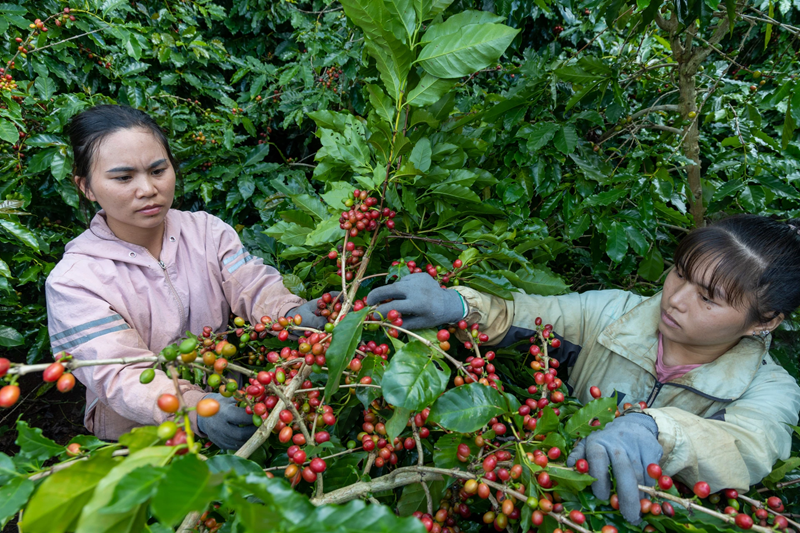
The study “Reducing CO₂ emissions from the coffee value chain toward sustainable agriculture” was conducted by the research team including Thai Phuong Vu, Nguyen Thi Mong Quynh, Nguyen Khuong Duyen, Tran Thi Que Tran, and Nguyen Thi Cam Tien from the Faculty of Environment, Ho Chi Minh City University of Natural Resources and Environment. This research is of significant importance as Vietnam’s coffee sector plays a key role in agricultural export while facing increasing pressure to mitigate greenhouse gas (CO₂) emissions across the entire value chain—from cultivation and harvesting to processing and consumption.

During 2023–2024, a research team from the Institute of Biology (Vietnam Academy of Science and Technology – VAST), in collaboration with the Graduate University of Science and Technology (VAST) and the Center for Technology and Nature Conservation, carried out an extensive survey to document the fish species composition in freshwater bodies, as well as tung and ang (karst sinkhole lakes and semi-enclosed lagoons) on the islands of Bai Tu Long Bay and Ha Long Bay. This represents one of the few dedicated studies on these semi-isolated karst water systems—often considered “forgotten biological refugia” within the World Heritage landscape.
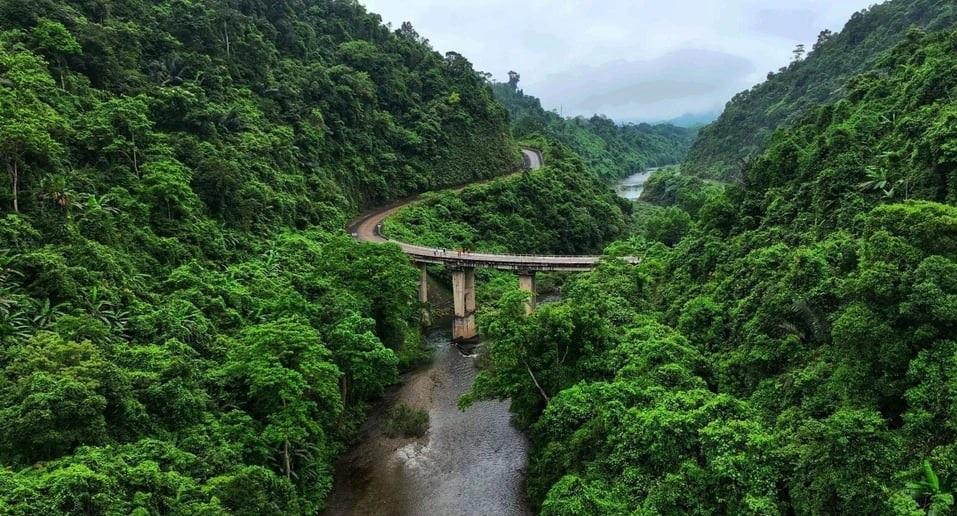
A large-scale study conducted by researchers Nguyen Dinh Tao, Dang Van Dong, and Le Hung Anh of the Institute of Biology, Vietnam Academy of Science and Technology (VAST), and the Graduate University of Science and Technology (VAST) has produced the first integrated assessment of stream fish diversity in the Dong Chau – Khe Nuoc Trong Nature Reserve in Quang Tri province.

Government Decree No. 98/2018/NĐ-CP, which sets out policies to encourage cooperation and linkages in agricultural production and marketing, has been the most important legal foundation, enabling nearly 3,000 linkage projects to be approved over six years. Yet in-depth analyses show two systemic constraints still holding back progress: legal and practical obstacles to land consolidation for large-scale production, and limited access to credit for cooperatives.

Coffee is one of the most widely consumed beverages in the world. Depending on the processing method, various by-products are generated, yet these materials remain substantially underutilized in Vietnam. Recognizing this gap, a research team from Nong Lam University, Ho Chi Minh City, and Quy Nhon University conducted a study titled “Coffee by-products: Chemical composition and potential applications in food processing.” By compiling and analyzing the characteristics of key by-products—coffee pulp, mucilage, husk, parchment, silver skin, and spent coffee grounds—the authors identified noteworthy levels of dietary fiber, polyphenols, caffeine, and multiple antioxidant compounds. Based on these findings, the study evaluates potential applications in beverage development, extraction of bioactive compounds, enzyme production, and food processing, thereby opening pathways to add value to coffee by-products in Vietnam.