




 As a multi-sector ministry responsible for a broad range of functions closely linked to local governments, Viet Nam's Ministry of Agriculture and Environment (MAE) moved swiftly during the first year of implementing the two-tier local government model to streamline its organizational structure, strengthen the legal framework, and redefine the allocation of administrative authority. Initial results underscore the Ministry's proactive efforts to translate the Party and State's reform agenda into governance mechanisms suited to the sector's operational needs.
Strengthening the legal framework
One of the fundamental requirements of institutional reform is ensuring that organizational restructuring is underpinned by a coherent legal framework. While government agencies can be reorganized within a relatively short period, the legal framework must be established in advance to ensure the new system operates smoothly, consistently, and without creating regulatory gaps. This is also essential to turning the Party's decentralization agenda into practical governance rather than limiting reform to structural changes alone.
For the agriculture and environment sector, this requirement is particularly pressing. The Ministry oversees a wide range of policy areas—including land administration, water resources, minerals, environmental protection, crop production, livestock, forestry, fisheries, and disaster prevention and control—most of which are directly connected to local governments and the daily lives of citizens. With the district level no longer functioning as an administrative tier, redefining responsibilities, authority, and administrative procedures became not only a legislative necessity but also a prerequisite for maintaining continuity and consistency in state governance.
The first year of implementation showed that without adequate legal preparation, decentralization could easily result in responsibilities being assigned without sufficient legal authority for implementation, or multiple agencies becoming involved without a clearly designated authority responsible for the final outcome. In such cases, efforts to streamline the administrative system would be unlikely to improve governance and could instead create new implementation bottlenecks.
Recognizing this challenge, the Ministry identified institutional reform as a top priority from the outset of implementing the two-tier local government model. According to a report presented at the National Conference reviewing one year of implementing the two-tier local government model, the Ministry conducted a comprehensive review of 1,055 legal documents within its regulatory scope, along with 265 legal documents related to district-level administrative procedures, to develop proposals on the allocation of authority, decentralization, and delegation of authority in line with the new governance structure. Based on this review, the Ministry classified and clarified the respective responsibilities of the Government, the Prime Minister, the Minister, and local authorities for each category of functions.
The review stood out not only for its scale but also for its methodology. Rather than amending individual regulations in isolation, the Ministry undertook a comprehensive review of the entire legal framework governing the sector to ensure consistency between state management functions and the new organizational structure. The approach reflects a broader shift from administration based on hierarchical government levels to governance based on functions, responsibilities, and accountability—a central objective of Viet Nam's ongoing institutional reform.
Addressing at the National Conference reviewing the first year of the two-tier local government model on July 1, 2026, Deputy Minister Nguyen Hoang Hiep said the Ministry had "reviewed, issued, and submitted legal documents to the competent authorities in a timely and comprehensive manner to support the organizational model at all levels of government and across ministries, thereby minimizing implementation challenges in the agriculture and environment sectors."
The effort was aimed not only at ensuring a smooth transfer of responsibilities between different levels of government but also at providing local authorities with a clear legal basis to exercise greater initiative in carrying out their assigned functions. The approach is consistent with the direction set by Party General Secretary To Lam, who stressed at the conference that "legal revisions must begin with real-world bottlenecks." He called on ministries, sectors, and localities to continue conducting comprehensive reviews of regulations governing institutional functions, responsibilities, authority, and coordination mechanisms to ensure there are "no overlaps, duplication, regulatory gaps, or situations in which multiple agencies are involved without a clearly accountable authority." His guidance underscored that legal reform should not merely improve the regulatory framework but also strengthen the effectiveness of state governance and accountability at every level.
More broadly, the Ministry's decision to prioritize institutional reform during the first year of implementing the new governance model reflects a forward-looking approach. Rather than waiting for problems to emerge before revising regulations, the Ministry sought to identify potential obstacles early and establish the legal framework needed to support decentralization and delegation of authority. This represents an important step toward ensuring that every organizational adjustment is underpinned by law, every delegated responsibility has a clear legal basis, and every level of government is equipped to fully discharge its duties. That legal foundation will ultimately determine the success of the two-tier local government model as the focus of reform shifts from restructuring the administrative apparatus to enhancing the effectiveness and efficiency of governance, in line with the direction set by Party General Secretary Tô Lâm.
Streamlining the administrative structure
While the legal framework provides the foundation for the effective operation of the two-tier local government model, the organizational structure ultimately determines how successfully those policies are implemented in practice. Alongside its comprehensive review of legislation, the Ministry of Agriculture and Environment carried out a sweeping organizational restructuring aimed at creating a leaner administrative system, reducing intermediary layers, and strengthening the capacity of grassroots authorities to carry out their responsibilities.
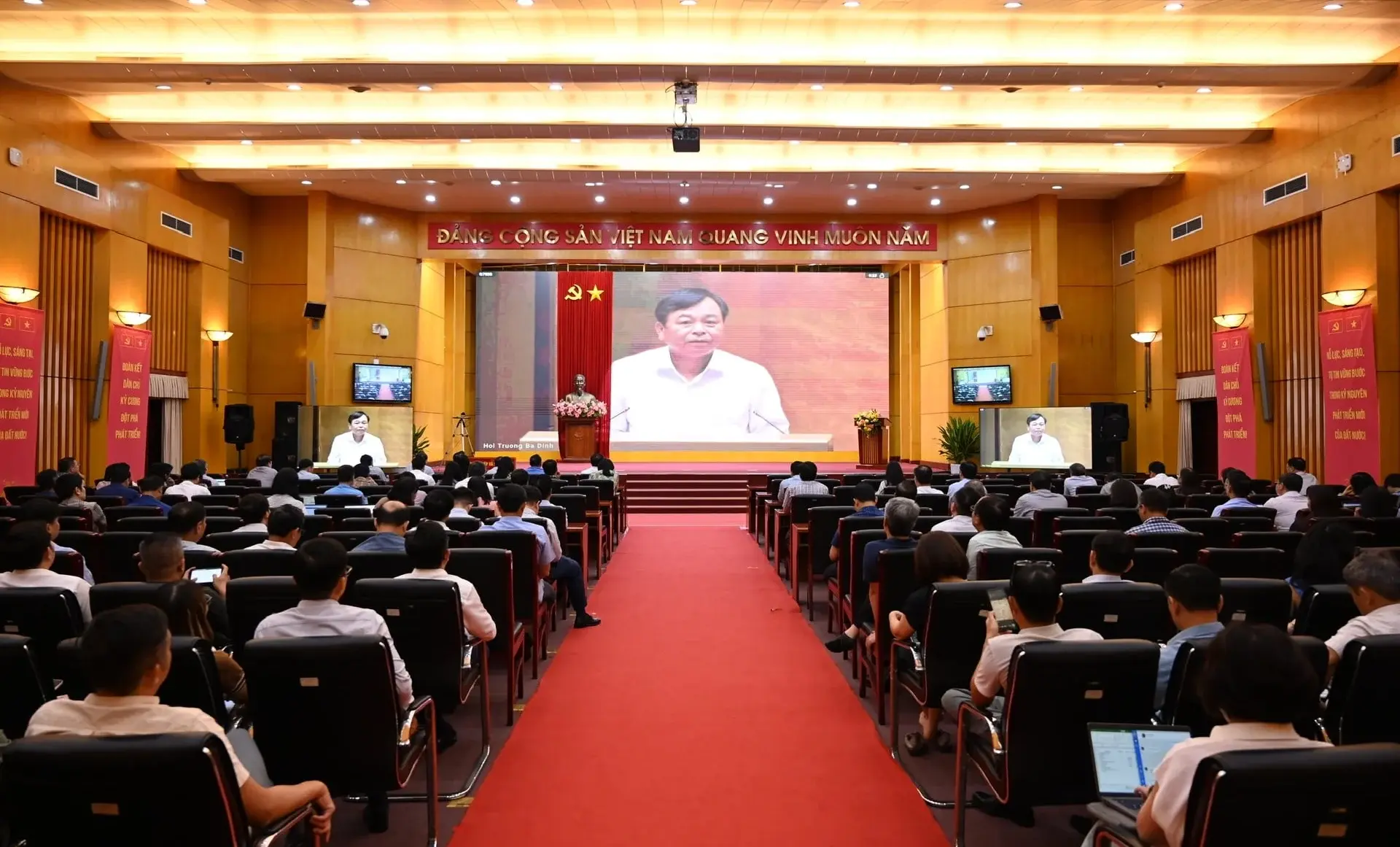
According to Deputy Minister Nguyen Hoang Hiep, following the restructuring and consolidation process, both the Ministry and the sector's organizational system have largely transitioned to stable and effective operations, meeting governance requirements under the nationwide implementation of the two-tier local government model.
A key outcome was the restructuring of the Ministry's subordinate agencies. The Ministry reduced the number of affiliated units by 45%, cut the number of public service units by 30%, and significantly streamlined division-level offices within individual agencies. Beyond reducing administrative layers, the restructuring has helped clarify functions and responsibilities while eliminating overlaps and duplication in state management.
Importantly, the organizational overhaul extended beyond the central level. The Ministry issued timely guidance enabling provinces and centrally governed cities to reorganize their specialized agencies in line with the new local government model, ensuring consistency in both organizational structures and management practices nationwide.
A notable example is the restructuring of Viet Nam's agricultural extension system. Following directions from the Party Central Committee and Party General Secretary To Lam, the Ministry proactively issued professional guidance and worked closely with local authorities to ensure coordinated implementation nationwide. To date, all 34 provinces and centrally governed cities have completed the restructuring of their agricultural extension organizations, providing a stronger institutional foundation for the system to continue transferring agricultural technologies, supporting production, and assisting farmers at the grassroots level.
These achievements demonstrate that the restructuring effort was intended not merely to reduce administrative units but to improve public service delivery. Under the new governance model, the commune level has become the tier of government closest to citizens, assuming responsibility for many functions previously handled at the district level. This requires the Ministry's specialized agencies to become more responsive and better equipped to support local governments in carrying out their expanded responsibilities.
Addressing the conference, Party General Secretary To Lam stressed: "Commune-level authorities must serve as the front line of public governance, capable of promptly receiving, processing and responding to the needs of citizens and businesses, while identifying emerging issues related to social welfare, land, the environment, public services and local risks at an early stage."
His remarks underscore the need for the agriculture and environment sector to continue strengthening its specialized management system by enhancing implementation capacity at the grassroots level, ensuring that Party and State policies are carried out promptly, consistently, and effectively.
The first year of implementation showed that streamlining the Ministry's organizational structure was never an end in itself. More importantly, the restructuring has reorganized agencies around clearly defined functions and responsibilities, reduced unnecessary administrative layers, and strengthened coordination between central and local authorities. These reforms also provide a solid foundation for advancing decentralization, accelerating administrative reform, and expanding digital transformation across the sector in the years ahead.
Expanding decentralization, supporting local governments
A core objective of Viet Nam's two-tier local government model is to shift from governance based on administrative hierarchy to governance based on functions, responsibilities, and accountability. This means decentralization must extend beyond redistributing authority on paper and be backed by implementation mechanisms that enable local governments to carry out their responsibilities effectively.
For the Ministry of Agriculture and Environment (MAE), this is particularly important because nearly all of its areas of responsibility are closely tied to local governments and the public. From land administration, environmental protection, and water resources management to agricultural production, forestry, fisheries, and disaster prevention and control, the effectiveness of state governance depends largely on the implementation capacity of provincial- and commune-level authorities.
Reporting at the national conference, Deputy Minister Nguyen Hoang Hiep said the Ministry had proposed the decentralization, delegation, and reallocation of authority for 441 administrative functions, guided by the principle of assigning as many responsibilities as possible to local governments where they have the capacity to perform them. Under this approach, the Ministry retains responsibility for cross-sectoral and interregional issues, as well as obligations arising from international treaties and commitments, while functions directly related to local administration are increasingly transferred to local authorities.
A notable feature of this process is that decentralization has gone hand in hand with a comprehensive review of the responsibilities assigned to each level of government. The Ministry has advised competent authorities to grant provincial governments greater discretion to further delegate authority to specialized agencies and commune-level administrations according to local conditions. This approach maintains consistency in state governance while allowing local authorities greater flexibility in organizing implementation.
The first year of implementation also highlighted that decentralization can succeed only when accompanied by technical guidance and sustained support from higher-level authorities. During the early stages of the new model, many localities faced significant challenges as their workloads expanded while the capacity of grassroots officials remained uneven, particularly in highly specialized areas such as land administration, environmental protection, and water resources management.
Recognizing these challenges, the Ministry has proactively shifted from a traditional regulatory role to one focused on implementation support. According to Deputy Minister Nguyen Hoang Hiep, the Ministry established 10 task forces, each led by a senior Ministry official, and deployed 34 civil servants to localities to provide technical guidance, assist in preparing operational handbooks, and help resolve issues arising during implementation of the new governance model.
The task forces have done more than address immediate operational challenges. They have also helped establish a regular coordination mechanism between central authorities and local governments. Through direct engagement with local administrations, the Ministry has identified shortcomings in regulations, administrative procedures, and implementation practices, providing practical input for future amendments to the sector's legal framework.
This approach is consistent with the direction set by Party General Secretary To Lam, who emphasized that "decentralization must be substantive, ensuring that the authorities entrusted with responsibilities also have the legal authority, personnel, financial resources, and management tools needed to carry them out." He further stressed that "decentralization is not about shifting burdens to lower levels of government; it is about transferring authority, resources, data, implementation tools, and accountability in a clear, transparent, and well-supervised manner."
The first year of implementation demonstrated that decentralization delivers tangible results only when supported by a comprehensive implementation framework. By combining the transfer of authority with technical guidance, professional training, and practical support for local governments, the Ministry has sought to ensure that responsibilities are not only assigned to the appropriate level but are also carried out effectively at the grassroots level.
Administrative reform through digital transformation
While decentralization has reshaped the way government functions are managed, administrative reform and digital transformation have become the key enablers for translating those institutional changes into day-to-day governance. Recognizing their importance, the Ministry of Agriculture and Environment made both priorities central to the first year of implementing the two-tier local government model.
According to Deputy Minister Nguyen Hoang Hiep, the Ministry continued a comprehensive review of administrative procedures within its jurisdiction, significantly reducing regulatory requirements. Specifically, it eliminated 83 administrative procedures, simplified 119 ministerial-level administrative procedures, reduced 355 of 845 business conditions, or 42%, and abolished 21 of 49 conditional business lines, equivalent to 43%, exceeding the Government's target of 30%.
These reforms have not only reduced compliance costs for businesses and citizens but have also enabled local authorities to carry out newly decentralized responsibilities more efficiently. As the new governance model places greater responsibility on commune-level administrations, simplifying administrative procedures and reducing business conditions have become essential to easing administrative burdens and improving public service delivery.
Alongside administrative reform, the Ministry has identified digital transformation as the foundation for strengthening governance capacity under the new model. According to the conference report, the Ministry has worked closely with the Ministry of Public Security to integrate two sectoral databases with the National Data Center. It has also launched the Viet Nam Agricultural Traceability System and continues to develop integrated digital applications to support sector-wide management.
A major achievement was the Ministry's collaboration with the Ministry of Public Security in launching the nationwide 90-day campaign to enrich and cleanse land data. After three months, the campaign completed the verification and standardization of records for 62 million land parcels, laying an important foundation for building a unified national land database.
The progress is significant because Party General Secretary To Lam has repeatedly highlighted the strategic role of data in modern governance. Addressing the conference, he emphasized that "data must be regarded as an asset, a strategic resource, and the foundation of modern governance." He also stressed that digital transformation should fundamentally redesign government operations, minimizing the need for citizens and businesses to repeatedly provide information already held by state agencies.
For the agriculture and environment sector, this objective is especially important because many core functions—including land administration, natural resources management, environmental protection, and agricultural product traceability—depend directly on the quality and integration of digital data. The Ministry therefore views the development of sectoral databases not simply as a digital transformation initiative but as a prerequisite for improving governance, enhancing transparency, and delivering better public services to citizens and businesses.
After one year of implementing the two-tier local government model, administrative reform and digital transformation have emerged as two of the Ministry's principal drivers of institutional modernization. The progress achieved so far has helped ensure the smooth operation of the new administrative system while laying the groundwork for a modern governance model built on data, greater transparency, and more efficient public services.
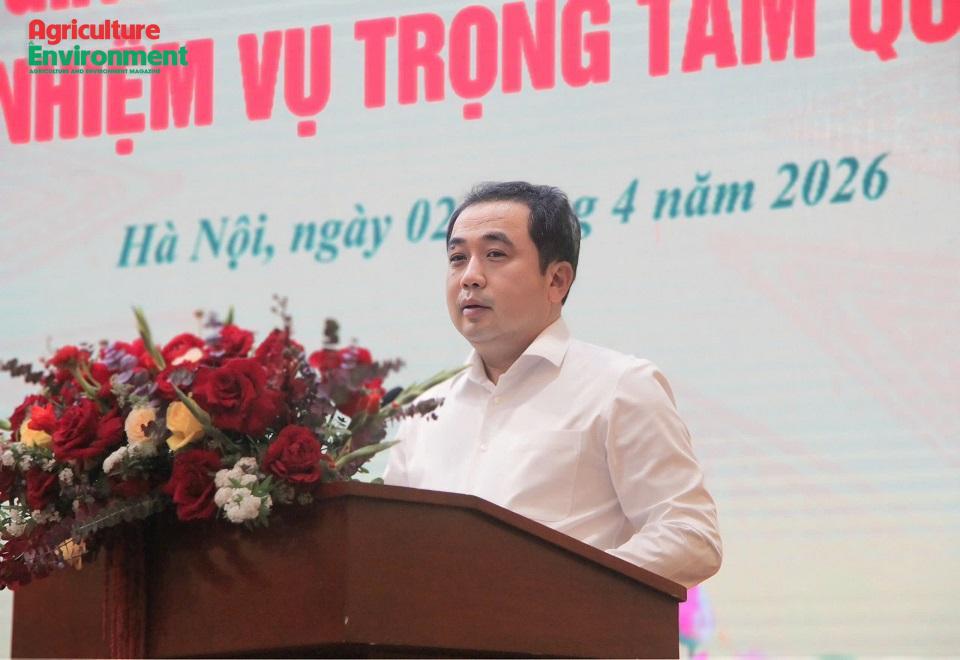
A first-quarter growth rate of 3.5–3.7% and export turnover of $16.69 billion reaffirm the resilience of Viet Nam’s agriculture and environment sector. Yet emerging pressures—from weakening export momentum to rising standards in global markets—are exposing structural constraints and underscoring the need for a transition toward a more innovation- and data-driven growth model. The first-quarter review conference held on April 2 marked not only an assessment point, but also the starting line for a critical policy acceleration phase in Q2 2026.

After the initial year of implementing the Action Program for Resolution No. 57-NQ/TW, the Ministry of Agriculture and Environment has entered a phase that requires directly confronting the core bottlenecks revealed during implementation. Part II of this series examines the difficulties and challenges emerging from practice; how the Ministry has articulated solutions to address foundational issues related to institutions, data, and operational capacity; and the outlook for implementing Resolution No. 57-NQ/TW from 2026 onward, with an emphasis on generating substantive, measurable value for the economy and for citizens.

After one year of implementing Resolution No. 57-NQ/TW of the Politburo on breakthroughs in science, technology, innovation, and national digital transformation, the Ministry of Agriculture and Environment has completed a substantial volume of tasks under conditions of high requirements for progress, quality, and nationwide scope. The year 2025 was identified as a start-up phase, focusing on institutional refinement, foundational development, and the coordinated implementation of key tasks. The initial results—particularly in digital transformation, administrative procedure reform, and the construction of the national land database—not only demonstrate the sector’s organizational capacity but also lay an essential foundation for the transition toward generating tangible value from 2026 onward.
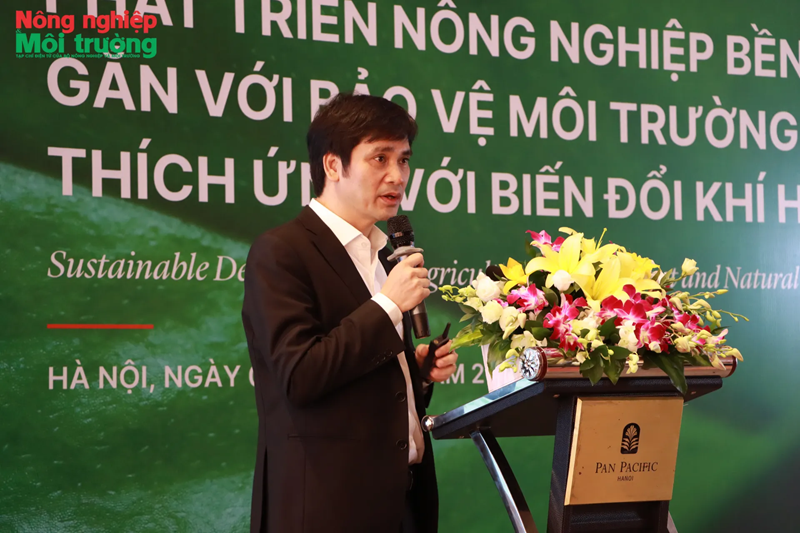
Amid the increasingly rapid and complex impacts of climate change, adopting a circular economy (CE) plays a crucial role in advancing an efficient, sustainable, and green agricultural sector.
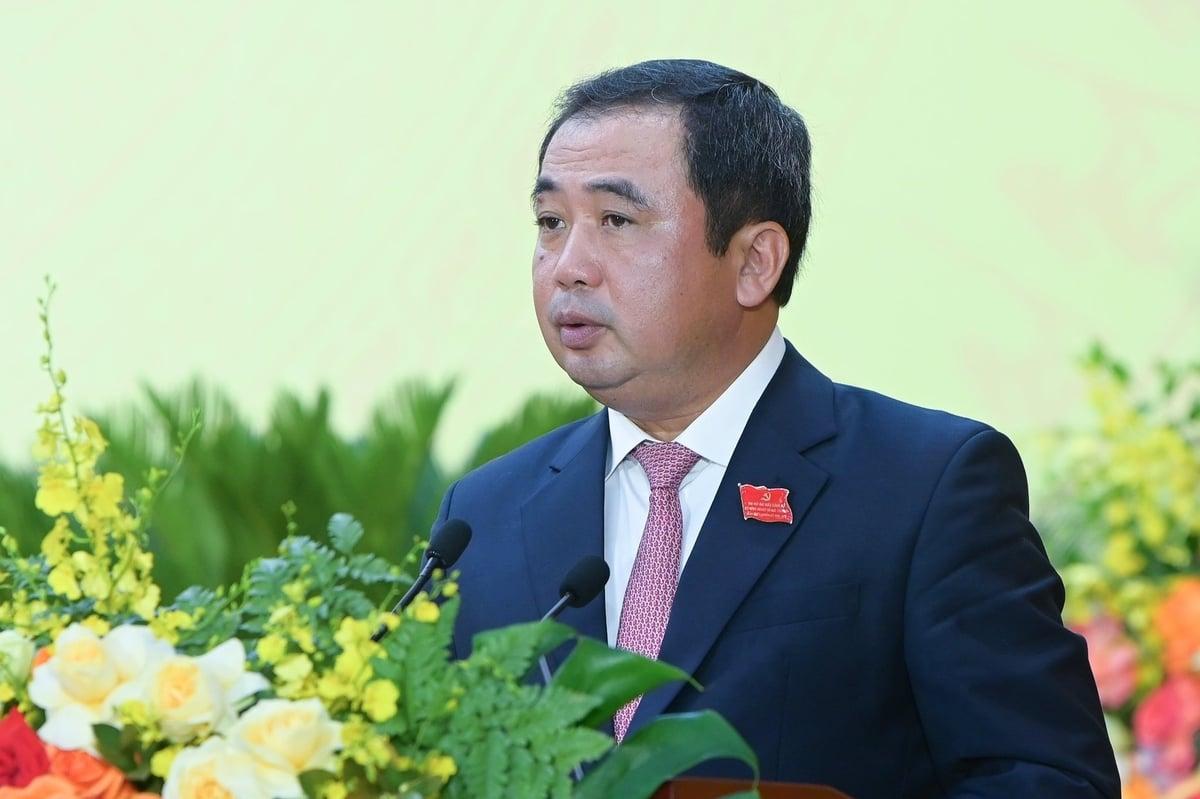
Resolution No. 59-NQ/TW of the Politburo has established international integration as a strategic task—both urgent and long-term—closely linked to the requirement for rapid and sustainable national development amid an increasingly volatile global landscape. In concretizing this spirit, the Government issued Resolution No. 153/NQ-CP, while the Ministry of Agriculture and Environment proactively developed and implemented its own action program, identifying international integration as a key pillar in sectoral restructuring, expanding development space, enhancing Viet Nam’s international standing, and making substantive contributions to global goals on food security, environmental protection, and climate change response.