



 Street trees contribute to providing shade, improving the urban environment, and shaping the appearance of cities. For an urban tree system to develop sustainably, species selection, the provision of adequate growing space, and coordination with technical infrastructure need to be considered in an integrated manner. A study by researchers from the University of Agriculture and Forestry, Hue University, examined the street-tree system in the Han river and Eastern Coastal Zone of Da Nang City, identifying strengths and limitations in planting, maintenance, and management practices and proposing management and development approaches better suited to the characteristics of each area.
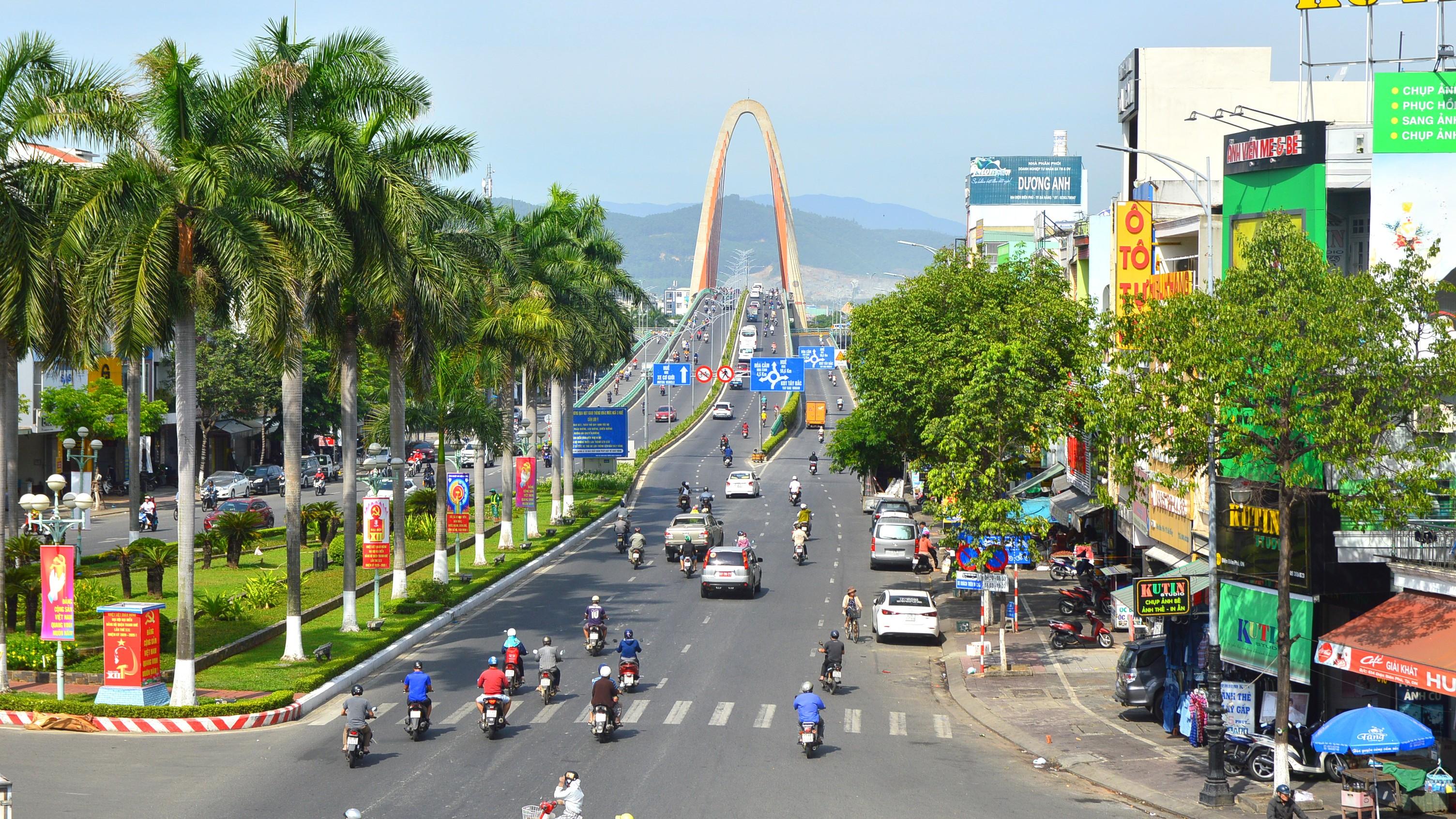
Street trees as an integral part of Da Nang’s urban landscape
In a rapidly developing city, street trees are more than rows of trees providing shade. They coexist with sidewalks, roads, technical infrastructure, and public spaces, while also contributing to the appearance and identity of the urban environment. In Da Nang, this issue is particularly relevant as the city’s spatial organization is planned around zones associated with distinct landscape characteristics.
Against this backdrop, researchers Tran Thi Thuy Hang, Le Thai Hung, Ngo Thi Phuong Anh, Nguyen Thi Thuong, and Hoang Huy Tuan from the University of Agriculture and Forestry, Hue University, conducted a study on the current status and management and development solutions for street trees in the Han River and Eastern Coastal Zone of Da Nang City. The study area has the largest street-tree population among the surveyed zones and encompasses both long-established urban areas along the Han River and more recently developed areas along the coast.
To assess the existing street-tree system, the researchers surveyed all roads with a roadway width of more than 7.5 m within the study area. For each tree, they recorded species identity and growth characteristics. Field survey data were complemented by discussions with managers, technical staff, and tree-care workers, as well as interviews with local residents. This approach enabled the study to examine street trees not only in terms of species composition and abundance but also the issues arising from planting, maintenance, upkeep, and management.
The scale of the surveyed system highlights the particular importance of the Han River and Eastern Coastal Zone within Da Nang’s street-tree network. Of the 65,463 trees recorded along roads with roadway widths greater than 7.5 m across the broader study area, 31,653 trees belonging to 114 species were located in this zone. It also had the largest number of street trees among the 12 zones surveyed.
Species diversity is another notable feature. Da Nang’s street-tree system comprises 132 species, with six species accounting for the largest shares by number: Peltophorum pterocarpum, Samanea saman, Hopea odorata, Terminalia catappa, Barringtonia acutangula, and Pterocarpus macrocarpus. In the Han River and Eastern Coastal Zone, Peltophorum pterocarpum and Samanea saman are the two most abundant species. This composition indicates that the city has developed a relatively diverse street-tree system, including species that have adapted and established under local conditions.
Yet the scale and development of the system also raise another question: are the selected tree species genuinely suited to the different urban environments in which they are planted? The study suggests that the answer is not straightforward, because the two sub-zones within the study area have markedly different conditions. The Eastern Coastal sub-zone has approximately 1.4 times as many trees as the Han River sub-zone, while the number of large trees with diameters exceeding 50 cm is considerably lower. According to the researchers, this difference is associated with the fact that many roads in the Eastern Coastal sub-zone were developed and planted more recently, whereas the Han River area forms part of Da Nang’s long-established urban core.
Viewed through these findings, the study does not focus primarily on how many more trees the city should plant, but rather on which species should be planted, where they should be planted, and how they should be managed so that they can coexist sustainably with the urban environment. This perspective also provides the basis for examining the practical challenges identified by the researchers in managing and developing street trees in the study area.
Species selection and growing conditions in an urban environment
A system comprising tens of thousands of trees and numerous species does not necessarily mean that the urban tree system has been optimally organized. Field surveys conducted by the researchers indicate that one of the key issues in the Han River and Eastern Coastal Zone concerns the compatibility among tree species, growing conditions, and the urban spaces in which the trees are planted.
Da Nang is regularly exposed to heavy rainfall and storms, making tree resistance to strong winds an essential consideration. At the same time, some species currently planted in large numbers have been frequently affected by extreme weather events. Samanea saman and Peltophorum pterocarpum are two notable examples. During Typhoon TRAMI in 2024 alone, 1,108 trees were affected; Samanea saman accounted for 45% and Peltophorum pterocarpum for 15% of the affected trees.
According to the study, the underlying causes extend beyond species characteristics. Rooting space along many streets is constrained by soil conditions, sidewalks, and underground infrastructure. In the Eastern Coastal sub-zone, coastal sandy soils and compacted soils also hinder tree development. Meanwhile, in the long-established urban areas along the Han River, many streets have narrow sidewalks, further limiting the space available for trees.
When above-ground growth is vigorous but below-ground space is insufficient for root development, trees may lose the structural balance required for stability. The study identifies this issue as particularly relevant to species such as Samanea saman and Peltophorum pterocarpum. Their crowns can become extensive while the rooting zone remains restricted, causing roots to spread along sidewalks within the available planting soil. The researchers consider this one of the factors contributing to the increased risk of tree or branch failure during storms and heavy rainfall.
The situation becomes more complex because trees do not exist independently of urban infrastructure. Street-lighting and household electrical wires in some locations run through tree canopies, requiring pruning to accommodate utility lines and resulting in asymmetric crowns. Beneath sidewalks, drainage channels, water-supply pipes, fiber-optic cables, electrical cables, and telecommunications infrastructure can also obstruct root development. Construction or rehabilitation of underground infrastructure and sidewalk improvements, when undertaken without adequate consideration of existing trees, can further affect tree stability and growth.
The study also notes that tree distribution along streets is not always appropriate. In some locations, tree canopies overlap, while other stretches lack sufficient shade. Tree size and species composition are also inconsistent along some major roads. Some aging trees that are no longer suitable have not been rehabilitated or replaced in a timely manner. These shortcomings have limited the development of clearly differentiated street-tree landscapes along individual urban corridors.
At the same time, the study does not overlook the progress already made. More than 74% of the trees in the zone have diameters greater than 20 cm, indicating that the majority are growing relatively well. The city has also established regulations on urban tree management, lists of species recommended, restricted, and prohibited for planting, and proactive measures for pruning, reinforcement, and hazard mitigation before the storm season.
Because a substantial street-tree foundation is already in place, the next challenge is no longer simply to increase green coverage, but to improve the quality of the existing system. For a riverfront and coastal city regularly exposed to severe weather, species selection needs to be considered alongside soil conditions, rooting space, technical infrastructure, and the characteristics of individual streets. These considerations provide the basis for the researchers’ proposed approach to managing and developing street trees in ways better aligned with the conditions of each sub-zone.
Integrating street trees with urban infrastructure
One of the issues identified by the study concerns not only tree maintenance itself but also the relationship between trees and the city’s technical infrastructure. On many streets, street-lighting and household electrical wires remain interwoven with tree canopies. As a result, pruning has to accommodate utility corridors, which can cause asymmetric tree growth and reduce the visual balance of the streetscape. Beneath sidewalks, drainage channels, water-supply pipes, fiber-optic cables, electrical lines, and telecommunications infrastructure also occupy space that is essential for root development.
This situation demonstrates that street trees cannot be managed as an isolated component of urban infrastructure. When infrastructure is constructed, upgraded, or expanded without adequate coordination with the space required for trees, cumulative impacts can directly affect tree growth and stability. According to the researchers, this is also one of the reasons why tree management in some areas has not yet achieved a sufficient level of coordination.
Another gap identified by the study is the lack of a sufficiently defined approach to urban tree planning in relation to overall spatial planning. There is currently no dedicated urban tree plan serving as a basis for long-term investment and development, while some roads have not been specifically planned to create characteristic tree-lined corridors that could serve as distinctive landscape features. In the Han River area, where land availability and sidewalk space are more constrained, the need for deliberate planning of urban green space is particularly significant.
Changes in urban land-use patterns also create practical management challenges. The study records cases in which trees planted under earlier land-use plans subsequently came to stand between residential buildings after new subdivision plans were implemented. In addition, tree spacing and positioning along some streets are not always appropriate: in some places, canopies overlap, while other sections lack shade. Some aging or unsuitable trees have not been rehabilitated or replaced in a timely manner.
Management also requires greater consistency in institutional responsibility. Of the 31,653 trees in the zone, most have been assigned to the Da Nang Urban Tree and Park Company for care and management. However, 993 trees planted under other construction works, programs, and projects between 2020 and 2023 had not yet been handed over for centralized management. When trees remain under different management arrangements, differences in maintenance, upkeep, and management practices can make it difficult to achieve a consistently coordinated system.
The study also recognizes that a management framework has already been established. Da Nang has issued regulations concerning urban tree management, lists of species recommended, restricted, and prohibited for planting, and provisions for decentralized management. Before the rainy and storm seasons, relevant agencies also conduct inspections, pruning, reinforcement, and removal of trees considered hazardous. These mechanisms provide an important basis for proactive urban tree management, but field observations indicate a continued need for closer integration among tree planning, technical infrastructure, and the specific characteristics of different areas.
Toward site-specific street tree selection and management
Based on the issues identified, the researchers argue that street-tree development should place greater emphasis on selecting species suited to the specific conditions of each area. The Han River and Eastern Coastal Zone is not a homogeneous urban space: on one side is a long-established riverfront urban area with many streets characterized by limited sidewalk space; on the other are newer coastal areas with sandy soils and many roads developed and planted in recent years. These differences indicate that a single approach to species selection is unlikely to be appropriate across the entire zone.
A key recommendation of the study is to develop a set of criteria for selecting tree species for each zone and sub-zone. Such criteria could provide a basis for reviewing existing species, gradually replacing those that are no longer suitable, and selecting species for newly developed streets. Given the area’s exposure to strong winds and storms, the researchers recommend prioritizing species with good resistance to adverse weather, flexible stems, and evergreen characteristics, while also considering native tree species.
For streets where species frequently affected by storms, particularly Samanea saman and Peltophorum pterocarpum, are planted at high densities, the study recommends gradual replacement to bring their proportions to more appropriate levels. This does not imply the immediate removal of commonly established species, but rather a gradual adjustment of species composition over time in line with growing conditions and the safety requirements of individual streets.
Alongside species selection, the study emphasizes the need for integrated planning of trees and infrastructure. Electricity, water supply and drainage, fiber-optic networks, and underground utilities should be considered together with the space required for tree growth during planning, rehabilitation, and upgrading. Such an approach could reduce future conflicts, create better conditions for balanced tree development, and reduce the need for extensive pruning or root-zone intervention when infrastructure is subsequently upgraded.
Urban tree management is also not solely the responsibility of technical agencies. The researchers recommend improving public awareness and encouraging community participation in protecting urban trees, while limiting the planting of species outside the approved lists on sidewalks. This is particularly relevant because street trees are directly connected to everyday public space and are affected by a wide range of activities involving residents, businesses, and urban construction.
Overall, the study by researchers from Hue University does not propose a single formula for Da Nang’s urban tree system. Its practical value lies in considering trees in relation to the urban spaces in which they grow, including species characteristics, soil conditions, resilience to extreme weather, sidewalk space, technical infrastructure, and community participation. This provides a basis for managing and developing street trees according to the specific conditions of different areas, rather than relying primarily on increasing the number of trees./.
Source: This article is based on the study by Tran Thi Thuy Hang, Le Thai Hung, Ngo Thi Phuong Anh, Nguyen Thi Thuong, and Hoang Huy Tuan, titled “Research on current situation and solutions for managing, developing street trees in the zone of Han River and Eastern Coastal of Da Nang City,” published in the Science Journal of Agriculture and Environment, Issue 1, March 2026.
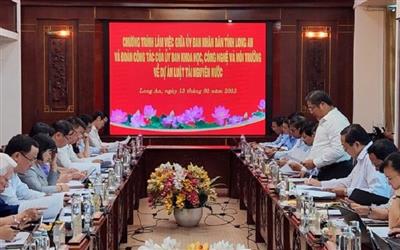
A delegation from the National Assembly's Committee on Science, Technology, and Environment, led by Ms. Nguyễn Thị Lệ Thủy, Deputy Head of the Committee on Science, Technology, and Environment, visited and conducted a field survey in Long An province to serve the assessment of the proposed amendments to the Water Resource Law. The National Assembly is expected to provide its initial feedback during the 5th session in May 2023 and review the law for approval during the 6th session in October 2023.
On April 11th, in Hanoi, the National Center for Meteorological and Hydrological Forecasting organized a conference on "Forecasting meteorological and hydrological trends and natural disasters in 2023." Mr. Hoang Duc Cuong, Deputy Director General of the General Department of Meteorology and Hydrology, attended and chaired the conference.