




 Meeting established criteria is an important measure of new rural development, but it is not sufficient to answer a more fundamental question: what are residents actually gaining from the development process? A study in Thai Nguyen, drawing on subjective well-being theory and examining the relationship between importance and satisfaction, identifies notable gaps in employment, housing, infrastructure, health, individual capabilities, and time. The findings suggest that residents’ perceptions and quality of life should be incorporated into assessments of new rural development outcomes at the village level.

When meeting the standard does not tell the whole story
After years of implementing the National Target Program on New Rural Development, rural areas have undergone substantial changes. The criteria system has provided local authorities with a relatively clear basis for setting objectives, organizing implementation, and assessing progress. However, behind the figures showing the proportion of localities meeting the standards lies a more difficult question: how do residents actually perceive these outcomes in their daily lives?
This question has become increasingly important as New Rural Development moves toward a deeper and more community-oriented approach, with greater emphasis on residents’ everyday lives. A completed road, an infrastructure project, or the fulfillment of a specific criterion are all observable and measurable outcomes. Yet these outcomes do not automatically indicate whether residents feel that their lives have become better, safer, more convenient, or more conducive to personal development.
The study by Nguyen Ngoc Luan, Ho Van Bac, and Ha Quang Trung starts from this gap. Rather than viewing New Rural Development solely through the extent to which criteria have been met, the authors place residents at the center of the assessment: What truly matters to their happiness, and to what extent are those needs being met?
This approach also highlights an important feature of the village level. This is where changes resulting from policies and investment ultimately translate into concrete experiences for residents. People do not simply see a new road or infrastructure project; they also experience whether employment has become more stable, whether housing meets their needs, whether the living environment is safe, whether their health is better supported, and whether they have sufficient time and capabilities to adapt to changes in their lives.
At the same time, aspects such as satisfaction, perceived safety, work-life balance, and confidence in the future are difficult to capture fully through quantitative indicators. Incorporating a subjective well-being perspective can therefore provide another layer of information about New Rural Development—information rooted directly in how residents perceive their own lives.
From this perspective, the study does not question the appropriateness of the New Rural Development criteria. Rather, it raises a more substantive question: what gaps remain between what the program has achieved and what residents consider important to their lives? This provides the basis for the authors’ approach to the concept of “welfare gaps.”
Measuring happiness through residents’ priorities and satisfaction
If the New Rural Development criteria indicate what a locality has achieved, the subjective well-being approach adds another question from the residents’ perspective: how do they assess their own lives, and what shapes those perceptions?
This is the theoretical foundation of the study. Under subjective well-being theory, happiness is not determined solely by material conditions that can be observed externally. People living under similar conditions may report different levels of satisfaction because they also assess their lives in terms of family and social relationships, perceived safety, personal autonomy, and confidence in the future.
In rural Viet Nam, this approach is particularly relevant because people’s lives are shaped not only by income and material conditions, but also by family, kinship, neighborhood, and community relationships. The study therefore uses a happiness measurement framework developed and adapted to the Vietnamese context, focusing on three broad dimensions: economic and material conditions, family and social relationships, and personal life and individual well-being.
A notable feature of the study lies in how the authors interpret residents’ responses. An aspect of life may receive a relatively high satisfaction score without necessarily being a top priority. Conversely, some issues may be regarded as highly important while the level of satisfaction remains below expectations. Satisfaction scores alone are therefore insufficient. The study considers two dimensions together: “importance” and “satisfaction.”
The gap between these two dimensions is referred to by the authors as a “welfare gap.” Put simply, it represents the shortfall between what residents consider highly important to their lives and the extent to which they feel those needs are being met. This approach allows the study to move beyond determining simply whether residents are satisfied: What are they still dissatisfied with, and how important are those issues to their lives?
To address these questions, the authors surveyed 405 households in 27 villages across nine communes in three districts of Thai Nguyen Province, representing different levels and conditions of rural development. Residents were asked about the factors they considered important to their happiness and their level of satisfaction with different aspects of their lives.
This approach offers a perspective that differs from simply counting the criteria that have been achieved. It enables the study to identify areas in which residents continue to expect improvement, even where substantial progress has already been made in New Rural Development. It is at this point that the study’s findings begin to reveal a more nuanced picture of how residents actually experience the benefits of rural development.
The biggest gaps are in livelihoods and quality of life
The survey results from Thai Nguyen do not present a simple picture of residents being either “satisfied” or “dissatisfied.” The average satisfaction score across the 24 happiness indicators was 3.84 out of 5, and no indicator scored below 3. Overall, this suggests that residents held a relatively positive assessment of their current lives. However, when satisfaction is considered alongside the issues they regard as most important, several gaps become clearly visible.
The most prominent gaps were found in the economic and material dimension. Employment had the largest gap, with a GAP value of 0.43, followed by housing and infrastructure, both at around 0.4. These figures do not simply indicate that residents were dissatisfied with these conditions. More importantly, they show that these are highly prioritized needs for which actual conditions have not yet fully met residents’ expectations. Behind the broader story of New Rural Development therefore remains the fundamental question of livelihoods and the concrete living conditions of individual households.
Another notable finding is that the gaps were not distributed evenly across all areas of life. Some aspects, including public services, the living environment, household assets, and clothing, were assessed relatively positively, with satisfaction even exceeding their relative priority. This suggests that improvements achieved through New Rural Development have generated relatively stable perceptions of several aspects of daily life. The issue, therefore, is not necessarily to expand every type of investment uniformly, but to identify more precisely the needs that have become constraints on quality of life.
While the economic and material dimension highlights gaps directly related to livelihoods, the personal life and individual well-being dimension points to another aspect of development. Health and individual capabilities were among the issues residents considered most important but for which satisfaction remained comparatively low, with GAP values of 0.33 and 0.30, respectively. Time was another notable concern: its level of importance was relatively high, while satisfaction averaged only 3 out of 5. These findings suggest that rural life is generating new demands—not only for employment and income, but also for maintaining health, strengthening individual capabilities, and achieving a better balance between work and personal life.
By contrast, family and social relationships appear to provide a relatively strong foundation. Satisfaction with family relationships and children exceeded 4.3 points, while relationships with relatives, neighbors, and friends were also rated relatively highly. Notably, security and safety, despite receiving a relatively favorable satisfaction rating, remained one of the issues residents considered particularly important, with a GAP of 0.21. Thus, even within a relatively stable domain, changes in rural life are generating new demands for a living environment that is safe and predictable.
Overall, the study shows that welfare gaps are not evenly distributed across areas of life. Issues directly associated with livelihoods, living conditions, and human development emerge more clearly than factors supported by relatively stable social foundations. This is significant because it suggests that as basic needs have gradually improved, residents’ expectations regarding quality of life have also changed. New Rural Development therefore faces not only the task of achieving established objectives, but also the need to respond to new and evolving needs emerging within rural communities.
Putting residents’ well-being at the center of new rural development
The study does not suggest choosing between the existing criteria system and happiness indicators. Rather, it points to the need to assess New Rural Development outcomes through multiple dimensions. A locality may achieve high rates of compliance with criteria related to income, employment, housing, transport, health care, or education, but this alone is not sufficient to establish that all of the needs that matter to residents have been adequately met. The difference between outcomes measured through formal criteria and residents’ perceptions is the gap that a subjective well-being approach can help identify.
The study provides clear evidence for this point. While criteria related to employment, housing, transport, health care, and education have achieved high compliance rates in many localities, residents surveyed in Thai Nguyen still placed very high priority on employment, housing, health, individual capabilities, and time. These gaps were present even in areas that had already met New Rural Development standards. This suggests that “meeting the standard” and “experiencing commensurate benefits” are related but not synonymous concepts.
From this perspective, the value of the study lies in bringing residents’ perceptions into the policy assessment process as an additional source of evidence. When an issue is both highly important to residents’ well-being and associated with relatively low satisfaction, policymakers have an additional basis for determining priorities. This approach is particularly relevant at the village level, where policies and investment ultimately become visible in everyday life and where residents directly experience their effects.
This also calls for a broader understanding of the role of villages—not simply as places where program objectives are implemented, but also as the level closest to residents and therefore well positioned to identify changes in community life. In the study, family and social relationships were assessed as relatively stable, while the demand for security and safety emerged more clearly. At the same time, new pressures were associated with employment, health, individual capabilities, and work-life balance. Such changes may not be fully captured by aggregate indicators measured at the commune level.
Based on these findings, the authors argue that New Rural Development at the village level should pay greater attention to the factors that directly shape residents’ happiness and quality of life. Incorporating measures of residents’ perceptions and satisfaction could improve the identification of welfare gaps and support the adjustment of intervention priorities to better reflect the actual needs of rural communities. This should be understood as a complementary approach to the existing assessment system rather than a replacement for it.
At the same time, the study acknowledges the limitations of its methodology. Importance-Satisfaction analysis can identify gaps between needs and perceived fulfillment, but it cannot establish the causes underlying those gaps. Because the data were collected at a single point in time, they do not capture changes over time. The study also does not examine in depth differences among population groups by age, gender, ethnicity, or occupation. Recognizing these limitations is important because the value of the study does not lie in providing a definitive conclusion about happiness in rural areas, but in opening up an additional perspective for assessing New Rural Development more closely through residents’ lived experiences.
From this perspective, the concept of “welfare gaps” can be understood as a prompt to reconsider how New Rural Development is assessed: not only by asking what a locality has achieved, but also by asking how those achievements are perceived by residents and which needs remain insufficiently addressed. When residents genuinely perceive improvements in their lives, there is a stronger basis for considering the outcomes of New Rural Development substantive and sustainable.
Source: This article is based on the study by Nguyen Ngoc Luan, Ho Van Bac and Ha Quang Trung, titled “Analyzing welfare gaps in new rural development at the village level: An application of happiness theory and the subjective well-being approach,” published in the Science Journal of Agriculture and Environment, Issue 2, May 2026.

In recent years, green innovation, a key focus for Vietnam, has been reflected in national development strategies, government action plans, international cooperation activities, investment attraction, as well as scientific and technological research.

Extended Producer/Importer Responsibility (EPR) is an environmental strategy/policy which the responsibility of manufacturers for their products is extended to the disposal stage of the product’s lifecycle. In practice, EPR involves manufacturers taking primary responsibility for the proper management of waste products, including waste collection, pre-treatment (such as sorting, cleaning, and pre-processing), and recycling/disposal of those waste products. EPR systems allow manufacturers to extend their responsibilities by contributing the necessary financial resources or directly/indirectly carrying out waste collection, processing/recycling activities, and supporting operational processes from the community. EPR can be implemented individually or in combination.

Based on the research conducted under Project Code: TNMT.2021.02.03, numerous flood monitoring & warning systems are currently operational and utilized by national disaster management authorities globally. However, in Vietnam, the early warning system for significant flood hazards in small river basins have not yet satisfactorily met the increasingly stringent societal demands. The lead time for flood warnings is currently limited to 3-6 hours for small river basins, lacking precise forecasts regarding timing, location, intensity, and extent of occurrence. Consequently, the focus remains primarily on qualitative risk alerts rather than quantitative assessments.

Water pollution is a serious and escalating public health concern, affecting approximately 2 billion people worldwide who lack access to clean and safe drinking water, according to the United Nations World Water Development Report
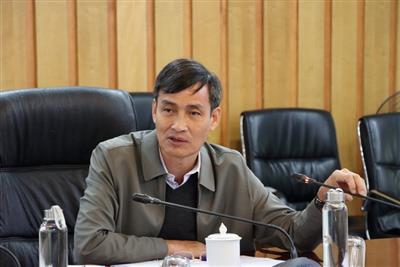
On the morning of February 16th, in Hanoi, the Vietnam Mineral Authority reported to Deputy Minister of the Ministry of Natural Resources and Environment, Tran Quy Kien, on the implementation of the draft "Decree amending and supplementing some provisions of Decrees detailing the Mineral Law."