



 The U.S. Food and Drug Administration's (FDA) decision to establish its first ASEAN regional office in Vietnam is expected not only to strengthen cooperation between the two countries' regulatory authorities but also to support the harmonization of food safety standards, improve supply chain oversight and facilitate agricultural trade as international market requirements become increasingly stringent.
Expanding cooperation on food safety management
Food safety has become a key factor determining the competitiveness of agricultural products in global markets. As importing countries tighten requirements on traceability, risk control and supply chain transparency, strengthening food safety governance is increasingly seen as essential not only to protecting consumers but also to expanding export opportunities.
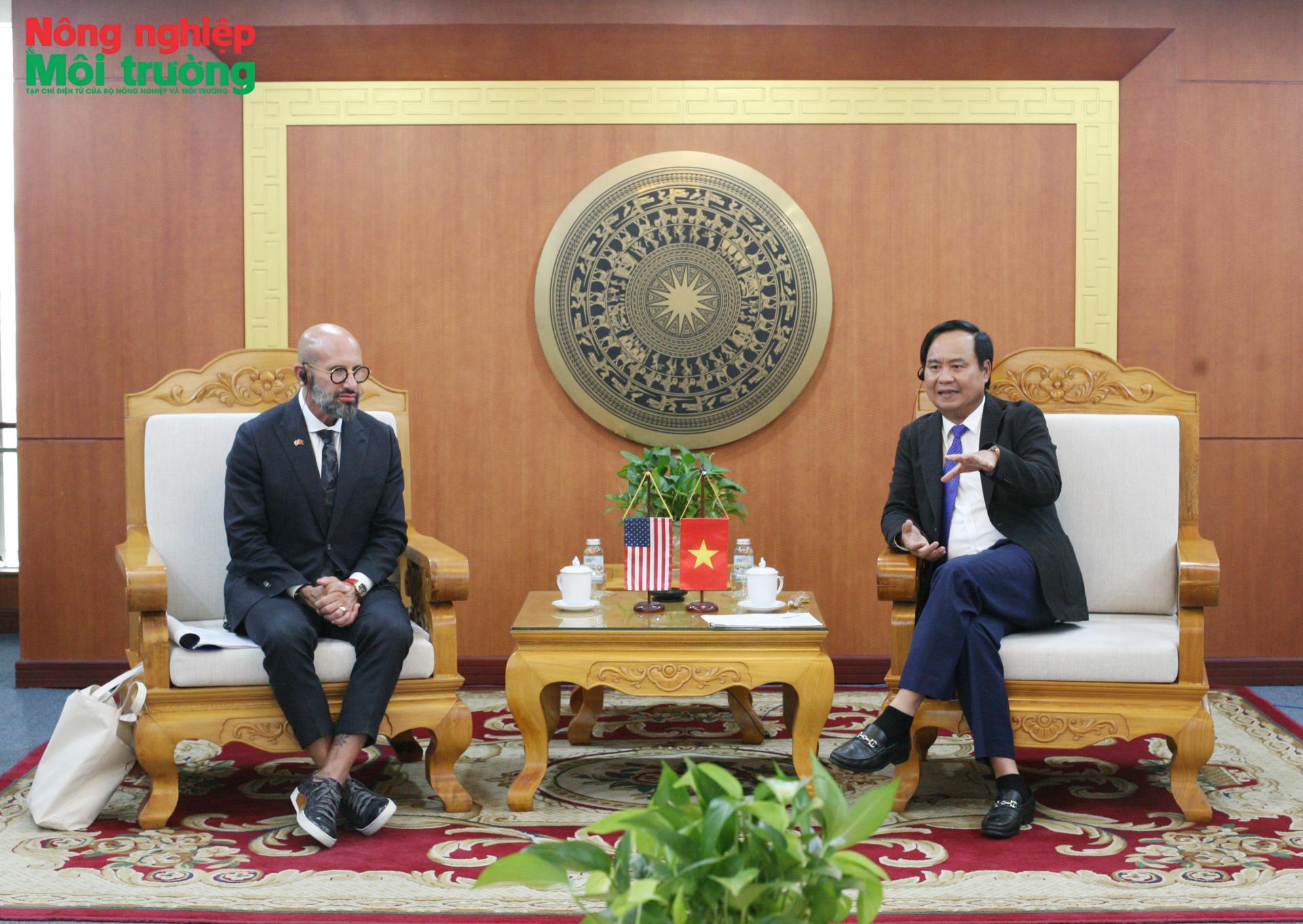
These issues were discussed during a meeting in Hanoi on July 29 between Deputy Minister of Agriculture and Environment Vo Van Hung and Mark Abdoo, Deputy Director for Global Policy and Strategy, Office of Global Policy and Strategy, U.S. Food and Drug Administration (FDA).
Deputy Minister Vo Van Hung said the Ministry of Agriculture and Environment is implementing a range of measures to modernize the country's food safety management system, with supply chain transparency serving as a central pillar. These include expanding the use of planting area codes, strengthening product traceability and accelerating digital transformation to improve regulatory efficiency while better meeting the requirements of export markets.
Building on years of cooperation in seafood food safety, Viet Nam proposed expanding collaboration with the FDA to cover the broader agriculture, forestry and fisheries sectors. Priority areas include food safety risk assessment and risk management, inspection and enforcement, traceability, workforce training, and strengthening regulatory capacity in crop production, animal husbandry and veterinary services.
The two sides also agreed to enhance information sharing on U.S. technical regulations and emerging standards. According to Deputy Minister Hung, early access to regulatory updates would enable businesses to adjust production processes in a timely manner, reduce export risks and improve compliance with international standards.
As supply chains between the two countries become more closely integrated, the United States remains a major supplier of raw materials for Viet Nam's agricultural processing and animal feed industries. In 2025, Viet Nam's agricultural product imports from the United States rose 27% compared with 2024, helping secure inputs for domestic processing and increase the value added of agricultural products.
Strengthening regulatory cooperation and data sharing
According to the U.S. side, locating the FDA's first ASEAN regional office in Viet Nam reflects the country's growing role in global supply chains and demonstrates a long-term commitment to advancing cooperation under the Viet Nam-U.S. Comprehensive Strategic Partnership.
Unlike previous coordination mechanisms that relied primarily on regional offices outside Southeast Asia, the Hanoi office is expected to streamline information exchange, strengthen regular technical cooperation and support the timely resolution of issues related to food safety management and agricultural trade.
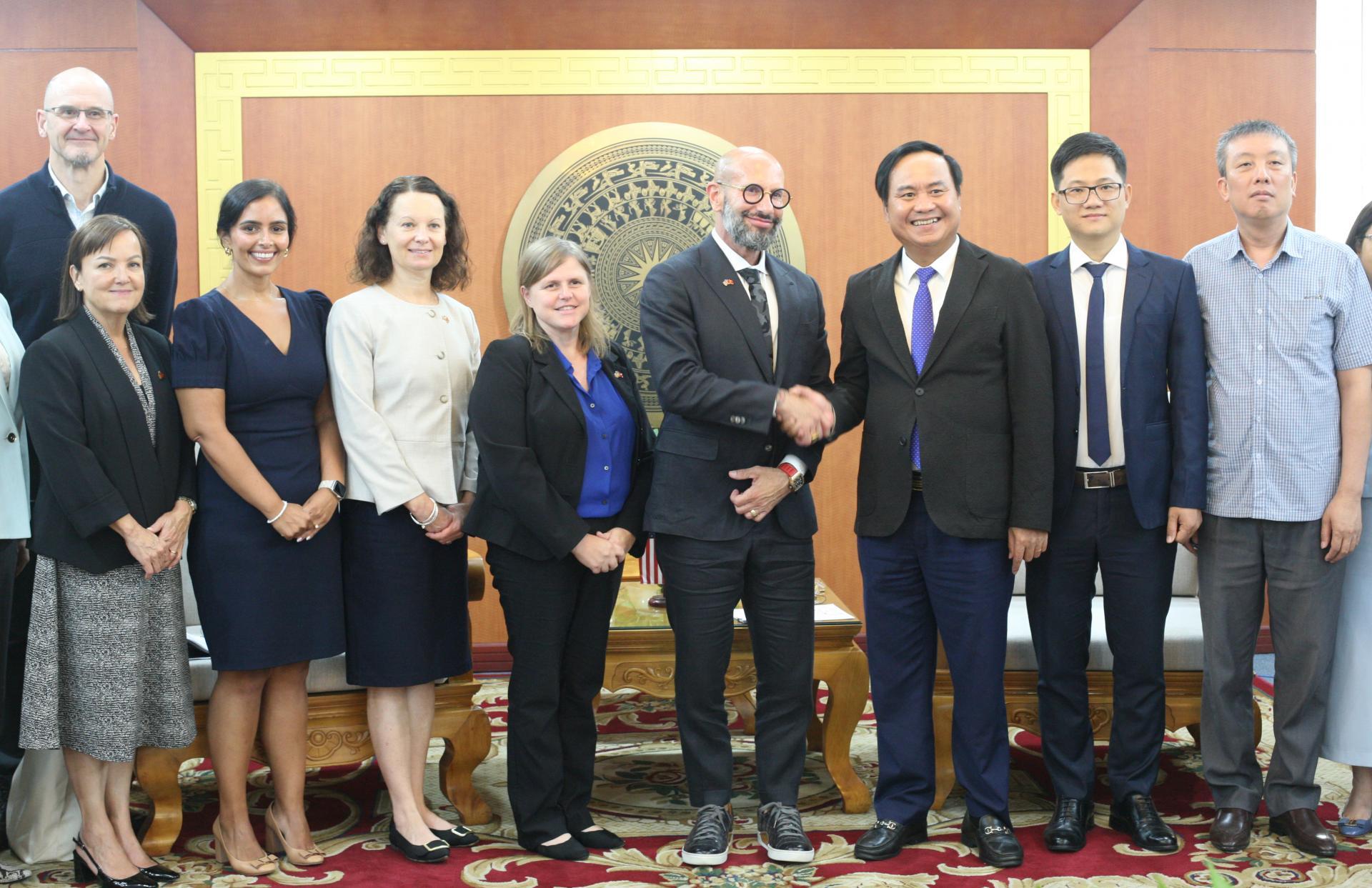
Mark Abdoo said the FDA looks forward to working with Viet Nam to develop a modern, transparent and more predictable regulatory system. Priority areas include data sharing, closer cooperation on export certification and quality testing, and stronger coordination among regulatory agencies.
The FDA also proposed expanding cooperation on genomic sequencing for disease surveillance and food safety monitoring. According to the agency, deeper participation in international data-sharing networks would enable real-time access to genomic sequencing data, improving the ability to trace sources of contamination or pathogens and strengthening risk management throughout the supply chain.
The FDA's new presence in Viet Nam is expected to deepen bilateral cooperation on food safety while creating new opportunities to harmonize regulatory approaches, strengthen data connectivity and improve the quality management of agricultural products and food in line with international practices, contributing to a more favorable environment for agricultural trade between Vietnam and the United States.
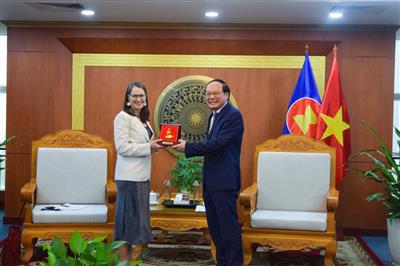
During the meeting with Deputy Minister of Natural Resources and Environment (MONRE) Le Cong Thanh on March 14th, Canada's Ambassador for Climate Change Catherine Steward expressed Canada’s hope to expand cooperation with Vietnam in responding to climate change.
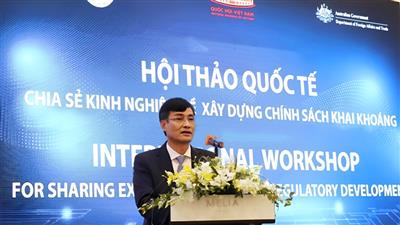
Leading the “International workshop on sharing experience on mining regulatory development”, Deputy Minister of Natural Resources and Environment (MONRE) Tran Quy Kien highly appreciated contributions and sharing experiences from delegates and international experts on key issues highlighted in the Draft Law on Geology and Minerals. He emphasized that this valuable information serves as a crucial reference for the MONRE to study, absorb, and contribute to the refinement of the Draft Law.
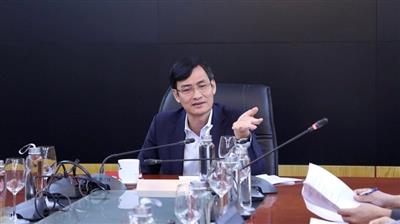
On March 7th, Deputy Minister of Natural Resources and Environment Tran Quy Kien chaired a meeting with the Vietnam Mineral Resources Department, the Vietnam Geological Department, and the International Cooperation Office to discuss the organization of an international conference to gather input on the Draft Geological and Mineral Law. The conference, which aims to exchange and learn from international experiences in state management of geology and minerals, will be jointly organized by the Ministry of Natural Resources and Environment in collaboration with the National Assembly's Committee on Sci-Tech and Environment and the Australian Embassy on March 13th, 2024, in Hanoi.
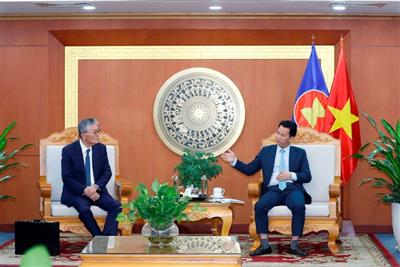
Members of the Party Central Committee, Minister of Natural Resources and Environment Dang Quoc Khanh, on March 4th, received international partners to exchange and collaborate on natural resources, climate change adaptation, and energy transition.
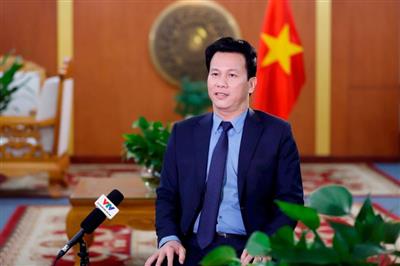
On the occasion of the Lunar New Year in 2024, Dr. Đặng Quốc Khánh, Member of the Central Committee, Secretary of the Party's Executive Committee, Minister of Natural Resources and Environment, shared important insights with the media of the Natural Resources and Environment sector about the notable achievements in 2023 and the direction of the Ministry's work in 2024. TN&MT Magazine is pleased to introduce this content to readers.