



 The licensing of four Belarusian companies to export boneless beef to Viet Nam, with the first shipment entering the Vietnamese market in April 2026, marks a concrete result in efforts to address market-access procedures between the two countries. In the opposite direction, the number of Vietnamese companies authorised to export meat and seafood to the Eurasian Economic Union (EAEU) is only about one-sixth the number of Belarusian companies authorised to export to Viet Nam, pointing to further scope for addressing technical barriers and expanding market opportunities for Vietnamese agricultural products.
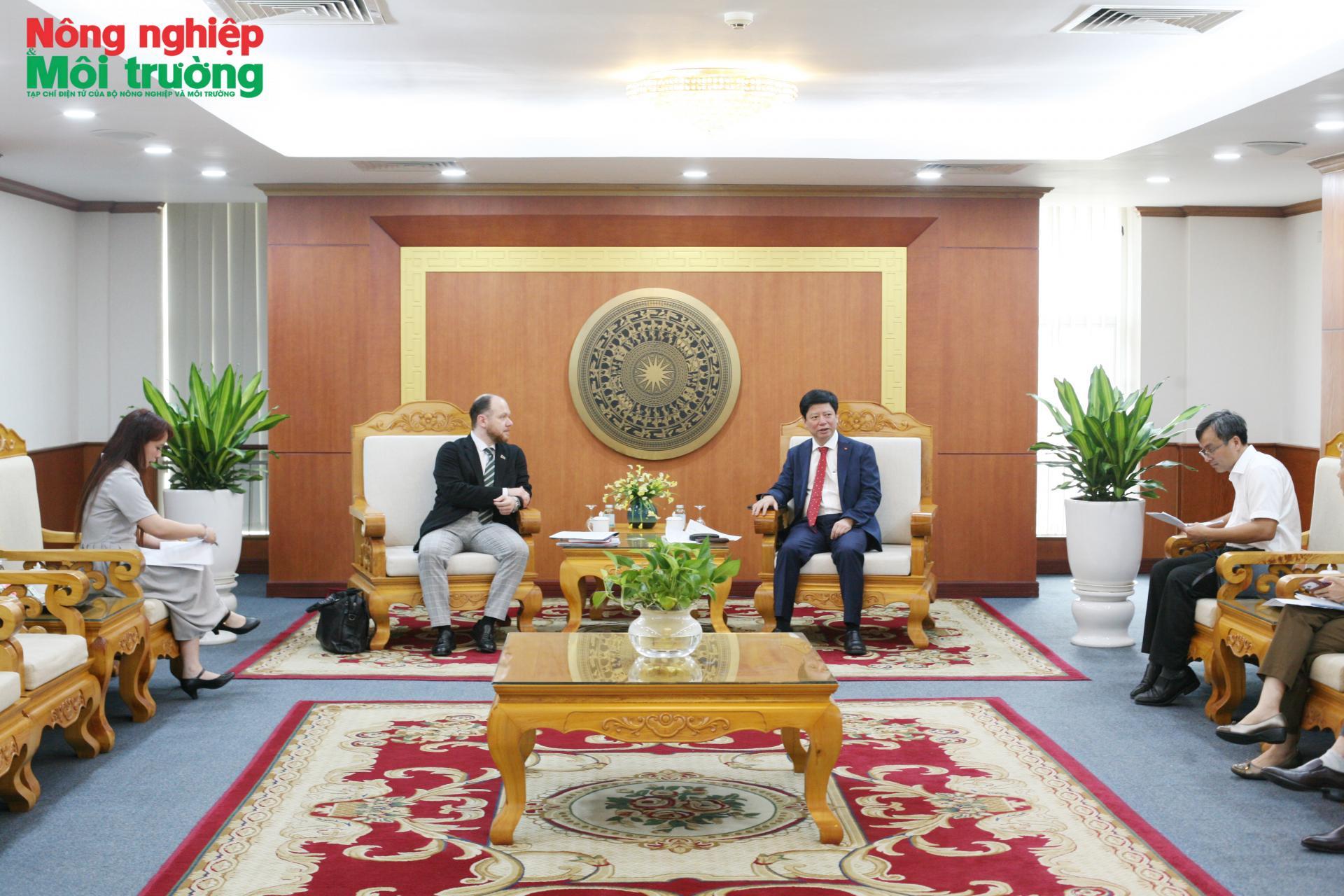
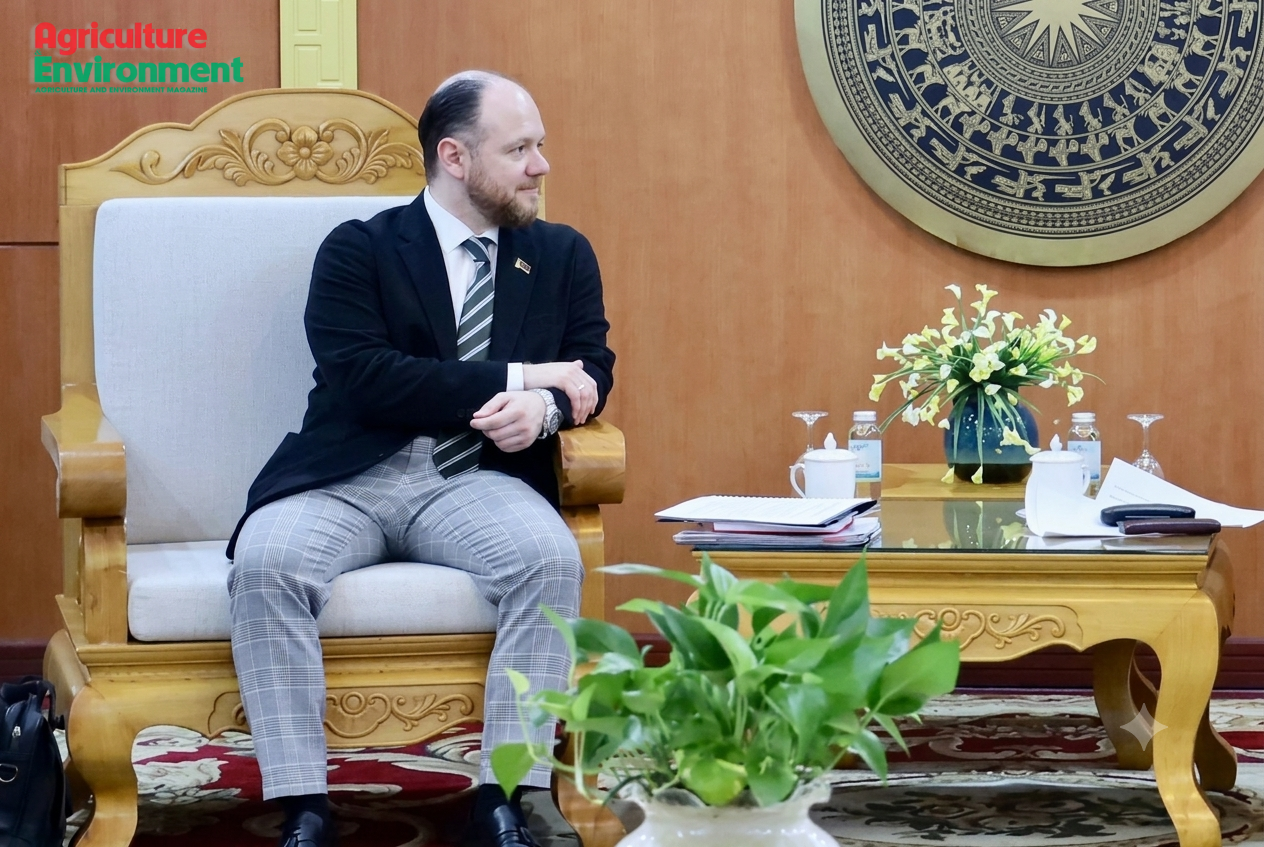
On August 25, Dennis Nikalayeu, Trade Counsellor at the Embassy of Belarus in Vietnam, visited the Ministry of Agriculture and Environment to review bilateral agricultural cooperation and discuss upcoming activities.
Viet Nam-Belarus agricultural trade has room to grow
Pham Ngoc Mau, Deputy Director General of the Department of International Cooperation, said agricultural cooperation between Viet Nam and Belarus had been developing positively under the Free Trade Agreement (FTA) between Viet Nam and the EAEU.
As an EAEU member, Belarus is important not only to Viet Nam-Belarus bilateral agricultural trade but also to Viet Nam’s broader access to the EAEU market.
The two countries have highly complementary agricultural sectors, but bilateral trade remains modest and has yet to match its potential. In 2025, two-way trade in agricultural, forestry and fishery products totaled only about US$10 million, down significantly from previous years and well below the peak of approximately US$90 million in 2021.
Viet Nam currently exports seafood, rice, cassava, cashew nuts, tea and rubber to Belarus. Tropical fruit, vegetables and coffee are among the products with further export potential. In the opposite direction, Viet Nam mainly imports fertilisers from Belarus and is gradually expanding imports of livestock products, including beef.
From a trade policy perspective, the issue is not the absence of a framework for cooperation. The Viet Nam-EAEU FTA provides a framework for tariff preferences and market access, while the two countries maintain bilateral cooperation mechanisms. However, trade preferences only translate into actual business opportunities when exporters meet the importing market’s technical requirements, quarantine rules, food safety standards and requirements for production facilities. This makes market access a key issue in bilateral agricultural cooperation.
Viet Nam and Belarus entered a new phase in their relationship after establishing a Strategic Partnership in May 2025. In their joint statement, the two sides agreed to deepen cooperation across a range of areas and develop a 2025-2027 cooperation roadmap to translate agreements reached by their leaders into concrete areas of cooperation. VNA reported that the two sides also agreed to expand market access for each other’s agricultural, forestry and fishery products and make more effective use of the Viet Nam-EAEU FTA.
Against this backdrop, cooperation between agricultural authorities has a direct bearing on businesses. Each completed dossier, each approved product and each additional market-access decision represents a step in turning policy commitments into measurable trade outcomes.
Four Belarusian companies licensed to export boneless beef to Viet Nam
The clearest result of bilateral coordination is Viet Nam’s approval of market access for Belarusian beef.
According to Trade Counsellor Dennis Nikalayeu, four Belarusian companies have been licensed to export boneless beef to Viet Nam. The first shipment, totaling 22 tonnes, entered the Vietnamese market in April 2026 and received positive feedback. Belarus is preparing its next shipment and plans to provide the Department of Livestock Production and Animal Health with an additional list of eligible exporters. The English-language version of the source report uses this current official name for the department.
The development goes beyond a single commodity. The approval of specific exporters demonstrates that agricultural market access depends on coordination between competent authorities and exporters’ ability to meet documentation and technical requirements.
The Belarusian side also noted progress in licensing canned beef exports and expressed interest in supplying additional processed meat products to Viet Nam.
At the same time, dossiers concerning other products remain under review. For poultry meat, Belarus has responded to requests from the Department of Livestock Production and Animal Health for additional information. The Vietnamese competent authority is reviewing the dossier and is expected to issue a written response. For pork, the two sides are continuing to exchange and supplement information needed to complete the import risk assessment. Since 2025, the two countries have also cooperated on products including poultry meat and bone meal.
These developments show that market access is being addressed product by product, based on individual dossiers and specific technical requirements. This approach is particularly relevant to agricultural trade, which is subject to animal and plant quarantine, food safety requirements and disease-risk management.
The Belarusian side said the review of some dossiers was taking a relatively long time and called for closer coordination to help businesses complete the documentation required by Viet Nam. In response, Pham Ngoc Mau asked Belarus to continue providing the requested information to facilitate the assessment and consideration of market access for Belarusian meat products.
Technical requirements cannot simply be set aside in the interest of faster trade. They provide the basis for risk assessment and food safety controls. The practical approach is therefore not to lower standards, but to ensure that information is submitted, reviewed and exchanged more clearly, completely and efficiently.
Viet Nam seeks more EAEU market access for seafood
While the approval of four Belarusian companies represents a concrete result on the import side, Viet Nam’s request at the meeting focused on expanding opportunities for Vietnamese agricultural and seafood exports to the EAEU.
Pham Ngoc Mau asked Belarus to continue supporting wider EAEU market access for Vietnamese agricultural and seafood products. Viet Nam also wants Belarus to work with Russia and other EAEU members to facilitate the addition of more Vietnamese seafood companies to the list of eligible exporters.
The number of Vietnamese companies currently authorised to export meat and seafood to the EAEU is only about one-sixth the number of Belarusian companies authorised to export to Viet Nam. The disparity points to an uneven level of market access for businesses from the two countries.
For Viet Nam, the issue is not simply making use of tariff preferences under the Viet Nam-EAEU FTA. Actual market entry also depends on quarantine requirements, technical dossiers, import risk assessments and the eligibility of production and processing establishments. The agreement provides the trade framework, but access in practice still depends on regulatory and technical procedures.
Viet Nam’s request for Belarus to engage with Russia and other EAEU members also reflects the structure of the regional market. Bilateral ties with Belarus can facilitate exchanges, but decisions on the eligibility of exporters and products must still be handled by the relevant authorities in accordance with EAEU rules and national regulations.
The aim, therefore, is not to lower technical standards. Rather, it is to make market-access requirements clearer and more predictable, allowing businesses to prepare complete dossiers and enabling competent authorities to process them more efficiently.
The issue also fits the broader direction of the Vietnam-Belarus Strategic Partnership. When the two countries agreed to establish the partnership in May 2025, they called for more effective use of the Viet Nam-EAEU FTA and greater access for agricultural, forestry and fishery products in each other’s markets.
The two sides are also considering holding the third meeting of the Agricultural Working Group in late 2026. The meeting would review cooperation progress, address outstanding issues and identify priority areas for the coming period.
Specific dossiers will determine the results of agricultural cooperation
The discussions show that the effectiveness of Viet Nam-Belarus agricultural cooperation increasingly depends on implementation. High-level agreements generate commercial value only when they are translated into eligible exporters, complete dossiers, approved products and workable procedures.
For Belarusian beef, that process has already produced a concrete result. Dossiers involving poultry meat and pork are still being processed, while Viet Nam is seeking approval for more seafood exporters to access the EAEU market.
For agricultural products, these are not merely administrative steps. They determine whether businesses can enter a market, how long they need to prepare for exports and whether trade can be maintained on a stable basis after approval is granted.
This makes measurable outcomes particularly important in assessing cooperation: the number of approved exporters, the range of products eligible for trade, the time required to process dossiers and the ability of businesses to sustain shipments.
The two sides are considering holding the third meeting of the Agricultural Working Group by the end of 2026. The meeting is expected to provide a forum to review progress, examine unresolved issues and identify priorities for the next phase of cooperation.
With bilateral trade in agricultural, forestry and fishery products at only about US$10 million in 2025, compared with approximately US$90 million in 2021, the gap between potential and actual trade remains substantial. Closing that gap will depend less on setting broad targets than on resolving specific market-access requirements for individual products and exporters.
The Viet Nam-Belarus Strategic Partnership provides a broader political framework, while the Viet Nam-EAEU FTA provides the trade framework. In agriculture, the value of both will ultimately be reflected in the dossiers resolved, the companies approved and the products that can be traded on a sustained basis.
The August 25 meeting therefore highlighted more than the arrival of an initial shipment of Belarusian beef in Viet Nam. It also underscored a broader policy task: turning the existing bilateral and EAEU trade frameworks into practical market opportunities for businesses on both sides.
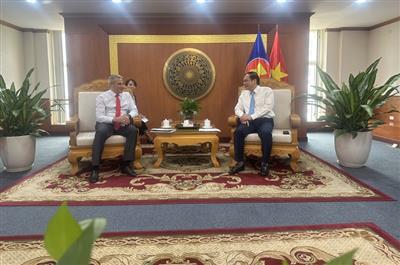
On May 29, Deputy Minister of Natural Resources and Environment (MONRE) Le Cong Thanh hosted a meeting with Mr. Ulazdimir Baravikou, the Belarusian Ambassador to Vietnam. Both sides agreed to strengthen the exchange and sharing of advanced science and technology in waste treatment and recycling, with a particular focus on future municipal solid waste management.
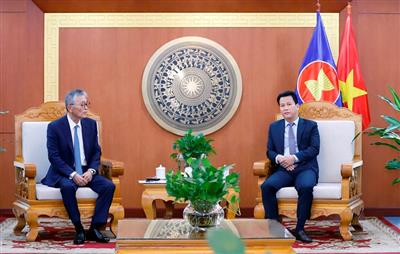
On May 24, Minister of Natural Resources and Environment Dang Quoc Khanh held a meeting with EREX Group Chairman Honna Hitoshi and the Japanese Ambassador to Vietnam Ito Naoki. The discussions focused on cooperation in developing biomass energy and the objective of reducing greenhouse gas emissions.
In observance of the International Day for Biological Diversity 2024, celebrated on May 22nd, the Ministry of Natural Resources and Environment (MONRE) has issued a directive to ministries, sectors, and localities, outlining strategies to commemorate this event.
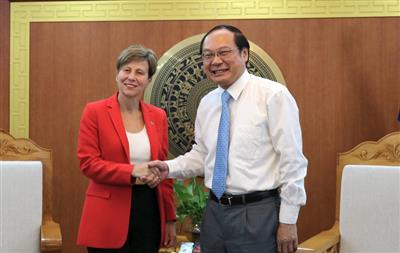
During the meeting with Senator Jenny McAllister, Australia's Assistant Minister for Climate Change and Energy, in Hanoi on April 17th, the Deputy Minister of Natural Resources and Environment, Le Cong Thanh, expressed the hope for enhanced cooperation between Australia and Vietnam on climate, energy, and the environment under the newly signed Comprehensive Partnership.
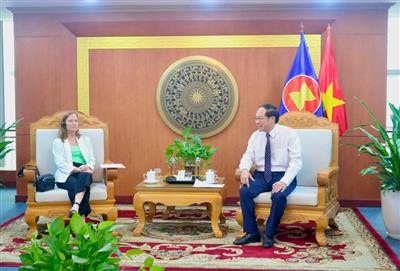
On April 5th, Deputy Minister of Natural Resources and Environment Le Cong Thanh hosted a meeting with Ms. Aler Grubbs, Director of the United States Agency for International Development (USAID) in Vietnam, to discuss the expansion of cooperation in environmental protection