



 As pressure from water pollution continues to intensify and environmental management moves toward more modern approaches, the transition from conventional manual monitoring to real-time digital data-based monitoring has become an inevitable trend. A study conducted by researchers from Can Tho University and the Can Tho Department of Agriculture and Environment examines this transition through an analysis of Vietnam's legal framework on environmental protection and water resources during the 2020–2025 period. The findings clarify the foundation for a transparent, proactive, and data-driven water quality management model in Viet Nam.
Transforming water quality management
Water pollution is becoming increasingly complex, while rapid industrialization and urbanization continue to place mounting pressure on river basins. In this context, the challenge is no longer simply how to collect more water samples, but how to monitor water quality continuously, promptly, and reliably in order to detect pollution risks at an early stage.
To address this practical challenge, Nguyen Thanh Giao, Ly Quoc Su, Le Vu Truong and their colleagues conducted the study "Transitioning the water quality management model in Viet Nam towards real-time digital data-based monitoring." Rather than focusing on a specific technological solution, the study employs a policy analysis approach to examine changes in Viet Nam's legal framework on environmental protection and water resources between 2020 and 2025, thereby identifying the ongoing transformation of the country's water quality management model.
The study's most significant finding is that Viet Nam is transitioning from a water quality management model based on pollution concentration control through periodic sampling to one centered on total pollutant load management supported by continuous, automated monitoring and real-time data. Under this new model, the emphasis shifts from detecting violations after they occur to continuously monitoring pollution sources in order to proactively regulate pollution. This represents a fundamental shift in water environmental management, where data are no longer used solely for statistical reporting but have become a key tool supporting evidence-based management decisions.
According to the researchers, this transition also reflects a broader change in pollution control strategies. Whereas previous assessments relied primarily on laboratory analyses of water samples collected at specific points in time, the new model emphasizes continuous, automated monitoring capable of tracking water quality in real time. This approach enables regulatory authorities to detect environmental changes more rapidly, reduces the likelihood of missing intermittent or strategically timed illegal discharges, and provides the basis for proactive management rather than responding only after pollution incidents occur.
The findings demonstrate that this transformation extends well beyond advances in monitoring technology. It reflects a fundamental shift in Viet Nam's approach to water environmental management. As real-time data are collected continuously and updated without interruption, water resource protection can evolve from periodic inspections toward continuous monitoring, improving regulatory effectiveness, strengthening water security, and supporting sustainable development in the context of the country's digital transformation.
Continuous monitoring replaces periodic inspections
To explain this transition, the researchers analyzed recent changes in Vietnam's environmental monitoring regulations. The study finds that the defining feature of the new management model is the shift from pollution concentration control to total pollutant load management using data collected through continuous, automated monitoring. Under this approach, environmental impacts are no longer assessed solely on the basis of individual water samples collected at a specific point in time. Instead, assessments integrate pollutant concentrations with wastewater discharge flow rates throughout the discharge process.
The researchers argue that this represents a significant advancement because the new approach more accurately reflects the actual quantity of pollutants entering receiving waters while overcoming the limitations of periodic sampling, which may fail to capture short-duration discharge events or may be influenced by deliberate attempts to circumvent inspections. Rather than simply asking, "What was the pollutant concentration when the sample was collected?" the new management framework seeks to answer a more meaningful question: "How much pollution is the receiving water body receiving throughout the discharge process?"
To support this transition, the study analyzes recent regulatory requirements for installing continuous automatic wastewater monitoring systems, integrating automatic sampling equipment, standardizing online data transmission, and connecting information from discharge sources to regulatory authorities. According to the authors, combining monitoring data with automatic sampling devices, surveillance cameras, and digital signature-based data authentication has gradually established a highly reliable monitoring system, providing a robust legal foundation for administrative enforcement based on electronic evidence.
Based on these analyses, the researchers conclude that real-time data are becoming the foundation of modern water environmental management. As monitoring data are standardized, interconnected, and continuously updated, regulatory agencies can monitor changes in water quality in near real time, identify emerging pollution risks at an early stage, and make more timely management decisions. This also establishes the foundation for a data-driven management model that relies less on periodic inspections and conventional sampling campaigns.
Supporting river basin carrying capacity governance
While real-time data enable continuous monitoring of water quality conditions, another major finding of the study is that integrating multiple environmental datasets provides a more comprehensive basis for river basin carrying capacity governance. According to the researchers, water quality management should extend beyond monitoring pollution discharge sources to simultaneously evaluating the assimilative capacity and self-purification capacity of receiving waters.
The study finds that achieving this objective requires integrating surface water monitoring data with sediment data rather than focusing solely on parameters measured within the water column. Surface water reflects pollution conditions at the time of monitoring and can change rapidly in response to river flow or weather conditions, whereas sediments preserve the long-term accumulation of pollutants, particularly heavy metals and persistent organic compounds. Combining these complementary datasets enables environmental authorities to monitor immediate changes while also identifying long-term pollution accumulation and ecological risks.
Based on these findings, the researchers emphasize that monitoring data should no longer serve merely to assess environmental conditions but should become essential inputs for a broad range of management activities. Information on water quality, carrying capacity, and pollutant loads can support water resource functional zoning, determination of wastewater receiving capacity, allocation of discharge quotas, and environmental permitting for new investment projects. This represents a transition from managing individual discharge sources toward river basin carrying capacity governance.
According to the authors, this approach has particular practical significance for Viet Nam, where many river basins span multiple provinces and face increasing pressure from economic development and climate change. Management decisions supported by continuous and integrated environmental data can significantly strengthen pollution prevention while promoting more efficient water resource utilization and long-term protection of river ecosystems.
Building the foundation for smart water governance
Beyond transforming environmental monitoring practices, the study concludes that digital data are becoming the foundation of a modern environmental management model in which decisions are increasingly based on scientific evidence rather than relying primarily on periodic inspections. This represents the next stage of digital transformation in Viet Nam's environmental protection sector.
The findings indicate that once monitoring data are standardized, transmitted online, and authenticated in accordance with current regulations, regulatory authorities can use them to monitor compliance among discharge sources, detect anomalies at an early stage, and support enforcement actions. This not only enhances transparency in environmental law enforcement but also reduces reliance on conventional field inspections, which are often resource-intensive and time-consuming.
The researchers further argue that the value of an integrated environmental data system extends well beyond pollution control. When information on water quality, discharge sources, and environmental conditions is consolidated into a unified national database, it becomes an essential resource for development planning, water resources management, and investment decision-making. Local authorities can proactively assess environmental carrying capacity before approving new development projects, while businesses gain stronger scientific evidence to improve environmental management and meet increasingly stringent sustainability requirements.
According to the authors, such a system also creates favorable conditions for advancing the circular economy in Viet Nam. A transparent, reliable, and continuously updated environmental data system not only improves the effectiveness of environmental management but also strengthens confidence among investors, financial institutions, and international partners as environmental, social, and governance (ESG) considerations become increasingly important.
In conclusion, the researchers emphasize that the transition toward a water quality management model based on real-time digital data-based monitoring is only the beginning. Achieving smart water governance will require further strengthening inter-agency data-sharing mechanisms, enhancing data analytics capacity, and developing a unified national environmental database. According to the study, these efforts will provide a critical foundation for improving water resource protection, strengthening resilience to environmental challenges, supporting river basin carrying capacity governance, and advancing sustainable development throughout Viet Nam's ongoing digital transformation.
This article is based on the research paper "Transitioning the water quality management model in Viet Nam towards real-time digital data-based monitoring" by Nguyen Thanh Giao and colleagues from Can Tho University and the Can Tho Department of Agriculture and Environment, published in the Science Journal of Agriculture and Environment, Issue 1 (April 2026). |

Animal cloning is the process of producing genetically identical individuals without undergoing conventional fertilization. The successful creation of cloned animals has opened up numerous potential applications in basic research, medicine, and agriculture.

The Cai hoa vang glutinous rice variety is a well-known specialty of Thanh Hoa province, appreciated for its opaque white grains, characteristic aroma, and sticky texture when cooked—qualities that give it high economic value. However, after many years of traditional cultivation and informal seed exchange, the variety has shown signs of segregation and genetic degradation, resulting in unstable yields and inconsistent grain quality. This trend threatens not only production efficiency but also the preservation of an important local germplasm resource.
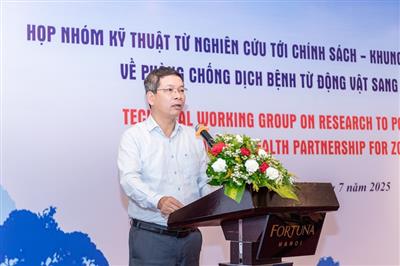
At the launch of the Research to Policy (R2P) Technical Working Group on July 28 in Ha Noi, the Ministry of Agriculture and Environment, together with international partners, delivered a clear message: Viet Nam is advancing the institutionalization of the One Health approach, grounded in scientific evidence and multisectoral dialogue. R2P is more than just a technical mechanism—it represents a new interface where science informs policy, and where research-based evidence serves as the foundation for systemic solutions linking human, animal, and environmental health.
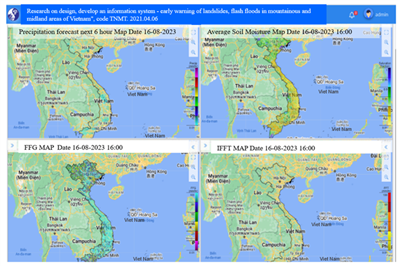
Flash floods, while small in scale, can be highly destructive. This article introduces a web portal for early warnings about flash floods and landslides, integrating real-time rainfall data, weather predictions, and SEAFFGS results. The system sends automatic alerts via email or Zalo and helps forecasters, authorities, and citizens monitor and respond to these natural disasters, reducing potential damage.
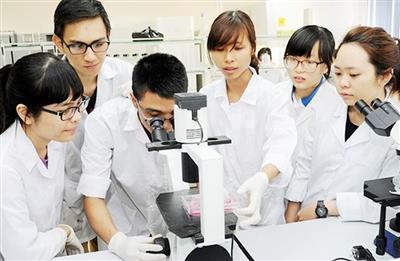
Scientific-technological research is intrinsically linked to the evolution and refinement of strategies for sustainable development in these domains. Scientific inquiry serves as a crucial step in the acquisition, analysis, and processing of information, thereby furnishing invaluable insights for governmental entities. This aids in the formulation of policies, establishment of guidelines, and delineation of strategic frameworks tailored to address practical exigencies at various developmental junctures of the nation.