



 Science and technology play an important role in the development of the agriculture and environment sector, contributing to national food security, greater production efficiency and producer incomes, stronger exports, and Viet Nam’s position as a major agricultural producer in the global market. However, the development and application of science and technology in Viet Nam in general, and in fisheries and fisheries surveillance in particular, still face a number of limitations. It is therefore essential to establish orientations for science and technology development and innovation in fisheries and fisheries surveillance for the 2026–2030 period.
Building a foundation for science and technology development
Amid climate change, increasingly stringent food safety requirements and higher market standards, the competitiveness of the fisheries sector can no longer depend solely on expanding production. Productivity, quality, disease control, resource efficiency and value addition will determine long-term competitiveness. Across all these areas, science and technology and innovation must play a leading role.
The 2021–2025 period demonstrated that the sector has established a substantial research base. A total of 113 science and technology tasks in fisheries and fisheries surveillance were implemented, with total funding of VND 336.779 billion, of which 60 tasks had been completed and accepted. The research generated 48 recognized technical advances, while nine technical processes were accepted for utility-solution protection applications, alongside hundreds of research papers published domestically and internationally.
More importantly, many research outcomes have been adopted in production. Breeding research has helped secure more than 80% of the seed supply for major aquaculture species, with more than 95% being disease-free. Technological processes for aquaculture, biological products, environmental management, disease prevention and treatment, harvesting and preservation have been applied to approximately 90% of the production area and output of major aquatic species.
This represents a significant advance because, for a sector directly affected by disease outbreaks, extreme weather and market fluctuations, self-reliance in seed and technology constitutes a form of growth infrastructure.
In aquaculture, many research outcomes have focused on areas that directly determine production efficiency. Twelve new varieties and strains have been developed, while 27 technical advances have been recognized and transferred for application. Several shrimp and fish strains with rapid growth, disease-free status, disease resistance and climate resilience have been developed. The PanGI2 strain of striped catfish (Pangasianodon hypophthalmus) has a growth rate more than 20% higher than the original strain, while selective breeding of giant freshwater prawn has achieved a selection response of more than 20%.
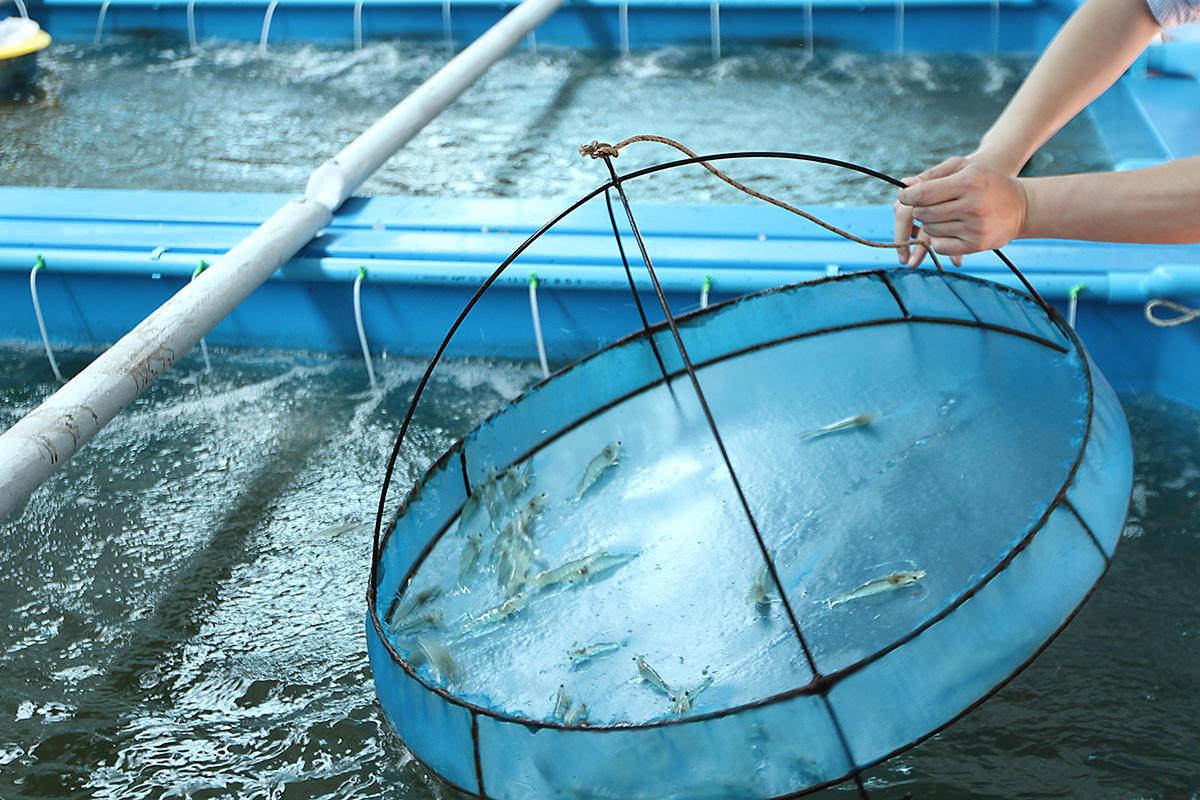
At the farming stage, many technologies have focused on reducing costs and environmental pressures. Some production processes have reduced feed and water-exchange requirements by 15% while maintaining survival rates above 75%. Technology for intensive two-stage farming of whiteleg shrimp with limited water exchange, together with measures to control white spot disease and acute hepatopancreatic necrosis disease (AHPND), has been researched and transferred for application. In rice–shrimp systems on the Ca Mau Peninsula, shrimp yields have reached 400–500 kg/ha/year, while rice yields have exceeded 3.5 tonnes/ha/year.
In marine aquaculture, research is also shifting toward more sustainable development. Improvements in technologies for farming high-value marine fish, the production of formulated feeds to replace low-value fish used as feed, vaccine research, and the development of seaweed farming technologies create opportunities to diversify products while reducing pressure on marine resources and improving climate resilience.
Science and technology have also generated significant changes in capture fisheries and post-harvest preservation. CPF preservation technology using polyurethane (PU) materials has reduced ice loss by nearly 30%, improved raw-material quality by 25–30%, and increased the economic efficiency of fishing trips by 25.6%. LED lighting systems used in purse-seine fisheries have reduced fuel consumption by 30–60%, lowered fishing-trip costs by 18–22%, and increased average profits by 25–40%.
These figures show that the value of research lies not in the number of research projects or completed studies, but in its capacity to address concrete production challenges. A technology that reduces feed use, saves fuel, limits disease outbreaks or improves product quality can directly strengthen the sector’s competitiveness.
The challenge now is how to ensure that these proven results do not remain confined to a limited number of models, localities or enterprises with access to technology.
Bridging the gap between research and production
The major bottleneck facing science and technology development in fisheries today is not necessarily a lack of research outcomes, but the gap between research results and the market.
The supply of high-quality seed remains partly dependent on imports, while some newly recognized varieties and strains have not yet been widely adopted. Notably, the quality of approximately 50% of striped catfish and black tiger shrimp seed remains uncontrolled. At the same time, technology transfer and transactions between domestic enterprises and research organizations remain limited, preventing research results from being commercialized on a scale commensurate with their potential.
If this gap is not narrowed, the effectiveness of investment in research will be reduced. A technology that is technically sound but is not adopted by enterprises, widely used by farmers, or developed into a commercial product cannot yet become a driver of growth.
Technological infrastructure is another bottleneck. Fisheries logistics remain fragmented, while digital infrastructure, innovation centers and startup incubators have yet to meet demand. Processing technology is generally at an intermediate to upper-intermediate level, with an equipment renewal rate of only around 7% per year. While some large enterprises have invested in modern production lines, most processing facilities continue to use outdated equipment, offer limited product diversification, and consume substantial amounts of raw materials and energy.
Digital transformation faces a similar challenge. The Internet of Things (IoT), big data, blockchain and artificial intelligence (AI) have been applied in areas such as water-quality monitoring, feed management, aquaculture animal health and processing automation. However, their application remains limited in scope and is concentrated mainly among enterprises and production models with stronger resources. For small and medium-sized enterprises, cooperatives and farming households, digital technologies have yet to become a widespread component of production processes.
Accordingly, the orientation of science and technology development for 2026–2030 needs to shift its focus: rather than pursuing the number of research projects, priority should be given to technologies capable of addressing the sector’s most significant bottlenecks.
The first priority is seed production. Mastering technologies for breeding broodstock and producing disease-free seed for key species must be regarded as a foundation of competitiveness. This should be accompanied by advanced aquaculture technologies that use biological products, reduce antibiotic use, control disease and manage the aquatic environment. This direction is also consistent with increasingly stringent food safety requirements and the goal of sustainable fisheries development.
Biotechnology should be given a more prominent position within the value chain. Research into and mastery of biological products, vaccines, diagnostic kits, cell technologies and products that progressively replace chemical inputs will not only improve production quality but also provide a foundation for a new technological ecosystem in the fisheries sector. This orientation is framed by Decision No. 429/QD-TTg dated March 24, 2021, on the development of biotechnology in the agriculture sector through 2030.
At the same time, advanced technologies need to be integrated more deeply into commercial production. The target for 2030 is to contribute to raising the share of fisheries product value generated through high-technology applications to 30%, while achieving an average annual labor productivity growth rate of 7–8%. Achieving these targets requires research to remain closely connected to the needs of enterprises and producers; technologies must be designed for practical application, scalability and demonstrable economic efficiency.
Digital transformation should also be understood more broadly than simply installing equipment or developing software. The core requirement is to establish reliable data capable of being connected and shared, thereby enabling AI, IoT and other Industry 4.0 technologies to optimize production, management, traceability and value-chain integration. Precision and smart fisheries models should be piloted and subsequently scaled up rather than remaining limited to a small number of demonstration models.
The ultimate objective of science and technology is not to create another list of technologies, but to transform production methods.
A modern fisheries sector must be capable of securing its own seed supply, controlling disease, using feed and water efficiently, reducing post-harvest losses, increasing the share of processed products, ensuring traceability, and managing production based on data. Beyond this, by-products should be reused, waste should be minimized, and greater value should be generated from the same unit of resources.
The 2021–2025 period established an important foundation. The 2026–2030 period needs to bring about a qualitative shift: from research to application, from application to technological mastery, and from technological mastery to value creation.
When this is achieved, science and technology will no longer stand outside the fisheries production chain but will become an integral part of the value chain, contributing to the sector’s transition toward more modern, green, efficient and competitive development.
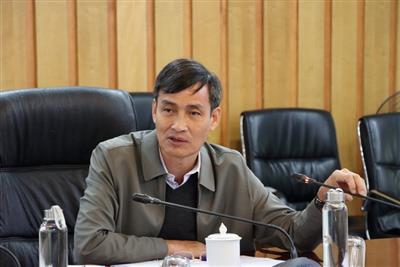
On the morning of February 16th, in Hanoi, the Vietnam Mineral Authority reported to Deputy Minister of the Ministry of Natural Resources and Environment, Tran Quy Kien, on the implementation of the draft "Decree amending and supplementing some provisions of Decrees detailing the Mineral Law."
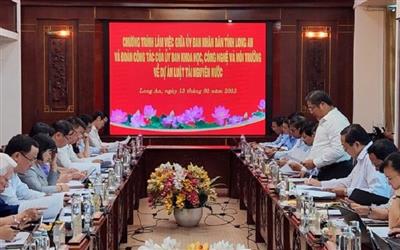
A delegation from the National Assembly's Committee on Science, Technology, and Environment, led by Ms. Nguyễn Thị Lệ Thủy, Deputy Head of the Committee on Science, Technology, and Environment, visited and conducted a field survey in Long An province to serve the assessment of the proposed amendments to the Water Resource Law. The National Assembly is expected to provide its initial feedback during the 5th session in May 2023 and review the law for approval during the 6th session in October 2023.

On April 11th, in Hanoi, the National Center for Meteorological and Hydrological Forecasting organized a conference on "Forecasting meteorological and hydrological trends and natural disasters in 2023." Mr. Hoang Duc Cuong, Deputy Director General of the General Department of Meteorology and Hydrology, attended and chaired the conference.