



 From the tea-covered hills stretching across Nghe An, Ha Tinh, Quang Binh (now part of Quang Tri), and Quang Tri provinces, a research team from the University of Agriculture and Forestry, Hue University conducted a large-scale investigation to decode the diversity of local tea germplasm. Using 31 tea accessions collected from four provinces, analyzed for morphological traits and genetic diversity using Random Amplified Polymorphic DNA (RAPD) markers, the team constructed a comprehensive overview of morphological variation and genetic relationships among tea accessions in the North Central region. The findings not only add essential data to Vietnam’s tea germplasm database but also provide a scientific basis for conservation and sustainable development of this culturally significant crop.
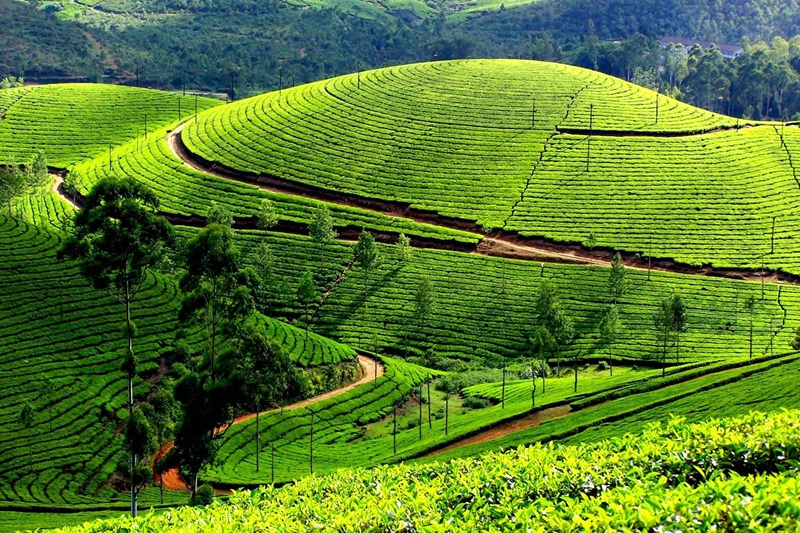
Tea (Camellia sinensis (L.) O. Kuntze) — one of Vietnam’s traditional industrial crops — carries both economic and cultural significance. More than an export commodity, tea has long symbolized simplicity, resilience, and purity in Vietnamese life
Tea: A cultural heritage, a livelihood, and a green symbol of Central Vietnam
Tea (Camellia sinensis (L.) O. Kuntze) is one of Vietnam’s traditional industrial crops, playing both economic and cultural roles. Beyond serving as a key export commodity, tea has been intertwined with Vietnamese life for generations, symbolizing simplicity, endurance, and purity.
Vietnam currently cultivates more than 120,000 hectares of tea, concentrated mainly in the northern midlands, Central Highlands, and part of the North Central region. Although the Central region accounts for only about 7% of the national tea area, it embodies unique ecological and cultural values. Across the slopes of Nghe An, Ha Tinh, Quang Binh (now part of Quang Tri), and Quang Tri, tea is not only a source of income but also a cultural heritage, where each cup of green tea remains a symbol of hospitality and rural connection.
The region’s hot, humid climate and low hills interspersed with plains have shaped local tea varieties with strong adaptability. Many households cultivate green tea primarily for household consumption, maintaining traditional farming practices. However, small-scale production and the lack of scientific data on genetic resources have limited the conservation and improvement of local tea varieties.
Recognizing this gap, the research team from the University of Agriculture and Forestry, Hue University (Phan Thi Phuong Nhi, Duong Thanh Thuy, and Nguyen Van Thinh) conducted the study “Study of genetic diversity of tea (Camellia sinensis (L.) O. Kuntze) collected at some provinces of the North Central region” to evaluate the morphological characteristics and genetic relationships of tea accessions in the region.
A total of 31 accessions were collected from Nghe An, Ha Tinh, Quang Binh (now part of Quang Tri), and Quang Tri and characterized for 22 morphological traits of stems, leaves, buds, and flowers, following the National technical regulation on testing for distinctness, Uniformity and Stability of Tea Varieties (QCVN 01-124:2013/BNNPTNT) and the International Plant Genetic Resources Institute (IPGRI) guidelines. In parallel, eight RAPD primers were used to assess genetic diversity.
The study aimed to identify morphological traits that could serve as classification and breeding criteria, and to determine the level of genetic relatedness among tea populations in the four provinces, considered a biological transition zone between northern and central Vietnam’s tea-growing regions.
Decoding the diversity among North Central tea accessions
The detailed morphological and genetic analyses revealed that, although all accessions belong to Camellia sinensis (L.) O. Kuntze, they exhibited significant morphological variation while maintaining close genetic relationships.
Morphological diversity: Unique regional features
The tea accessions displayed remarkable variation in stems, leaves, buds, and flowers. Over half (54.8%) had woody stems, while 45.2% were semi-woody or shrubby. Growth habits were primarily erect (38.7%) and semi-erect (48.4%), suitable for the region’s strong sunlight and high humidity. Dense branching (64.5%) was predominant, reflecting adaptation to high rainfall and helping maintain stable yields.
Bud traits, the key determinants of tea quality, varied notably across provinces. The second leaf color of young shoots exhibited three main forms: yellow-green (54.8%), purple-green (22.6%), and dark green. Anthocyanin pigmentation at the base of the bud appeared in accessions from Nghe An, Ha Tinh, and Quang Binh (now part of Quang Tri), but was almost absent in Quảng Trị. About 90% of accessions showed pubescence on buds, mostly short and sparse, unlike Shan or hybrid varieties.
Leaf blades also differed significantly: most were narrowly elliptic (54.8%) or medium elliptic (29.0%), ranging from medium to large in size. Leaf orientation was upward or outward, suitable for intense sunlight exposure. Leaf surfaces varied in greenness and rugosity, and serrations ranged from shallow to deep, distinct traits for local variety identification.
Flower morphology varied as well. Nghe An accessions had medium to long pedicels; Ha Tinh had all three types—short, medium, and long—while Quang Binh (now part of Quang Tri) and Quang Tri mostly had medium pedicels. Most flowers had white petals, no pigmentation on sepals, and few showed anthocyanin on inner petals. Among 22 morphological traits examined, only one—zigzag branching—remained constant; all others exhibited polymorphism.
According to the research team, this high morphological diversity reflects natural adaptation to local climatic and soil conditions, combined with long-standing traditional propagation practices. Farmers commonly use cuttings or seeds, leading to accumulated morphological variation over generations while maintaining stable growth.
Key morphological traits defining variation
Principal Component Analysis (PCA) was performed on 22 morphological traits to identify those contributing most to variation. Eight principal components had eigenvalues greater than 1, explaining 76.11% of total variance. The first two components (PC1 and PC2) accounted for 30.92% of the total variation.
Traits contributing most to PC1 were the color of the second leaf on young shoots, anthocyanin pigmentation, and leaf surface texture. For PC2, branch density, growth habit, and leaf size had the greatest influence. These results indicate that traits related to buds and leaves, parts most directly affected by ecological factors, play a central role in differentiating local accessions.
On the PCA scatterplot, the 31 accessions were dispersed across axes without clear provincial grouping, suggesting that morphological variation arises mainly within populations rather than from geographic isolation, a typical pattern in local crops propagated naturally over long periods.
Genetic relationships: Closeness within diversity
Genetic diversity analysis using eight RAPD primers revealed 11 polymorphic bands, with OPAX07_400 showing the highest polymorphism information content (PIC = 0.310), indicating strong discriminatory ability.
Cluster analysis grouped the 31 accessions into three main clusters (I, II, and III):
- Group I: 21 accessions from all four provinces, mainly woody, erect or semi-erect, with dense branching.
- Group II: Two accessions (CHT4-2 and CQT2-1) from Hà Tĩnh and Quảng Trị, with no bud pigmentation, outward leaves, and stigmas above stamens.
- Group III: Eight accessions with upright stems, moderate branching, upward leaves, and medium-sized leaves.
Notably, genetic clustering did not correspond to administrative boundaries; accessions from Nghe An, Ha Tinh, Quang Binh (now part of Quang Tri), and Quang Tri were interspersed across groups, showing high genetic similarity and indicating frequent germplasm exchange among neighboring areas.
According to the authors, these results confirm that North Central tea germplasm exhibits genetic uniformity with rich morphological diversity, reflecting long-term adaptation and natural selection. This provides a scientific foundation for evaluating, conserving, and effectively utilizing local tea resources.
From variation to local identity
By combining morphological and genetic analyses, the researchers achieved a comprehensive “decoding” of diversity among Central Vietnam’s tea accessions. Morphological analysis revealed visual diversity, while RAPD results clarified genetic connectivity. Together, they point to a unified conclusion: despite observable morphological differences, North Central tea accessions share a stable genetic base.
This has important practical implications. It suggests that local tea varieties are not isolated populations but part of a cohesive genetic system adapted to regional ecological conditions. Their variation in bud color, leaf form, canopy structure, and floral traits forms a natural genetic reservoir for breeding programs aimed at improving productivity, quality, and resilience in Vietnamese tea.
Charting new directions for the conservation and development of Vietnamese tea
The study’s findings on morphological and genetic diversity provide both scientific evidence and practical direction for tea breeding, germplasm conservation, and sustainable development in Vietnam.
From data to conservation awareness
In the context of climate change and the growing use of commercial high-yield cultivars, traditional local teas, maintained for generations, are losing cultivation area and genetic purity. This study thus contributes critical baseline data to help identify tea accessions with strong adaptability, stable yield, and breeding potential.
By describing 22 morphological traits and applying eight RAPD primers, the research team developed the first dataset on morphological and genetic diversity of tea accessions in the North Central region. This information enriches Vietnam’s national tea germplasm database and supports the selection of characteristic traits for conservation and propagation.
Results demonstrate that North Central tea accessions possess broad morphological diversity yet close genetic relationships, reflecting both adaptability and population stability. This allows research and management institutions to identify priority groups for long-term conservation, particularly those with desirable characteristics such as tolerance to high temperature, humidity, and nutrient-poor soils.
Applications in breeding and regional development
The results also open potential applications for tea breeding programs. Key traits—young shoot color, anthocyanin presence, branch density, leaf size, and growth habit—are valuable indicators for improving yield, quality, and stress resistance.
Given their resilience, North Central tea accessions can serve as genetic material for breeding drought- and heat-tolerant varieties, meeting production needs under increasingly extreme weather. Morphological features such as thick, dark-green leaves and short pubescence suggest potential for breeding teas suited to arid or hot conditions.
For local authorities, the findings provide a scientific basis for planning raw material zones and developing geographical indications (GIs) for specialty teas. Identifying distinct morphological and genetic characteristics helps register and protect local tea brands, increasing market value. Regions such as Thanh Chuong (Nghe An), Huong Son (Ha Tinh), and Le Thuy (Quang Binh, now part of Quang Tri) can build unique green tea areas linked with eco-tourism and local culture.
Science as a bridge between tradition and innovation
One of the study’s most significant values lies in emphasizing the role of science in preserving indigenous knowledge. Many local tea accessions are still cultivated through traditional experience, with little scientific documentation. By systematically identifying and describing these varieties, the study preserves the genetic fingerprints of tea germplasm that has long shaped Central Vietnam’s cultural landscape.
Once morphological and genetic characteristics are recorded, local tea varieties evolve from traditional crops into scientifically managed genetic resources, forming part of Vietnam’s integration into regional and global crop genetic resource conservation programs.
In the long term, the value of this study goes beyond data publication—it offers a scientific pathway toward sustainable tea development in Vietnam. Conserving and developing local tea germplasm is not only a scientific task but also a cultural and ecological commitment. Recognizing the value of native varieties enables the creation of ecological and organic farming models, strengthening rural livelihoods.
Ultimately, the study conveys a message of a new agricultural approach—developing through understanding genetic resources rather than expanding cultivation area. By understanding tea comprehensively—from buds and leaves to genes—Vietnam can better conserve, develop, and affirm the position of its tea industry in a modern and sustainable agricultural landscape.
Minh Thao
Source: Based on the research project “Study of genetic diversity of tea (Camellia sisnesis (L.) O. Kuntze) collected at some provinces of the North Central region" conducted by Phan Thi Phuong Nhi, Duong Thanh Thuy, Nguyen Van Thinh from the University of Agriculture and Forestry, Hue University

As Viet Nam’s fisheries sector approaches an output of nearly 10 million tonnes and export turnover exceeding $11.3 billion in 2025, a national conference has called for a fundamental shift toward a development model driven by science, technology and innovation. Mounting bottlenecks in logistics, seed supply, environmental management and the application of research have made technological advancement not just a policy choice, but a prerequisite for sustaining growth and improving competitiveness in global value chains.
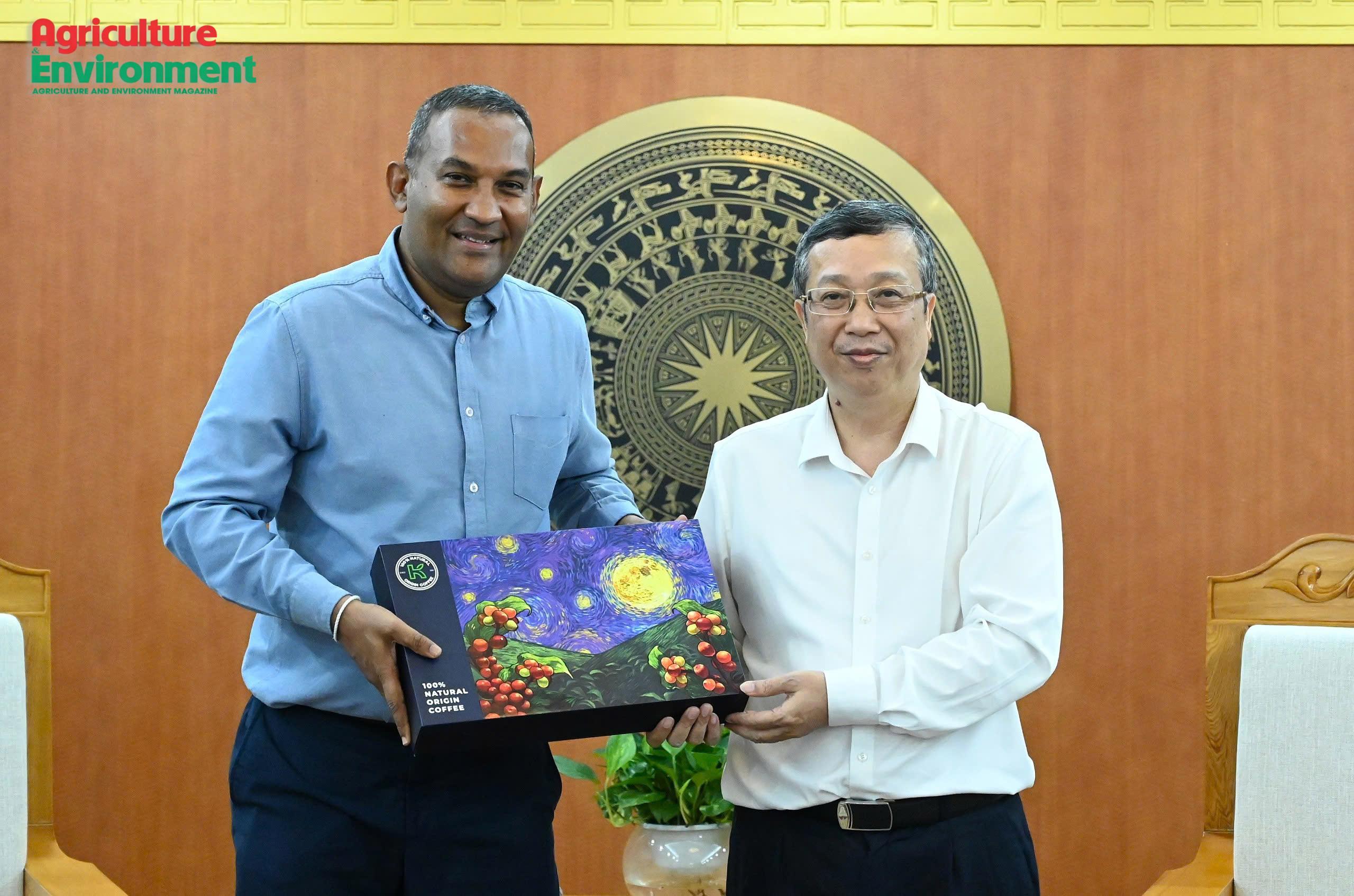
Viet Nam and Sri Lanka are seeking stronger cooperation in fertilizers and farm technology, Deputy Minister of Agriculture and Environment Hoang Trung said during talks with Sri Lankan Ambassador to Vietnam Poshitha Perera in Hanoi on April 28.
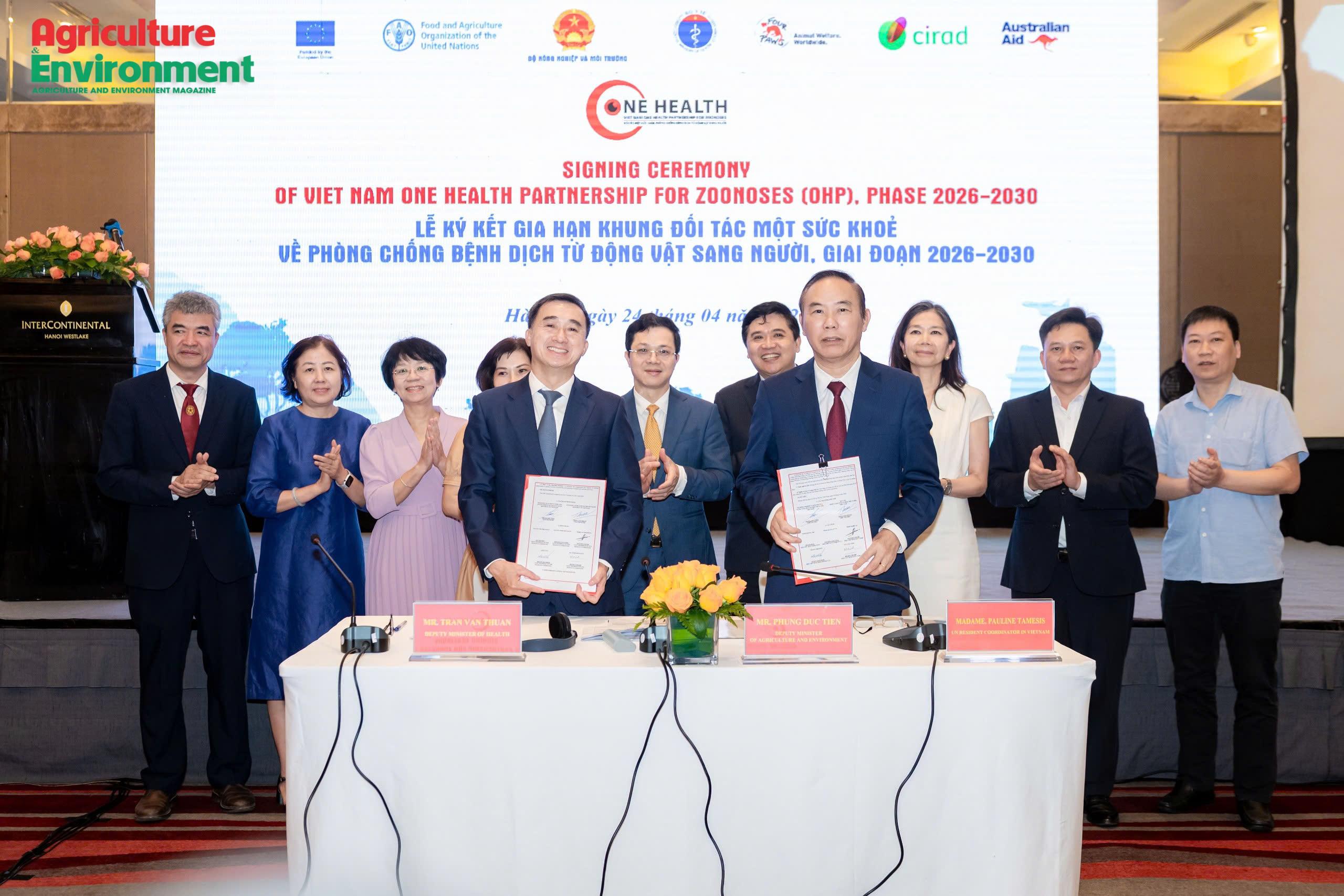
On April 24, a signing ceremony for the One Health Partnership Framework for 2026–2030 brought together 57 partners, underscoring strong commitments by the Vietnamese Government and the international community to advance the One Health approach, enhance information sharing, coordinate resources, and implement joint action programs.
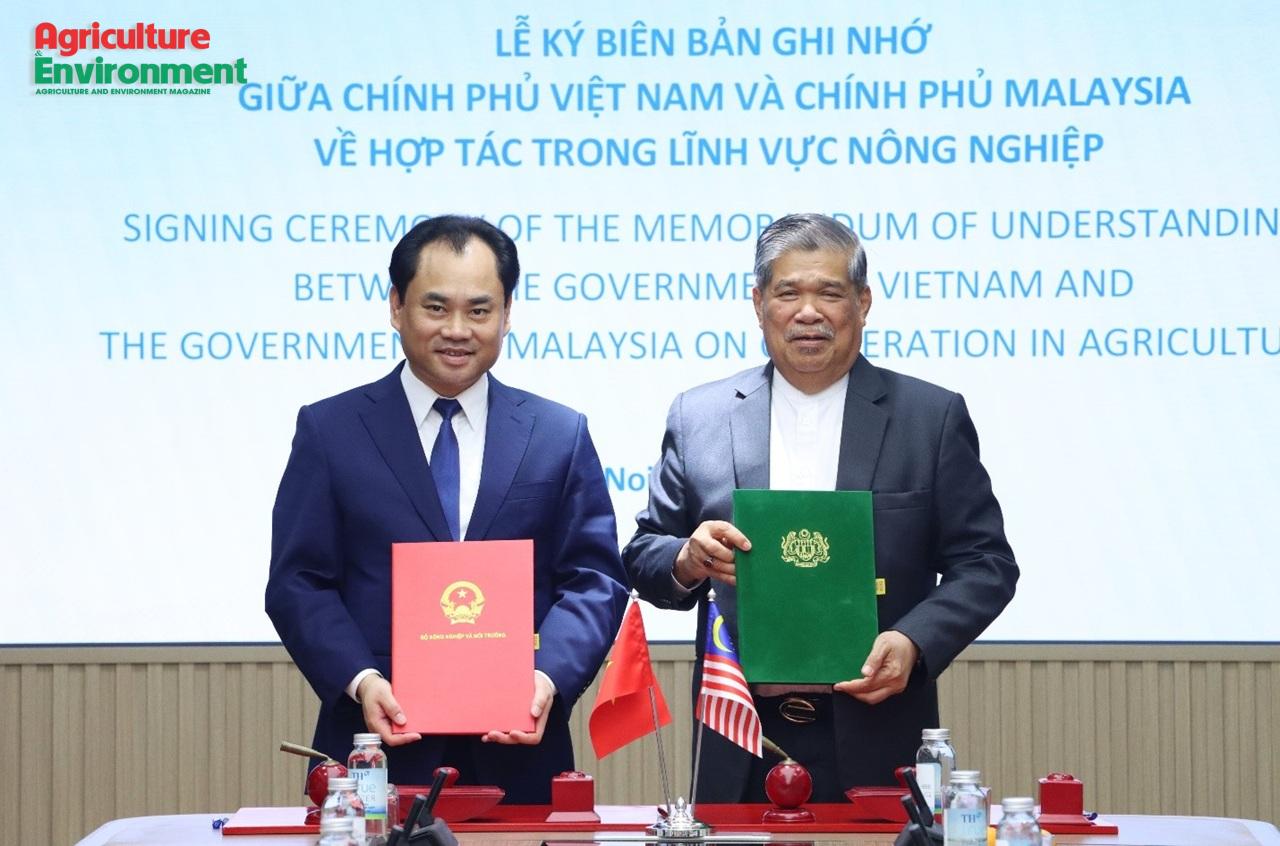
Viet Nam’s Minister of Agriculture and Environment, Trinh Viet Hung, and Malaysia’s Minister of Agriculture and Food Security, Datuk Seri Mohamad Sabu, on Wednesday signed a memorandum of understanding (MoU) on agricultural cooperation between the two governments.

Deputy Minister of Agriculture and Environment Nguyen Hoang Hiep on April 20 called for faster administrative procedures and closer coordination with the Japan International Cooperation Agency (JICA) to remove bottlenecks and accelerate the Japan-funded Ben Tre Water Management Project.