



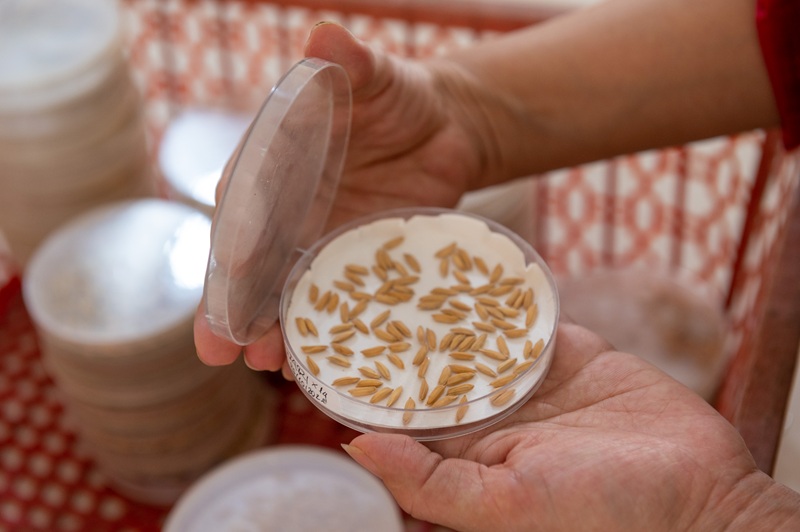
 The research team from the Plant Resources Center (National Plant Gene Bank), comprising Le Thi Loan, Pham Hung Cuong, Doi Hong Hanh, Duong Thi Hanh, Nguyen Thi Hoa, Nguyen Thi Thuy Hang, and Nguyen Thi Bich Thuy, has recently reported a five-year (2020-2024) overview of ex-situ conservation of plant genetic resources in Vietnam. By the end of 2024, the system held 28,790 seed samples representing 125 species across five major crop groups, 3,041 vegetatively propagated samples, and 659 in-vitro conserved samples.
Rationale for urgent conservation
According to the references cited by the team, over 80% of indigenous varieties have disappeared from production due to climate change, urbanization, and intensive cultivation. Although ex-situ conservation expanded by 55.2% during 2020–2024, some propagated materials still did not meet quality standards due to unsuitable ecological conditions, highlighting the need for further investment in infrastructure and region-specific conservation strategies.
Scope of the study
The project compiled all conservation data of the Gene Bank over five years, including seed banks, field collections (for vegetatively propagated species), and in-vitro laboratories. Assessment methods followed FAO/CGIAR standards, complemented by molecular marker analyses such as ITS, matK, rbcL, and genome-wide association studies (GWAS).
In addition to domestic collections, the Center incorporated 2,066 samples from international collaborations (USA, Japan, UK) and domestic sources, focusing on rice, maize, legumes, vegetables, tuber crops, and selected wild species.
Key results:
A notable highlight is the GWAS conducted on 177 local rice varieties, which identified 25 QTLs associated with antioxidant compounds and 19 candidate genes, providing a foundation for developing nutritionally enriched red and black rice varieties.
The authors noted that in major gene banks such as IRRI and CIP, the proportion of “detailed evaluation integrated with molecular data” often exceeds 25–30%, higher than current rates in Vietnam, indicating potential for technological and data improvements.
Challenges and recommendations
The study highlighted limitations in cold storage infrastructure, digitalization and automation, and Vietnam’s non-membership in the International Treaty on Plant Genetic Resources for Food and Agriculture (ITPGRFA), which restricts global accessibility and sharing of plant genetic resources.
Based on the five-year results, the authors proposed priority actions:
In conclusion, this study demonstrates that Vietnam has shifted from “passive storage” to integrated conservation and utilization, with rapidly expanding collections, digitized data, and initial applications of molecular biology. The next steps include increasing the proportion of detailed evaluations, modernizing infrastructure, and expanding international connectivity to convert plant genetic resources into scientific and economic value for sustainable agriculture.
Viet Anh
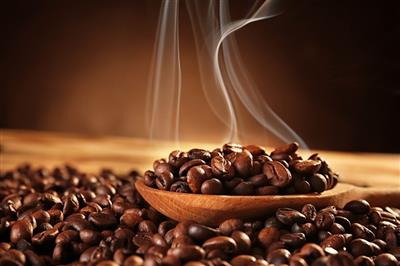
Coffee is one of the most widely consumed beverages in the world. Depending on the processing method, various by-products are generated, yet these materials remain substantially underutilized in Vietnam. Recognizing this gap, a research team from Nong Lam University, Ho Chi Minh City, and Quy Nhon University conducted a study titled “Coffee by-products: Chemical composition and potential applications in food processing.” By compiling and analyzing the characteristics of key by-products—coffee pulp, mucilage, husk, parchment, silver skin, and spent coffee grounds—the authors identified noteworthy levels of dietary fiber, polyphenols, caffeine, and multiple antioxidant compounds. Based on these findings, the study evaluates potential applications in beverage development, extraction of bioactive compounds, enzyme production, and food processing, thereby opening pathways to add value to coffee by-products in Vietnam.
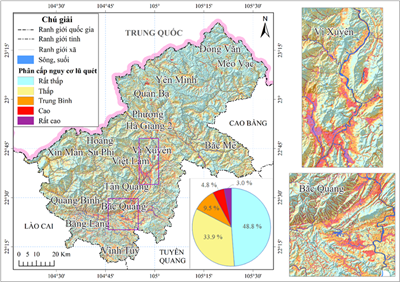
Following the data-building and field-validation groundwork outlined in Part 1, this second installment, led by Le Nhu Nga and colleagues at the Institute of Mechanics, Vietnam Academy of Science and Technology, examines how three machine-learning models were tested against the complexities of Vietnam’s mountainous terrain. Each algorithm offered a different path to decoding the nonlinear interactions that drive flash-flood formation—yet the performance gap between them also reflected the physical realities of steep slopes, fractured bedrock, and highly variable extreme rainfall.
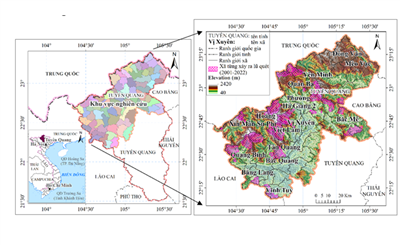
Flash floods in Vietnam’s northern mountains are not only tallied in annual disaster statistics, they shape the land, livelihoods, and planning decisions across entire districts. As climate change intensifies extreme rainfall, the demand for reliable and accessible hazard maps becomes urgent. A research team from the Institute of Mechanics, Vietnam Academy of Science and Technology (VAST) has demonstrated that Geospatial Artificial Intelligence (GeoAI) can meet this demand, producing high-precision, data-driven maps of flash flood risk for the northern communes of Tuyen Quang province, an area once part of Ha Giang’s rugged highlands.
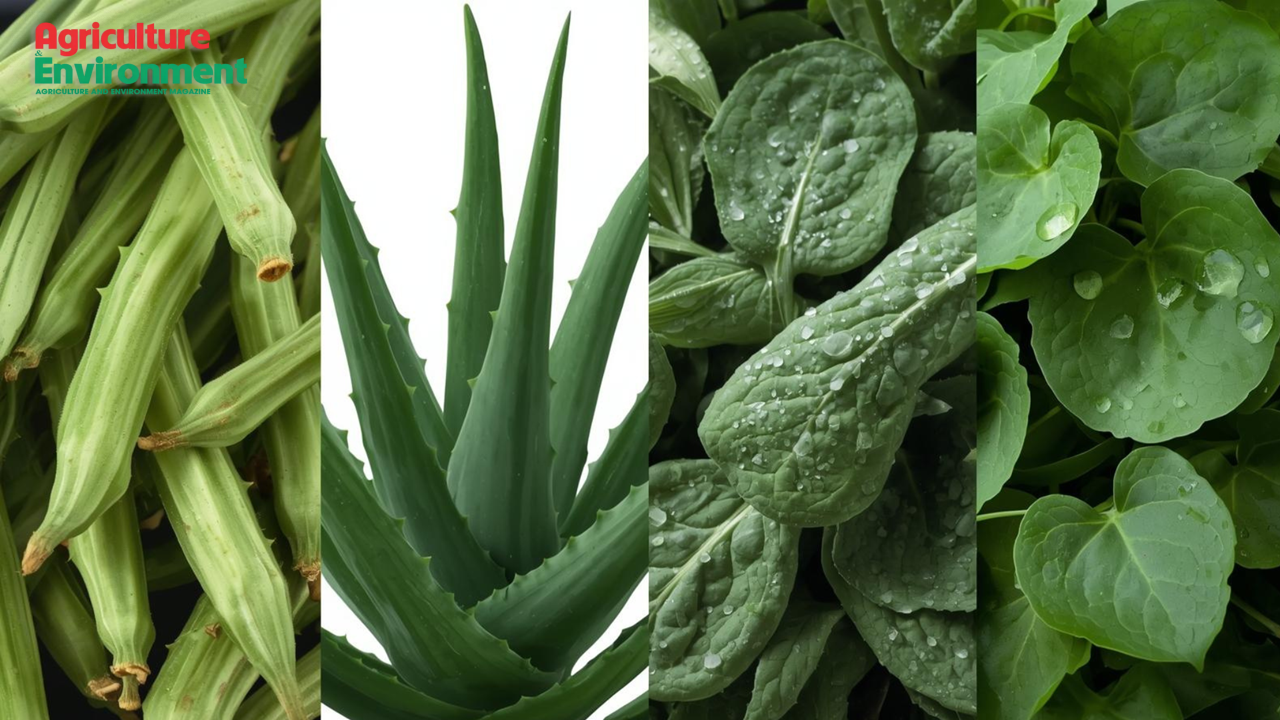
From familiar plants such as okra, jute, Malabar spinach, and aloe vera, a research team from Kien Giang University has explored a new pathway to improve the treatment of domestic wastewater—one of the major pollution sources, accounting for more than 30% of all wastewater generated today. The study found that okra extract, a natural and readily available plant-based coagulant substance, achieved a chemical oxygen demand (COD) removal efficiency of 64.18%, reduced turbidity by more than 89%, and significantly enhanced nitrogen and phosphorus removal when combined with PAC. These findings suggest strong potential for using plant-derived coagulant substances in small-scale household and community wastewater treatment models.

As Vietnam advances toward digital government and modern natural resource management, the land sector has emerged as a pioneering field requiring institutional, technological, and data governance reforms. A research group from the Department of Land Management under the Ministry of Agriculture and Environment, including experts Nguyen Khac The, Dinh Hong Phong, and Tran Van Tien, has conducted the study “Legal basis and requirements for institutional improvement in the implementation of electronic certificates of land use rights and ownership of assets attached to land.”