



 Viet Nam is drafting a new Law on Marine and Island Resources and Environment to meet the requirements of marine governance in the next stage of development. The draft law seeks to establish unified management of marine space, promote efficient use of resources, protect the environment, sustain community livelihoods and expand opportunities for international cooperation. It represents an important step in strengthening the institutional framework for a green, sustainable and responsible marine economy.
Integrated governance for a shared marine space
Viet Nam is a coastal country with a coastline of more than 3,260 kilometers. The sea is closely linked to the country's history, culture and people's livelihoods, while also playing an important role in economic development, environmental protection and international cooperation.
In recent years, Viet Nam's marine economy has gradually expanded across shipping, seaports, tourism, fisheries, energy, services and scientific research. Alongside traditional sectors, new forms of marine economic activity have emerged, increasing demand for the use of the sea surface, water column, seabed and airspace above the sea.
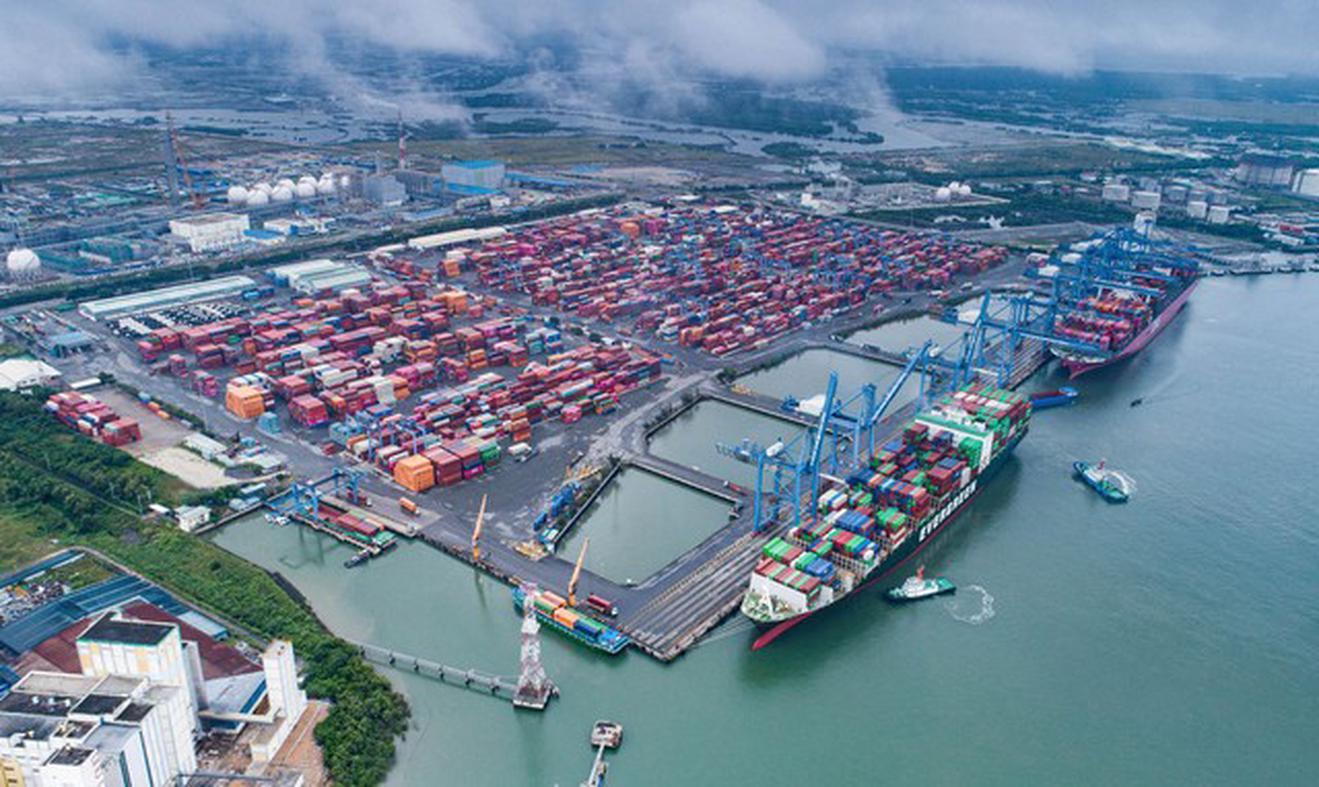
This development has created a need for a more integrated approach to marine management. A single marine area may simultaneously be used for shipping, fisheries, tourism, nature conservation, energy production and coastal community livelihoods. If each activity is considered separately, the use of marine space may lack coordination and fail to fully capture the combined value of the sea.
According to the proposal submitted by the Ministry of Agriculture and Environment, after more than 10 years of implementation, the 2015 Law on Marine and Island Resources and Environment established a legal foundation for integrated management of marine resources and protection of the marine and island environment. However, new development conditions, emerging forms of marine use and the need to implement international commitments require the legal framework to be further strengthened.
The draft law marks a clear shift from managing individual types of resources to integrated governance of marine resources and space. The sea is viewed as a unified space comprising coastal land, the water surface, the water column, the seabed and the subsoil beneath the seabed. This approach provides a basis for more comprehensive consideration of the relationship between economic activities, environmental protection and community interests.
Under the draft law, management must be comprehensive, unified, cross-sectoral, cross-regional and ecosystem-based. The exploitation and use of resources must be compatible with the functions of each marine area, the environment's carrying capacity, the resilience of ecosystems and sustainable development requirements.
This is a principle with long-term implications. Marine resources can generate substantial economic value, but they are not unlimited. Exploitation beyond the capacity of ecosystems to recover can degrade ecosystems and affect fisheries resources, landscapes, tourism and community livelihoods. Conversely, appropriate allocation mechanisms and clear environmental standards can allow the sea to become a driver of growth for decades to come.
A key instrument of this new governance approach is the national marine spatial plan. Under the draft law, the plan would allocate and organize marine space for different sectors, fields and activities; identify areas requiring protection, conservation, restoration or restrictions on exploitation; and balance economic development, environmental protection and public interests.
Marine spatial planning does more than determine where an activity should be located. It also helps identify the compatibility of competing uses, anticipate cumulative impacts and reduce the risk of conflicts within the same marine space.
When planning information is made public, organizations and individuals have a clearer basis for choosing investment locations, technologies and project scales. Management agencies can also assess projects in relation to other activities rather than considering each proposal in isolation.
The draft law also emphasizes the development of information systems and databases on marine resources, marine space, the environment and islands. Data are identified as a foundation of modern governance, supporting planning, decision-making, resource monitoring, risk warnings and the provision of information to the public.
The sea is a vast space in which conditions vary with seasons, currents, climate and human activities. Effective management therefore needs to be based on baseline surveys, regular monitoring, remote sensing, digital mapping and modern analytical tools.
A unified database is also important for investors and international partners. Clear information on natural conditions, existing uses, environmental requirements and planning orientations can reduce due-diligence costs, improve predictability and support project preparation.
The draft law also emphasizes the participation of communities, organizations and relevant individuals. Under Article 10, communities would be given opportunities to participate in the management of marine resources and space, environmental protection and the development of marine and island economic activities.
Competent authorities must seek public input during the formulation of strategies, the preparation of the national marine spatial plan, the master plan for sustainable exploitation and use of coastal resources, and the establishment of coastal protection corridors. Contributions must be considered, explained and made public in accordance with regulations.
Community participation can bring practical knowledge into policymaking. Coastal residents have first-hand knowledge of waterways, fishing grounds, seasonal patterns, nursery areas, landslide-prone locations and traditional community spaces. Such knowledge needs to be combined with scientific data to improve the quality of marine governance.
An integrated, data-driven and participatory approach provides a foundation for Viet Nam to build a modern marine governance system. It is also necessary to attract long-term investment based on appropriate technologies and respect for natural limits.
Clear use rights and the conditions for responsible investment
Marine space is a special type of resource. Unlike land, boundaries of use at sea are not easily visible. An activity on the sea surface can affect the water column, seabed, shipping lanes or surrounding ecosystems. Rights to use marine areas therefore need to be clearly defined in terms of location, area, depth, height, duration and purpose.
The draft law devotes a chapter to establishing, exercising and terminating rights to use marine areas. This is one of the key policy areas aimed at improving transparency, stability and efficiency in the use of marine space.
Under the draft, rights to use marine areas could be established through allocation, leasing or registration, depending on the nature of the activity. Distinguishing between these forms would enable management agencies to choose appropriate instruments while clarifying the rights and obligations of organizations and individuals.
The draft provides for a certificate of rights to use a marine area as the legal basis confirming the user's rights. Information on the marine area would be defined in three-dimensional space, including coordinates, area, depth, height, purpose and duration.
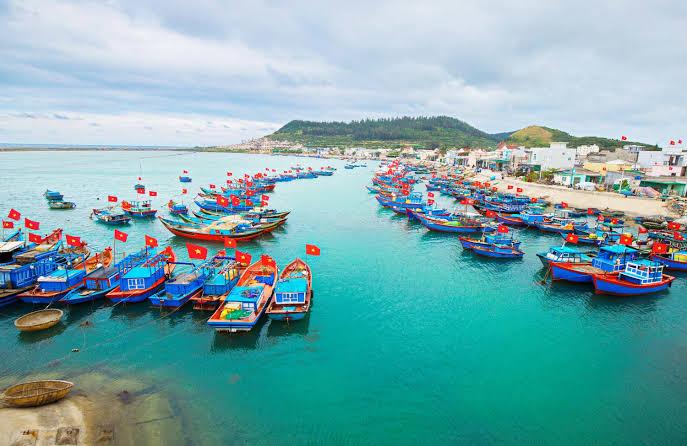
The three-dimensional approach reflects the actual characteristics of marine space. In some cases, different activities could be accommodated at different spatial levels if safety, technical and environmental requirements are met. A marine area could potentially be used for a combination of energy production, marine aquaculture, scientific research or appropriate services rather than being dedicated to a single activity.
Under the draft law, multi-purpose use of marine areas must ensure that activities are compatible, do not obstruct one another, do not compromise safety and do not exceed the environment's carrying capacity. The provision could create opportunities for more efficient use of marine space, while also imposing greater requirements for impact assessment and coordination among stakeholders.
Multi-purpose use does not mean increasing activities at any cost. Each combination must be considered on the basis of natural conditions, the functions of the marine area, ecosystem protection requirements and the lawful rights and interests of relevant parties.
The draft also proposes establishing marine cadastral records to support registration, monitoring of changes and management of rights to use marine areas. This could represent an important step in the digitalization of marine resource management.
When information on use rights is regularly updated and managed through a unified system, organizations and individuals can gain clearer access to relevant data. The State would have additional tools to monitor whether marine areas are being used for the approved purpose, within the approved scope and according to the approved schedule. Relevant agencies would also be better placed to coordinate, inspect and address emerging issues.
For areas with particular advantages and strong interest from multiple organizations and individuals, the draft provides for auctions of rights to use marine areas. Auctions are intended to promote transparency and competition and improve the efficiency of resource allocation.
However, the highest bid is not the only factor determining the quality of a marine project. Financial capacity, technology, the proposed use, environmental protection measures and contributions to sustainable development also need to be considered under relevant laws and regulations.
A stable investment environment first requires clear rights and obligations. Under the draft, organizations and individuals would be entitled to use marine areas within the established scope, purpose and duration, and have their lawful rights and interests protected. They would also be required to fulfill financial obligations, protect the environment, use resources efficiently and comply with inspection and monitoring requirements.
The draft also addresses transactions involving rights to use marine areas, subject to the form in which the rights were established and other applicable conditions. Establishing a legal framework for related property rights could help mobilize capital for projects requiring large investments and long development periods.
For the marine economy, stability is particularly important. Offshore projects often require long-term surveys, complex technologies, high construction costs and the ability to operate under harsh natural conditions. Investors need clarity on the extent of their rights, their obligations and the circumstances under which their use rights may be adjusted or terminated.
Under the draft law, the recovery of marine areas must have a legal basis and comply with the authority and procedures prescribed by law. Where an area is recovered for public purposes or state management requirements, the lawful rights and interests of users would be considered in accordance with regulations.
Such clarity can help balance public interests with the stability required by the investment environment. It also provides a basis for reducing legal risks and strengthening the accountability of both management agencies and users.
An issue with significant social implications is the public's right of access to the sea. Under Article 9 of the draft law, the State would guarantee lawful access to the sea, beaches, public access routes and coastal community spaces for travel, daily life, cultural and religious activities, sports, tourism, fishing and other lawful activities.
Investment projects, coastal land use and the use of marine areas must take into account and safeguard the community's lawful right of access. Organizations and individuals may not arbitrarily obstruct this right. Restrictions may be imposed only when necessary, by a competent authority, with the scope and duration clearly defined and made public.
The provisions on access to the sea reflect a more balanced approach to development and community interests. A marine project should not be considered solely in terms of investment value, but also in terms of its ability to coexist with local communities, create jobs, protect livelihoods and preserve local cultural values.
The draft law also seeks to encourage green investment, innovation, scientific research, technology applications and resource-use models that are more efficient and have lower emissions. Green finance, green credit and social resources are identified as potential mechanisms to support the transition.
For international partners, the policy direction sends a clear message: Viet Nam is seeking to establish a transparent management framework in which rights to use marine space are clearly defined, resources are allocated through planning, and investment activities are linked to environmental and social responsibilities.
This provides a basis for expanding cooperation in clean energy, high-tech marine aquaculture, scientific research, nature conservation, ecotourism, green ports and the circular economy.
Ecological limits as the basis for long-term marine development
A green marine economy is determined not only by the sectors receiving investment but, more fundamentally, by how people use resources and manage environmental impacts. Even a project using advanced technology can have long-term consequences if it is located in an inappropriate area or exceeds the carrying capacity of an ecosystem.
The draft law therefore establishes environmental protection as a requirement throughout the entire project cycle, from planning and project selection to the establishment of use rights, operation, closure and restoration of marine areas.
According to the proposal submitted by the Ministry of Agriculture and Environment, the legal framework for controlling pollution and improving and restoring the marine environment needs to be strengthened to address emerging issues and meet the requirements of international treaties to which Viet Nam is a party.
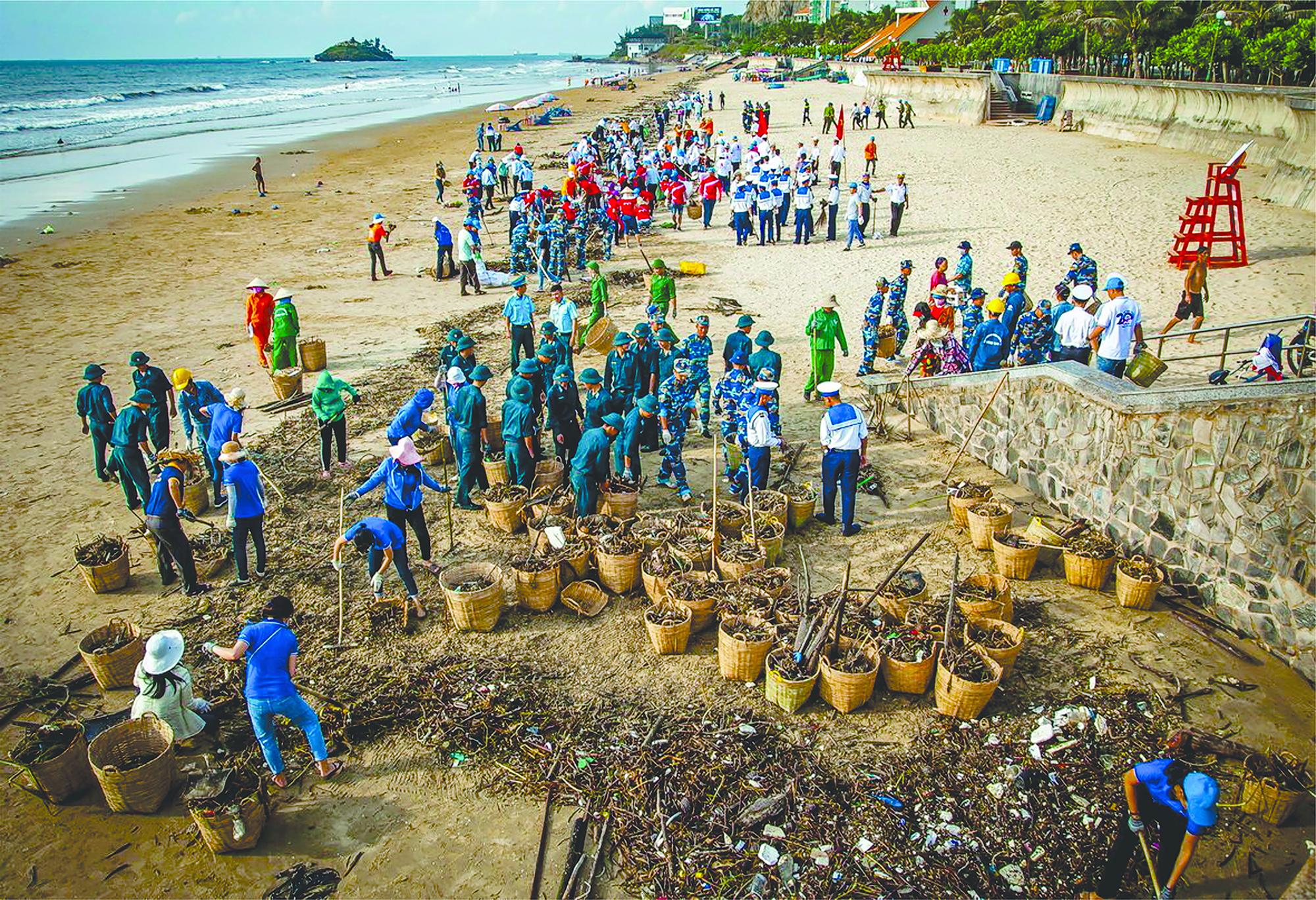
The draft approaches marine pollution by considering the entire pathway of waste and pollutants, from sources on land and in river basins and estuaries to islands and activities at sea. This approach reflects the characteristics of the marine environment, where pollutants can travel long distances and affect multiple areas.
Article 55 of the draft provides that waste generated by ships, offshore structures and activities at sea must be prevented, collected, sorted, stored, transported, transferred and treated in accordance with the law. Organizations and individuals must apply measures to reduce pollution and protect ecosystems and biodiversity.
The draft contains specific provisions on the control of ballast water and ballast-water sediments from ships. Ballast water can carry aquatic organisms, pathogens or invasive alien species from one marine area to another. The designation of ballast-water exchange areas must therefore be based on assessments of risks to the environment, ecosystems and biodiversity, as well as maritime safety conditions.
For pollution originating on land and islands, Article 56 requires management based on the interconnectedness of river basins, coastal areas and the sea. Wastewater discharge points in coastal waters must be compatible with the receiving capacity, self-purification capacity and carrying capacity of the environment, while avoiding adverse impacts on ecosystems and community livelihoods.
Under the draft, direct wastewater discharge points may not be located in areas of particular ecological and social value, including marine protected areas, coral reefs, seagrass beds, tidal flats, natural fish spawning grounds, concentrated aquaculture areas, public beaches, ecotourism areas and areas designated for conservation or restoration.
The provision reflects the precautionary principle. Preventing a pollution source from being located in a sensitive area is generally far less costly than restoring an ecosystem after degradation has occurred.
For islands, the draft requires development activities to be compatible with carrying capacity, freshwater availability and the capacity of waste collection and treatment infrastructure. Waste that cannot be safely treated on an island must be stored and transported to an appropriate facility, including on the mainland.
Projects posing a risk of pollution may proceed only when wastewater and waste-treatment plans are in place and the receiving capacity of the environment is not exceeded. This is particularly important for tourism-dependent islands, where visitor numbers can rise rapidly while land area, water resources and environmental infrastructure remain limited.
Marine plastic waste is another area addressed by the draft. Article 57 requires the identification of sources, pathways and accumulation areas of plastic waste, with priority given to reducing single-use plastics and hard-to-decompose packaging and preventing lost fishing gear from entering the environment.
The draft sets out a roadmap for restricting single-use plastics in protected areas, islands with sensitive ecosystems and tourism islands. Accommodation establishments, service providers and passenger transport operators would be required to develop plans to reduce plastic use, sort waste, recover plastic and transfer it for proper treatment.
Organizations and individuals bringing goods with plastic packaging onto islands would also be included in the chain of responsibility. Where an island lacks the capacity to treat such waste, packaging and waste would need to be collected and transported to an appropriate facility. The draft encourages deposit-return systems, reusable products and the transportation of waste from islands to the mainland.
Alongside preventive measures, the draft strengthens provisions on pollution-risk zoning, incident response and environmental restoration. Restoration would go beyond waste collection to restoring environmental quality, ecosystem functions and the capacity of marine ecosystems to provide services.
For oil pollution, the draft provides greater clarity on compensation responsibilities, the right to seek compensation and the application of relevant laws and international treaties. Damage would be assessed not only in terms of cleanup costs but also in relation to affected resources, ecosystems and lawful interests.
The draft also regulates ocean dumping through a licensing and strict control mechanism. Only materials and substances meeting prescribed conditions would be considered for dumping, and activities would have to comply with requirements on location, volume, method, timing and environmental protection. Permit holders would be responsible for monitoring and supervising activities and remedying any damage that occurs.
More broadly, the draft law adds provisions on the conservation and sustainable use of marine biodiversity in areas beyond national jurisdiction. This reflects Viet Nam's efforts to prepare a domestic legal framework for fulfilling its international responsibilities.
Under Article 72, Vietnamese organizations and individuals and Vietnamese-flagged ships collecting marine genetic resources in areas beyond national jurisdiction would be required to provide notification and information and fulfill benefit-sharing obligations in accordance with Vietnamese law and international treaties.
Marine genetic resources have potential value for scientific research, medicine, biotechnology and a range of future economic sectors. However, access to and use of such resources must support conservation objectives, ensure sustainability and provide for appropriate benefit-sharing.
Article 73 of the draft requires Vietnamese organizations and individuals carrying out activities beyond areas under national jurisdiction, where those activities could cause pollution or significant adverse impacts, to conduct an environmental impact assessment before deciding to proceed.
The assessment would be based on the precautionary principle, an ecosystem approach, the best available scientific information, openness and transparency. The draft also addresses capacity building, technology transfer, human-resource training and research cooperation for marine biodiversity conservation.
These provisions affirm that the environmental responsibilities of Vietnamese organizations and individuals do not end at the country's national maritime boundaries. When engaging in activities in the wider ocean, each actor must comply with common standards and assume responsibility for the global marine environment.
From integrated management of marine space and transparent use rights to pollution control and biodiversity conservation, the draft law points toward a more balanced approach to marine development in Viet Nam. The objective is not to maximize short-term exploitation, but to create long-term value through efficient resource use, ecosystem protection and benefit-sharing with communities.
The drafting process is ongoing, and the policies contained in the draft will continue to be reviewed and refined before it is submitted to the competent authorities. However, its broad direction is clear: Viet Nam sees modern marine governance, a green marine economy and ocean protection as inseparable elements.
This is also a message Viet Nam seeks to share with its international partners: as a maritime nation, Viet Nam is working to strengthen its institutional framework, honor its international commitments, expand cooperation and pursue development models that generate economic value without undermining the natural foundations on which future generations depend.
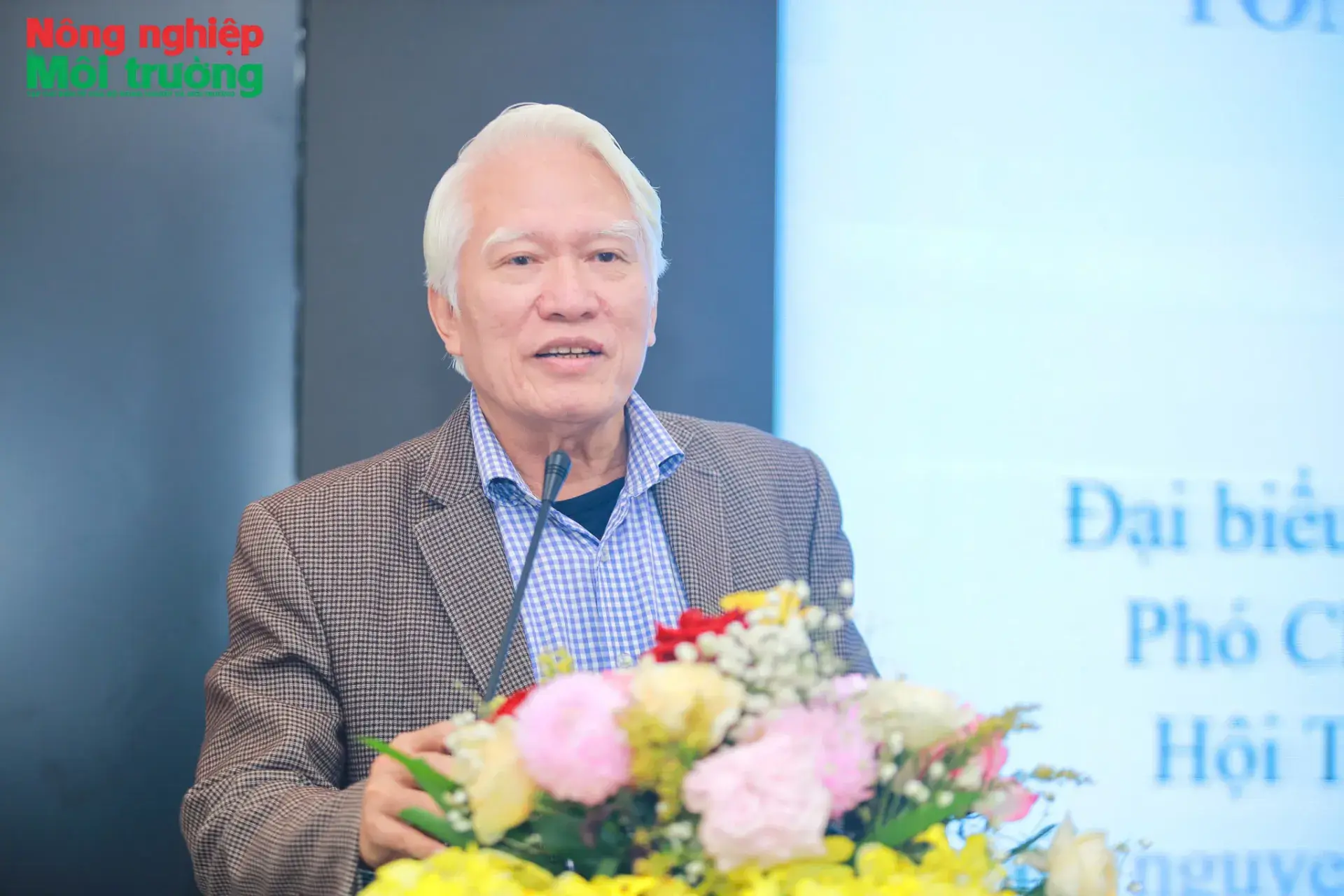
On December 17, 2025, in Quang Tri province, Agriculture and Environment Magazine, in coordination with the Quang Tri Provincial Department of Agriculture and Environment, convened the Forum on “The rational exploitation and sustainable use of Viet Nam’s marine and island resources.” The event drew strong interest from policymakers, scientists, businesses, and representatives of coastal localities.
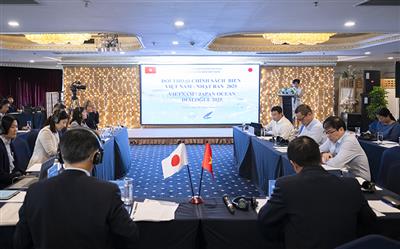
The Vietnam - Japan Ocean Policy Dialogue 2025 gathered policymakers, government officials, and experts from both countries for candid exchanges on legal frameworks, marine spatial planning (MSP), renewable energy development, and public-private cooperation. The wide-ranging perspectives from Vietnam and Japan not only underscored strong political commitment but also suggested concrete pathways toward the shared goal of building safe, sustainable, and resilient oceans.

On September 8 in Hanoi, the Vietnam - Japan Ocean Policy Dialogue 2025 was convened, continuing the annual cooperation mechanism established under the 2018 Memorandum of Cooperation. The event was co-chaired by the Vietnam Administration of Seas and Islands (Ministry of Agriculture and Environment) and the Secretariat of the Headquarters for Ocean Policy (Cabinet Office of Japan), with the participation of senior officials from both countries’ marine governance agencies, policy experts, and academic representatives.
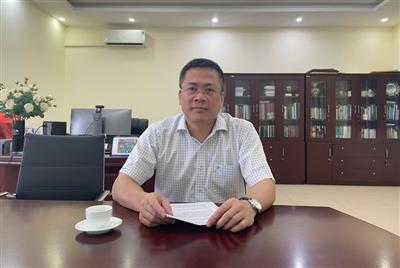
Soil is a vital resource and an irreplaceable means of production in agriculture. Once degraded, it cannot be regenerated, which is why it requires constant care to maintain and improve its health. Protecting soil health is essential to advancing ecological, sustainable, and circular agriculture that contributes to environmental protection, biodiversity conservation, and climate change adaptation. Assoc. Prof. Dr. Tran Minh Tien, Deputy Director of the Vietnam Academy of Agricultural Sciences and Director of the Institute of Soils and Fertilizers, spoke with Agriculture and Environment Magazine about the importance of safeguarding soil health for agricultural development.

On May 22, 2025, at Cuc Phuong national park in Ninh Binh province, the Ministry of Agriculture and Environment, in collaboration with UNDP, GIZ, and the People’s Committee of Ninh Binh province, solemnly organized the celebration of International Biodiversity Day under the theme “Living in harmony with nature and sustainable development.” This event not only honored the essential role of nature in human life but also reaffirmed Vietnam’s strong commitment to implementing the Kunming-Montreal Global Biodiversity Framework, aiming to restore and protect ecosystems for a peaceful and prosperous future.