



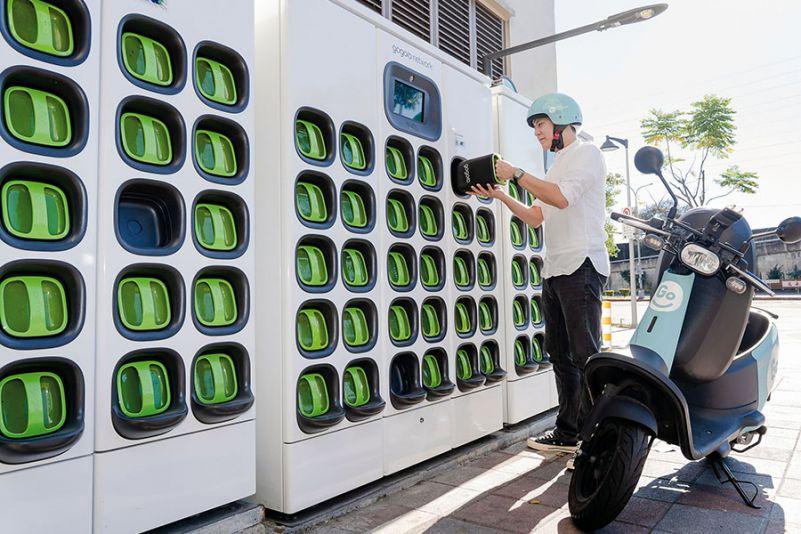
 The rapid development of electric mobility is supporting Viet Nam’s energy transition and helping reduce emissions from the transport sector. However, the environmental performance of this transition depends not only on the number of electric vehicles (EVs) in use but also on how vehicles and batteries are managed at the end of their useful lives. Before the volume of end-of-life batteries increases substantially, Vietnam is studying models for the collection, reuse, remanufacturing, and recycling of end-of-life vehicles and EV batteries, with a view to establishing a circular value chain.
On September 9, 2026, the Institute of Strategy and Policy on Agriculture and Environment (ISPAE), in cooperation with the Economic Research Institute for ASEAN and East Asia (ERIA), organized the workshop “Research on circular economy models for end-of-life vehicles and electric vehicle batteries in Viet Nam.” The participation of government agencies, research institutions, industry associations, and businesses indicates that the issue is no longer solely a waste-management concern. It has become an interdisciplinary challenge directly related to industry, transport, energy, technology, trade, and environmental protection.
The research is being conducted at a particularly important point in the policy cycle. Viet Nam’s electric mobility market is expanding, while end-of-first-life EV batteries have not yet accumulated on a large scale. This period provides an opportunity for policymakers to identify risks, develop technical standards, and establish collection systems before waste-related pressures become more acute.
Managing environmental risks across the vehicle life cycle
According to materials presented at the workshop, as of June 2026, Viet Nam had approximately 91 million road motor vehicles in operation, including about 84 million motorcycles and 7 million automobiles. Two-wheeled vehicles accounted for more than 92% of the total. This distinctive vehicle structure means that Viet Nam’s circular model must address two streams simultaneously: automobiles, which contain significant material value, and the very large number of motorcycles distributed across the country.
For end-of-life vehicles, Article 40 of the 2024 Law on Road Traffic Order and Safety establishes principles governing vehicle service life, while implementing regulations further specify service-life limits for certain vehicle categories. According to the research team, the service life is 25 years for cargo vehicles, 20 years for passenger vehicles with more than nine seats, and 15 years for four-wheeled motor vehicles designed to carry passengers.
Data from the Viet Nam Register cited at the workshop indicate that, cumulatively during 2019–2025, approximately 120,000 passenger vehicles with more than nine seats and cargo vehicles had reached the end of their service lives, with large concentrations in Ho Chi Minh City, Hanoi, and Dong Nai. These figures cover only the two vehicle categories for which data have been reported and do not capture the full volume of vehicles that have lost their useful value or have been discarded by owners for technical or economic reasons.
An end-of-life vehicle contains multiple material streams that can potentially be recovered, including steel, aluminum, copper, plastics, rubber, glass, and electronic components. When received at adequately equipped facilities, vehicles can be decontaminated, dismantled, sorted, and processed for parts reuse and material recycling. By contrast, uncontrolled manual dismantling can release oil, fuel, coolant, and hazardous components into the environment.
The challenge becomes more complex as transport shifts toward electrification. Lithium-ion batteries are both high-value components of electric vehicles and potential sources of electrical hazards, thermal runaway, and risks associated with organic electrolytes. If batteries are damaged, short-circuited, stored under inappropriate conditions, or dismantled improperly, incidents may occur during collection, transportation, storage, and processing.
However, treating batteries solely as hazardous waste provides an incomplete picture. Batteries also contain lithium, nickel, cobalt, manganese, copper, aluminum, and graphite—important materials for the battery industry and the energy transition. End-of-life battery management must therefore pursue two objectives simultaneously: controlling environmental and safety risks while maximizing the recovery of material value.
Dinh Nam Vinh, representing the Department of Technology Assessment and Appraisal under the Ministry of Science and Technology, warned that if transport electrification is not accompanied by mechanisms to manage batteries after their first life cycle, environmental risks could shift from the exhaust emissions of fossil-fuel vehicles to resource-related and hazardous-waste risks. This warning highlights the need to assess EV impacts across the entire life cycle rather than measuring only tailpipe emissions.
Electric vehicle battery packs typically have a useful life of approximately 8–15 years. When they no longer meet requirements for vehicle range, power output, and operational stability, they may still retain around 70–80% of their original capacity. Following safety testing and state-of-health assessment, some battery packs may be suitable for less demanding applications, including stationary energy storage. This is regarded as the battery’s “second life” before its materials are ultimately sent for recycling.
A report published by the Asian Development Bank (ADB) in July 2025 focuses on three areas: diversifying Viet Nam’s lithium-ion battery supply chain; environmentally responsible reuse and recycling of EV batteries; and opportunities to create jobs and upgrade workforce skills across the battery value chain. According to ADB, Viet Nam has potential to develop a battery value chain, but the sustainability of the industry will depend significantly on its capacity to manage and recover batteries after use.
According to ADB projections cited at the workshop, by 2036, end-of-life lithium-ion batteries in Viet Nam could reach approximately 34,000 metric tons per year, while scrap generated from battery manufacturing could amount to around 3,000 metric tons annually. The projections indicate that the domestic feedstock available to the recycling industry is currently limited but could increase rapidly over the next decade. The 2026–2029 period is therefore considered an appropriate window for preparing the institutional framework, standards, infrastructure, and technological capacity.
ERIA has likewise recommended that ASEAN countries establish management systems before the volume of used EV batteries increases substantially. Its report on EV battery reuse in ASEAN indicates that policies need to balance safety requirements with the potential cost reductions offered by second-life battery applications. A lack of end-of-life batteries during the initial phase should not be a reason to delay policymaking; rather, it provides an opportunity to design systems before the market enters a period of large-scale waste generation.
The central issue, therefore, is not choosing between reuse and recycling. Each battery pack needs to be assessed to determine the most appropriate pathway: continued use in a vehicle, repair, remanufacturing, conversion to another application, material recycling, or safe disposal. Without clear grading and classification standards, batteries that do not meet quality requirements could enter secondary markets, increasing fire and explosion risks and shifting environmental responsibility to end users.
Building the institutional framework for circularity
Viet Nam has established an important legal foundation for the circular economy. The 2020 Law on Environmental Protection introduced explicit provisions on the circular economy while establishing extended producer responsibility (EPR) for manufacturers and importers in relation to products and packaging after use. Article 54 requires manufacturers and importers of products and packaging with recyclable value to undertake recycling in accordance with mandatory recycling rates and specifications or make financial contributions to support recycling activities.
Government Decree No. 08/2022/ND-CP, dated January 10, 2022, provides detailed provisions for implementing a number of articles of the Law on Environmental Protection, including requirements concerning the recycling and treatment responsibilities of manufacturers and importers for products and packaging. This provides a basis for gradually shifting the costs of managing products after use from the state and society to the entities that place those products on the market.
On January 23, 2025, the Prime Minister issued Decision No. 222/QD-TTg approving the National Action Plan for the Implementation of the Circular Economy through 2035. The plan identifies transport, processing and manufacturing industries, energy, and waste management as priority sectors, while emphasizing ecodesign, technological innovation, digital transformation, and the development of markets for circular-economy-related products and services.
Research on end-of-life vehicles and EV batteries is therefore not an isolated policy initiative but a specific application of the National Action Plan in a rapidly developing sector. The key issue that remains to be clarified is how producer recycling responsibility can be connected with vehicle collection systems, battery testing, reuse, hazardous-waste transportation, and secondary raw-material markets.
EPR provides an important foundation but cannot, by itself, address the entire value chain. The Environmental Protection Department considers EPR a tool for promoting responsible production, the collection and recycling of used products, resource conservation, and the circular economy. However, implementation still needs to address fragmented regulations, uneven awareness, and the lack of effective coordination mechanisms. Viet Nam continues to refine its legal framework with a view to clarifying the responsibilities of different stakeholders and increasing the transparency of financial mechanisms.
For vehicles and EV batteries, a comprehensive circular system needs to be organized across the entire life cycle. At the design stage, manufacturers need to consider the repairability, disassembly, and replacement of battery modules. Once products enter the market, information on their technology, chemical composition, and safety requirements should be retained. During use, records of charging, repairs, and battery state of health should be updated. After collection, batteries should be inspected, classified, and directed to appropriate facilities.
This requires a battery traceability mechanism. A “battery passport” or an equivalent data system could provide information on origin, composition, capacity, usage history, repairs, and end-of-life pathways. Accurate data would enable reuse and recycling companies to select appropriate technologies, support regulators in monitoring material flows, and reduce the risk of batteries of unknown origin entering secondary markets.
Data must be accompanied by technical standardization. Viet Nam needs to establish criteria for determining when a battery reaches the end of its first life; procedures for assessing state of health; safety requirements for dismantling, packaging, storage, and transportation; standards for second-life batteries; and methods for determining material recovery efficiency in recycling. Without such standards, the market could see “reused” products whose quality and safety have not been adequately verified.
The allocation of responsibilities must also cover the entire value chain. Manufacturers and importers should be responsible for products placed on the market; vehicle owners should transfer end-of-life products through designated systems; collection and transportation companies should meet safety requirements; dismantling, reuse, and recycling facilities should have appropriate technologies; and regulatory authorities should be responsible for licensing, inspection, and oversight.
Particular attention should be paid to the informal collection, repair, and dismantling sector. This network plays a significant role in recovering materials and spare parts, particularly from motorcycles. However, without support for transition, training, and integration into the formal system, manual dismantling activities could create environmental and occupational safety risks. Policy should therefore combine compliance requirements with mechanisms for technical assistance, training, and economic incentives.
From a market perspective, an initial challenge for the battery recycling industry is the insufficient and unstable volume of feedstock needed to ensure investment viability. ADB notes that establishing large-scale recycling facilities in Viet Nam may not be immediately feasible in the short term because of high capital requirements and limited domestic supplies of end-of-life batteries. Cooperation with regional facilities could allow Viet Nam to participate earlier in the battery recycling market while creating opportunities for ASEAN cooperation on standards, research, data sharing, and economies of scale in processing.
However, cross-border cooperation involving end-of-life batteries must be approached cautiously, ensuring compliance with regulations governing hazardous waste and preventing the transfer of pollution across borders. The long-term objective should remain the development of domestic capacity in areas where Viet Nam has comparative advantages, with the country gradually building technological capabilities in battery testing, reuse, and the recovery of valuable materials.
The joint research conducted by ISPAE and ERIA could provide a basis for Viet Nam to select an appropriate model rather than mechanically replicating policies adopted by other countries. Given the high share of two-wheeled vehicles, a fragmented market, and the continued prevalence of informal collection networks, Viet Nam needs a tailored pathway capable of connecting environmental objectives with economic conditions and implementation capacity.
Most importantly, the growth of EV adoption should not be equated with the completion of the green transition. EVs eliminate direct tailpipe emissions at the point of use, but their overall environmental benefits also depend on the electricity mix, product lifetime, and the capacity to recover materials after use. A vehicle can make a full contribution to sustainable development only when its impacts are managed throughout its entire life cycle.
Viet Nam’s decision to study a circular system while end-of-life battery flows have not yet reached critical volumes reflects a proactive approach: using policy to anticipate environmental pressures. If institutions, standards, data systems, technologies, and stakeholder responsibilities are designed in an integrated manner, end-of-life vehicles and EV batteries will not simply be waste streams requiring treatment. They could become sources of secondary resources, support green employment, promote technological innovation, and strengthen the resilience and autonomy of supply chains.
This also carries a broader message for the international community: Viet Nam is not only promoting transport electrification but is gradually preparing for the next phase of the transition—a phase in which materials must remain in the economy for as long as possible, environmental risks must be controlled, and responsibilities must be fulfilled across the entire product life cycle.
SOURCE
This article is based on the research study titled “Research on circular economy models for end-of-life vehicles and electric vehicle batteries in Viet Nam,” presented at the workshop of the same name held on September 9, 2026, in Viet Nam. The workshop was organized by the Institute of Strategy and Policy on Agriculture and Environment (ISPAE) in cooperation with the Economic Research Institute for ASEAN and East Asia (ERIA).
On April 11th, in Hanoi, the National Center for Meteorological and Hydrological Forecasting organized a conference on "Forecasting meteorological and hydrological trends and natural disasters in 2023." Mr. Hoang Duc Cuong, Deputy Director General of the General Department of Meteorology and Hydrology, attended and chaired the conference.