



 Viet Nam and the United Kingdom are stepping up coordination to expand market access for agricultural, forestry and fishery products, as bilateral trade in these sectors reached about US$1.16 billion in 2025, up 20% from the previous year.
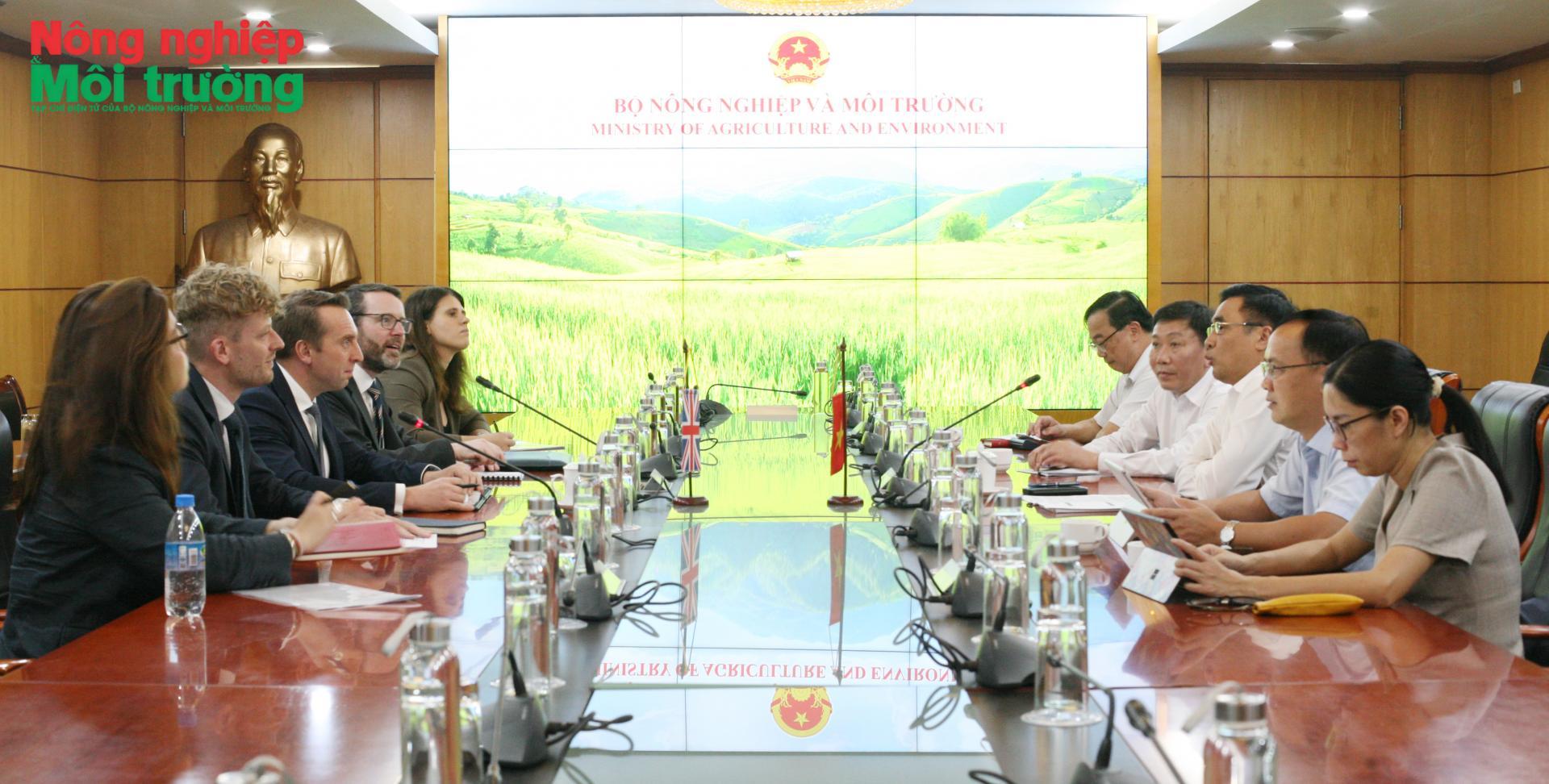
On August 13 in Hanoi, Deputy Minister of Agriculture and Environment Nguyen Quoc Tri held talks with Martin Kent, His Majesty’s Trade Commissioner for Asia Pacific, and his delegation on measures to facilitate trade in agricultural, forestry and fishery products between the two countries.
Agricultural trade grows, market opportunities widen
According to Deputy Minister Nguyen Quoc Tri, the UK is an important trading partner for Vietnam, particularly in agricultural, forestry and fishery products. The elevation of bilateral ties to a Comprehensive Strategic Partnership in 2025 has provided a stronger foundation for expanding agricultural trade cooperation, he said.
Trade figures point to growing opportunities. Bilateral trade in agricultural, forestry and fishery products reached about US$1.16 billion in 2025, up 20% from 2024. Viet Nam’s exports to the UK totaled about US$1.09 billion, led by seafood, wood and wood products, coffee, pepper, and fruit and vegetables.
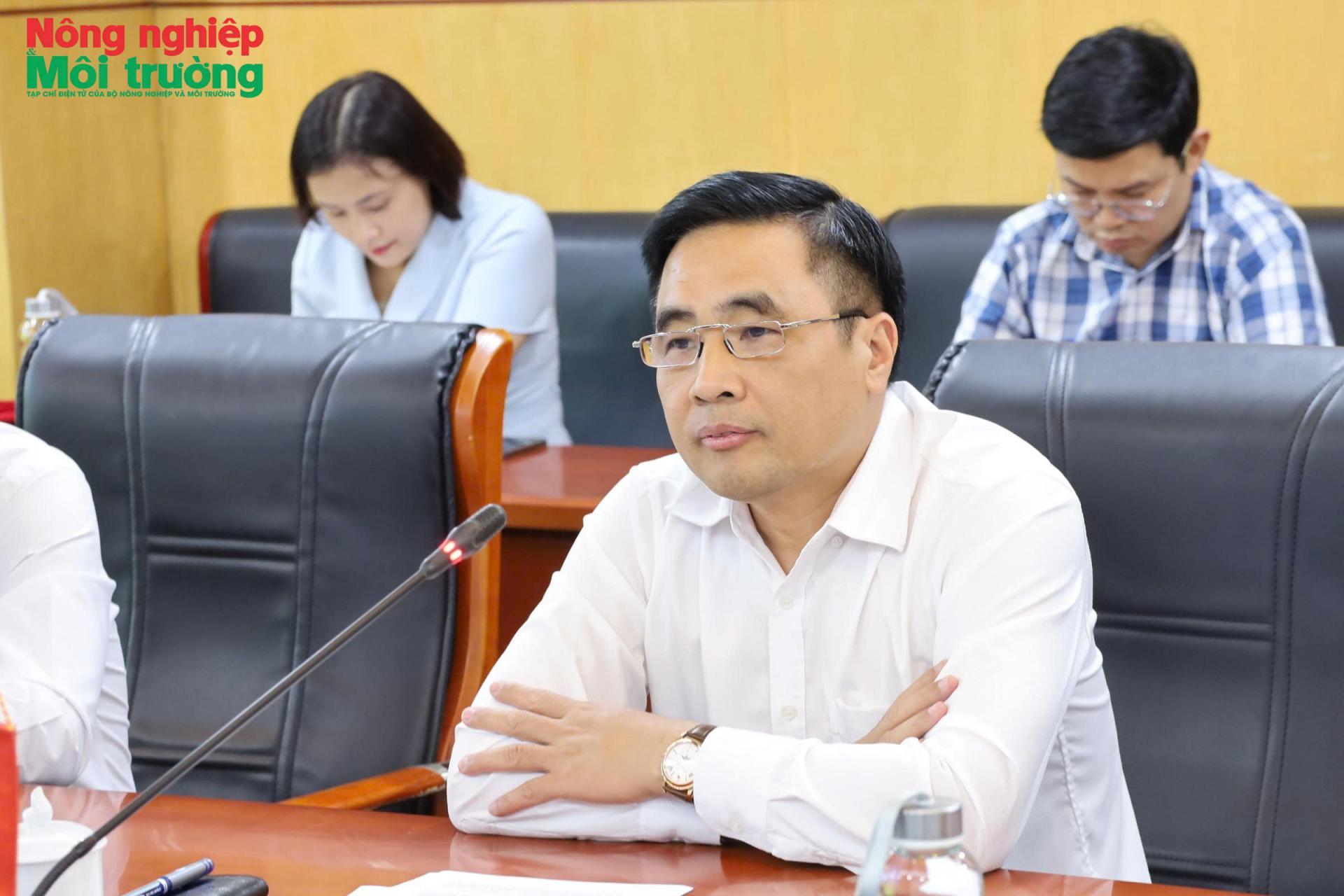
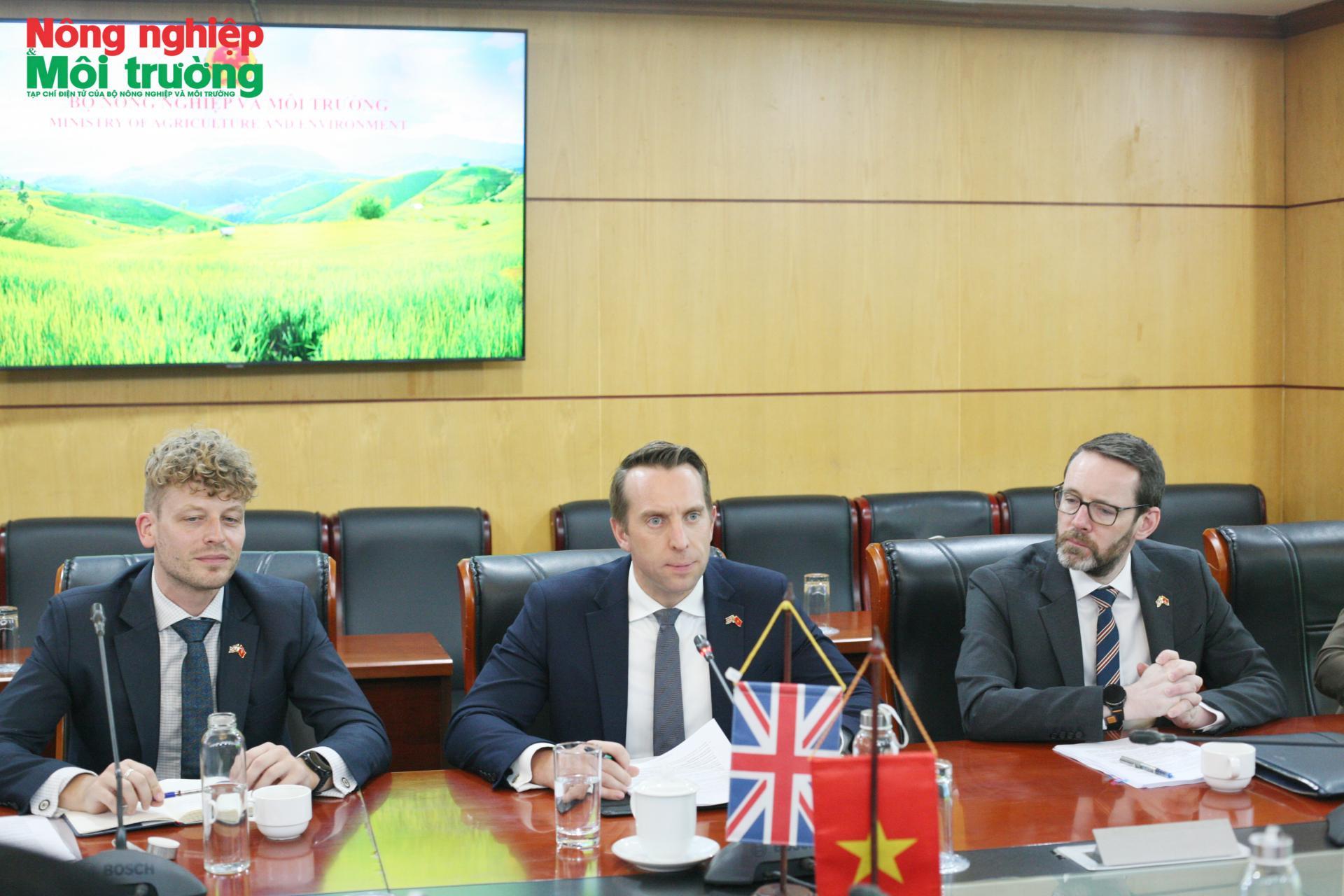
These product groups also have further potential in the UK market as demand for a diverse range of high-quality agricultural products continues to grow. Trade Commissioner Martin Kent said agricultural trade between the two countries was highly complementary, noting that Viet Nam had become an important source of agricultural products for the UK market.
The two sides are also seeking to make better use of opportunities created by existing trade agreements. Viet Nam will continue working with the UK to effectively leverage the UK-Viet Nam Free Trade Agreement (UKVFTA) and the Comprehensive and Progressive Agreement for Trans-Pacific Partnership (CPTPP), while facilitating import and export activities for businesses from both countries.
Step up coordination on market access
As trade expands, compliance with food safety, quarantine and technical requirements remains a key area of cooperation. Trade Commissioner Martin Kent said some UK businesses still faced difficulties in registering establishments eligible to export meat and seafood to Viet Nam, resuming trade in processed animal protein (PAP), and meeting inspection requirements for imported salmon.
Viet Nam, meanwhile, called on the UK to expedite its review of dossiers related to the export of processed poultry meat. Deputy Minister Nguyen Quoc Tri said Viet Nam had provided information and responses to recommendations following inspection missions and urged the UK to reach conclusions on the dossiers so that businesses found to meet the requirements could gain market access.
The two sides are addressing these issues while maintaining requirements for sanitary and phytosanitary measures (SPS), food safety and consumer health. The objective is not only to facilitate trade for businesses but also to maintain the standards required for products entering each market.
In Viet Nam, the Department of Animal Husbandry and Veterinary Medicine is continuing to review and process relevant dossiers concerning agricultural imports and exports in accordance with regulations. Deputy Minister Nguyen Quoc Tri also asked the UK side to provide complete and timely information so that Vietnamese technical agencies can assess the dossiers and take the next steps.
He affirmed that Viet Nam was ready to work with the UK in a constructive and transparent manner, in line with the regulations of both sides, while reviewing management and inspection approaches in accordance with international practices and actual conditions and ensuring food safety and consumer health.
Balance trade facilitation with food safety
Direct exchanges on technical requirements and import-export dossiers are expected to create a more favorable environment for agricultural businesses in both Viet Nam and the UK. Beyond increasing trade value, the cooperation is increasingly focused on businesses’ ability to meet market-specific standards, control procedures and regulatory requirements.
For Viet Nam, making effective use of the UKVFTA and CPTPP will go hand in hand with strengthening exporters’ capacity to meet UK market requirements, particularly for products subject to stringent food safety, quarantine and traceability standards. This will help businesses maintain their presence in the market while gradually expanding their range of exported products.
Likewise, Viet Nam’s consideration of the UK’s requests for market access will remain within a regulatory framework aligned with international practices. The approach seeks to balance trade facilitation with the protection of food safety and consumer health.
With the Comprehensive Strategic Partnership providing a broader framework for bilateral ties and agricultural trade recording strong growth in 2025, continued engagement between the two countries’ technical agencies will be important to turn market potential into more concrete and stable trade opportunities for businesses and agricultural products on both sides.
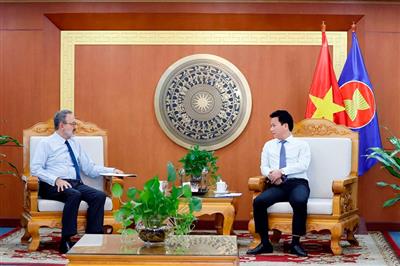
On July 18, Minister of Natural Resources and Environment Dang Quoc Khanh received Italian Ambassador Marco Della Seta. Both sides expressed their hope to deepen and broaden their cooperation in the field of resources and environment.
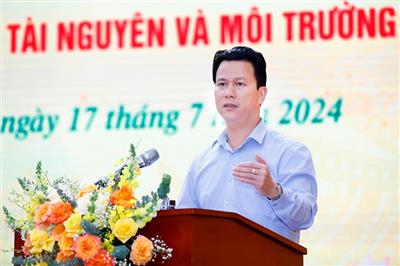
On July 17, in Hanoi, the Ministry of Natural Resources and Environment (MONRE) held a conference to review the first half of 2024 and outline tasks for the second half of the year. The conference was chaired by Mr. Dang Quoc Khanh, Member of the Central Committee of the Communist Party and Minister of MONRE.
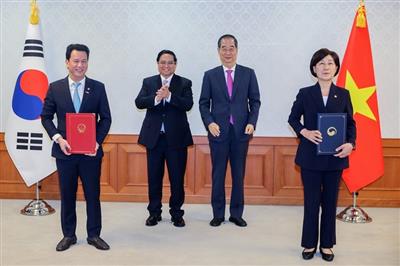
On July 2, 2024, Prime Minister Pham Minh Chinh and South Korean Prime Minister Han Duck Soo witnessed the signing of a Memorandum of Understanding (MoU) for cooperation in establishing an eco-industrial park project between the Vietnamese Ministry of Natural Resources and Environment and the South Korean Ministry of Environment, represented by Minister Dang Quoc Khanh and Minister Han Wha-jin.
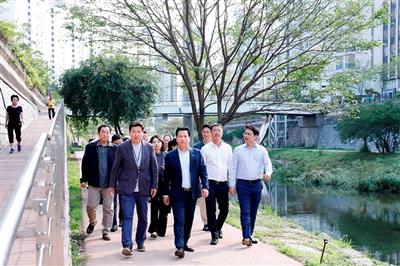
As part of the Vietnam-Korea environmental conference, Minister Dang Quoc Khanh visited the Cheonggyecheon stream—a symbol of Seoul's efforts to "revive the dead river".
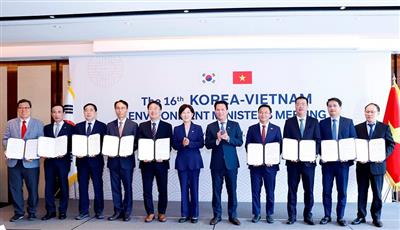
During the 16th Vietnam-Korea Environmental Ministers' Meeting, Vietnam's Minister of Natural Resources and Environment, Dang Quoc Khanh, and South Korea's Minister of Environment, Han Wha-jin, reached an agreement to implement comprehensive cooperation between the two ministries in the environmental sector.