



 Viet Nam is working to expand low-emission rice production models to increase value and farmers’ incomes, while gradually creating conditions for the development of markets for low-emission rice and carbon credits.
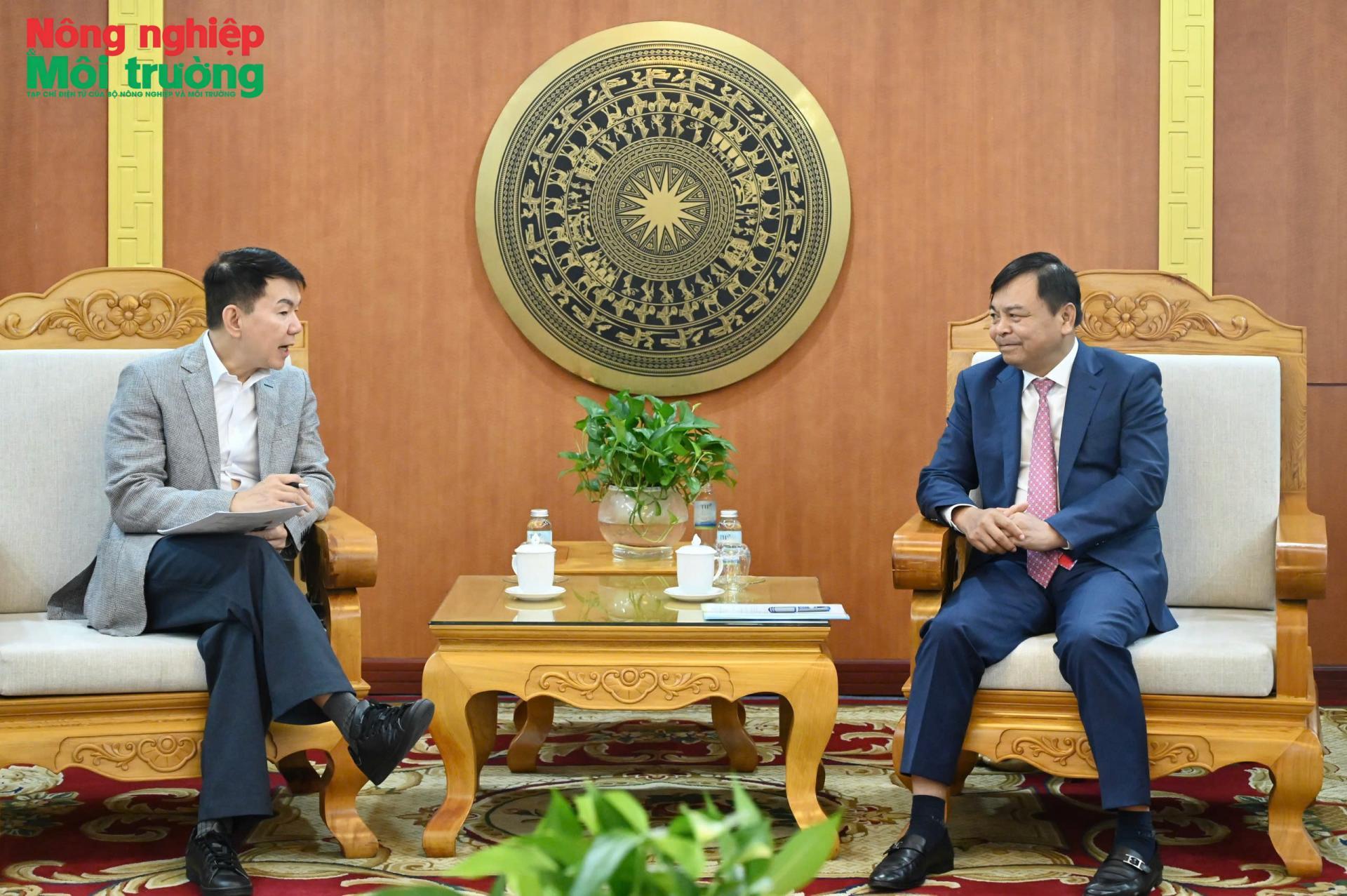
At a meeting with Shaun Seow, CEO of the Philanthropy Asia Alliance (PAA), on August 3, Deputy Minister of Agriculture and Environment Nguyen Hoang Hiep called for stronger international cooperation in sharing experience, market communications and resource mobilization to expand such models.
One-million-hectare program advances low-emission rice production
Speaking with the PAA CEO, Deputy Minister Nguyen Hoang Hiep said the Ministry of Agriculture and Environment was directing the implementation of key projects to develop the rice sector, with responsible agricultural production and farmers’ central role in the transition as key priorities.
The transition is being pursued through the use of higher-quality rice varieties, improved seeding techniques, land leveling, modernization of irrigation systems, alternate wetting and drying (AWD) irrigation, water conservation, emissions reduction and greater mechanization. Alongside changes in farming practices, the rice variety structure is also being adjusted to increase the share of high-quality, aromatic and specialty rice, while strengthening processing and post-harvest storage capacity to better meet market requirements.
According to the Deputy Minister, one of the current challenges is mobilizing sufficient resources to implement these measures in a coordinated manner and expand them at scale. International funds and development organizations could help support the transition by strengthening cooperation and facilitating the exchange of experience, he said.
After three years of implementing the one-million-hectare project for high-quality, low-emission rice production in the Mekong Delta, Viet Nam has gradually established a measurement, reporting and verification (MRV) system to monitor emissions reductions in rice production. This provides an important basis for further refining methods to measure emissions reductions and exploring ways to generate additional value for producers.
International cooperation targets markets and carbon credits
For low-emission rice, Viet Nam is pursuing two avenues to increase value: developing markets for responsibly produced rice and promoting carbon credit trading.
Deputy Minister Nguyen Hoang Hiep asked PAA and its network partners to support communications efforts and raise international consumers’ awareness of the value of low-emission rice from Viet Nam. Such efforts are important for enabling markets to recognize and properly assess the added value associated with low-emission production practices, he said.
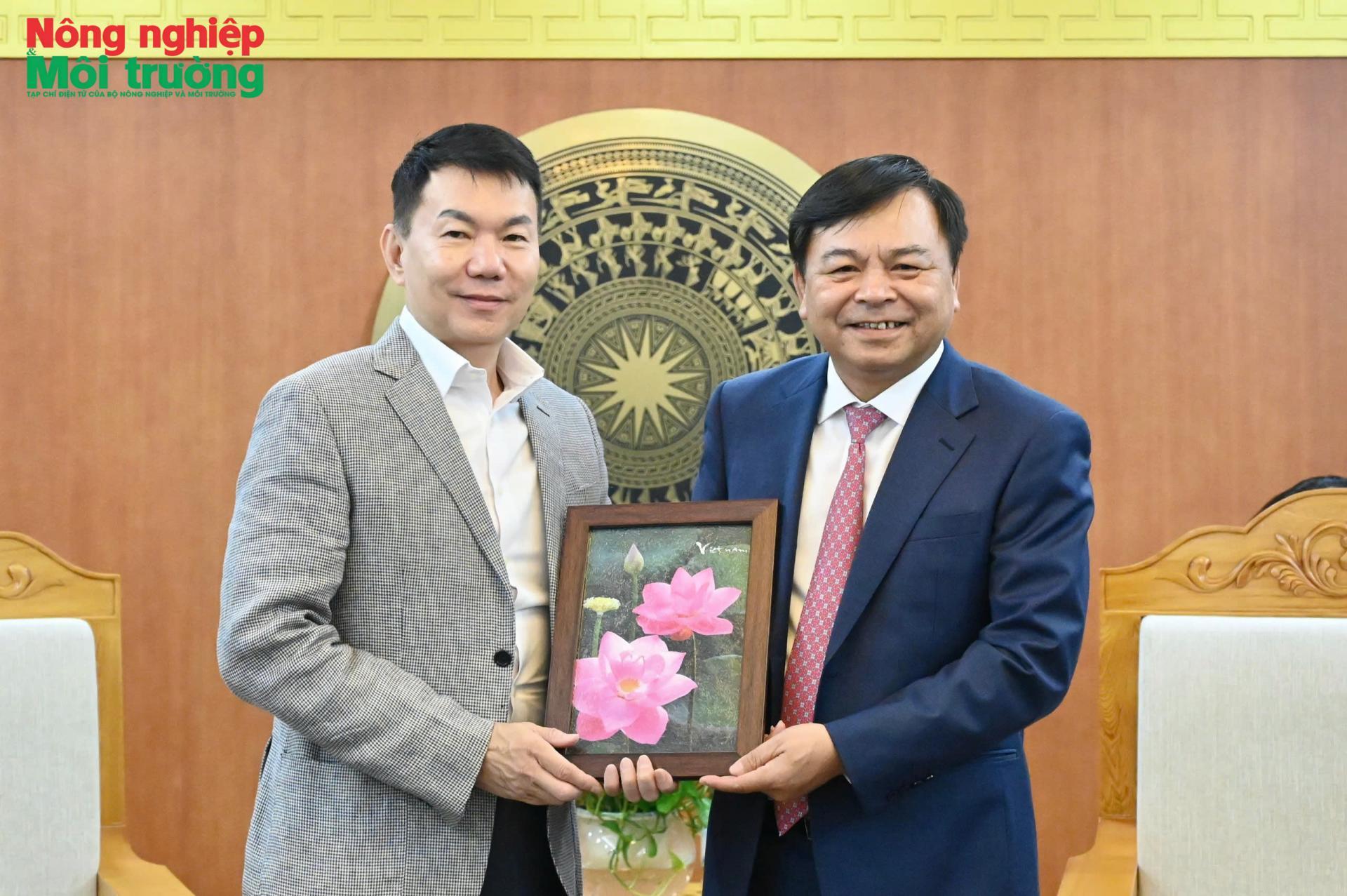
Shaun Seow said PAA was interested in Viet Nam’s practical experience in transitioning rice production toward lower emissions and expressed a desire to work with agencies under the Ministry of Agriculture and Environment on research, experience sharing, resource mobilization and the expansion of sustainable rice production models in the region.
PAA is working with the World Economic Forum’s First Movers Coalition for Food, which brings together businesses, financial institutions, governments, farmer organizations and technical experts. According to PAA, the organization serves as a regional coordinator for rice in Southeast Asia, connecting scientific initiatives, catalytic capital and market demand to promote improved management practices across 5 million hectares of rice cultivation in the region by 2030.
Rather than operating as a traditional funding organization, PAA focuses on connecting stakeholders and facilitating collective action, helping sustainable rice initiatives access relevant resources and partners.
Deputy Minister Nguyen Hoang Hiep affirmed that Viet Nam welcomes opportunities to exchange experience with international partners, considering such cooperation a basis for strengthening collaboration between the Ministry of Agriculture and Environment and PAA in the future.
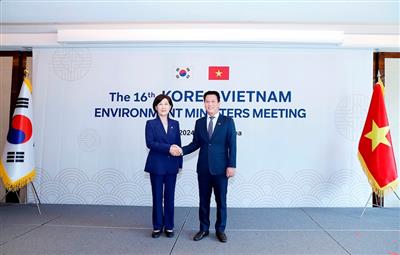
On July 1, the 16th Vietnam-Korea Environment Ministers' Meeting, presided over by Vietnamese Minister of Natural Resources and Environment Dang Quoc Khanh and Korean Minister of Environment Han Wha-jin, convened in Seoul, South Korea.
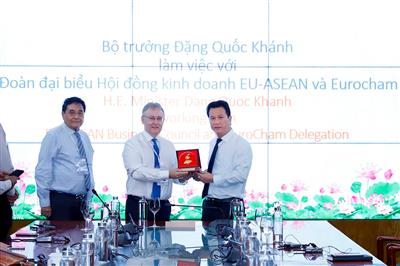
On June 27, Minister Dang Quoc Khanh received a delegation from the EU-ASEAN Business Council (EU-ABC) led by Mr. Noel Clehane, Vice Chairman of EU-ABC, and Mr. Jean-Jacques Bouflet, Vice Chairman of EuroCham Vietnam, along with representatives from several companies in the EU-ABC and EuroCham working groups. They discussed matters related to the Ministry of Natural Resources and Environment's (MONRE) areas of management.
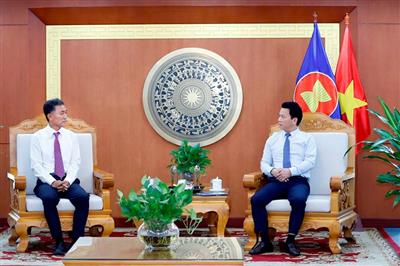
On June 24, Minister Dang Quoc Khanh met with Mr. Jung Heon Chul, Vice Chairman of Abe Invest Group, along with a delegation visiting the Ministry of Natural Resources and Environment (MONRE) to discuss wastewater treatment and the application of science and technology in environmental protection.
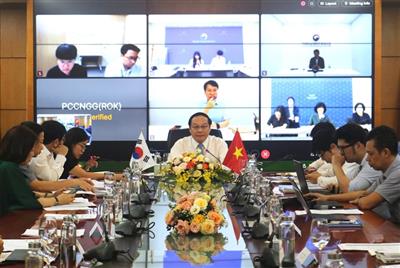
On June 20, the first online meeting of the Vietnam - South Korea Joint Working Group on Climate Change Cooperation was held. The meeting was co-chaired by Deputy Minister of Natural Resources and Envitonment of Vietnam Le Cong Thanh and Ms. Hyoeun Jenny Kim, Ambassador and Deputy Minister for Climate Change in the Ministry of Foreign Affairs of the Republic of Korea.
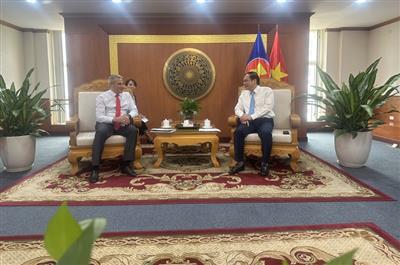
On May 29, Deputy Minister of Natural Resources and Environment (MONRE) Le Cong Thanh hosted a meeting with Mr. Ulazdimir Baravikou, the Belarusian Ambassador to Vietnam. Both sides agreed to strengthen the exchange and sharing of advanced science and technology in waste treatment and recycling, with a particular focus on future municipal solid waste management.