



 Viet Nam is moving to strengthen oversight of growing areas, packing facilities and traceability systems as the country seeks to expand official exports of pomelos and limes to China, one of its largest agricultural markets.
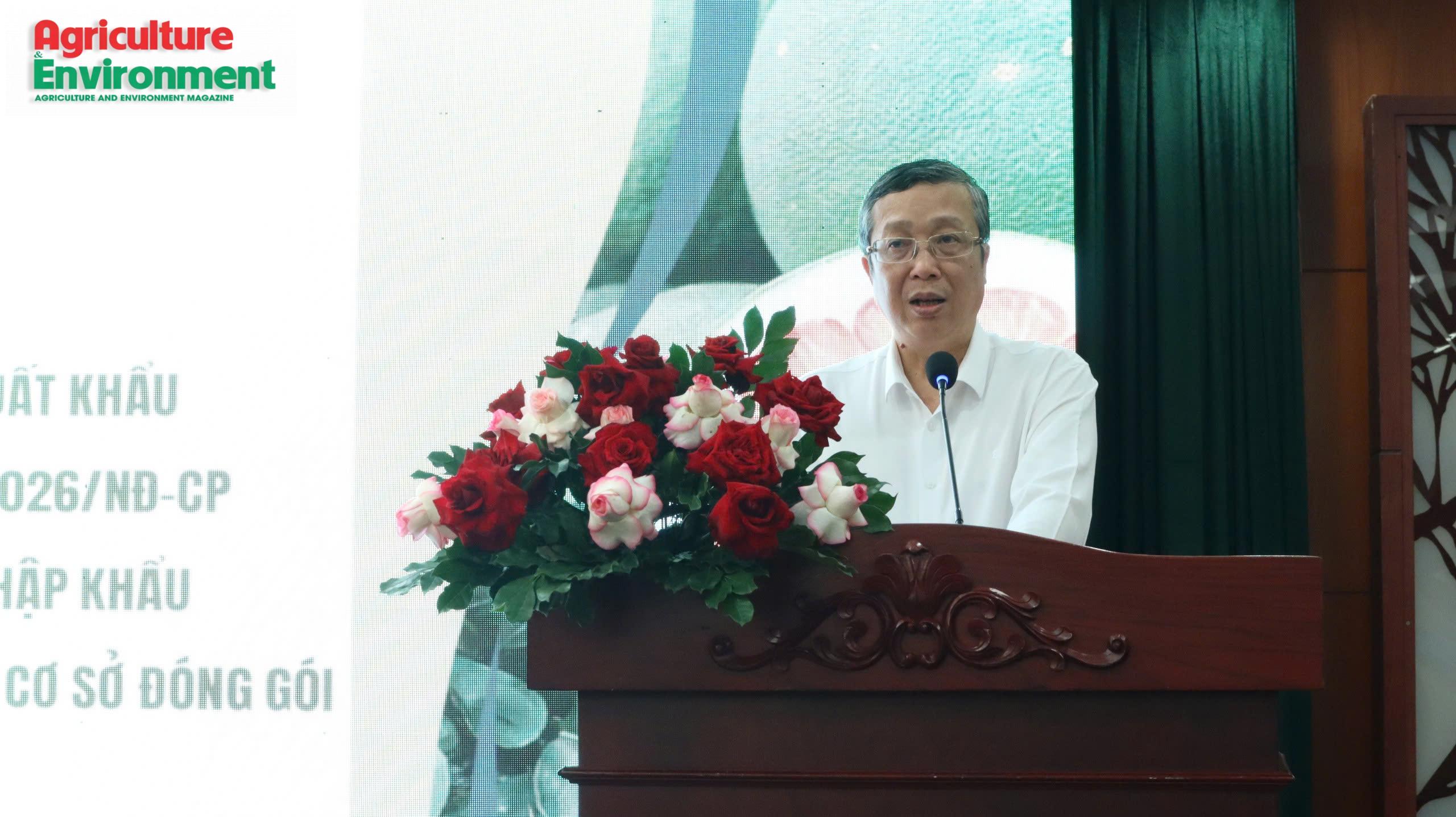
At a conference held in Ho Chi Minh City on May 14, the Ministry of Agriculture and Environment introduced new phytosanitary requirements under a recently signed export protocol with China, alongside Government Decree No. 38/2026/ND-CP on the management of growing area codes and packing facility codes.
The move came nearly one month after Viet Nam and China’s General Administration of Customs (GACC) signed a protocol on April 15 allowing official exports of Vietnamese pomelos and limes to the Chinese market during Party General Secretary To Lam’s state visit to China.
According to the ministry, the agreement was the result of technical negotiations between the two countries’ specialized agencies that began in 2019 in the field of plant protection and plant quarantine.
The conference focused on implementing the protocol’s technical requirements, including standards for growing areas and packing facilities, quarantine pest control measures, and record-keeping and traceability requirements set by the Chinese side.
Expanding export opportunities for two key fruit sectors
According to the Plant Production and Protection Department, pomelos and limes are among Viet Nam’s most competitive fruit products. Viet Nam currently has around 106,000 hectares of pomelo cultivation, with annual output exceeding 1 million metric tons, placing the country among the world’s leading pomelo producers. Specialty varieties such as Da Xanh and Nam Roi pomelos have already gained recognition in international markets.
Meanwhile, lime cultivation covers more than 44,000 hectares nationwide, with annual production reaching nearly 700,000 metric tons, concentrated mainly in the Mekong Delta and southeastern region.
Vietnamese pomelos also benefit from a relatively long shelf life, making them easier to transport by road and sea and helping exporters reduce logistics costs. Limes, meanwhile, still hold significant potential for further processing in addition to fresh exports, creating opportunities to increase added value for the sector.

Ngo Tuong Vy, Chief Executive Officer of Chanh Thu Fruit Import-Export Group JSC, said many supermarket chains in China are showing interest in Vietnamese pomelos and are awaiting market supply.
Vo Quan Huy, Director of Huy Long An Co., Ltd., said the opening of the Chinese market for Vietnamese pomelos and limes would create important opportunities to expand export outlets for the domestic fruit sector.
Viet Nam and China have so far signed more than 20 agreements and protocols related to agricultural, forestry and fishery exports, with around 10 fruit products currently eligible for official export to China. Since 2024, export protocols have also been signed for products including frozen durian, fresh coconuts, chili peppers and jackfruit, reflecting continued progress in expanding official agricultural exports to the Chinese market.
Stricter standards for growing areas and packing facilities
Under the protocol, all growing areas and packing facilities for pomelos and limes exported to China must be registered with the Ministry of Agriculture and Environment through the Plant Production and Protection Department and approved by the GACC before exports can begin.
Growing areas are required to apply Good Agricultural Practices (GAP) or equivalent standards, implement integrated pest management (IPM), monitor pests of concern to China, and maintain complete production and traceability records.
Speaking at the conference, Deputy Minister of Agriculture and Environment Hoang Trung said China had imposed stringent phytosanitary requirements, including strict control of eight quarantine pests.
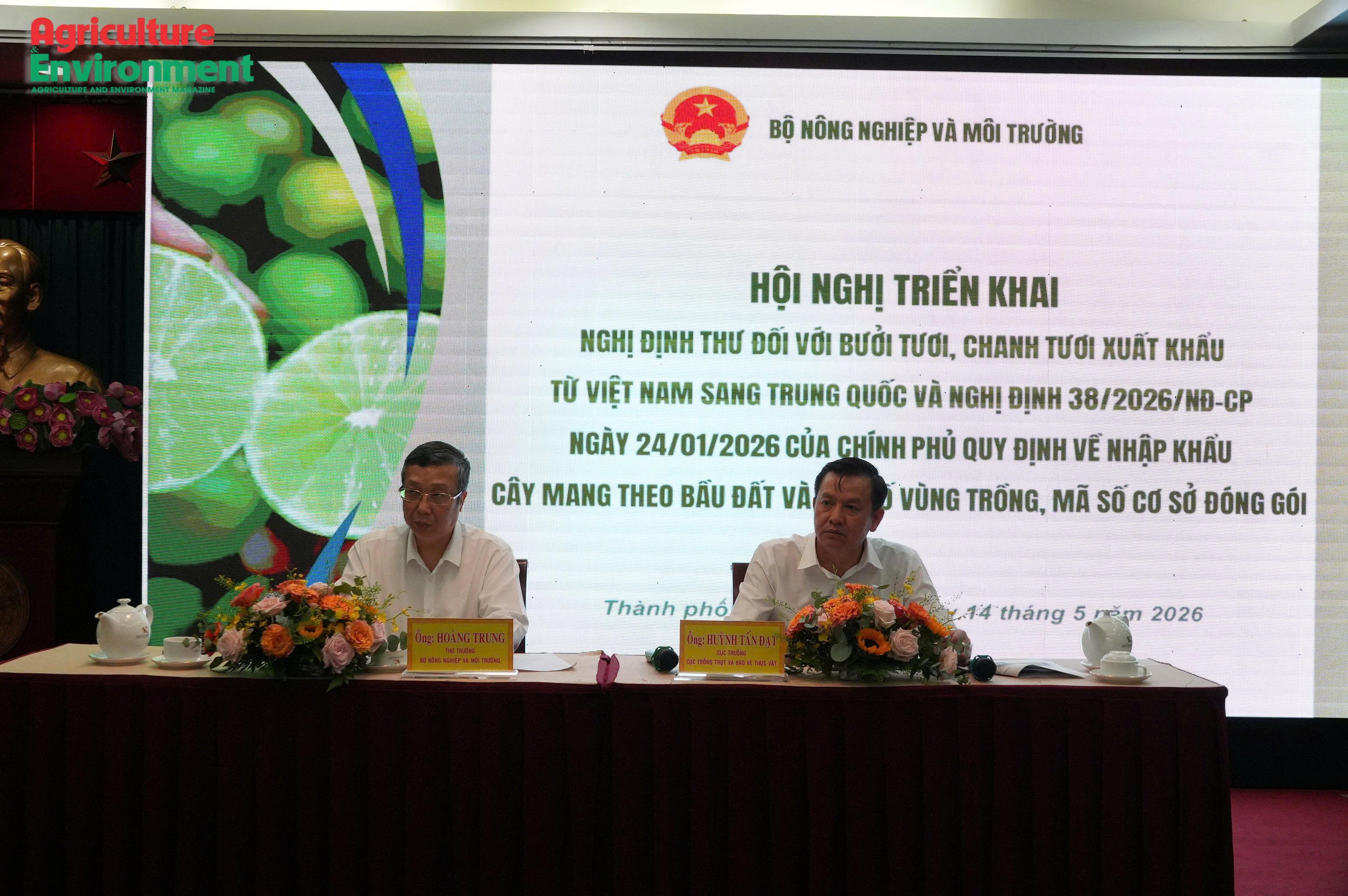
Notably, bagging pomelo fruit at least 60 days before harvest has become a mandatory requirement under the protocol. “This is a new technical requirement for many localities,” Deputy Minister Hoang Trung said. “Without synchronized implementation, it will be difficult to meet export conditions.”
Fruit fly monitoring and control measures are also subject to detailed regulations through bait trap systems. The ministry has asked the Plant Production and Protection Department to issue unified technical guidance on trap types, installation methods and monitoring frequency so local authorities can implement the measures consistently nationwide.
According to the ministry, only growing areas and packing facilities listed in the GACC system will be eligible for official exports to China.
Growing area codes become central to export governance
Another major focus of the conference was the implementation of Government Decree No. 38/2026/ND-CP, issued on Jan. 24, 2026, on the management of growing area codes and packing facility codes.
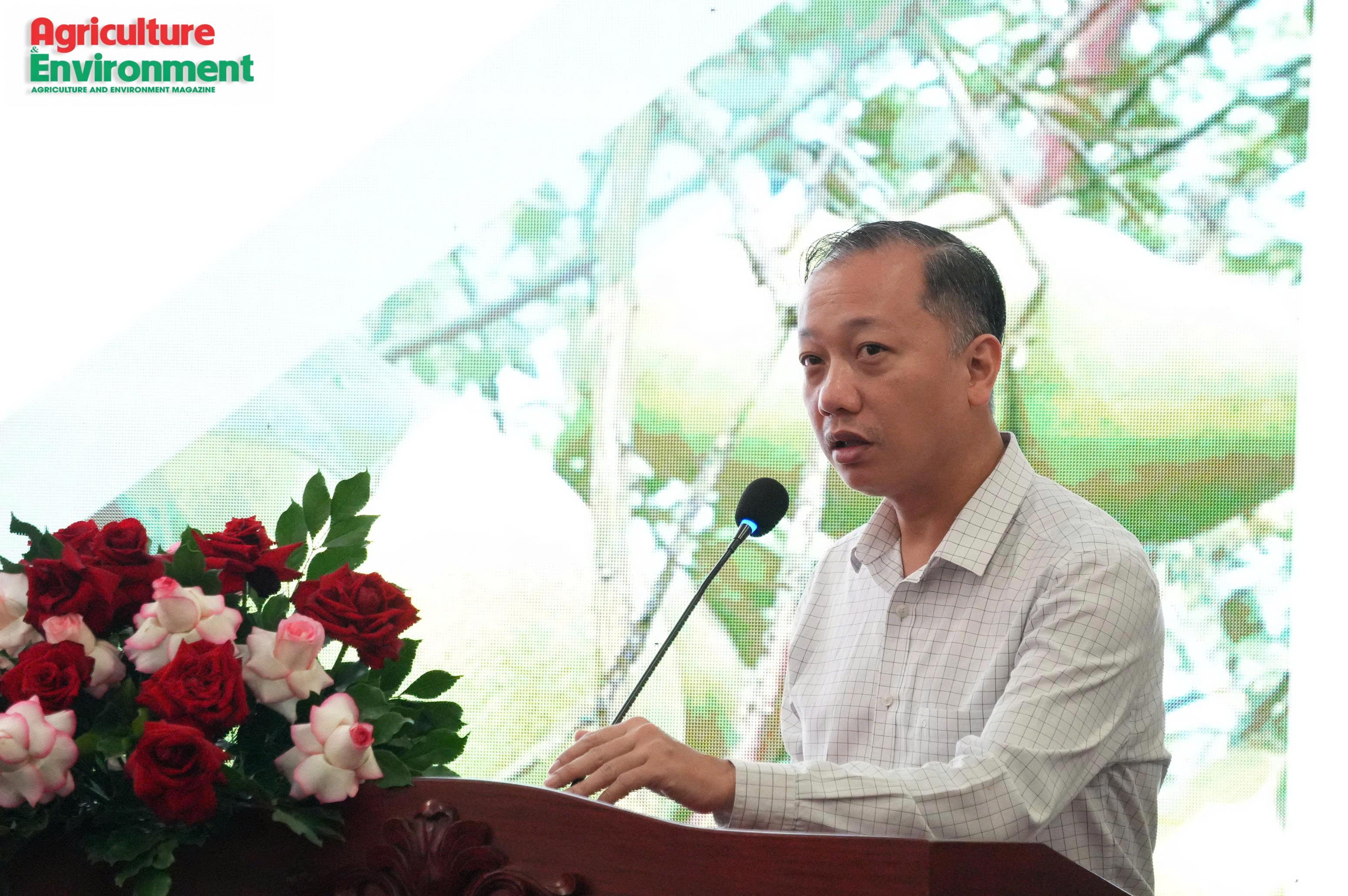
Nguyen Quang Hieu, Deputy Director of the Plant Production and Protection Department, said the decree clearly defines procedures for code issuance as well as cases involving suspension, revocation or reinstatement of growing area and packing facility codes.
Deputy Minister Hoang Trung said the management of growing area codes had remained inconsistent among localities for years because of the lack of a sufficiently strong legal framework. “Decree 38 provides a legal basis for unified implementation from the central to local levels,” he said. “But decentralization must still be accompanied by consistency. If all 34 provinces apply different procedures, businesses will not know how to comply.”
The ministry said the proportion of pomelo-growing areas granted export codes for the Chinese market remains low, while many previously issued codes were designed for other export markets and have not yet been updated to meet China’s new requirements.
The deputy minister requested provincial Departments of Agriculture and Environment and specialized agencies to complete reviews and issue growing area and packing facility codes for pomelos and limes before May 30, 2026, for submission to the GACC for approval.
Testing capacity and code management remain key challenges
At the conference, ministry officials also pointed to ongoing problems in the management of growing area codes, including code impersonation, misuse of codes, falsified export documents and sourcing products outside registered growing areas.
According to Deputy Minister Hoang Trung, links between businesses and raw material areas remain weak in many localities, while production records and farming diaries at some growing areas and packing facilities are still maintained largely as a formality.
He also identified agricultural testing capacity as a major bottleneck for fruit exports. Some businesses seeking to establish testing laboratories have faced approval delays of up to six months because applications must pass through multiple agencies, he said. “Businesses may have financial capacity and technical expertise, but they still cannot proceed because procedures are prolonged and applications are circulated among different agencies,” the deputy minister said.
According to the ministry, the Mekong Delta currently lacks stable testing laboratories after several facilities in Can Tho suspended operations for inspections related to regulatory violations. The situation has created difficulties for exporters, particularly for products with short shelf lives.
Nguyen Dinh Tung, General Director of Vina T&T, said growing area codes should be regarded as a “passport” for farmers, demonstrating production capacity and eligibility to participate in export markets.
Meanwhile, Dang Phuc Nguyen, General Secretary of the Vietnam Fruit and Vegetable Association, called for a unified nationwide process for issuing and managing growing area codes to avoid inconsistent implementation among localities that creates difficulties for businesses.
According to the Ministry of Agriculture and Environment, opening the market is only the first step. Maintaining sustainable exports will require the pomelo and lime sectors to further strengthen production, packing and traceability systems in line with increasingly stringent import market standards.

Minister Do Duc Duy and Ms. Ramla Khalidi, Resident Representative of the United Nations Development Programme (UNDP) in Vietnam, agreed on shared views, common goals, and the highest determination to implement the joint commitments on climate change and environmental protection.
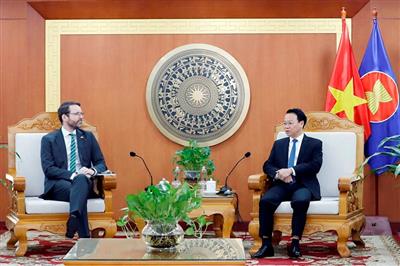
Building on the highly effective cooperation between Vietnam and the United Kingdom in the field of natural resources and environment in recent years, Minister Do Duc Duy and Ambassador Iain Frew agreed that more programs and projects should be implemented in the coming years.

Minister Do Duc Duy emphasized that the Government of Vietnam warmly welcomes foreign enterprises such as EREX to invest in new technology projects aimed at reducing greenhouse gas emissions and generating carbon credits in Vietnam.
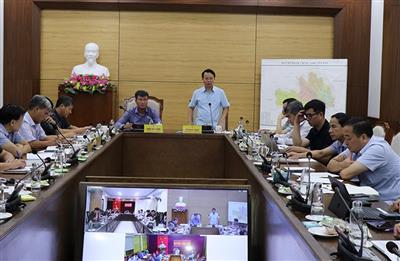
On September 11, Mr. Do Duc Duy, Member of the Party Central Committee and Minister of Natural Resources and Environment, along with Mr. Tran Huy Tuan, Deputy Secretary of the Provincial Party Committee and Chairman of Yen Bai People’s Committee, co-chaired a meeting of the Provincial Command for Natural Disaster Prevention and Search and Rescue. The meeting was convened to assess the disaster recovery efforts to date and to discuss solutions for future recovery tasks.

Yen Bai Provincial Party Secretary Do Duc Duy has just been approved by the National Assembly to be appointed as Minister of Natural Resources and Environment for the 2021-2026 term.