



 The launch of Viet Nam’s national agricultural product traceability system marks a new step in the digital transformation of the agriculture sector, supporting data-driven public administration, improving product quality management, and strengthening the competitiveness of Vietnamese agricultural products in global markets.
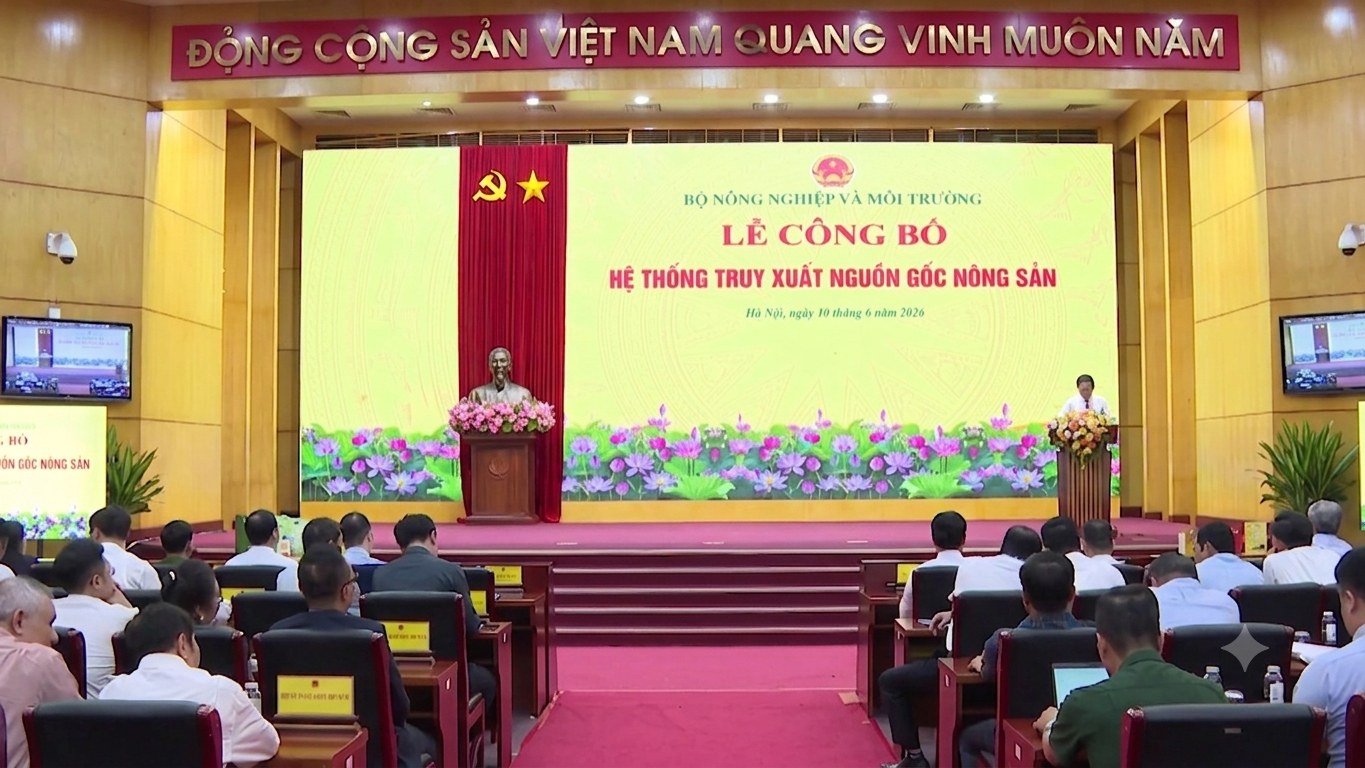
On June 30, 2026, in Hanoi, the Ministry of Agriculture and Environment officially launched the Viet Nam national agricultural product traceability system following a successful pilot phase for exported durian products.
Shared traceability database strengthens market access
Beyond allowing consumers and businesses to verify product information, the system is designed as a shared database that enables connectivity, data sharing, and interoperability among ministries, sectors, local authorities, businesses, and traceability service providers.
According to the Ministry of Agriculture and Environment, the system consists of three main components: a public search portal for consumers, an administrative platform serving regulators, businesses, and stakeholders across production chains, and a mobile application. The entire platform is built on an open, service-oriented architecture, allowing flexible expansion and stable operation to meet the requirements of a national shared system.
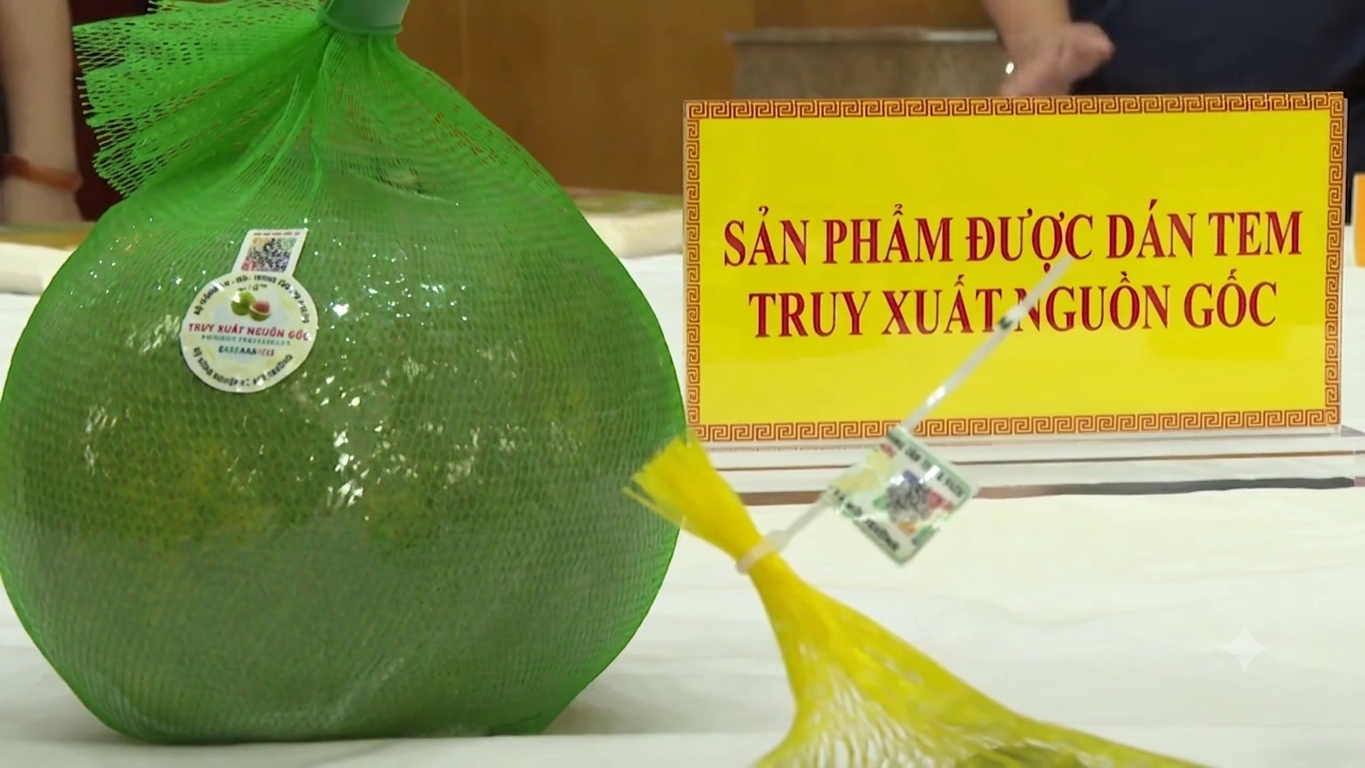
A key feature of the system is its ability to authenticate and preserve data integrity through digital signatures and blockchain technology. Product identification follows international GS1 standards, using GS1 Digital Link QR codes and standardized data exchange protocols, allowing multiple providers to participate in delivering traceability services and reducing dependence on a single technology platform.
The system has been designed for large-scale deployment. Test results showed it can process around 1,000 search requests per second, support 30,000 simultaneous QR-code scans, and handle more than 85 million scans per day. This provides a foundation for nationwide expansion in the coming period.
To date, the system has integrated traceability data for more than 18,500 products across 181 product categories from 170 enterprises in 24 of the country’s 34 provinces and centrally run cities. The centralized database is expected to improve agricultural quality management while helping businesses meet increasingly stringent market requirements.
For exported durian products, 16 enterprises have participated in the pilot application of electronic traceability on the system. During the pilot phase, six containers of durian were exported to China using traceability data provided by the Ministry of Agriculture and Environment. The results indicate that traceability is becoming an increasingly important tool for helping businesses meet technical requirements in import markets.
The system is continuing to connect with agricultural producers, processors, exporters and importers, as well as localities that have already established traceability platforms. It is also designed to ensure interoperability with ministries, sectors, and the National Data Center in accordance with information security and cybersecurity regulations.
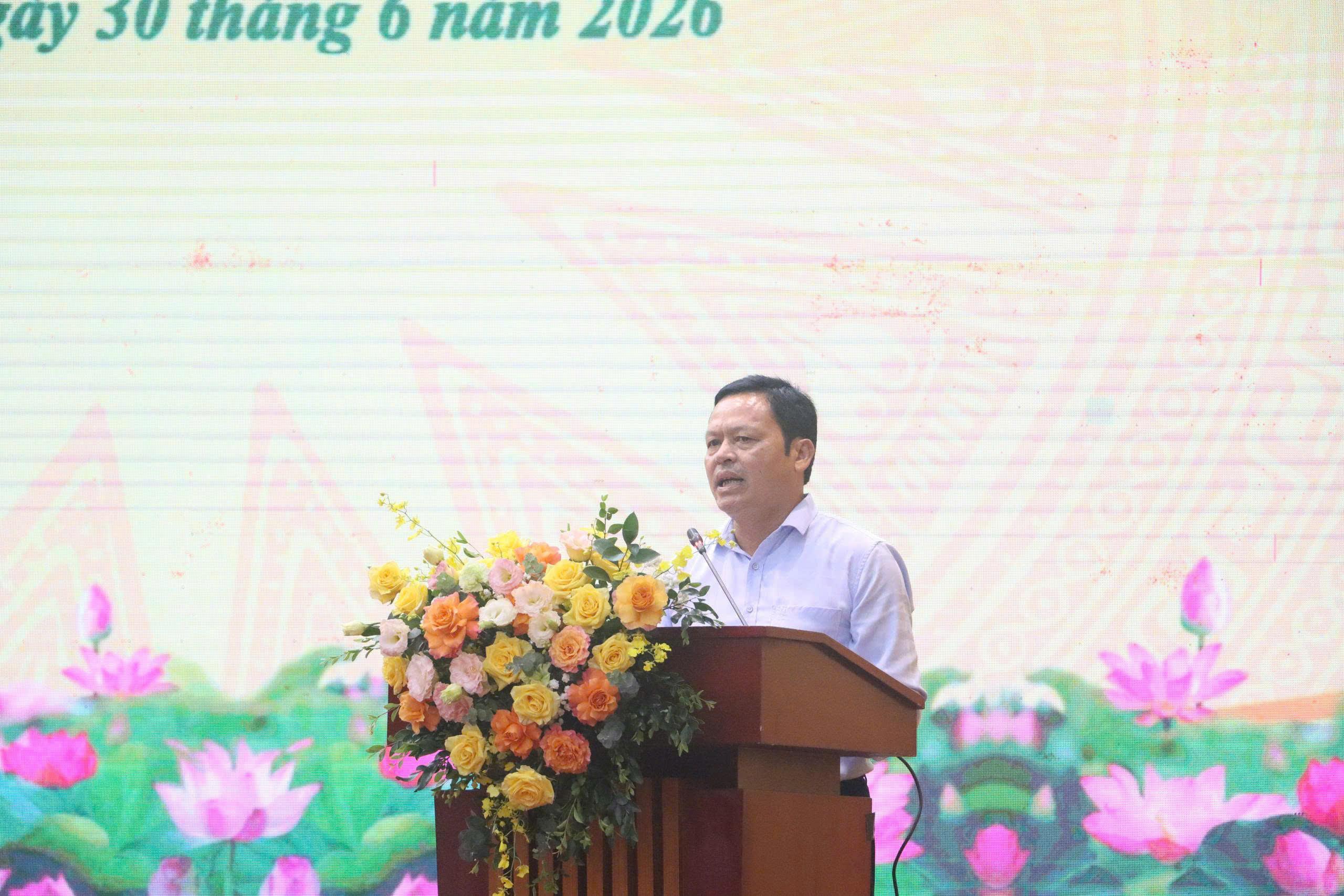
Ta Van Cuong, Deputy Director of the Hanoi Department of Agriculture and Environment, said Hanoi has operated an electronic traceability system for agricultural, forestry, and fishery products since 2018. After years of implementation, the system has gradually improved food safety management, enhanced product transparency, and supported business operations.
“In the context of rapid digital transformation, electronic traceability plays a particularly important role in both state management and production and business activities. Transparent traceability information is directly linked to product quality, food safety, and the ability to meet import market requirements,” Ta Van Cuong said.
According to the Hanoi official, the city’s traceability system has so far issued accounts to 3,310 production and business establishments and generated 12,400 QR codes for products. Of Hanoi’s 182 safe agricultural supply chains, 99 have accounts on the system, including 20 supply chains capable of tracing products directly to growing areas with regularly updated data.
With support from the Ministry of Agriculture and Environment, Hanoi has standardized and synchronized data from 2,823 agricultural production and business accounts and 10,147 product codes with the national system. Ta Van Cuong said this figure is lower than the city’s total because the national platform only accepts agricultural, forestry, and fishery products, excluding traditional craft village products.
Deputy Prime Minister calls for stronger link between agricultural branding and traceability
Speaking at the launch ceremony, Deputy Prime Minister Ho Quoc Dung said the event was significant for the agriculture sector, helping implement Resolution No. 57-NQ/TW while creating a foundation for digital transformation in agriculture and environmental management.
He said that as Viet Nam targets high economic growth to become a developed, high-income country by 2045, science and technology, innovation, and digital transformation have been identified as key drivers. Bringing the traceability system into operation is therefore not only a task for the agriculture sector but also an important step in Viet Nam’s broader national digital transformation.
On behalf of the Government, the Deputy Prime Minister commended the Ministry of Agriculture and Environment for completing the development and deployment of the system in line with directives from the Central Steering Committee for the Development of Science, Technology, Innovation and Digital Transformation, as well as from the Government.
He said the system would help improve transparency across the agricultural production chain, enable product origin verification, and thereby enhance quality, protect the reputation of Vietnamese agricultural products, and increase their value in international markets.
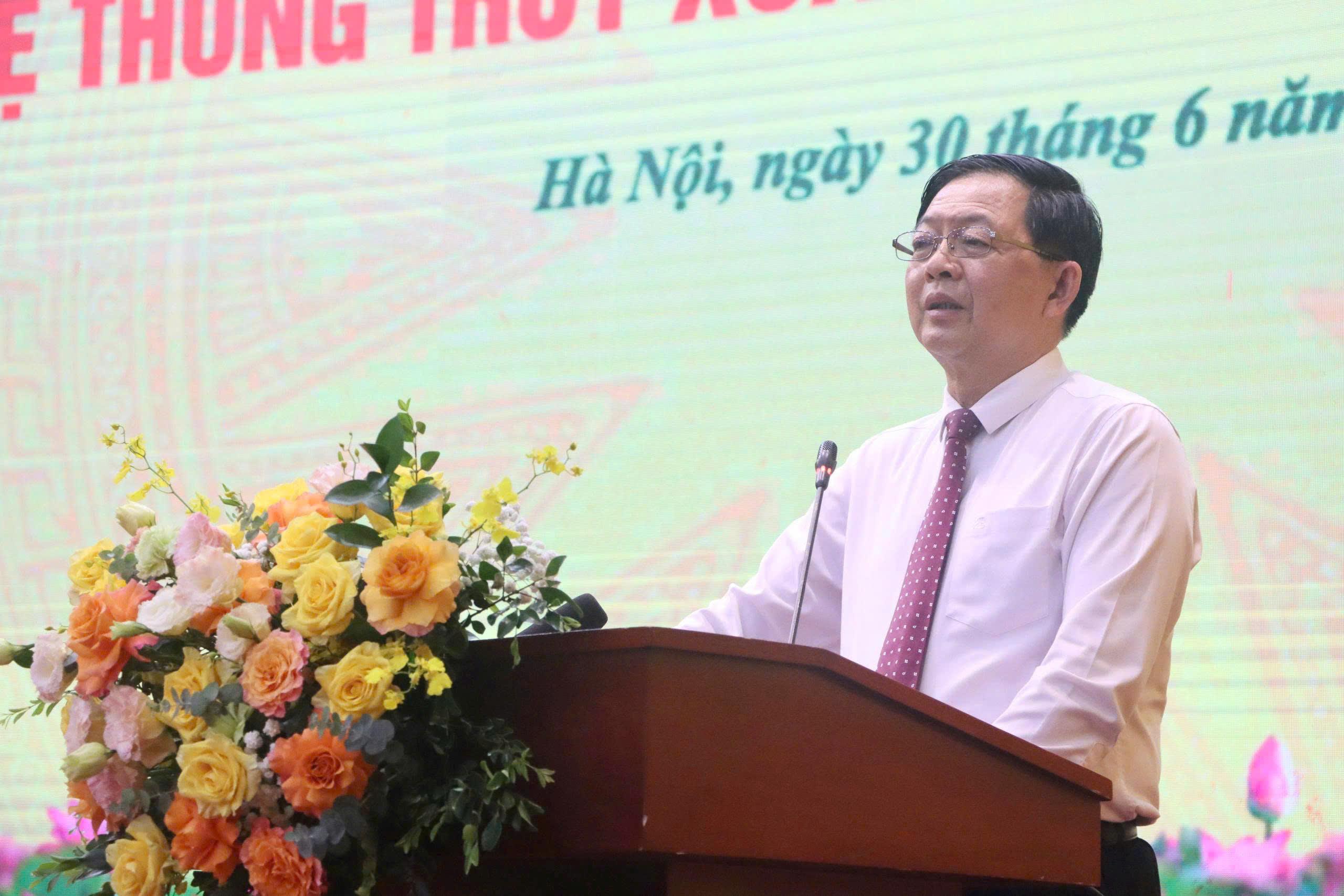
According to the Deputy Prime Minister, as global markets impose increasingly strict standards, traceability is no longer a requirement limited to specific products or export destinations. It has become an inevitable trend in quality management, information transparency, and consumer protection.
He said sustainable agricultural development in Viet Nam requires progress on two major fronts: building strong product brands and ensuring transparency throughout the production process through traceability.
At the same time, the Deputy Prime Minister pointed to one of Viet Nam’s biggest challenges: agricultural production remains small-scale and fragmented, involving around 9 million farming households. This presents a major obstacle to large-scale traceability implementation. He therefore called for a focused and practical rollout to ensure effectiveness and feasibility.
In the initial phase, priority should be given to key agricultural commodities, products with large output and high economic value, and those serving major export markets such as China, the European Union, and the United States. Based on that, standards, databases, and digital infrastructure should continue to be improved to gradually expand coverage to product groups subject to stricter quality and food safety requirements.
One issue the Deputy Prime Minister emphasized was that traceability must not become a new administrative burden.
He called on the Ministry of Agriculture and Environment, along with other ministries, sectors, and local authorities, to coordinate in standardizing, connecting, and sharing data while supporting businesses, cooperatives, and farming households in joining the system smoothly.
He also instructed regulatory agencies to continue reviewing and simplifying administrative procedures, ensuring that technical requirements, standards, or internal processes do not become additional bureaucratic hurdles for businesses and citizens.
According to the Deputy Prime Minister, implementation guidelines must be simple, accessible, and compatible with farmers’ production practices in order to encourage broader participation from enterprises, cooperatives, and local authorities.
Expressing confidence in coordinated efforts among ministries, sectors, local authorities, businesses, and the public, he said he expects the Viet Nam national agricultural product traceability system to become an important piece of digital infrastructure supporting a modern, transparent, safe, and sustainable agricultural sector.
In the coming period, the Ministry of Agriculture and Environment will continue coordinating with ministries, sectors, local authorities, industry associations, businesses, and technology providers to expand deployment of the system. Priority will be given to key agricultural, forestry, and fishery products, export-oriented products, and products subject to stringent quality, food safety, and origin transparency requirements. The ministry will also step up guidance and support for local authorities, businesses, cooperatives, and farmers to ensure the system is used effectively and delivers practical results.
On the August 23, 2024, Deputy Minister of Natural Resources and Environment Le Minh Ngan chaired a working session with three media units under the Ministry: The Natural Resources and Environment Magazine (NRE Magazine); The Natural Resources and Environment Newspaper (NRE Newspaper); and The Centre for Natural Resources and Environment Communication (CNREC).
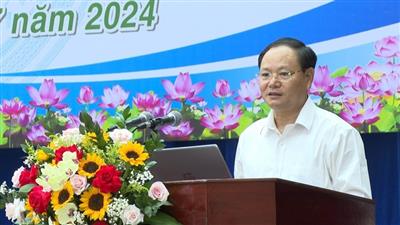
On July 5, the People's Committee of Quang Nam province, in collaboration with the Ministry of Natural Resources and Environment (MONRE), organized a conference to disseminate, propagate, and train on the implementation of the 2024 Land Law. The event was held in a hybrid format, combining in-person and online participation, with over 259 connection points from district, town, and city-level People’s Committees, as well as various organizations and units within the province.
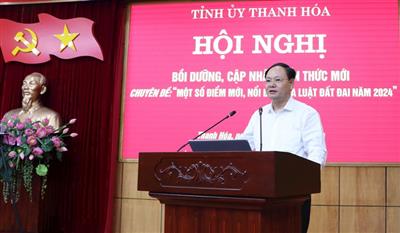
On July 2, in Thanh Hoa province, the Standing Board of Thanh Hoa Provincial Party Committee held a training conference to update new knowledge for provincial leaders and managers for the second quarter of 2024. The focus of the conference was on "Key new points of the 2024 Land Law," conducted through a combination of in-person and online formats. Deputy Minister of Natural Resources and Environment Le Minh Ngan attended and presented the key contents of the topic.
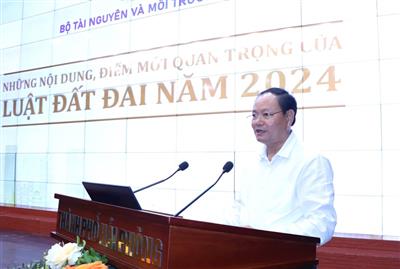
On June 28th, at the specialized conference titled "Key updates and important provisions of the 2024 Land Law" held in Hai Phong City, Deputy Minister Le Minh Ngan urged the Hai Phong City People's Committee to direct relevant agencies to swiftly develop guiding documents as mandated by the 2024 Land Law. This initiative aims to establish a comprehensive legal framework, ensuring a conducive environment for the city's socio-economic development, as well as safeguarding national defense and security when the National Assembly approves the early enforcement of the law (anticipated on August 1, 2024).
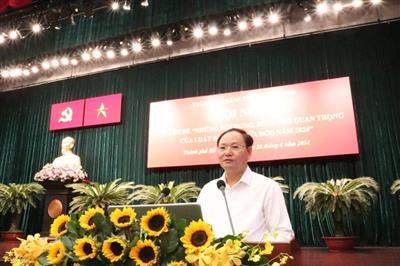
On June 26, the Party Committee of Ho Chi Minh City organized a specialized conference titled ‘Key updates to the 2024 Land Law’ for the city's core cadre at all levels. Deputy Secretary of the Ho Chi Minh City Party Committee, Nguyen Ho Hai, presided over the conference, with Deputy Minister of Natural Resources and Environment Le Minh Ngan attending and directly reporting on the specialized content.