



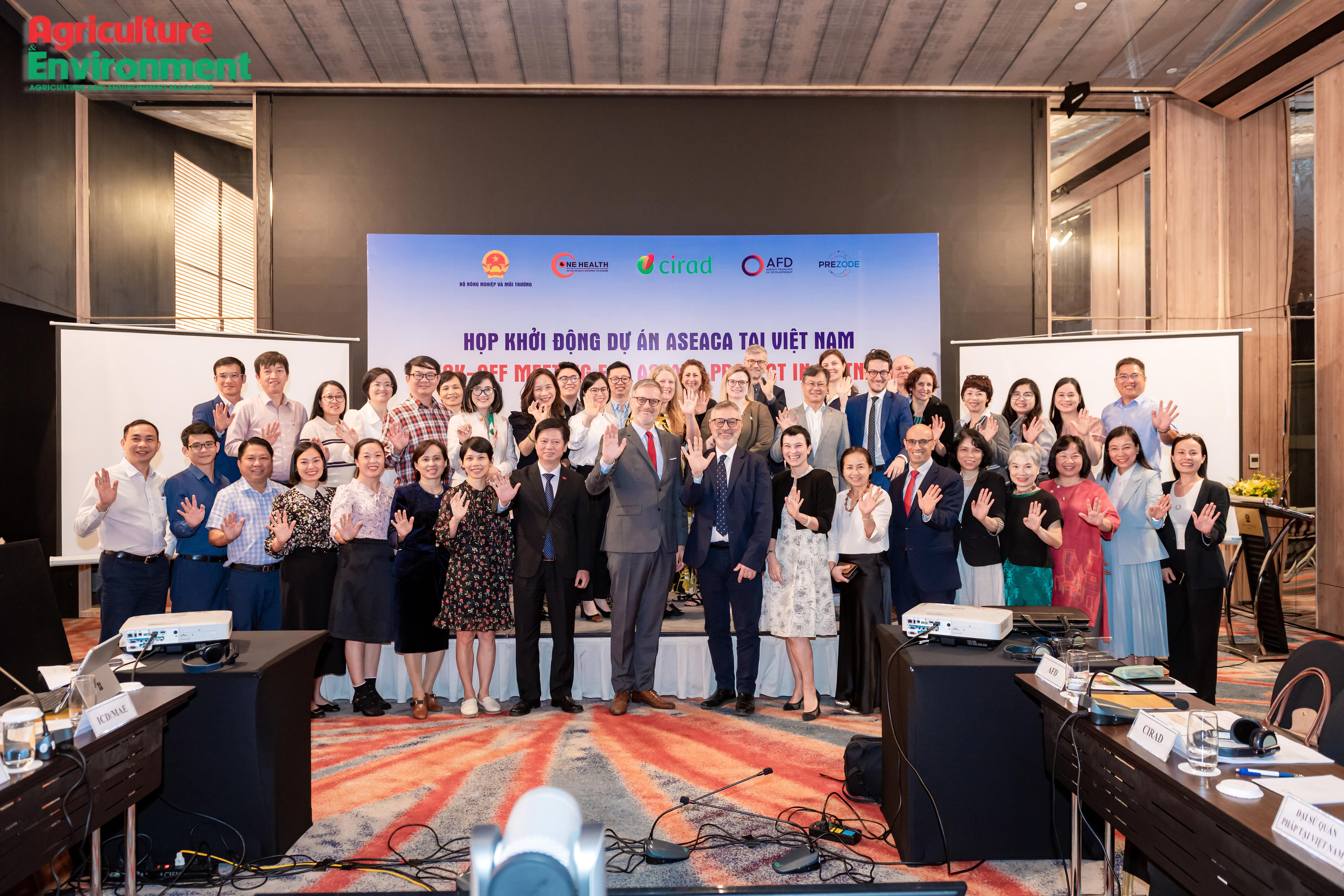
 On March 17, the Ministry of Agriculture and Environment, in coordination with the French Agricultural Research Centre for International Development (CIRAD), the French Embassy in Vietnam and partners, on Monday launched the ASEACA project aimed at strengthening disease prevention under the One Health approach. The project seeks to enhance research capacity, connect scientific networks and promote international cooperation in preventing zoonotic diseases, particularly in the context of rising risks from emerging infectious diseases, antimicrobial resistance (AMR) and environmental changes.
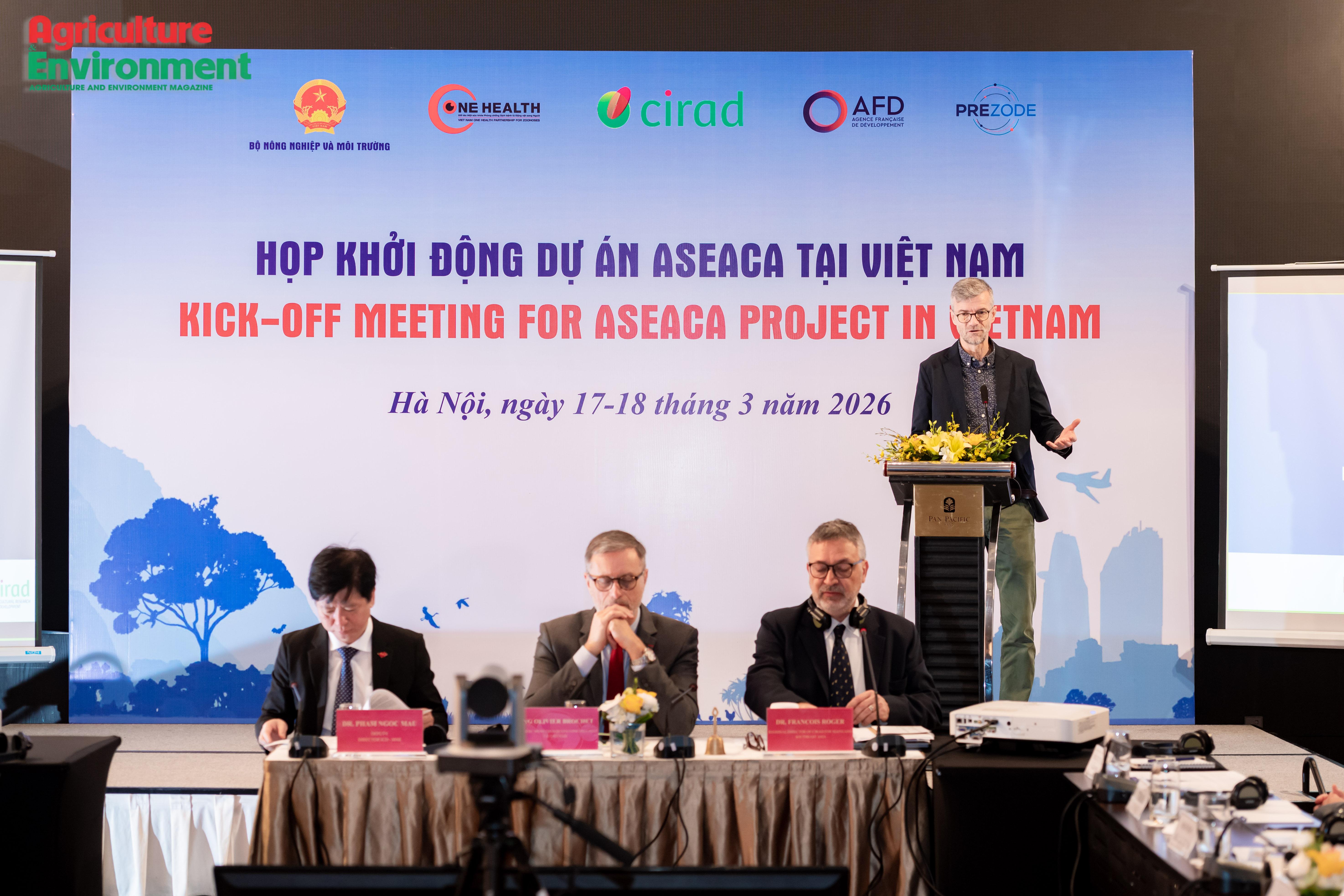
The launch meeting brought together representatives from central ministries and agencies, research institutes, universities, local technical agencies, United Nations organizations, international organizations, non-governmental organizations and development partners working in the One Health field in Viet Nam.
From response to prevention in disease control
ASEACA is implemented under the PREZODE initiative launched by the French Government, which aims to shift the global approach from pandemic response to prevention at source. The project is coordinated by CIRAD and funded by the French Development Agency (AFD).
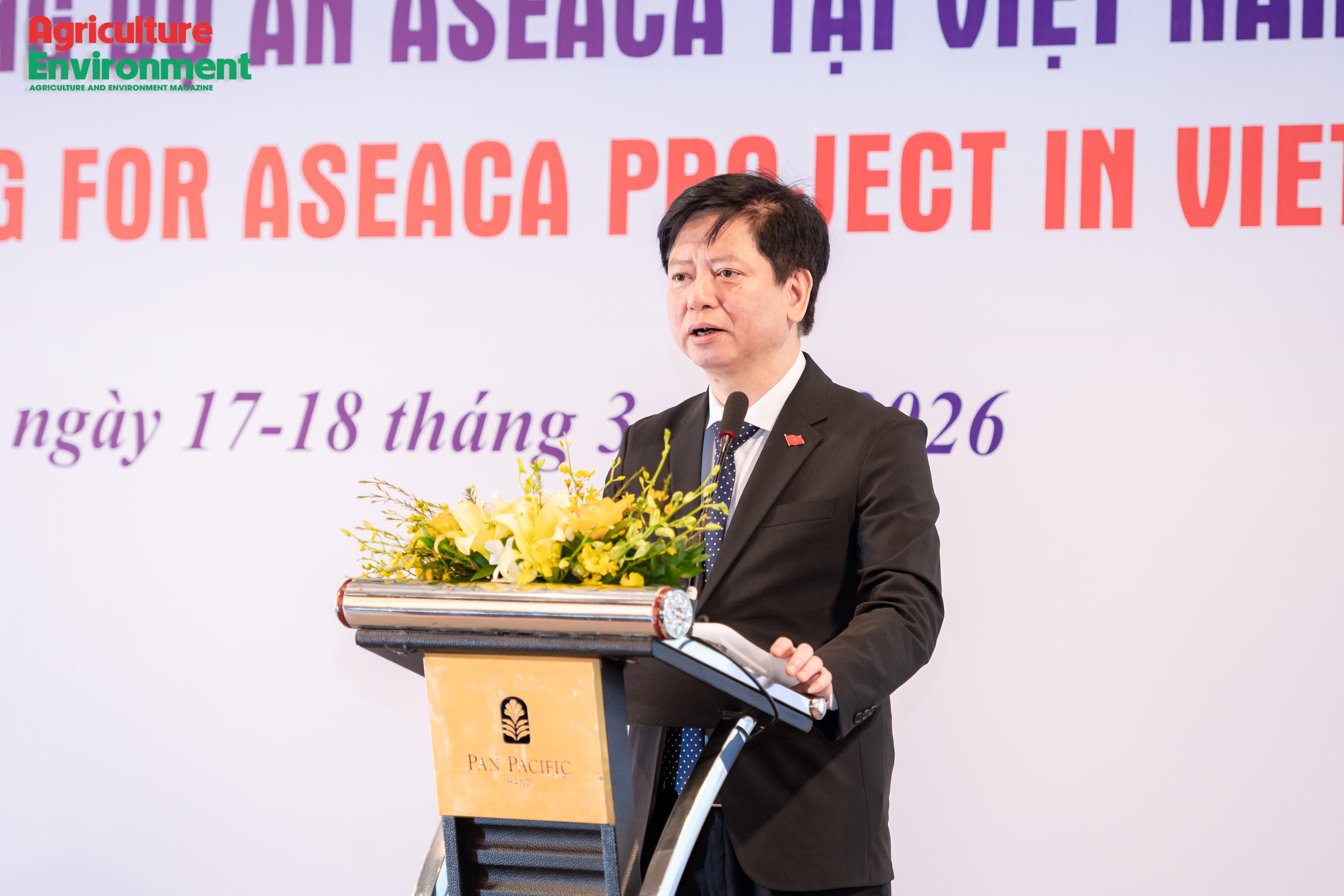
Speaking at the event, Deputy Director of the Department of International Cooperation Pham Ngoc Mau said strengthening research collaboration, data sharing and cross-sectoral coordination among human health, animal health and environmental sectors is essential to improve early disease prevention capacity.
Also addressing the meeting, French Ambassador to Viet Nam Olivier Brochet said Viet Nam is considered one of the leading countries in Southeast Asia in implementing the One Health approach. He noted that the One Health Partnership Framework in Viet Nam serves as a structured coordination mechanism, linking research, surveillance and public policy, and enabling domestic and international partners to jointly address emerging health risks in an integrated manner.
Regarding ASEACA, the ambassador said the project forms part of broader international efforts to strengthen research and scientific cooperation on infectious diseases and antimicrobial resistance. It is expected to help clarify the links between agricultural systems, biodiversity and health risks, while enhancing research collaboration across Southeast Asia, including Viet Nam.
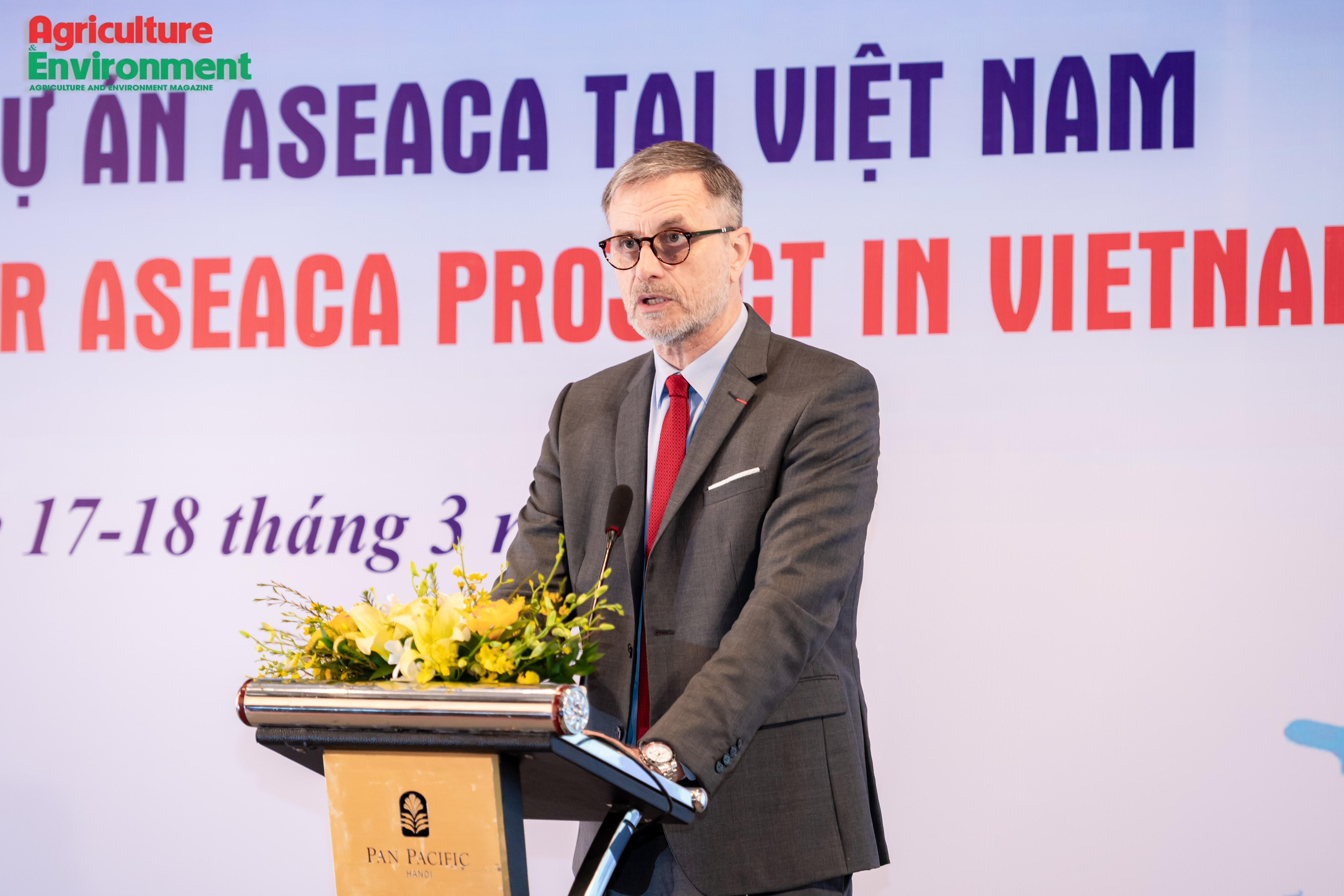
He also emphasized that promoting dialogue among researchers, communities and policymakers is a key component of the project, adding that stronger connections between science and policy would improve the effectiveness of health risk prevention and management. The launch of ASEACA reflects growing international cooperation in pandemic prevention and the advancement of the One Health approach, he said.
Bridging research, policy and local practice
From a scientific perspective, François Roger, a CIRAD representative, said emerging infectious diseases are increasing and are largely driven by profound changes in socio-ecological systems.
He pointed to factors such as agricultural intensification, land-use change, urbanization, biodiversity loss, wildlife trade and climate change as reshaping interactions between humans, animals and the environment, thereby creating conditions for pathogens to emerge and spread.
He stressed that understanding and managing these risks requires an integrated approach combining epidemiology, ecology, veterinary science, public health and social sciences. Southeast Asia is considered a hotspot due to its high biodiversity, rapidly changing agricultural systems and close interactions among humans, livestock and wildlife.
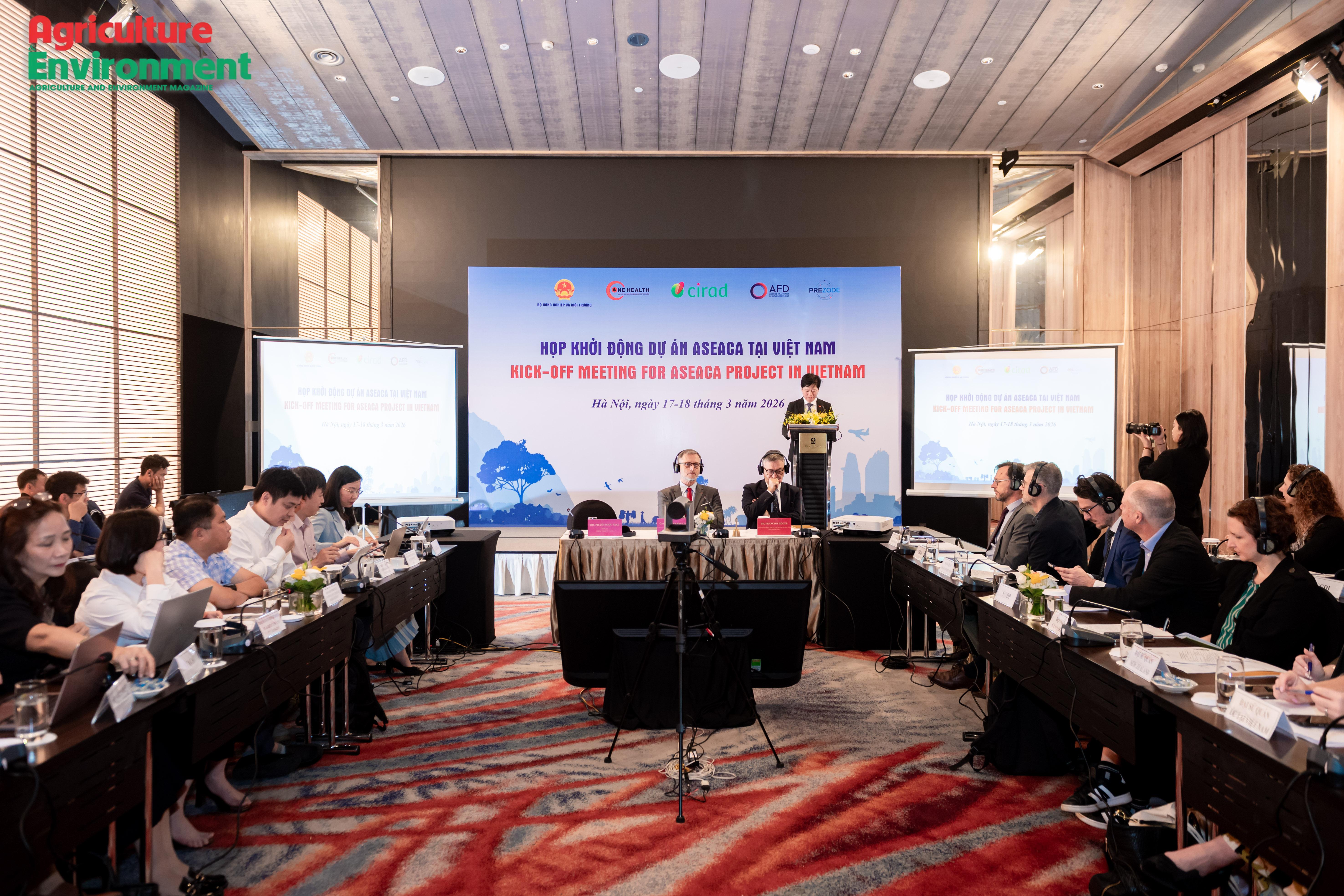
In Viet Nam, ASEACA adopts an integrated One Health approach to assess and manage risks related to zoonotic diseases, antimicrobial resistance and environmental health within agricultural systems. Research will analyze ecological, epidemiological and socio-economic drivers, while strengthening early warning systems, promoting community-based interventions and enhancing cross-sectoral coordination.
A key component of the project is the “Research-to-Policy” (R2P) Technical Working Group, which will synthesize scientific evidence and translate research findings into policy recommendations and practical solutions.
Dr. Flavie Luce Goutard of CIRAD identified major gaps in Viet Nam’s One Health ecosystem, including limited coordination mechanisms, challenges in translating scientific evidence into policy, gaps between national and local levels, and limited engagement of the private sector and communities. She proposed establishing an R2P secretariat, holding regular dialogues and expanding One Health models at local levels.
Local implementation to inform policy
At the meeting, participants were briefed on livestock production and disease risks in Thai Nguyen and Dong Thap provinces, which have been selected for field research representing different ecological zones and production systems.
In Thai Nguyen, where livestock accounts for 47% of agricultural production value and more than 1,600 farms are in operation, the project will trace antimicrobial-resistant bacteria along the poultry value chain, from farms to slaughterhouses and markets, through sampling in humans, animals and the environment.
The project will also integrate data into the Vietnam Animal Health Information System (VAHIS), develop early warning networks and establish community advisory models, contributing to an inter-sectoral disease surveillance system and strengthening grassroots veterinary capacity.
Dong Thap, with its large-scale poultry and waterfowl production, faces high risks of diseases such as avian influenza. The project there will focus on community and behavioral factors, conducting interdisciplinary surveys to design interventions tailored to local farming practices, while strengthening communication, advisory networks and early warning systems.
Findings from these local studies are expected to inform research priorities and support the development of community-based surveillance models, improved antibiotic use practices and risk management solutions under the One Health approach.
According to the Ministry of Agriculture and Environment, ASEACA is also expected to serve as a platform for new international cooperation initiatives in One Health. Research findings and lessons learned will be shared through the One Health Partnership Framework in Viet Nam to support policymaking, strengthen disease prevention capacity and promote effective cross-sectoral collaboration.
In its next phase, the project will continue under CIRAD’s coordination with the participation of domestic and international partners, including the National Institute of Veterinary Research, the National Institute of Hygiene and Epidemiology, the International Livestock Research Institute (ILRI), the Institute of Environmental Health and Sustainable Development, and the Center for Supporting Community Development Initiatives (SCDI).
Partners said the project will focus on strengthening interdisciplinary research, data sharing and field implementation, while operationalizing the Research-to-Policy mechanism to ensure scientific evidence informs policymaking.
Participants agreed to continue discussions on coordination mechanisms and research plans at a technical session scheduled for March 18 at the National Institute of Veterinary Research, with a view to finalizing the project’s initial implementation plan.
On June 25th, the Thua Thien Hue provincial People's Committee organized a conference to disseminate and train on the 2024 Land Law, addressing difficulties and challenges in the land sector. The conference was presided over by Deputy Minister of Natural Resources and Environment, Le Minh Ngan.
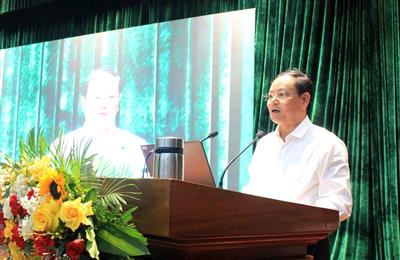
On May 23, the People's Committee of Da Nang City organized a conference to disseminate and provide training on the 2024 Land Law and to address challenges related to land management within the city.
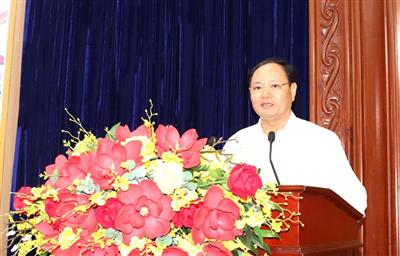
A training conference to disseminate the new points of the 2024 Land Law and Decree No. 12/2024/ND-CP, dated February 5, 2024, by the Government, was organized by the People's Committee of Ha Nam Province on May 17 in Phu Ly City, Ha Nam Province. The conference was held both in person and online, with nearly 130 connection points. Attendees included Deputy Minister of Natural Resources and Environment Le Minh Ngan, Deputy Secretary of the Provincial Party Committee, Chairman of Ha Nam Provincial People's Committee, and Head of the Provincial National Assembly Delegation Truong Quoc Huy.
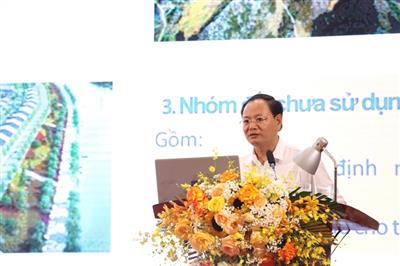
On April 24th in Hanoi, the Party Central Committee's Commission for Popularisation and Education, in collaboration with the Ministry of Natural Resources and Environment, organized a conference on the education and popularization of the 2024 Land Law for national central-level policy disseminators. The conference was co-chaired by Deputy Head of the PCC’s Commission for Communication and Education Phan Xuan Thuy, and Deputy Minister of Natural Resources and Environment Le Minh Ngan.
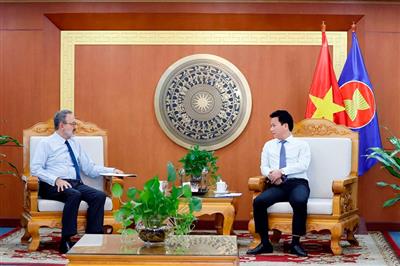
On July 18, Minister of Natural Resources and Environment Dang Quoc Khanh received Italian Ambassador Marco Della Seta. Both sides expressed their hope to deepen and broaden their cooperation in the field of resources and environment.