



 Selecting technologies suited to specific agroecological zones and producers’ capacity is an approach proposed by Nguyen Trong Tuan Anh, MSc, to strengthen agricultural resilience, improve resource-use efficiency, and advance green and circular production.
Climate risks and adaptation needs in Vietnamese agriculture
A salt-tolerant crop variety, a water-efficient irrigation system, or a monitoring device can deliver meaningful results only when it addresses the specific needs of a production area. This is a central issue examined in the study “Science and technology in climate change adaptation in Vietnamese agriculture” by Nguyen Trong Tuan Anh, MSc, of the Institute for South Asian, West Asian and African Studies.
The study synthesizes and analyzes secondary data and documents, using comparative analysis and case studies. It examines the state of agriculture, the impacts of climate change, and the role of science and technology in transforming production. Drawing on domestic and international experience, the author proposes solutions suited to Vietnam’s ecological conditions, production scales, and capacity to adopt new technologies.
A key consideration is the relationship between technology and land, water, production organization, and livelihoods. According to the author, productivity gains must go hand in hand with more efficient resource use, reduced environmental impacts, and greater resilience. This approach makes practical performance a central criterion for technology selection and transfer.
The production data compiled in the study illustrate the scale and economic significance of agriculture. In 2025, agriculture, forestry, and fisheries accounted for 11.64% of gross domestic product (GDP). The annual rice cultivation area was estimated at 7.13 million hectares, with an average yield of 6.11 tonnes per hectare and total output of 43.5 million tonnes.
However, sustaining agricultural production increasingly depends on the capacity to respond to fluctuations in temperature, rainfall, and water availability. The study analyzes the effects of drought, flooding, and saltwater intrusion on crop yields, cropping calendars, agricultural land, and incomes. As natural conditions change, producers need timely information to adjust farming practices and take preventive measures against potential risks.
The Mekong Delta serves as a case study. The author examines the interplay between sea-level rise, saltwater intrusion, and freshwater shortages, alongside pressures such as land subsidence, reduced sediment inputs, and sand extraction. Considering climatic factors alongside human-induced pressures helps clarify the need to coordinate technical interventions with land and water management.
Simulation results cited in the study indicate potential future risks to rice yields and the areas available for rice production. These are conditional projections that depend on climate scenarios and research assumptions. Their significance lies in providing an evidence base for preparing adaptation measures, adjusting cropping patterns and calendars, and selecting suitable crop varieties.
The study therefore calls for climate adaptation technologies to be aligned with the goals of ecological, green, and circular agriculture. Protecting natural resources, making use of agricultural by-products, and reducing emissions need to be integrated into production innovation to sustain economic performance over the long term.
Matching technologies to agroecological and production conditions
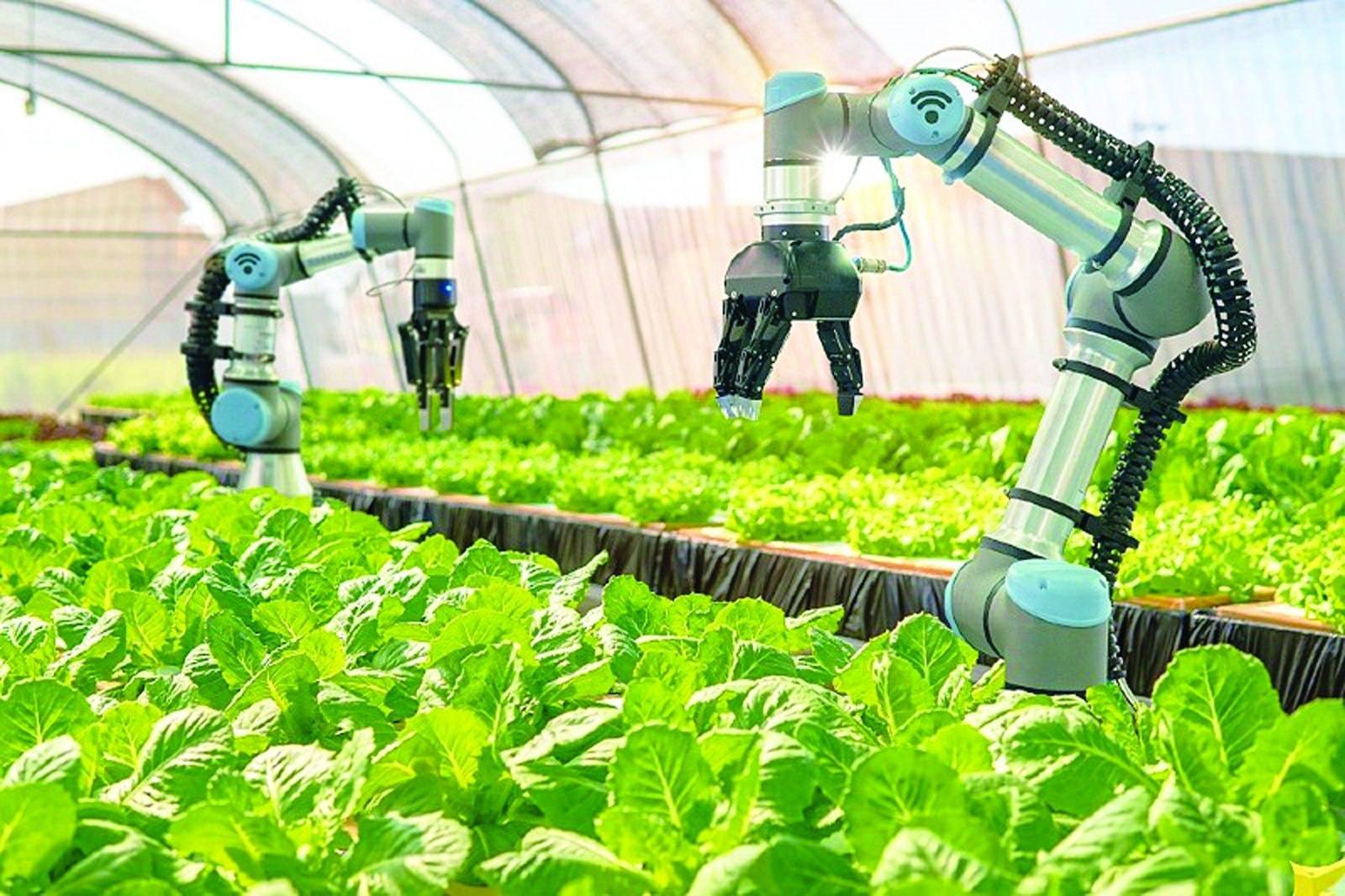
The study documents the application of science and technology across agricultural activities, from crop breeding and cultivation to environmental management, storage, and traceability. The combination of mechanization, automation, biotechnology, and digital technologies creates opportunities to monitor production conditions, use agricultural inputs more efficiently, and improve product quality.
According to data from the 2025 Rural and Agricultural Census cited by the author, 9.15% of crop-growing households had adopted technologies such as the Internet of Things (IoT), robotics and automation, agricultural aviation technologies, and microbial organic fertilizers. In livestock production, the corresponding adoption rates were 18.22% among pig-raising households and 17.5% among cattle-raising households. Approximately 0.7% of aquaculture households had adopted technologies covered by the census categories, including Biofloc technology, intensive aquaculture, recirculating and closed-system aquaculture, IoT, and sensors.
These figures indicate that technology is already being used in agricultural production, while considerable scope remains for wider adoption. The indicators cover the specified technology groups rather than the overall level of technological development in agriculture. Based on these findings, the author emphasizes the need to integrate technologies into production processes and create conditions for scaling up applications suited to local needs.
The study also discusses a model for raising meat pigs using organic-oriented production methods, implemented by the National Agricultural Extension Center in collaboration with Que Lam Group. The model uses biotechnology to treat wastewater and manage the livestock environment. It illustrates how production techniques can be integrated with waste management, linking productivity and product quality with environmental protection.
According to the author’s analysis, small-scale and fragmented production constrains investment in machinery, irrigation systems, sensors, and waste-treatment facilities. Technology transfer must therefore account for recipients’ available resources and their ability to operate the technologies. The effectiveness of a device depends on how it is used and maintained and how well it is integrated with other stages of production.
In response to these conditions, the study proposes selecting technology groups according to agroecological zones, commodity sectors, production scales, and levels of climate risk. Evaluation criteria should include economic performance, resource-use efficiency, emissions reduction, adaptive capacity, operating costs, and potential for wider adoption.
The author identifies several specific priorities: biotechnology and climate-adapted crop varieties; water-efficient irrigation and water management; monitoring, forecasting, and early warning; storage, logistics, and value-added processing; and the treatment and reuse of agricultural by-products. Particular emphasis is placed on biotechnology for crop breeding and the development of biological fertilizers and plant protection products, with the aim of improving crop quality and resilience.
The study recommends combining technologies into integrated packages tailored to specific production conditions. Resilient crop varieties need to be supported by appropriate water management, environmental monitoring, and cultivation practices. By-product treatment should be linked to the production of organic fertilizers, animal feed, energy, or other value-added products. Such coordinated approaches enable technologies to serve multiple objectives within the same production system.
Data infrastructure, technology adoption, and international cooperation
A consistent theme throughout the study is the development of digital infrastructure and shared data systems. Nguyen Trong Tuan Anh proposes integrating data on land, crops, livestock, the environment, markets, and supply chains while ensuring that these data can be managed, shared, and used securely and efficiently. Such infrastructure can support production management, environmental monitoring, and risk identification.
Building on these data, sensors, unmanned aerial vehicles (UAVs), and remote sensing technologies can support field monitoring. Artificial intelligence (AI) and big data can be used to analyze and forecast weather conditions, disease outbreaks, pest infestations, and climate-related risks. These applications should be expanded incrementally, in line with the infrastructure, resources, and capacity of local authorities, businesses, cooperatives, and farming households to adopt them.
To translate research findings into practical applications, the author recommends commissioning research in response to the actual needs of production areas and end users. Each research project should identify its intended recipients, application model, technical performance indicators, economic and environmental benefits, and potential for wider adoption. Research, testing, technology transfer, training, and commercialization should be closely integrated.
Training is considered essential to strengthening users’ capacity to adopt, operate, and master new technologies. The study proposes tailored training programs for researchers, business personnel, cooperative members, technical staff, and farmers. Initial investment support, credit, and partnerships with technology providers should be accompanied by efforts to strengthen users’ ability to operate, improve, and maintain technological applications.
At the international level, the author proposes drawing on technologies and management practices from more developed countries. Examples include drip irrigation and automation in Israel; greenhouse production, soilless cultivation, and computerized management in the Netherlands; and drought- and salt-tolerant crop varieties and floating agriculture in Bangladesh. The adoption of these approaches must take into account Viet Nam’s ecological conditions, available resources, and existing production capacity.
The study also emphasizes South–South and triangular cooperation with developing countries, including those in Africa. Viet Nam can both acquire knowledge and share its experience while jointly developing solutions involving crop varieties, water management, biotechnology, by-product reuse, digital transformation, and emissions reduction.
Overall, the study suggests that the value of science and technology should be assessed in terms of producers’ ability to adopt, master, and use them effectively. Appropriate technology selection, supported by reliable data and well-designed technology transfer, can strengthen agriculture’s capacity to manage climate risks, conserve natural resources, and improve rural livelihoods.
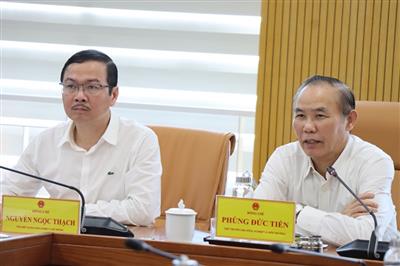
On May 5 in Hanoi, the Ministry of Agriculture and Environment (MAE) held a press conference to introduce the upcoming National Conference on the Implementation of Resolution No. 57-NQ/TW issued by the Politburo. The event is expected to usher in a new era of breakthroughs in science, technology, innovation, and digital transformation. Chaired by Deputy Minister Phung Duc Tien, the press conference not only provided key details about the conference but also highlighted major institutional bottlenecks that must be addressed for science and technology to become a genuine strategic driver of the sector.
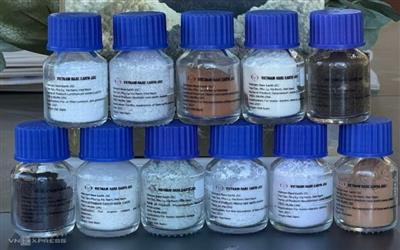
At the beginning of 2025, a series of new regulations on the technical investigation, resource assessment, and exploration of rare earth minerals and marine sand deposits will come into effect.
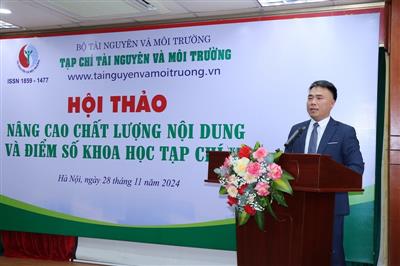
On November 28, 2024, in Hanoi, the Natural Resources and Environment Magazine (under the Ministry of Natural Resources and Environment) organized a workshop titled “Enhancing the content quality and scientific scores of the Magazine”. During the event, scientists, journalists, and experts contributed practical opinions and effective solutions to improve the quality of content and scientific scores of the print edition of the Journal of Natural Resources and Environment. Dr. Dao Xuan Hung, Editor-in-Chief of the magazine, chaired the workshop.
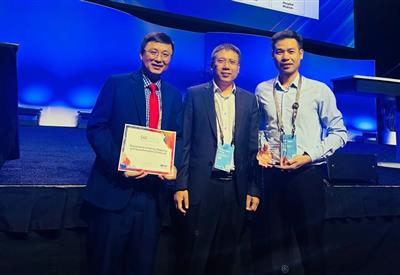
The Department of Survey, Mapping and GeoInformation of Vietnam (DOSMVN) has been recognized with the Special Achievement in GIS (SAG) Award at the recent 2024 Esri User Conference held in the United States.
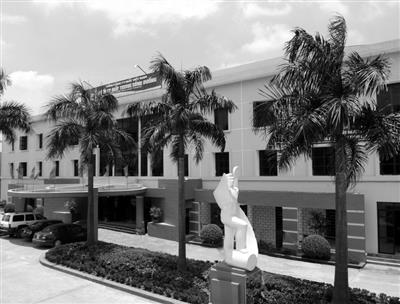
The paper industry, having evolved over time, plays a pivotal role in the economic and social development strategy of a nation. Despite the positive impacts of paper production, the excessive use of energy, natural resources, and chemicals poses a significant threat to water sources.