



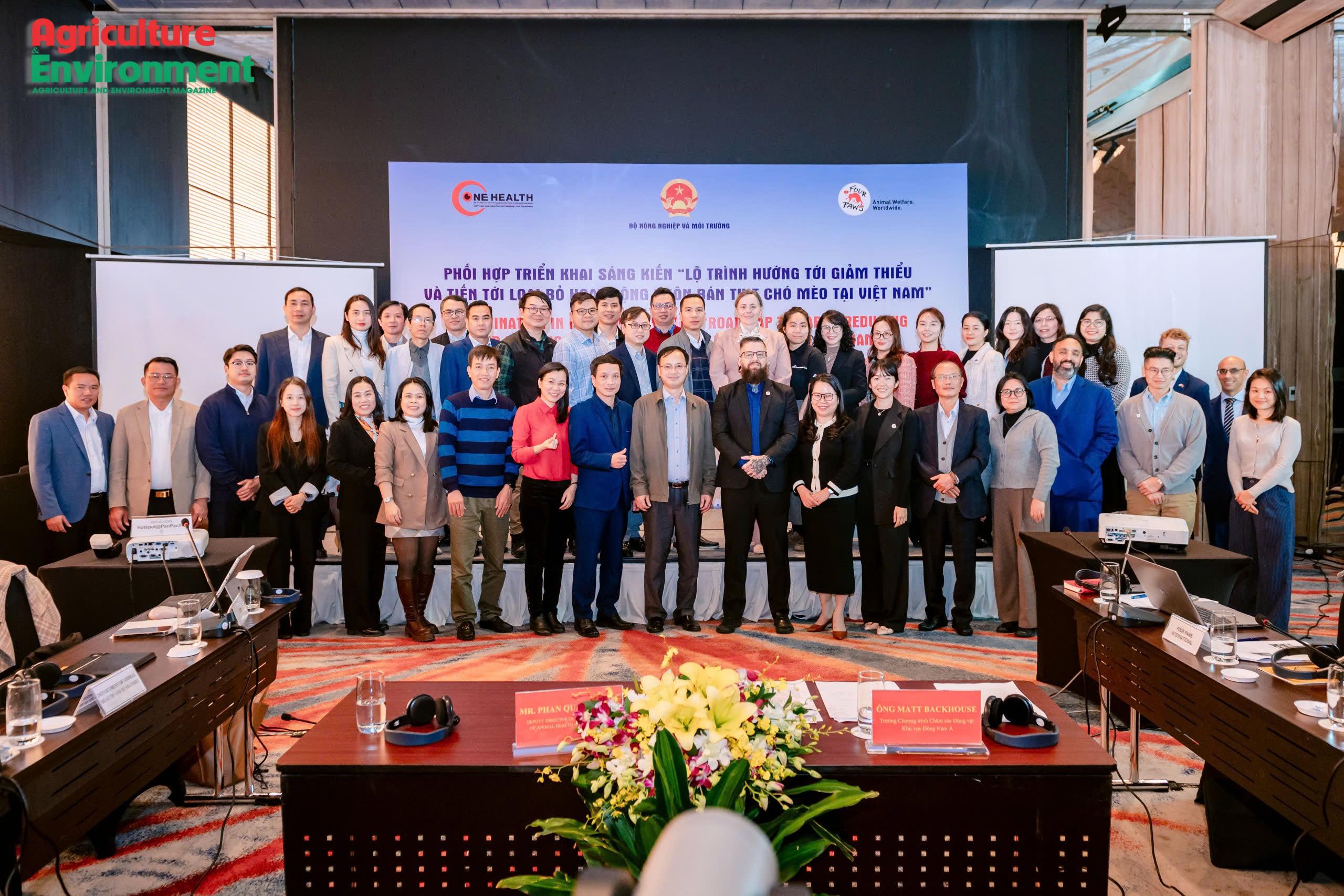
 On January 27, the third Technical Meeting of the Companion Animals Working Group under the One Health Partnership (OHP) was held to further identify policy and implementation gaps, share domestic and international experience, and discuss and provide feedback on a draft roadmap to reduce and gradually end the dog and cat meat trade, alongside efforts to eliminate rabies in Viet Nam by 2030.
Officials call for One Health approach to companion animal management
Opening the meeting, Phan Quang Minh, Deputy Director of the Department of Animal Health and Production, under the Ministry of Agriculture and Environment, said that free-roaming dogs and cats and weak population management remain widespread, while the risk of infectious diseases—particularly rabies—continues to be high. He noted persistent challenges related to animal welfare, food safety, and illegal interprovincial and cross-border trade and transport of dogs and cats.
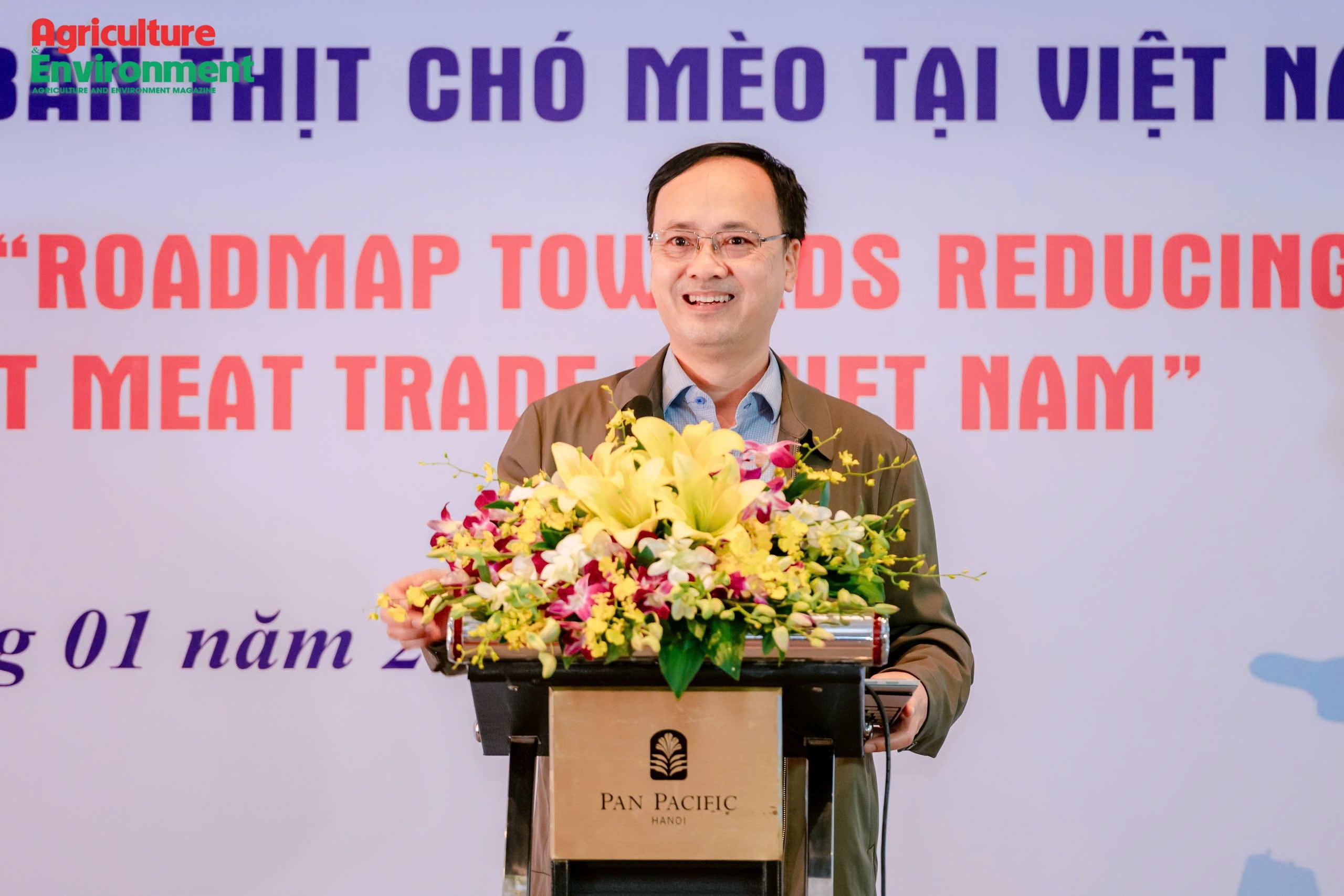
Deputy Director Phan Quang Minh stressed that issues related to companion animals require a comprehensive, intersectoral approach based on the One Health framework, with close coordination among veterinary, public health and environmental sectors, local authorities, and community participation. Developing an appropriate roadmap at this stage, he said, is a necessary measure to improve control and address these challenges more effectively.
At the meeting, Ninh Thi Phuong Thao, Program Coordinator for Four Paws’ Dog and Cat Meat Trade Elimination Program in Viet Nam, presented findings from One Health–based surveys identifying major transport routes, trade hotspots, and significant risks to animal welfare, food safety and public health. Survey results showed that the Lao Bao border gate in Quang Tri province, along the Viet Nam–Lao border, is a major hub for dog smuggling and, in some cases, cat smuggling. National Highway 1A and National Highway 22 were identified as key corridors for illegal trade and transport.
Based on these findings, Ms. Thao emphasized that the dog and cat meat trade should be addressed as a One Health issue, with stronger intersectoral cooperation and the use of data and community feedback as a basis for policy formulation and the development of a national roadmap.
Vu Tuan Anh, an official from the Community Livestock and Veterinary Division, provided an overview of animal quarantine practices for exports in the context of increasingly stringent requirements set by the World Organisation for Animal Health (WOAH), particularly for the import and export of pets. He said this places growing demands on veterinary capacity, which must be continuously strengthened. Some diseases have incubation periods that make them difficult to detect at border checkpoints, while differences in disease status and veterinary standards among countries increase risks. At the same time, equipment for rapid inspection and testing remains limited, and quarantine procedures still rely largely on documentation.
Regarding domestic animal transport, rising demand for consumption and transport, combined with limited capacity at the grassroots veterinary level, rapidly increasing transport volumes, and diverse transport methods—including passenger buses, railways, aviation, private vehicles and express delivery services—have heightened the risk of disease spread. Inadequate coordination between veterinary authorities and transport operators has further compounded these risks.
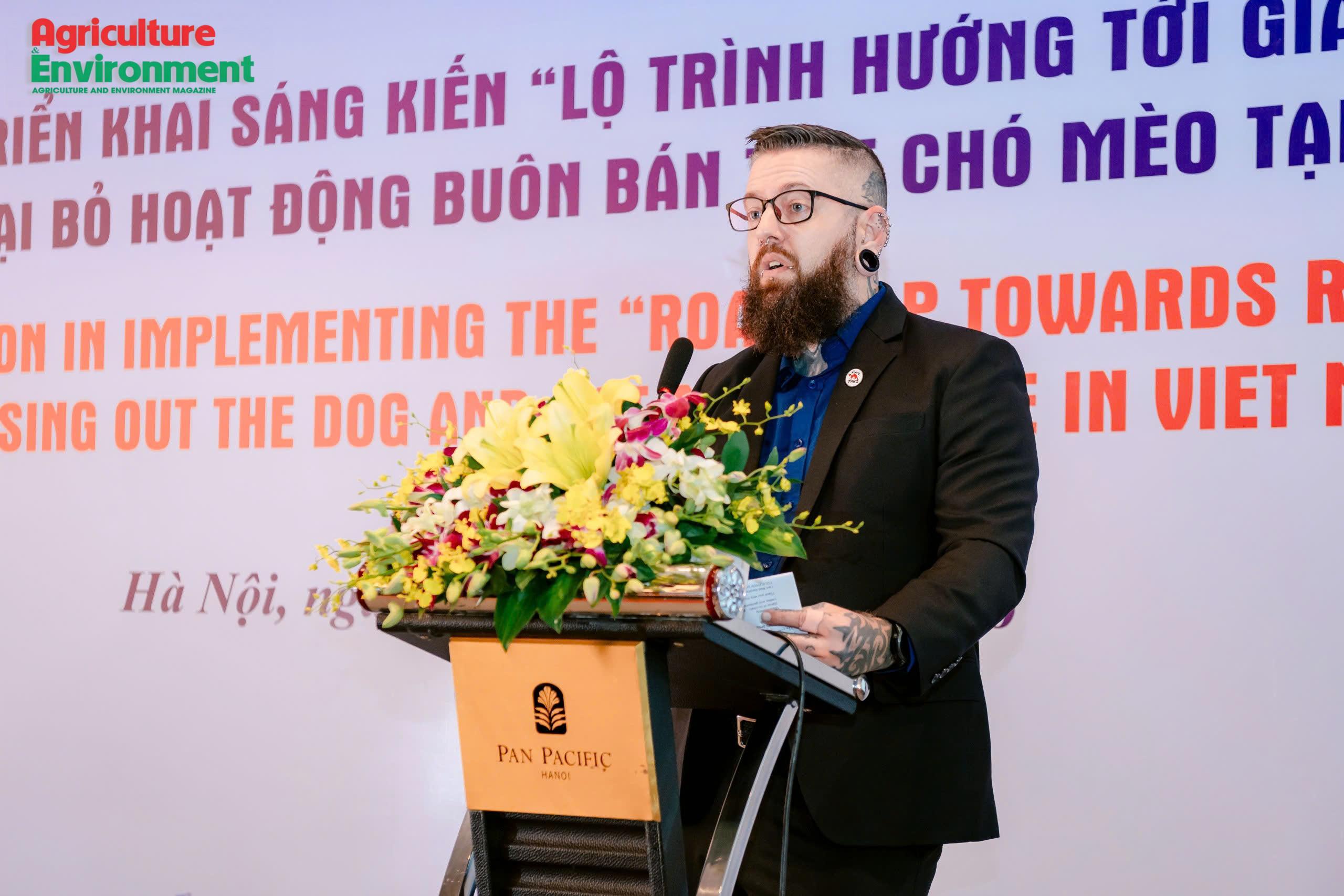
Matt Backhouse, Head of Animal Care, Southeast Asia, at FOUR PAWS International, said that as co-chair of the Technical Working Group on Companion Animals, working alongside the One Health Secretariat, the Ministry of Agriculture and Environment and relevant agencies, FOUR PAWS hopes the roadmap to reduce and eventually end the dog and cat meat trade in Viet Nam will be implemented soon and serve as an important tool to protect public health, improve animal welfare and promote sustainable development.
He said FOUR PAWS is committed to supporting the government in developing a step-by-step approach that builds social consensus and ensures long-term effectiveness.
Models and initiatives to reduce dog and cat meat trade shared
Ninh Thi Phuong Thao, Program Coordinator for FOUR PAWS’ Dog and Cat Meat Trade Elimination Program in Viet NamThe meeting recorded numerous contributions on models and initiatives aimed at reducing and ultimately eliminating the dog and cat meat trade, both domestically and internationally. Can Xuan Minh, a representative of the Ha Noi Department of Agriculture and Environment, presented a model combining rabies prevention with sustainable economic development, gradually transforming trading activities in several localities in the capital.

Under the project, coordinated activities have been implemented in 14 pilot wards in Ha Noi, with a focus on surveying individuals and establishments involved in the dog and cat meat trade to inform appropriate livelihood transition options. The project also organized training programs to support livelihood conversion for traders and to strengthen the capacity of management and veterinary officials directly involved in rabies prevention and control, as well as other infectious and emerging zoonotic diseases.
At the same time, the project stepped up public communication to raise awareness of the link between rabies and unsafe dog and cat meat trading practices, organized training for veterinary staff on humane animal handling, and worked to establish more effective dog and cat population management systems. These efforts aim to reduce disease risks and lay the groundwork for a sustainable management roadmap.
Karanvir Kukreja, a consultant on ending the dog and cat meat trade with Humane World for Animals, shared the Republic of Korea’s experience in transitioning from a long-standing industry to a legally mandated phase-out under a special law adopted in 2024. He said key factors behind the country’s success included shifts in public perception, strong leadership and political commitment, sustained pressure from civil society, and the design of a clearly time-bound roadmap supported by specific policies.
Drawing on the Korean case, Kukreja emphasized that when a legal framework is transparent and includes clear reporting, monitoring and enforcement mechanisms, implementation becomes more feasible and effective. He recommended that Viet Nam move quickly to establish legal clarity, define an endpoint for the related commercial activities, and design transition mechanisms linked to compliance, while addressing the issue through a risk governance approach rather than cultural debate.
Contributing to the discussion, Nguyen Van Trong, former Deputy Director of the Department of Animal Health and Production, said that if regulations only govern trading activities, household operators may continue transporting animals. He argued that the roadmap should move toward banning the transport of dogs and cats for meat in order to control the problem at its source. Local authorities, he said, must take proactive roles and develop models suited to urban and rural contexts. While livelihood support is important, he stressed that changing consumer behavior is more critical, as demand reduction would ultimately bring the trade to an end, requiring more substantive and effective public communication.
Concluding the meeting, Phan Quang Minh said the roadmap to reduce and eventually end the dog and cat meat trade, aligned with the goal of eliminating rabies in Viet Nam by 2030, should focus on several key pillars. These include reviewing and improving policies and legislation; strengthening enforcement and ensuring consistent application; managing dog and cat populations and expanding rabies vaccination; intensifying public communication and awareness-raising; and researching and implementing livelihood transition support measures suited to local conditions.
He said the views exchanged at the third Technical Meeting will provide an important basis for stakeholders and the Companion Animals Working Group to continue reviewing and refining the draft roadmap, clearly defining priorities, responsibilities and coordination mechanisms for the next phase. The meeting, he added, reflected Viet Nam’s commitment to controlling rabies, improving the management of companion animals, ensuring animal welfare and protecting public health, in line with sustainable development goals and regional and international trends.

At the workshop “Developing and enhancing the value of Shan Tuyet tea,” organized by the Agriculture and Environment Magazine in Lao Cai, Assoc. Prof. Dr. Pham Anh Tuan, Director of the Institute of Agricultural Engineering and Post-Harvest Technology, emphasized that the future of Shan Tuyet tea lies not only in its unique raw material areas, but also in how science and technology can pave the way for a more diverse and sustainable product ecosystem.
On December 5, the 4th Meeting of the Food Safety Technical Working Group (FSTWG) was convened under the co-chairmanship of the Ministry of Agriculture and Environment, the International Livestock Research Institute (ILRI), and development partners within the One Health Partnership (OHP) framework.
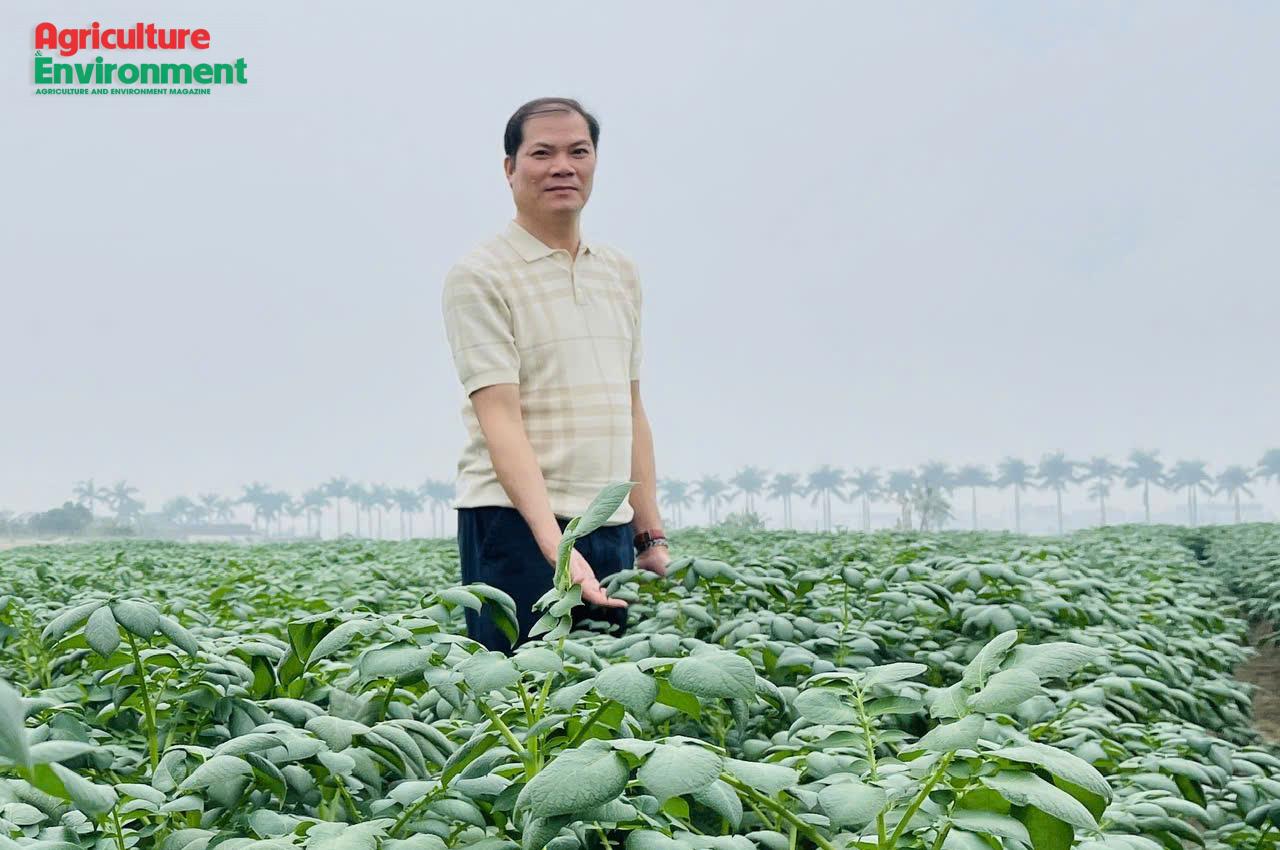
Amid climate change, declining land resources, and increasingly stringent requirements from the food processing industry, potato breeding and seed production are facing a pressing need for innovation. In an interview with the press, Assoc. Prof., PhD Nguyen Xuan Truong, Director of the Institute of Biology and Agricultural Technology, said that the application of greenhouse-based soilless cultivation systems, combined with IoT and AI, not only improves potato seed quality but also lays the groundwork for developing a modern and sustainable agricultural value chain in Viet Nam.

At the workshop “Regional linkages - Promoting green value chains in Vietnamese agriculture,” Deputy Minister Phung Duc Tien emphasized that the Ministry of Agriculture and Environment will prioritize advancing regional linkage strategies and developing comprehensive cooperative models centered on farmers, businesses, scientists, and local authorities.

Throughout Viet Nam’s development journey, communities have always been the foundation of its sustainable strength. In particular, in agriculture and the environment, the direct participation of local people has played a crucial part in maintaining livelihoods and conserving and restoring natural values.