



 As the world faces mounting challenges from climate change, food insecurity, resource depletion and widening nutrition inequality, transforming food systems toward greener, low-emission and sustainable pathways has become an urgent task rather than a long-term aspiration, including for Viet Nam.
The ISG 2025 plenary meeting, themed “Advancing the transformation of food systems toward green, low-emission and sustainable pathways: Cooperation and innovation”, was held in Hanoi on January 9, 2026, by the Ministry of Agriculture and Environment. The meeting provided a forum for policymakers, research institutions and development partners to review progress and identify priorities for the next phase of food system transformation.
Discussions at the meeting indicated that Viet Nam’s food system transformation is entering a phase of concrete implementation, requiring a comprehensive, cross-sectoral approach grounded in clear institutional frameworks, scientific evidence and sustained support from domestic and international partners. The implementation of the National Action Plan for a transparent, responsible and sustainable food system transformation (FST-NAP) through 2030, together with long-term technical assistance from international organizations such as the Food and Agriculture Organization of the United Nations (FAO), was identified as central to this process.
FST-NAP sets the framework for Viet Nam’s food system transformation
Dr. Tran Van The, Senior Technical Expert for the Food System Transformation Partnership (FST-P)
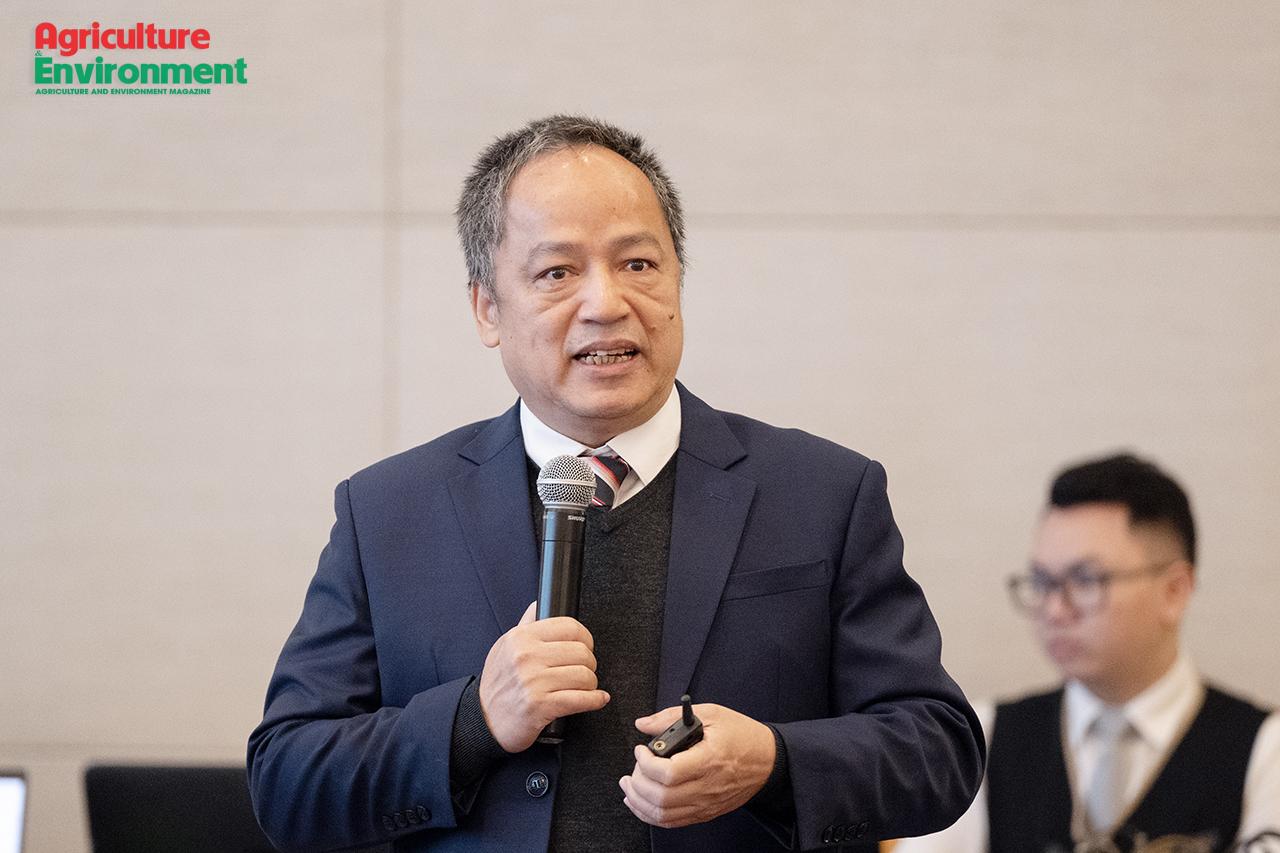
Providing an update on the implementation of the National Action Plan for a Transparent, Responsible and Sustainable Food System Transformation through 2030 (FST-NAP), Tran Van The said the plan represents one of the most important policy frameworks guiding Viet Nam’s food system transformation. It aims to ensure food security, improve incomes and living standards, and contribute to environmental protection and climate change response.
According to Dr. Tran Van The, FST-NAP is built on major Party and State strategies, particularly the Sustainable Agriculture Development Strategy to 2030. Its approval by the Prime Minister under Decision No. 300/QD-TTg reflects Viet Nam’s political commitment to sustainable development and signals a shift from a sector-based approach toward a systems perspective covering the entire value chain, from production and processing to distribution and consumption.
A key feature of FST-NAP, he said, is the establishment of clear, measurable objectives across economic, social and environmental pillars. These include targets to raise agricultural incomes, reduce multidimensional poverty, improve food security and nutrition, expand the adoption of good agricultural practices, promote organic farming, reduce post-harvest losses, and cut greenhouse gas emissions compared with 2020 levels.
To support implementation, FST-NAP adopts a partnership-based approach through the Food Systems Transformation Partnership (FST-P), coordinated by the Ministry of Agriculture and Environment with the participation of ministries, local authorities, international organizations, businesses and other stakeholders. Dozens of domestic and international partners have joined the partnership to implement priority activities under the plan, Dr. Tran Van The said.
Interdisciplinary technical working groups have also been established as expert focal points for each pillar of the transformation process. The five groups focus on institutional and policy reform; agroecological development; nutrition improvement and food diversification; food loss and waste reduction; and responsible distribution and consumption. These groups are intended to strengthen cross-sector coordination and support evidence-based policy dialogue.
At the local level, FST-NAP has been piloted in Son La and Dong Thap provinces. Dr. Tran Van The said provincial food system transformation plans help translate national goals into local action while enabling integration with socio-economic development, poverty reduction and rural development programs. The pilots also provide a basis for assessing effectiveness and scalability.
He acknowledged challenges, including limited financial resources, shortages of technical expertise, coordination disruptions following administrative restructuring, and the continued prevalence of small-scale, fragmented production. Completing a detailed implementation plan, developing a monitoring and evaluation framework, and mobilizing additional resources from development partners will be priorities in the next phase, he said.
Food system transformation requires a long-term support foundation
Nguyen Song Ha, Assistant FAO Representative in Viet Nam
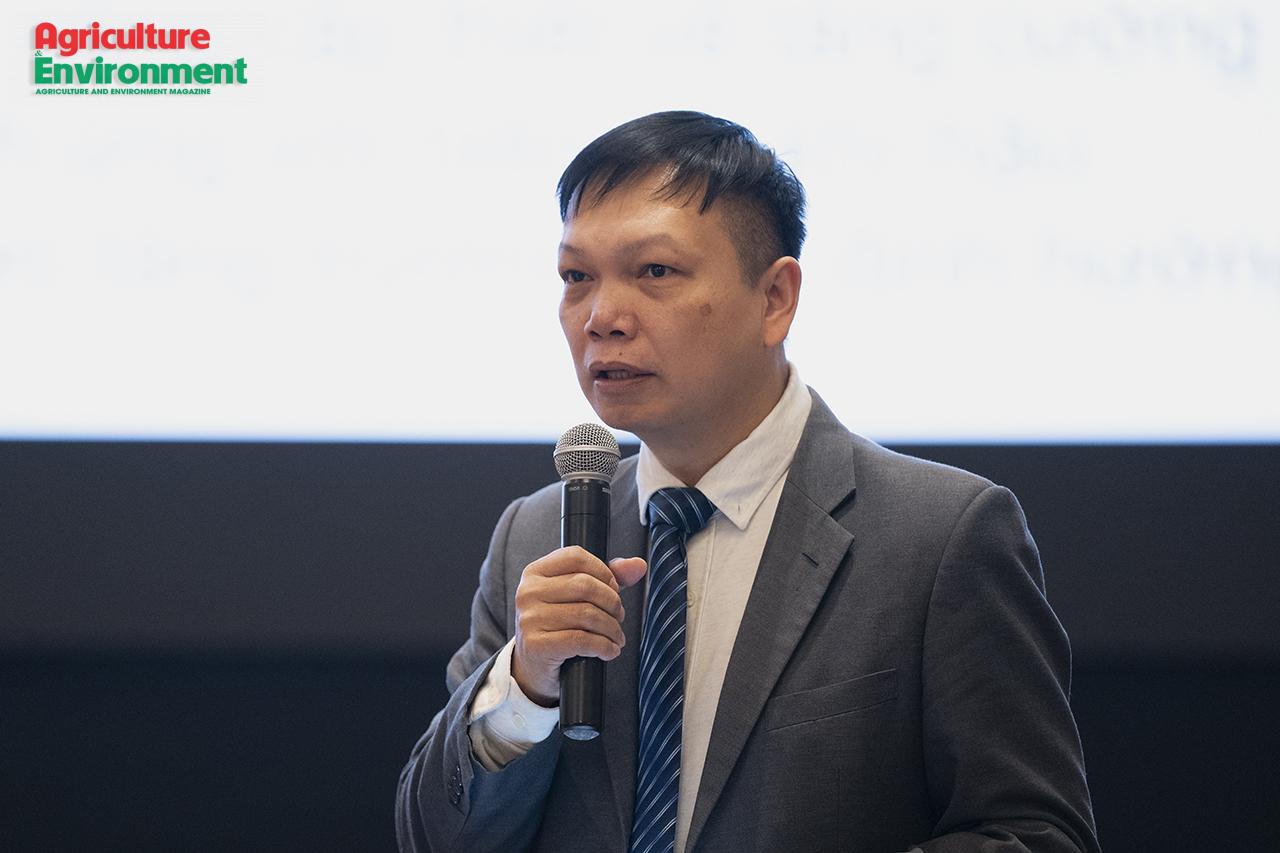
Speaking on FAO’s technical assistance for food system transformation and food security in Viet Nam during the 2026–2030 period, Mr. Nguyen Song Ha said FAO has long supported Viet Nam in developing and implementing major agriculture and food policies. Following its support for the formulation of FST-NAP, FAO will expand cooperation during the implementation phase through its Country Programming Frameworks.
According to Nguyen Song Ha, emerging demands related to green growth, digital transformation, innovation and institutional streamlining are placing higher requirements on food systems. FAO’s technical assistance in the coming period will therefore focus on key areas addressing human development, economic transformation, environmental sustainability and governance.
The first priority area is human development within food systems. FAO plans to support Viet Nam in strengthening capacities for disease forecasting, detection and response; improving food safety, biosecurity and sanitary and phytosanitary (SPS) measures; promoting the One Health approach; and enhancing nutrition quality toward healthy and sustainable diets. Ensuring food safety and nutrition, he said, is a foundation for food security, workforce quality and sustainable development.
Economic transformation and digital transformation form the second priority area. Planned support includes applying data, remote sensing and artificial intelligence to pest monitoring and resource management; developing national agricultural data platforms; and promoting digital agriculture and sustainable livelihood models linked to value chain development, the One Commune One Product (OCOP) program and ecotourism. Digital transformation can improve productivity while enhancing transparency, traceability and market access, he said.
FAO will also support climate action and environmental protection through landscape- and ecosystem-based approaches, circular agriculture, climate-smart agriculture, and assistance in developing measurement, reporting and verification (MRV) systems for implementing nationally determined contributions (NDCs). These efforts aim to strengthen food system resilience to climate shocks while reducing emissions and protecting natural resources.
Nguyen Song Ha said FAO will continue supporting policy and standards harmonization, green finance, agricultural insurance and carbon markets, as well as South–South and trilateral cooperation. Advancing human, economic, environmental and governance pillars in a coordinated manner is essential for achieving long-term, inclusive food system transformation, he said.
COP30 places agriculture at the front line of climate change adaptation
Le Ngoc Tuan, Deputy Director, Department of Climate Change; Head of Viet Nam’s Technical Negotiation Delegation
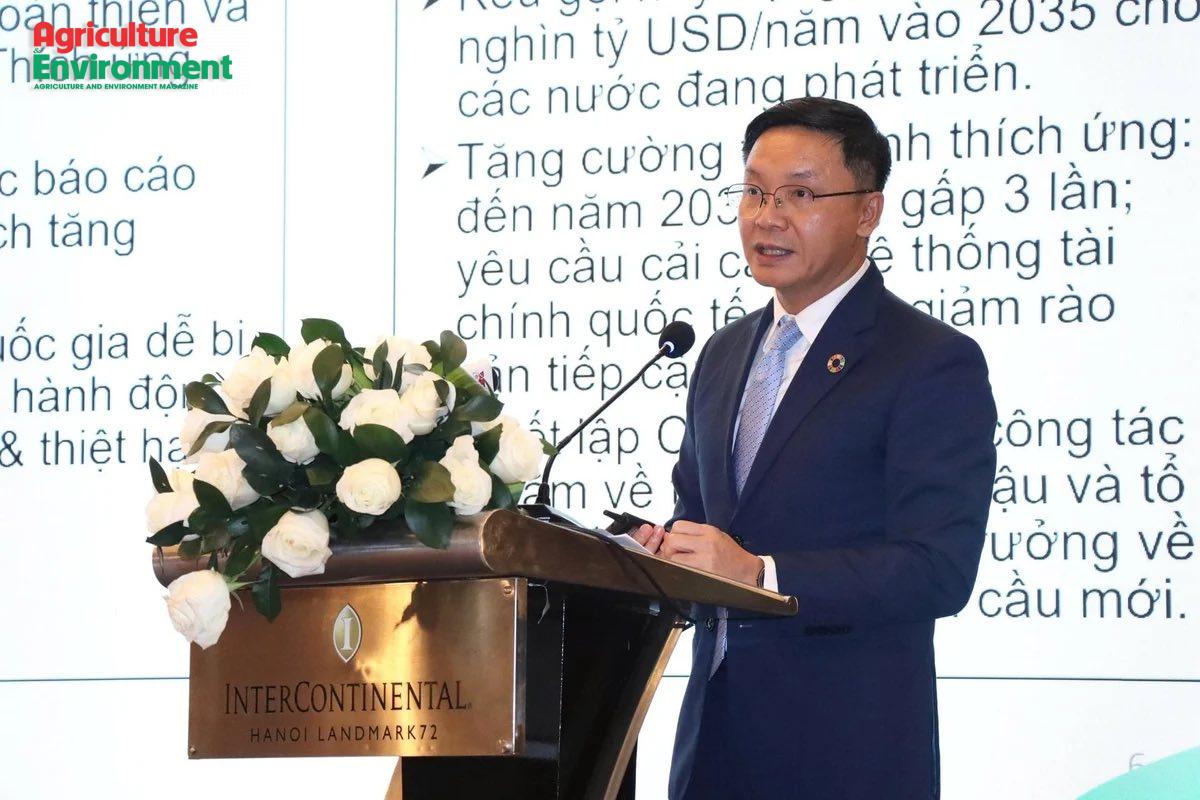
Addressing the ISG 2025 Plenary Meeting, Deputy Director Le Ngoc Tuan said outcomes of the COP30 climate conference reflect a new phase in the global response to climate change, marked by increasingly complex and urgent challenges. Scientific assessments indicate a growing risk of exceeding the 1.5-degree Celsius global warming threshold, accompanied by more frequent and intense extreme weather events affecting food security, livelihoods and ecosystems.
According to Deputy Director Le Ngoc Tuan, COP30 took place amid prolonged geopolitical tensions, slowing economic growth and global financial stress, undermining countries’ capacity to deliver on climate commitments. This has heightened the need to shift the COP process from expanding pledges toward concrete, measurable and verifiable action.
One of COP30’s key outcomes was placing agriculture and food systems at the center of climate adaptation discussions. The conference adopted decisions to operationalize the Paris Agreement, strengthen implementation of nationally determined contributions (NDCs), enhance transparency and accountability, and promote nature-based solutions, land restoration and ecosystem protection.
COP30 has been widely described as a “COP on adaptation and agriculture,” he said, with initiatives launched or reinforced to advance sustainable agriculture, emission reduction and climate resilience. These initiatives focus on mobilizing investment toward net-zero emission agriculture, improving land and water use efficiency, reducing land degradation and supporting farmer livelihoods.
Le Ngoc Tuan said Viet Nam’s participation in global initiatives at COP30 helps open access to climate finance, technology and knowledge to support domestic agricultural transformation. Aligning COP30 outcomes with FST-NAP implementation will help ensure consistency between national development goals and international climate commitments, he said.
He said that aligning outcomes and commitments from COP30 with the implementation of the FST-NAP would help Viet Nam maintain coherence between its sustainable agricultural development objectives and its international climate change obligations. The alignment, he added, would also help advance the transition toward greener, low-emission food systems with greater resilience to climate shocks in the period ahead.
Policy and institutional reform seen as key to food system transformation
Dr. Tran Cong Thang, Director, Institute of Strategy and Policy for Agriculture and Environment
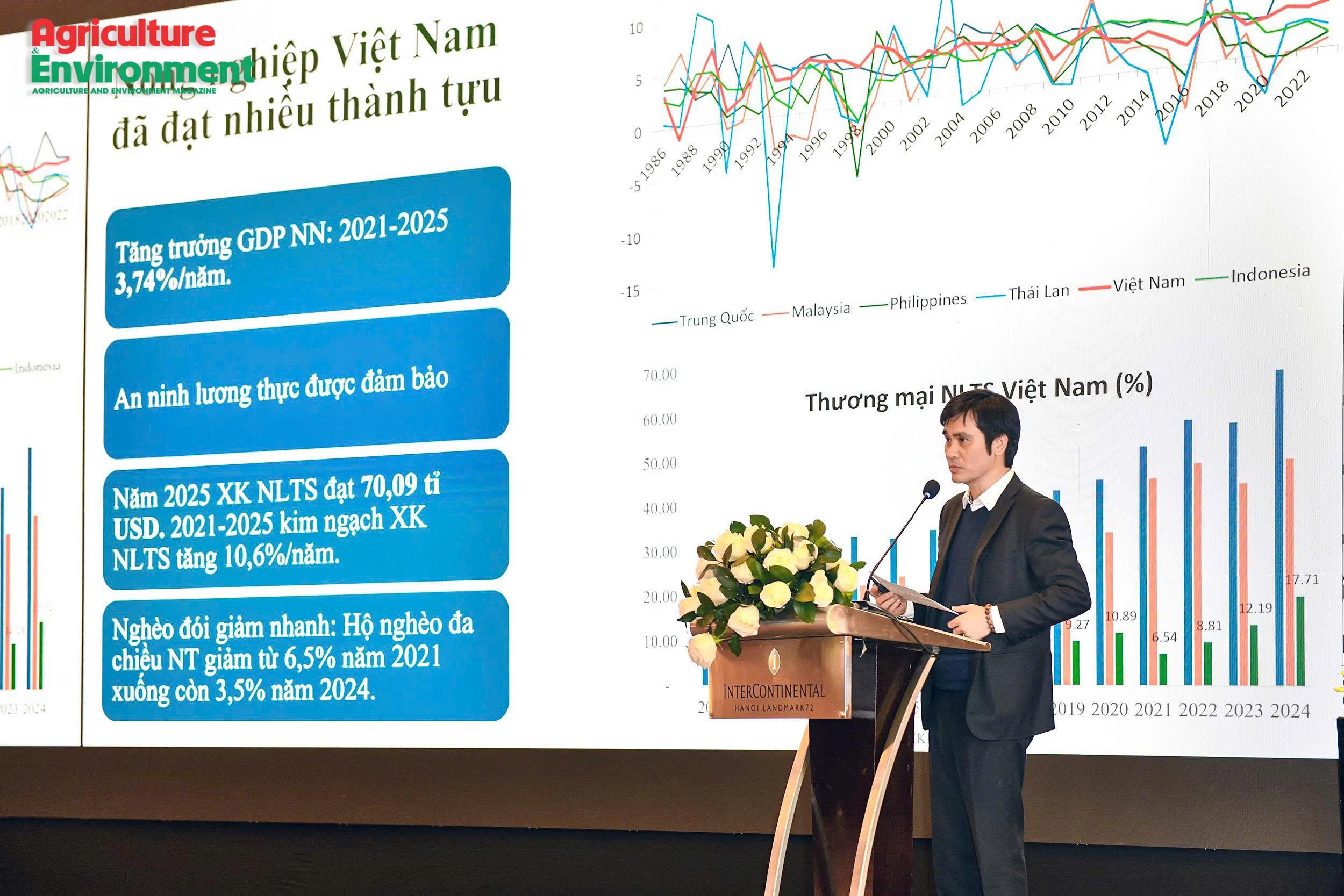
Providing an overview of Viet Nam’s policy landscape for food system transformation, Dr. Tran Cong Thang said agriculture has played a stabilizing role in ensuring food security and economic resilience amid global volatility, but structural weaknesses remain.
Production remains fragmented and small-scale, value chain linkages are weak, and traceability and quality control are limited. At the same time, challenges related to nutrition, food safety, resource degradation and greenhouse gas emissions are becoming more pronounced, increasing risks for domestic production and international market access.
Dr. Tran Cong Thang said food system transformation cannot rely solely on technical solutions or pilot models, but requires a coherent, long-term institutional and policy framework. Recent strategies and programs related to green agriculture, climate adaptation, circular economy and emission reduction have laid a legal foundation, but implementation remains the main challenge. Policy execution, coordination and oversight must be strengthened through a holistic approach linking production, processing, distribution and consumption, as well as coordination across sectors and administrative levels, he said.
As Viet Nam advances administrative restructuring and decentralization, demands for accountability, transparency and policy effectiveness are increasing. This presents opportunities to streamline and strengthen agricultural and environmental governance.
Institutional reform, Dr. Tran Cong Thang said, must place farmers, cooperatives and businesses at the center of the transformation process, creating incentives for green production, quality improvement, emission reduction and deeper integration into value chains. Food system transformation, he emphasized, is a long-term process requiring consistent policy direction, flexible instruments and close cooperation among the State, private sector and development partners.
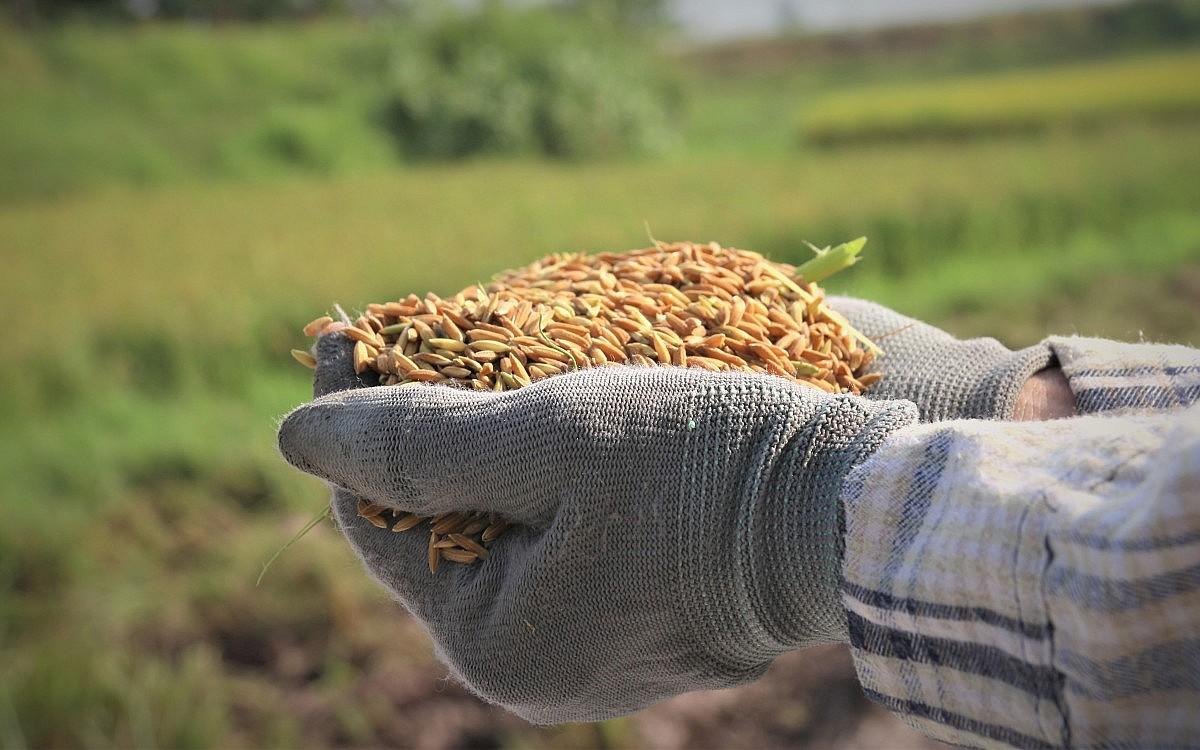
Policies achieve lasting impact only when they translate into changes in production practices. This is particularly true of efforts to reduce food loss and waste: setting reduction targets or encouraging the productive use of agricultural by-products will have limited effect unless producers can see clear economic returns and businesses have access to sufficiently stable markets.

Viet Nam has gradually established a policy foundation for reducing food loss and waste (FLW), increasingly linking the issue to sustainable development, the circular economy, and food system transformation. The challenge in the next phase is therefore not to start from scratch, but to connect existing policies into a coherent, data-driven governance framework that prioritizes prevention and is supported by sufficiently strong coordination mechanisms to drive action at the national level.
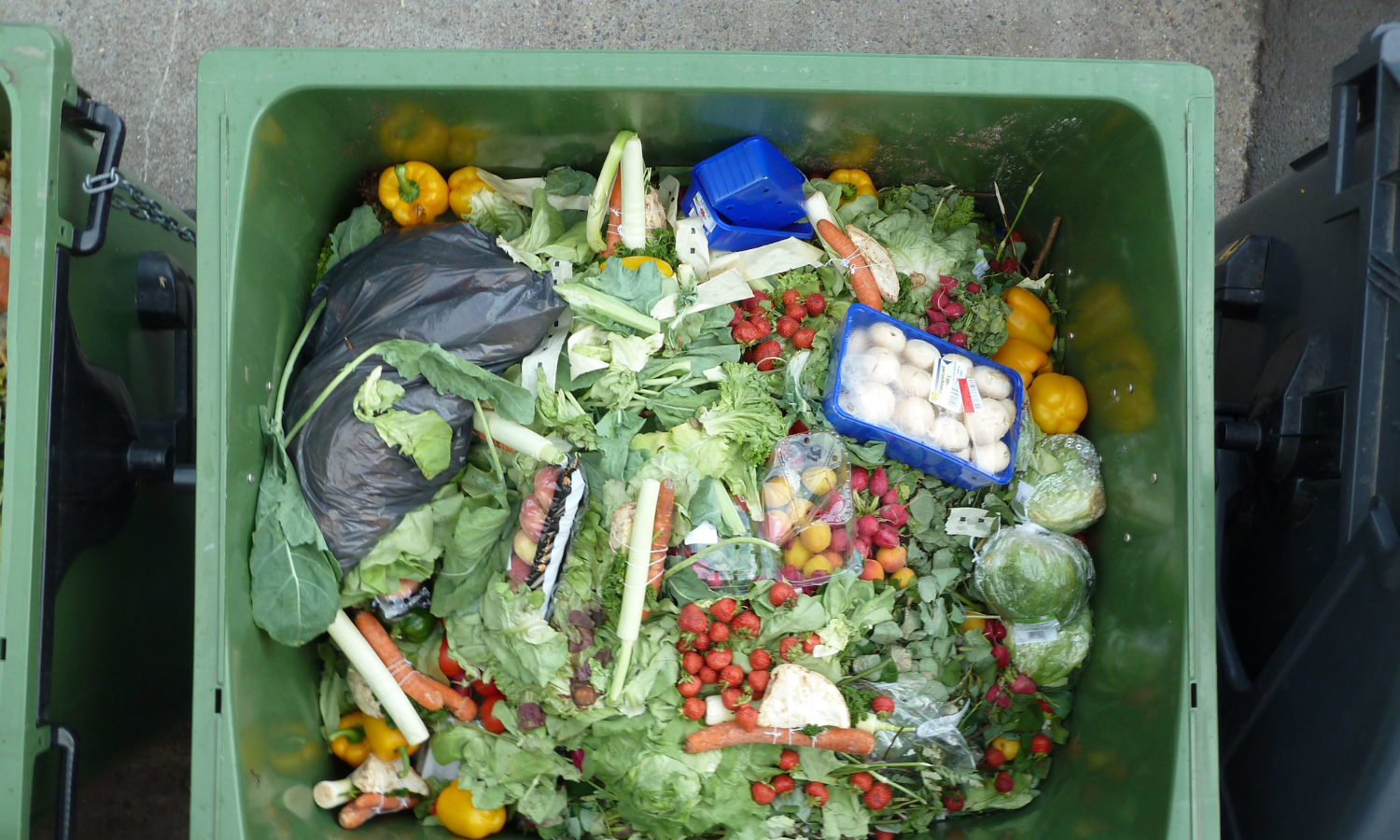
International experience suggests that food loss and waste (FLW) is not a problem that can be resolved through a single policy measure. Effective action requires institutions capable of coordinating stakeholders, data that can identify where losses occur, regulations that do not create unnecessary barriers, and mechanisms that allow businesses and communities to participate.
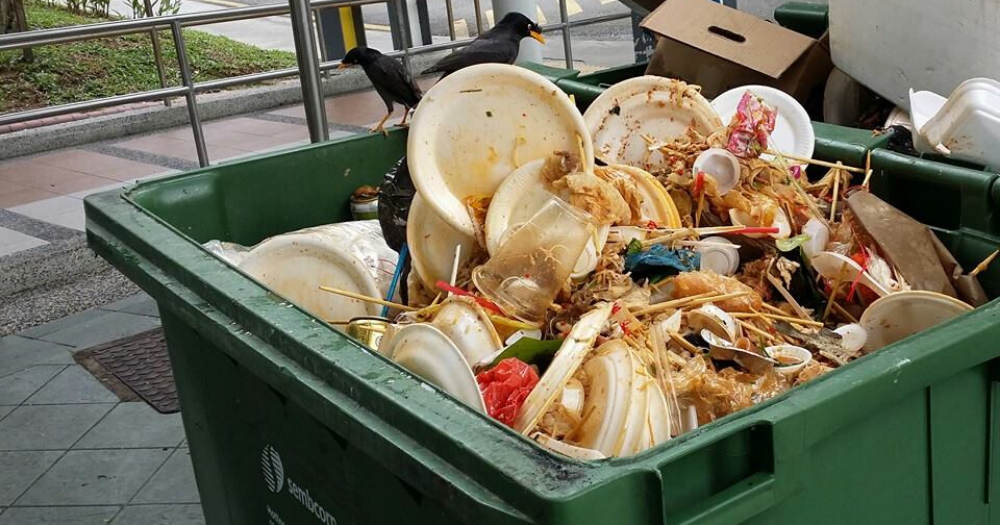
Food loss and waste are emerging as major bottlenecks in global agrifood systems, with large quantities of food lost or discarded despite the land, water, energy and labor invested in producing it. In Viet Nam, the issue not only diminishes the value of agricultural products but also generates substantial economic, environmental and social costs. Research on selected value chains shows that food losses occur throughout the chain, from production and harvesting to transportation, post-harvest handling and storage, while food waste continues to arise at the retail, food service and household levels. A clear understanding of the current situation is essential for Viet Nam to further strengthen its policies to reduce food loss, curb food waste and improve the efficiency of the agrifood system as a whole.

Resolution No. 36/2026/NQ-CP and new regulations on growing-area codes (GACs) and packing-facility codes (PFCs) are prompting changes in how these codes are managed, registered, and maintained. At a training session on implementation of the new regulations held on August 20, government officials and experts focused on procedural changes, requirements for digitizing records, and the supporting role of agricultural extension services at the local level.