



 After one year of implementing Resolution No. 57-NQ/TW of the Politburo on breakthroughs in science, technology, innovation, and national digital transformation, the Ministry of Agriculture and Environment has completed a substantial volume of tasks under conditions of high requirements for progress, quality, and nationwide scope. The year 2025 was identified as a start-up phase, focusing on institutional refinement, foundational development, and the coordinated implementation of key tasks. The initial results—particularly in digital transformation, administrative procedure reform, and the construction of the national land database—not only demonstrate the sector’s organizational capacity but also lay an essential foundation for the transition toward generating tangible value from 2026 onward.

Resolution No. 57-NQ/TW and the need to transform the agriculture and environment development model
Resolution No. 57-NQ/TW of the Politburo on breakthroughs in science, technology, innovation, and national digital transformation was issued in a context where Viet Nam faces an urgent need to renew its growth model, enhance labor productivity, and strengthen the competitiveness of the national economy. More than a sectoral policy, the Resolution establishes science and technology, innovation, and digital transformation as central drivers of medium- and long-term national development, while also requiring a fundamental transformation in governance and management practices at both central and local levels.
For the agriculture and environment sector, Resolution No. 57-NQ/TW carries particular significance. This sector manages vast natural resources across the entire country and is directly linked to food security, the livelihoods of tens of millions of people, environmental protection, and climate change adaptation. At the same time, it is a sector with a high degree of dependence on data, science, and technology—from land and water resources management, meteorology and hydrological services, and environmental monitoring, to agricultural production, processing, and market connectivity.
In this context, implementing Resolution No. 57-NQ/TW in agriculture and environment cannot be narrowly understood as promoting isolated technological applications or deploying stand-alone digital platforms. The core requirement of the Resolution is a transformation of the governance and development model itself: shifting from experience-based, fragmented, and manual management toward data-driven, science- and technology-based governance, with the capacity for measurement, monitoring, and real-time decision-making.
From the outset, the Party Committee and leadership of the Ministry of Agriculture and Environment identified Resolution No. 57-NQ/TW as a central and overarching political task for the entire sector. The Resolution’s objectives were translated into concrete action programs, plans, schemes, strategies, and task portfolios, each linked to clearly assigned responsibilities for specialized units. This approach was intended to ensure that the Resolution would not remain at the level of policy orientation, but would be operationalized through specific tasks with timelines, outputs, and mechanisms for inspection and supervision throughout implementation.
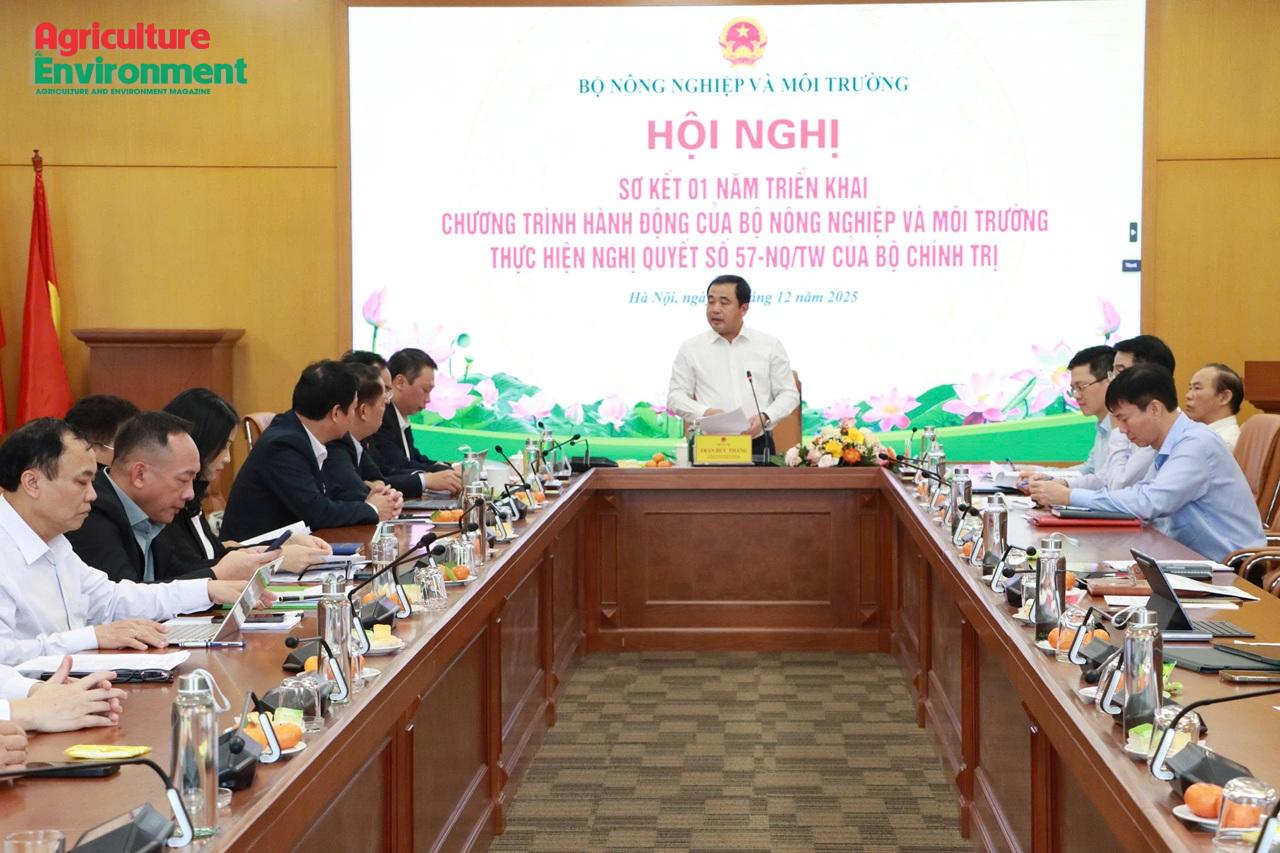
At the conference reviewing one year of implementation of the Action Program for Resolution No. 57-NQ/TW, held on December 23, 2025, Minister Tran Duc Thang emphasized a consistent guiding principle: 2025 was defined as a start-up year, prioritizing institutional refinement, foundation-building, and the synchronized implementation of assigned tasks. This phase was considered essential preparation so that, from 2026 onward, policies and programs could move into a deeper phase, generating tangible value for the economy and for citizens.
This phased approach reflects a clear recognition that for a resolution of such broad scope and high ambition as Resolution No. 57-NQ/TW, success cannot be achieved in a short timeframe. Prioritizing foundation-building in the first year is a necessary condition to ensure sustainability, avoid fragmented or superficial implementation, and adequately prepare institutional arrangements, organizational capacity, and resources for the subsequent acceleration phase.
Completion of 188 assigned tasks: Organizational capacity put to the test
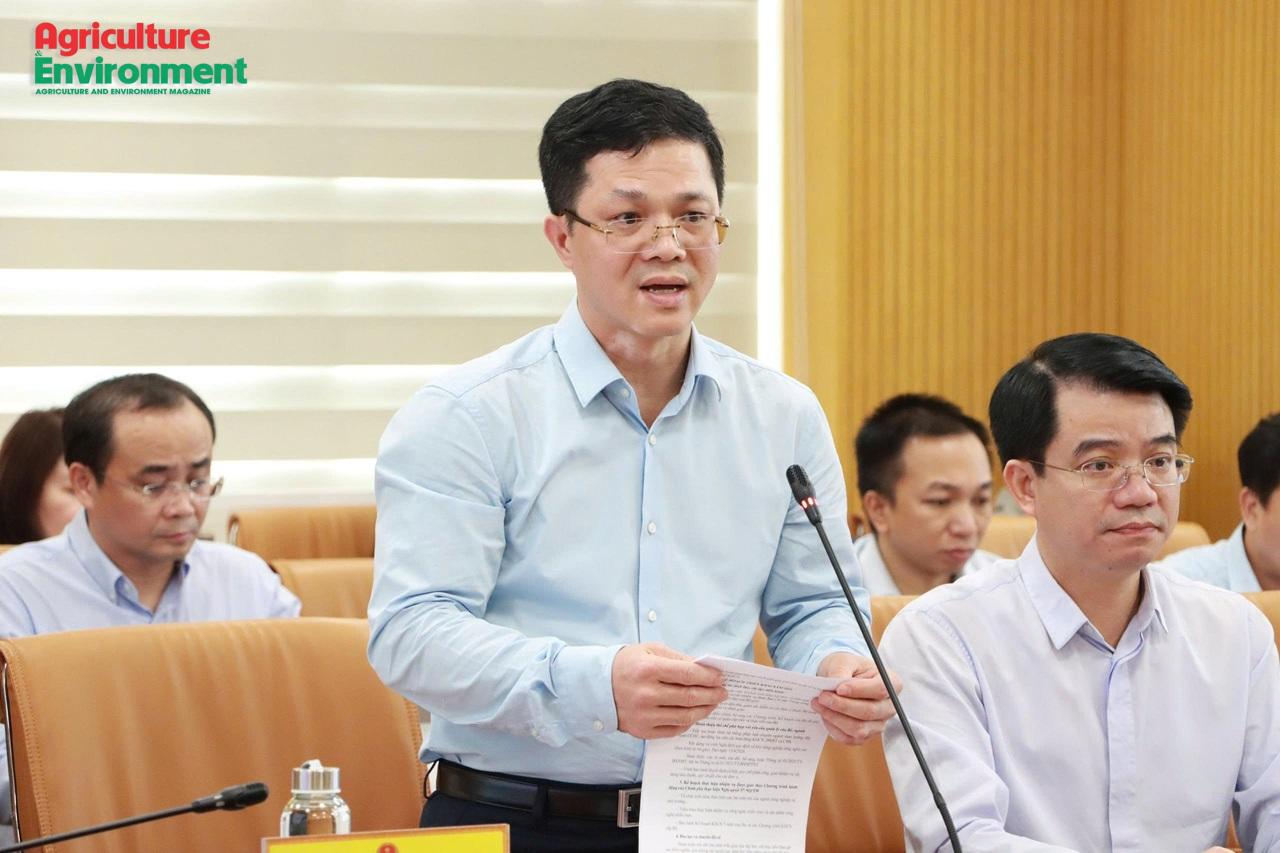
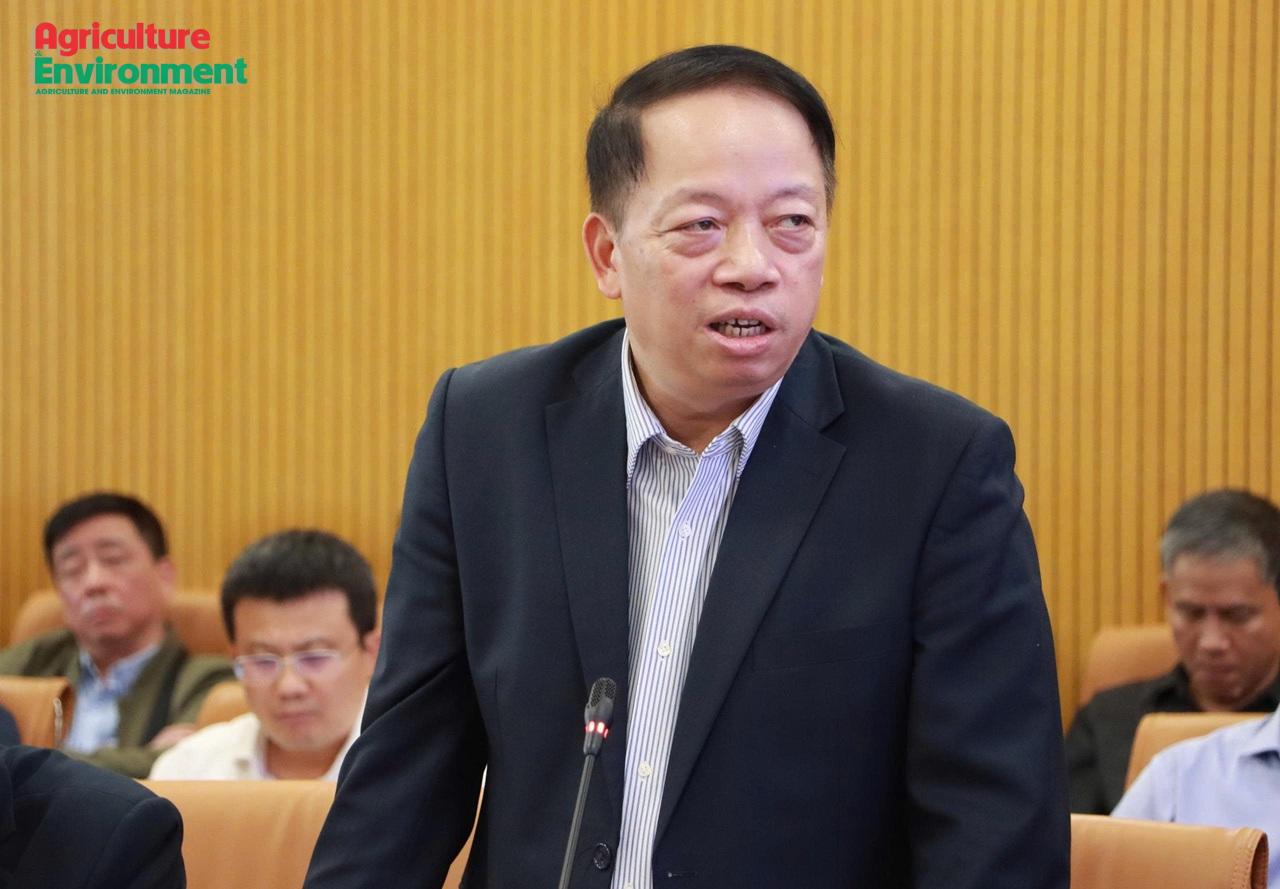
One of the central issues discussed at the review conference was the Ministry’s performance in implementing tasks assigned under Resolution No. 57-NQ/TW and related programs and plans in 2025. Reporting at the conference, Mr. Nguyen Van Long, Director of the Department of Science and Technology, highlighted that as of December 23, 2025, the Ministry of Agriculture and Environment had been assigned a total of 188 tasks. These included tasks under the Action Program for Resolution No. 57-NQ/TW, Plan No. 02-KH/BCĐTW of the Central Steering Committee, as well as related government resolutions and conclusions.
Of these 188 tasks, the Ministry completed 151, with no tasks overdue or behind schedule. The remaining 37 tasks were regular, ongoing assignments with implementation timelines extending into subsequent years. This outcome reflects a proactive and disciplined approach to implementation across the sector, particularly given the large workload, stringent requirements for progress and quality, and the concentration of many tasks in the final months of the year.
With regard to Plan No. 02-KH/BCĐTW, the Ministry was assigned 14 tasks. By the time of the review, 11 had been completed, while the remaining three were being implemented according to schedule, with no overdue items. This performance provided an important basis for ensuring coherence and consistency in implementing the overarching objectives of Resolution No. 57-NQ/TW under the direction of the Central Steering Committee.
Earlier, at a working session held on December 9, 2025 in Hanoi between the Intersectoral Working Group of the Central Steering Committee on science and technology development, innovation, and digital transformation and the Ministry of Agriculture and Environment, Mr. Nguyen Huy Dung—Standing Member of the Central Steering Committee and Head of its Intersectoral Working Group—assessed the Ministry’s progress in implementing tasks under Resolution No. 57-NQ/TW. He acknowledged the Ministry’s efforts in completing a large volume of assigned tasks largely on schedule and noted that implementation had not encountered major systemic obstacles.
At the same time, Mr. Nguyen Huy Dung emphasized the Steering Committee’s consistent requirement that implementation of Resolution No. 57-NQ/TW must not focus solely on meeting deadlines, but must place particular emphasis on quality and final outcomes. Completed tasks, he stressed, should translate into tangible improvements in governance and deliver concrete benefits for citizens, businesses, and sectoral operations, avoiding situations where tasks are formally completed but yield limited substantive impact.
From a governance and management perspective, the completion of 188 tasks in the first year of implementing Resolution No. 57-NQ/TW clearly demonstrates the Ministry’s organizational capacity in executing a major policy initiative with broad scope and high expectations. The decisive leadership of the Ministry, particularly its close monitoring of task progress and clear assignment of responsibilities to specialized units, contributed to strengthened administrative discipline and a shift in implementation practices.
Importantly, the results achieved in 2025 are not significant merely in terms of the number of tasks completed. They constitute a critical foundation for the next phase. Building on the organizational capacity established during this initial year, the requirements for the 2026–2030 period will be more demanding, as tasks under Resolution No. 57-NQ/TW are expected to be assessed based on their substantive value, measurability, and contribution to socio-economic development.
Science, technology, and innovation: Building institutional capacity before breakthroughs
Alongside the large volume of tasks implemented on schedule, another core pillar of Resolution No. 57-NQ/TW in the agriculture and environment sector is the development of science and technology and innovation. Unlike digital transformation—where short-term, visible outcomes can be achieved through systems, platforms, and data—science and technology in agriculture and environment are inherently medium- and long-term endeavors, requiring sustained investment, clear sequencing, and strategic vision.
Reports presented at the review conference indicate that in 2025, the Ministry of Agriculture and Environment prioritized reviewing, formulating, and refining strategies, schemes, and programs related to science and technology and innovation across its management domains. Numerous legal documents were reviewed and amended to meet the requirements of new governance models under Resolution No. 57-NQ/TW, thereby creating a legal framework for the application of science and technology and the promotion of innovation in practice.
In parallel, ministry-level science and technology tasks continued to be implemented according to schedule, closely aligned with the sector’s practical needs. Priority research areas included crop and livestock varieties, land management, water resources, environmental protection, disaster prevention, and climate change adaptation—foundational fields that directly affect agricultural productivity, production quality, and the effectiveness of resource management and environmental protection.
However, the Ministry’s leadership also candidly acknowledged that in the initial phase of implementing Resolution No. 57-NQ/TW, it would not be realistic to expect immediate breakthroughs in economic value generated by science and technology. The primary focus in 2025 was institutional consolidation, strategic orientation, and restructuring of the science and technology task system to ensure alignment with the overarching objectives of the Resolution. This was regarded as a necessary preparatory step so that, from 2026 onward, science and technology could play a more visible role in generating added value for the sector.
This approach is consistent with the assessment of the Central Steering Committee on science and technology development, innovation, and digital transformation, which identifies science and technology as a foundational pillar requiring time to accumulate knowledge, data, and human resources, while innovation and digital transformation can deliver faster impacts by translating research outcomes into practical production and management applications.
By embedding science and technology within an integrated framework alongside innovation and digital transformation from the outset, the agriculture and environment sector has demonstrated a shift in implementation mindset under Resolution No. 57-NQ/TW. Rather than treating these domains in isolation, science and technology tasks are increasingly oriented toward practical demand, digital data, and application potential—laying the groundwork for the development of measurable development models in the next phase.
Digital transformation and the national land database: A defining achievement of 2025
Within the overall picture of one year of implementing Resolution No. 57-NQ/TW, digital transformation stands out as the area where the agriculture and environment sector recorded the most visible progress. As the organizational tool linking science and technology, innovation, and digital transformation, digital transformation tasks in 2025 focused on platform consolidation, administrative procedure reform, and the construction of core databases.
According to the Department of Digital Transformation, in 2025 the Ministry of Agriculture and Environment issued eight implementation plans, two strategies, and one digital architecture framework, establishing a legal and strategic foundation for sector-wide digital transformation. On this basis, administrative procedure reform and the provision of online public services were further promoted in a substantive manner, placing citizens and businesses at the center.
Specifically, the Ministry provided 252 administrative procedures through its administrative procedure information system, integrated with the National Public Service Portal. Of these, 89 were fully online public services—covering 100 percent of eligible procedures—and 163 were partially online services. This result reflects sustained efforts to standardize processes, digitize records, and improve service quality, thereby reducing time and cost burdens for citizens and enterprises.
In implementing the Government’s Project 06, the Ministry completed four of the five required essential public services. For the remaining service, the Ministry formally proposed its removal from the list under Decision No. 206/QĐ-TTg, ensuring feasibility and alignment with actual management conditions. This outcome demonstrates a proactive and flexible approach to intersectoral task implementation, avoiding formality and numerical compliance.
The most significant digital transformation achievement of 2025 was the construction and completion of the national land database. Under conditions of tight timelines, exceptionally large workloads, nationwide implementation, and adverse impacts from natural disasters in multiple localities, the Ministry completed the national land database and launched the 90-day campaign to enrich and clean land data.
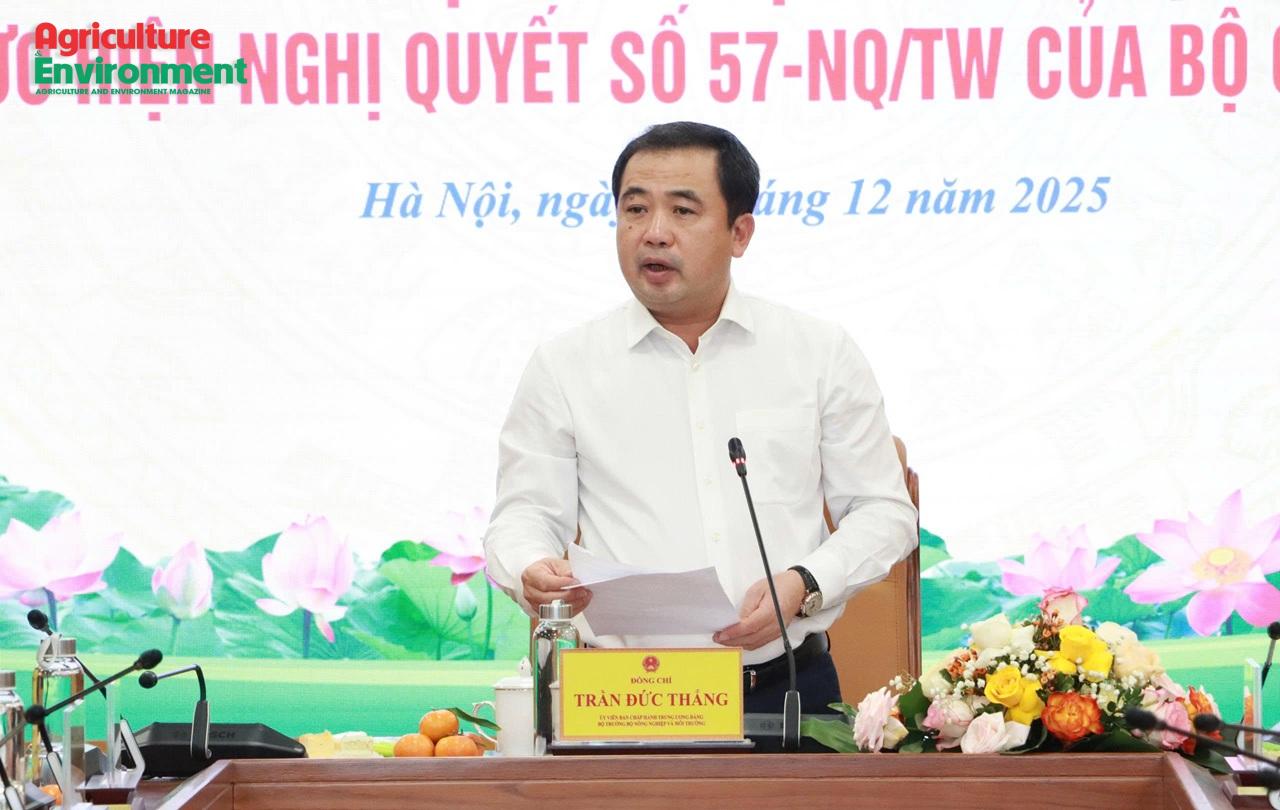
Minister Tran Duc Thang assessed the results of this campaign as a major step forward in data quality. After 90 days, 61.72 million land parcels nationwide were reviewed, updated, and standardized. Of these, more than 24.37 million parcels met the criteria of being “accurate, complete, clean, and live,” making them suitable for real-time operation and ready for connection and sharing with other national databases. This figure represents a substantial improvement in both data quality and usability compared with earlier phases.
In parallel, data synchronization efforts were pursued intensively. All 34 provinces and centrally governed cities synchronized their land data with the national database, covering more than 61.15 million land parcels—approximately 98 percent of parcels in local databases. Among these, over 24.4 million records contained all three core data components and were ready for exploitation and data sharing.
In areas where land databases had not yet been fully completed, the campaign focused on collecting and digitizing residential land and housing data through land-use right certificates. Of the more than 7.6 million certificates requiring collection, local authorities gathered over 6.2 million, exceeding 81 percent. This result significantly narrowed data gaps and enhanced the comprehensiveness of the national land database.
The Ministry of Agriculture and Environment has defined the national land database not merely as a technical product, but as a core foundation of modern national governance—serving policy formulation, real estate market management, investment attraction, and socio-economic development. Establishing “live, clean, unified, and shared” data is regarded as a decisive step toward transitioning the sector to a data-driven governance model, in line with the spirit of Resolution No. 57-NQ/TW.
Starting July 1, 2025, 34 provinces and centrally governed cities across Vietnam officially began operating under a new two-tier local government model, comprising only provincial and communal levels—effectively dissolving the district-level government structure. This historic shift marks a major milestone in Vietnam’s ongoing administrative reform agenda, aimed at streamlining governance, improving operational efficiency, and enhancing public service delivery. As one of the key ministries deeply involved in agricultural development and environmental protection, the Ministry of Agriculture and Environment (MAE) has taken a proactive approach in adapting to the new model. It has reviewed and revised policy frameworks, delegated appropriate authority, and prioritized capacity-building for grassroots-level officials. This proactive stance not only ensures continuity in sectoral governance but also lays the foundation for advancing digital transformation, green agriculture, circular econom
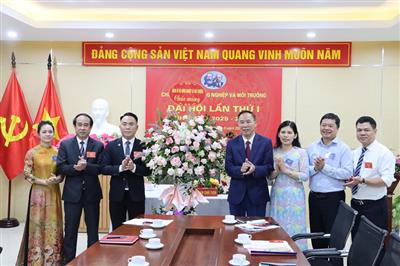
On May 26, 2025, the Party Cell of the Agriculture and Environment Magazine solemnly convened its First Congress for the 2025-2030 term. The event was held in the sacred and heroic atmosphere of historic May, as the nation commemorated the 50th anniversary of national reunification (April 30, 1975 - 2025), along with the President Ho Chi Minh's 135th birthday (May 19, 1890 - 2025). The Congress carried special political significance, marking a milestone in the Party Cell’s growth and development as Vietnam enters a new era of digital transformation, while the agriculture and environment sectors face increasing demands for reform and international integration.
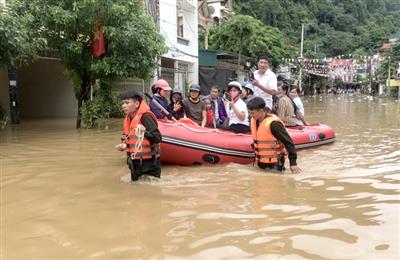
Prime Minister Pham Minh Chinh has issued a directive for swift and comprehensive action to mitigate the aftermath of severe flooding in northern and midland regions of Vietnam. From June 8-10, heavy rainfall led to extensive flooding in the provinces of Quang Ninh, Hai Phong and Ha Giang, causing significant disruption and damage.
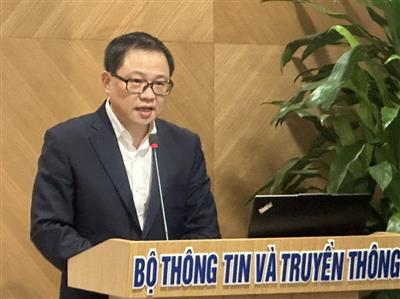
On April 25th, the Ministry of Information and Communications (MIC) hosted a training workshop on media coverage of integration, UNESCO, and ASEAN in 2024 for journalists from various media agencies in Hanoi.

By 2030, Vietnam is planning to develop new Marine Conservation Areas (MCAs) and restore marine ecosystems, increasing the area of marine and coastal conservation zones to approximately 6% of Vietnam's coastal area. This plan, initiated by the Ministry of Natural Resources and Environment, is currently undergoing feedback and input from various coastal regions and entities.