




 After one year of implementing Resolution No. 57-NQ/TW of the Politburo, the Ministry of Agriculture and Environment has completed a large volume of tasks related to science and technology, innovation, and digital transformation, with no overdue assignments. At a review conference held on December 23, participants assessed initial results while highlighting key challenges and priorities for the next phase, as the focus shifts from task completion to generating tangible impacts for governance, production, and livelihoods.
A demanding start under a far-reaching Resolution
Resolution No. 57-NQ/TW sets out comprehensive requirements for reforming science and technology, innovation, and digital transformation—not only in research, but also in implementation mechanisms and state management. For the agriculture and environment sector, the Resolution has a particularly wide scope of impact, directly affecting multiple management domains and requiring close coordination among units within the Ministry, as well as between central and local authorities.
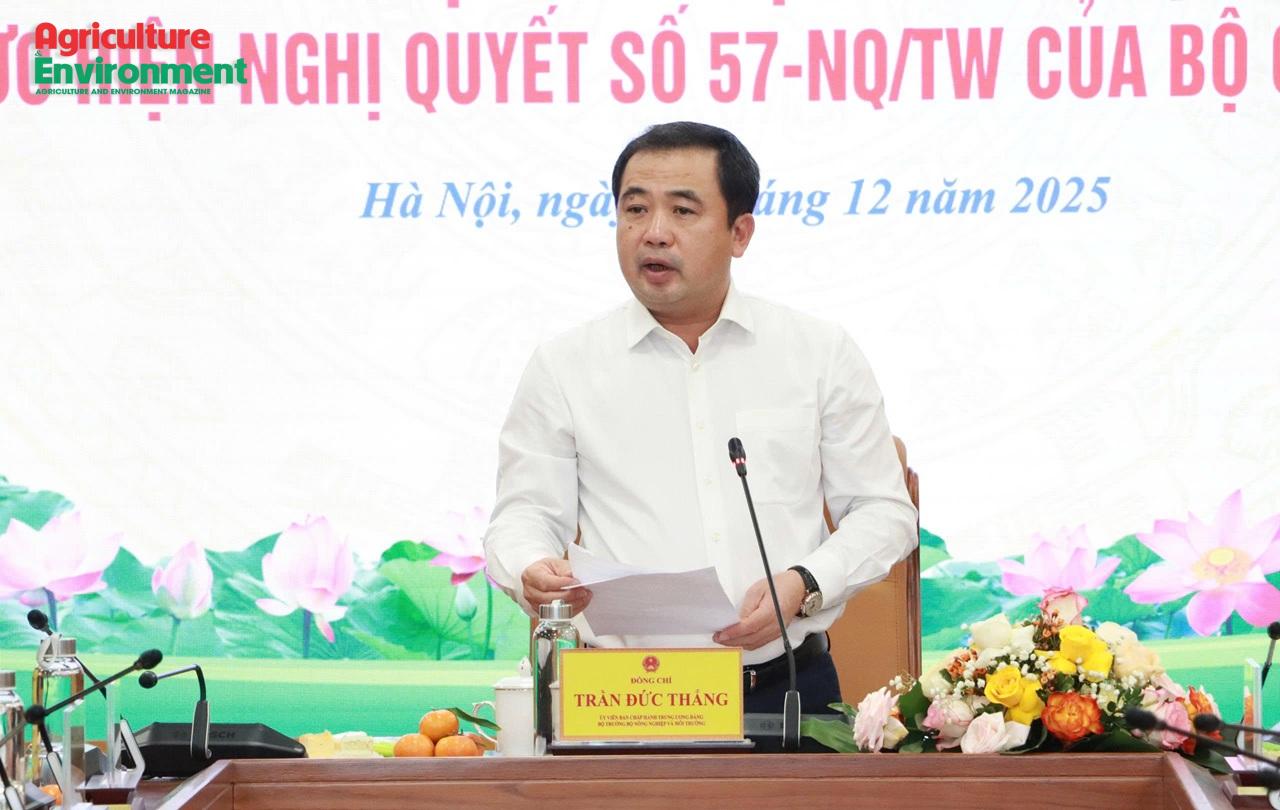
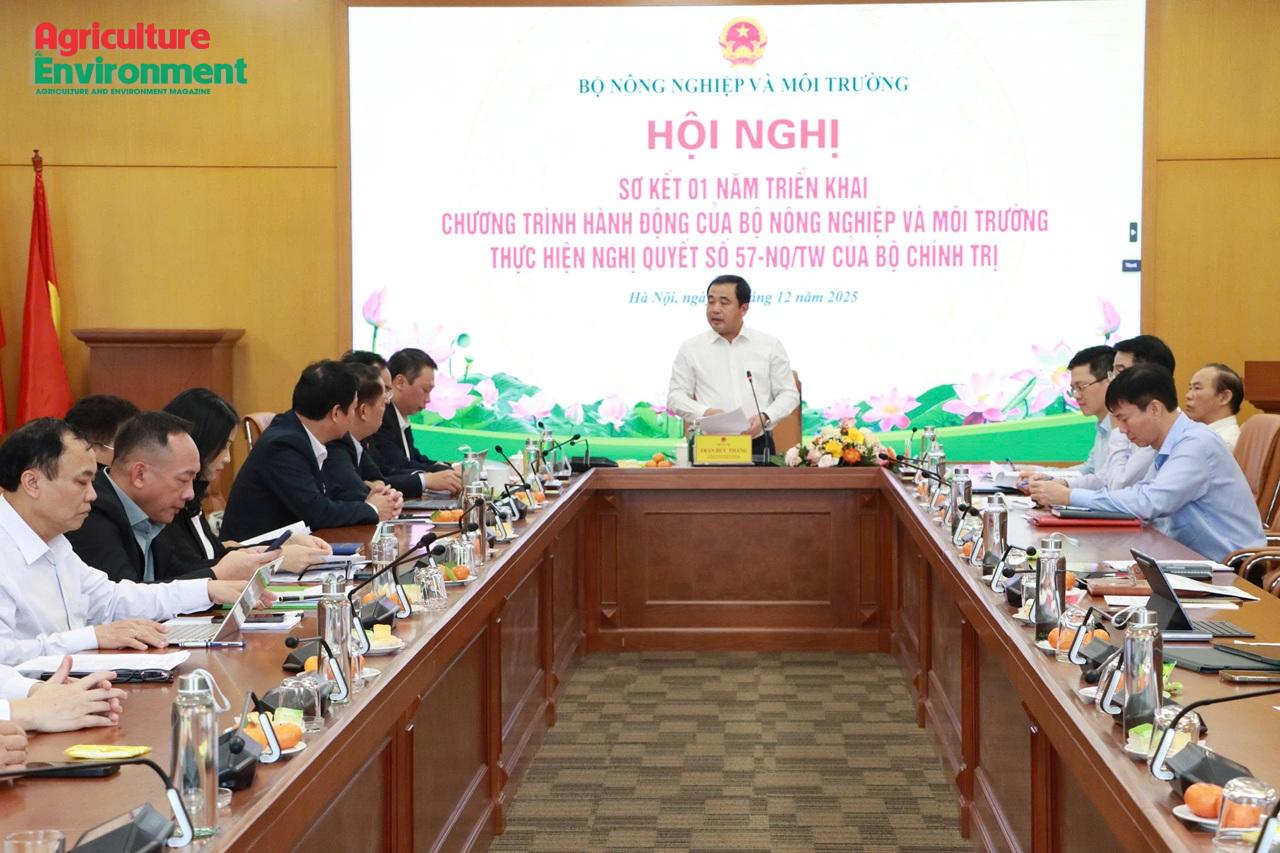
Against this backdrop, the one-year review conference on the implementation of the Action Program for Resolution No. 57, convened by the Ministry of Agriculture and Environment on the afternoon of December 23, marked an important milestone. It provided an opportunity to look back on the initial phase while clearly identifying priorities for the road ahead. The conference brought together representatives of the Central Steering Committee, universities and research institutes under the Ministry, and specialized agencies—reflecting the cross-sectoral nature and complexity of the tasks involved.
Speaking at the conference, Minister Tran Duc Thang stressed that the overarching requirement throughout the implementation of Resolution No. 57 is to ensure that science and technology, innovation, and digital transformation are applied in a substantive manner, rather than stopping at the issuance of plans or the completion of formalistic tasks. According to the Minister, 2025 has been designated as a start-up year, with a focus on refining institutions, building foundational systems, and preparing the necessary conditions for deeper implementation in subsequent stages.
This view was echoed by Mr. Nguyen Huy Dung, Member of the Central Steering Committee for Science and Technology Development, Innovation and Digital Transformation, who clarified that 2025 should be seen primarily as a foundational phase aimed at producing initial results. From 2026 onward—especially during the 2026–2030 period—policies and programs are expected to penetrate the real economy, generating tangible and measurable value through business development and improved public benefits.
Participants at the conference agreed that the greatest pressure in the first year of implementing Resolution No. 57 stemmed not only from the sheer volume of work, but also from the need to change established approaches to organization and execution. This initial phase thus served as a critical test of the sector’s capacity for governance, coordination, and task follow-up.
Meeting deadlines is necessary, but not the final benchmark
Reporting at the conference, Mr. Nguyen Van Long, Director of the Department of Science and Technology, emphasized that as of December 23, 2025, the Ministry of Agriculture and Environment had been assigned a total of 188 tasks under the framework of Resolution No. 57, including the development of databases on poor and near-poor households. Of these, 151 tasks had been completed, with no tasks behind schedule or overdue. The remaining 37 tasks are ongoing, routine assignments to be implemented according to plans in subsequent years.
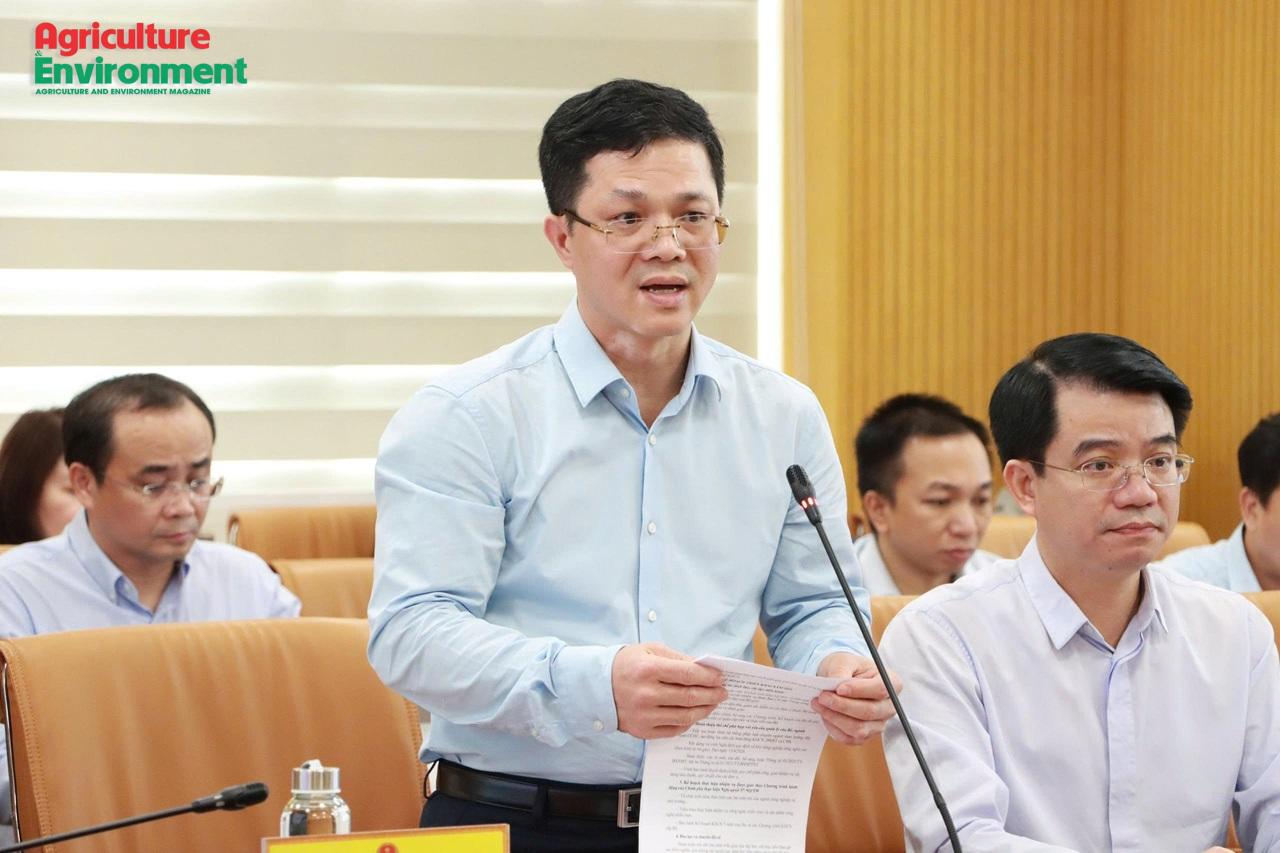
Regarding tasks under Plan No. 02-KH/BCĐTW of the Central Steering Committee, the Ministry was assigned 14 tasks, of which 11 have been completed, while the remaining three are being implemented on schedule. Conference assessments noted that these results demonstrate the Ministry’s proactive and serious approach to direction and management, particularly given the heavy workload and the concentration of tasks toward the end of the year.
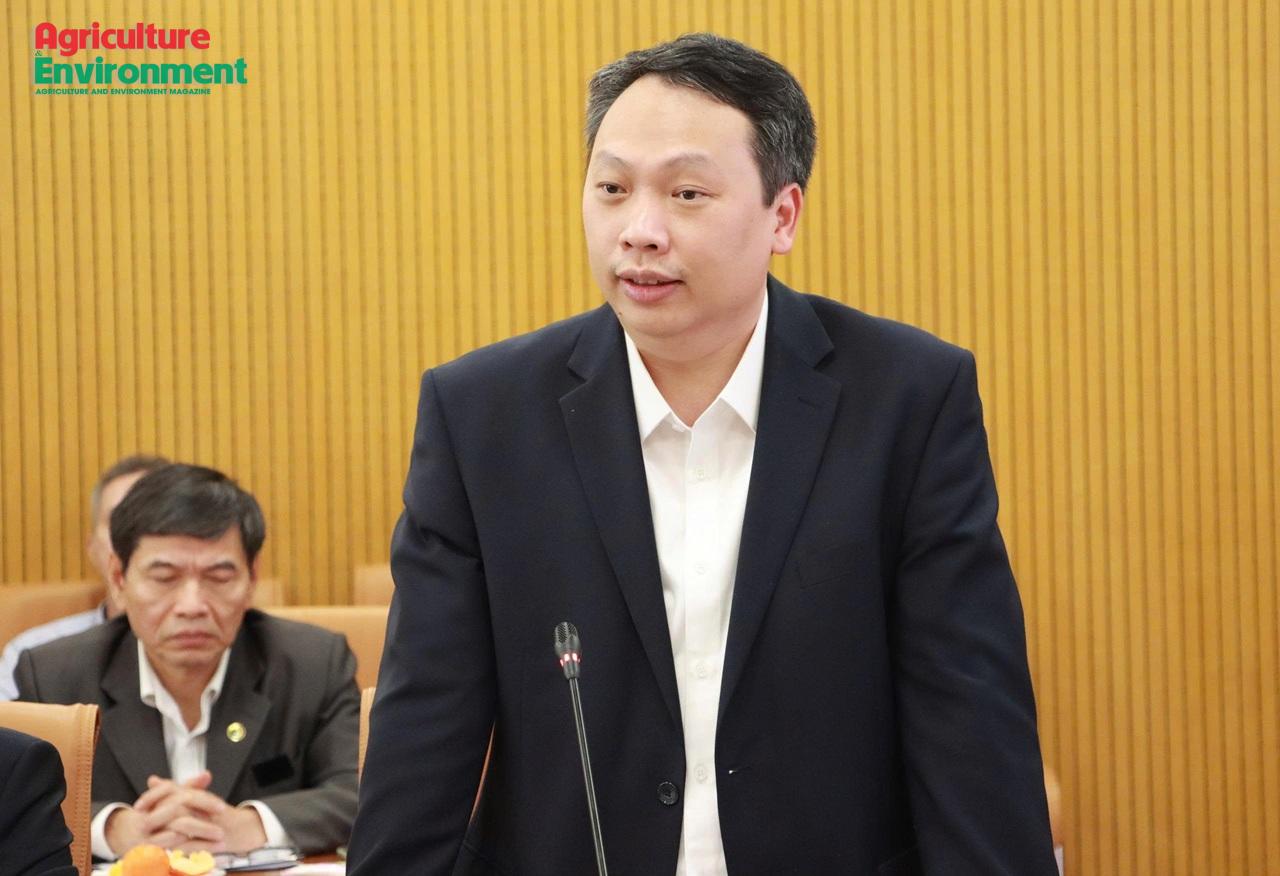
From the perspective of the Central Steering Committee, Mr. Nguyen Huy Dung commended the sector’s efforts in completing a large volume of tasks in 2025, largely on schedule and in many cases ahead of deadlines. He noted that the Ministry of Agriculture and Environment is among the leading ministries in terms of implementation progress under Resolution No. 57, especially considering the high level of complexity involved in many tasks within a limited timeframe.
At the same time, he candidly acknowledged that progress alone is only an initial criterion. In his view, the results of implementing Resolution No. 57 have yet to fully meet the high expectations set out, particularly in terms of quality and end outcomes. This underscores the need for the next phase to shift from a focus on “task completion” to “value creation,” where the effectiveness of science and technology, innovation, and digital transformation is clearly reflected in production, business activities, and governance practices.
From the Ministry’s standpoint, leadership has drawn a clear distinction between completing assigned tasks and generating substantive impact. While completing 188 tasks in the start-up year is regarded as an important foundation, it is not the ultimate benchmark. Tasks under Resolution No. 57 only become meaningful when they are translated into concrete outcomes that directly enhance state management efficiency, sectoral growth, and the quality of life for citizens.
Digital transformation begins to reshape sector governance
One of the most notable developments in the first year of implementing Resolution No. 57 in the agriculture and environment sector is that digital transformation is no longer treated merely as a supporting task, but increasingly as a tool for restructuring state management operations. Rather than deploying fragmented initiatives, the Ministry has focused on establishing a legal framework and overarching direction, laying the groundwork for long-term digital transformation across the sector.
According to reports presented at the conference, in the area of national digital transformation, the Ministry has issued eight action plans, two strategies, and one Digital Architecture Framework, gradually forming a unified orientation system for agencies throughout the sector. In parallel, administrative procedure reform and the provision of online public services have continued to be strengthened, serving as a direct measure of digital transformation effectiveness.
Specifically, the Ministry has made available 252 administrative procedures through its Administrative Procedure Resolution Information System, integrated with the National Public Service Portal. Of these, 89 are fully online public services—covering 100% of eligible procedures—while 163 are partially online services. In addition, the Ministry has completed the provision of four out of five essential public services under Project 06/CP. For the remaining service, the Ministry has formally proposed its removal from the list in accordance with Decision No. 206/QĐ-TTg.
From a management perspective, Minister Tran Duc Thang emphasized that digital transformation should not be limited to placing more services online, but must focus on high-frequency services that have a direct impact on citizens and businesses. Accordingly, he instructed the Digital Transformation Department to prioritize the effective delivery of approximately 25 of the most frequently used online public services, rather than spreading resources across hundreds of services. He also called for training programs for local authorities ahead of the rollout of a unified system starting January 1, 2026, to prevent disruptions to sector-wide operations.
At the macro-policy level, Mr. Nguyen Huy Dung noted that digital transformation is a key tool for implementing Resolution No. 57. However, its effectiveness depends on close integration with the other two pillars: science and technology, and innovation. Therefore, the next phase requires a coordinated, focused approach to digital transformation—avoiding formality and an excessive emphasis on quantity.
Data and science & technology: Foundations in place, utilization still ahead
If digital transformation is considered the implementation tool, then data constitute the core foundation determining the quality and effectiveness of the entire process. In 2025, the most significant achievement of the agriculture and environment sector has been the development and enrichment of national and sectoral databases, particularly the national land database.
Reports at the conference indicated that the Ministry completed the construction of the national land database and launched a 90-day campaign to clean and enrich land data under extremely tight timelines, with an exceptionally large workload, nationwide coverage, and adverse impacts from natural disasters and flooding in several localities. After 90 days, a total of 61.72 million land parcels were reviewed, updated, and standardized; of these, more than 24.37 million parcels met the criteria of being “accurate, complete, clean, and live,” making them eligible for real-time operation, connection, and data sharing with other national databases.
For localities that have yet to fully establish land databases, the campaign focused on collecting and digitizing data on residential land and housing through land use right certificates. Of more than 7.6 million certificates requiring collection, over 6.2 million were gathered, representing more than 81%. At the same time, data synchronization was rigorously implemented as a mandatory requirement to ensure that data remain “live, clean, unified, and shared.” As a result, all 34 provinces and centrally governed cities have synchronized land data with the national database at the central level, covering more than 61.15 million parcels—approximately 98% of all parcels in local databases.
Based on these outcomes, Mr. Nguyen Huy Dung assessed that the land database has currently met around seven out of nine national criteria, while the agricultural database meets only two out of nine. This is both a notable achievement and a major challenge for the next phase. He noted that by the end of the year, it would be entirely feasible to add three to four more criteria for the agricultural database—raising its level of completion to at least five or six out of nine—provided there is strong leadership and an appropriate implementation approach.
From a management standpoint, Minister Tran Duc Thang affirmed that he would instruct specialized agencies to prioritize these tasks in the near future. However, many conference participants emphasized that the main challenge lies not only in technical refinement or meeting additional criteria, but in the effective utilization of data. Data only generate real value when they are actively used to support governance, scientific research, innovation, and production and business activities—rather than remaining as isolated information repositories.
Overall, 2025 has laid an important foundation in terms of data and science and technology infrastructure for the agriculture and environment sector. Nevertheless, the challenge of exploiting, connecting, and translating these foundations into concrete value remains substantial, requiring new approaches and stronger determination in the next phase.
From task completion to value creation: The challenge for 2026–2030
Looking back on one year of implementing Resolution No. 57, many conference participants agreed that the agriculture and environment sector has moved beyond the “organizational start-up” phase, having established initial institutional, data, and infrastructure foundations for science and technology, innovation, and digital transformation. However, the road ahead demands more: not only completing planned tasks, but also measuring the tangible value delivered to state management, citizens, and businesses.
In his concluding remarks, Minister Tran Duc Thang stressed that during the 2026–2030 period, the Ministry’s implementation of Resolution 57 must shift decisively from “building” to “utilizing,” and from “inputs” to “outputs.” Each science and technology task, digital platform, and database must be able to answer a fundamental question: what real-world problem does it solve, and what value does it create for production, management, and sustainable development.
A consistent requirement emphasized by the Ministry’s leadership is the need to renew approaches to organizing scientific research and innovation. Rather than spreading resources thinly, priority will be given to tasks with strong potential for commercialization and direct application, closely linked to concrete challenges faced by the sector and localities. The development of “triple-helix” cooperation models—bringing together the State, scientists, and enterprises—has been identified as a key pathway for moving research outcomes from laboratories into practical application.
With regard to digital transformation and data, many conference participants noted that the next phase should focus on measuring effectiveness of use, rather than merely assessing technical completeness. Land data, agricultural data, and sector-specific digital platforms only become meaningful when they are regularly utilized to support decision-making, reduce compliance costs, and facilitate citizens and businesses. This will also provide the basis for building quantitative evaluation indicators, replacing subjective or formalistic assessments.
At a strategic level, Resolution No. 57 is not viewed as a short-term program, but as a long-term orientation for national science and technology development and digital transformation. For the Ministry of Agriculture and Environment, 2025 can be considered a “foundation-laying” year, while the 2026–2030 period will be the true test of implementation capacity and value creation.
The challenges ahead are significant. Yet, based on the foundations established in the first year, the conference reflected a strong determination across the sector to move from a mindset of “completing tasks” to one of “creating value”—a prerequisite for science and technology, innovation, and digital transformation to truly become drivers of sustainable development in agriculture and the environment in the years to come.
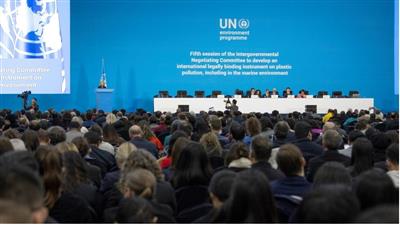
The 5th session of the Intergovernmental Negotiating Committee on the Global Agreement on Plastic Pollution (INC-5) officially opened in Busan, South Korea, with the expectation of concluding negotiations and adopting the Global Agreement on Plastic Pollution. However, the negotiation process faces significant challenges due to differing perspectives among participants.
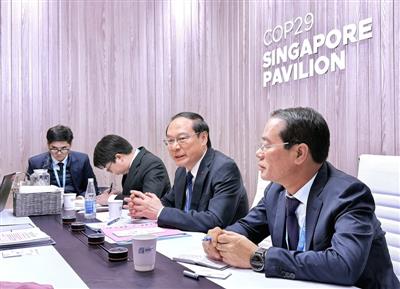
On the sidelines of the 29th Conference of the Parties to the United Nations Framework Convention on Climate Change (COP29) in Azerbaijan, Deputy Minister of Natural Resources and Environment Le Cong Thanh held a bilateral meeting with Mr. Stanley Loh, Permanent Secretary of Sustainability and Environment of Singapore.
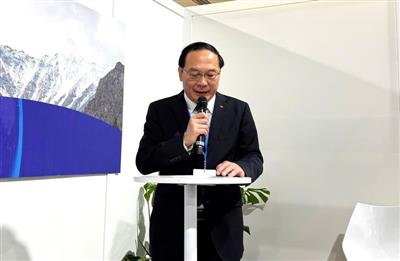
On November 19, at the 29th Conference of the Parties to the United Nations Framework Convention on Climate Change (COP29) in Azerbaijan, Deputy Minister of Natural Resources and Environment, Mr. Le Cong Thanh, presided over a significant event. This event marked the announcement of Vietnam's updated National Adaptation Plan for Climate Change for the 2021-2030 period, with a vision to 2050 (NAP).
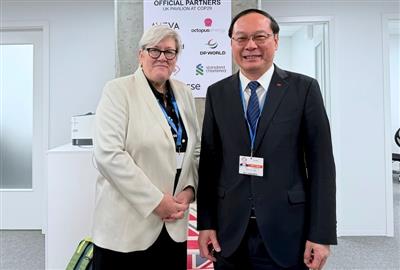
On November 19, on the sidelines of the 29th Conference of the Parties to the United Nations Framework Convention on Climate Change (COP29) in Azerbaijan, Deputy Minister of Natural Resources and Environment, Mr. Le Cong Thanh, held a bilateral meeting with Ms. Rachel Kyte, the UK’s Special Representative on Climate.
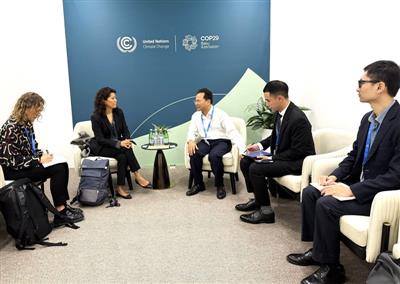
On November 16, in Azerbaijan, Mr. Pham Van Tan, Deputy Director General of the Department of Climate Change under the Ministry of Natural Resources and Environment and Deputy Head of Vietnam's Negotiation Delegation at COP 29, met with Ms. Anne Hammill, Vice President of the International Institute for Sustainable Development (IISD). Their discussion focused on potential areas of cooperation, including implementing climate change adaptation initiatives and developing a carbon market.