



 In 2025, international cooperation across Viet Nam’s agriculture and environment sector was carried out with unprecedented intensity and an increasing emphasis on substance. From policy advisory on international integration to market access negotiations and the resolution of trade barriers, the year’s results demonstrate that international integration is no longer confined to expanding external relations, but is gradually emerging as a key lever for mobilizing resources and opening new pathways for sustainable development across agriculture, forestry, fisheries, and environmental management.
A pivotal year marked by growing workload and deeper integration demands
Speaking at the 2025 year-end review conference, Deuty Minister of Agriculture and Environment Hoang Trung emphasized that 2025 represented a pivotal year for international cooperation across the sector. This was not only due to the sharp increase in workload, but also to the growing complexity, multi-layered nature, and close linkage of international cooperation activities with strategic-level integration commitments.
According to the year-end report, throughout 2025 the Department of International Cooperation concurrently undertook multiple core tasks. These ranged from providing strategic advisory on international integration, developing and refining foundational policy documents, and coordinating high-level external affairs, to directly engaging in market access negotiations, addressing trade barriers, and mobilizing international cooperation resources for the agriculture and environment sector. The workload expanded not only in volume, but also in scope and depth, requiring close coordination among units within and beyond the Ministry.
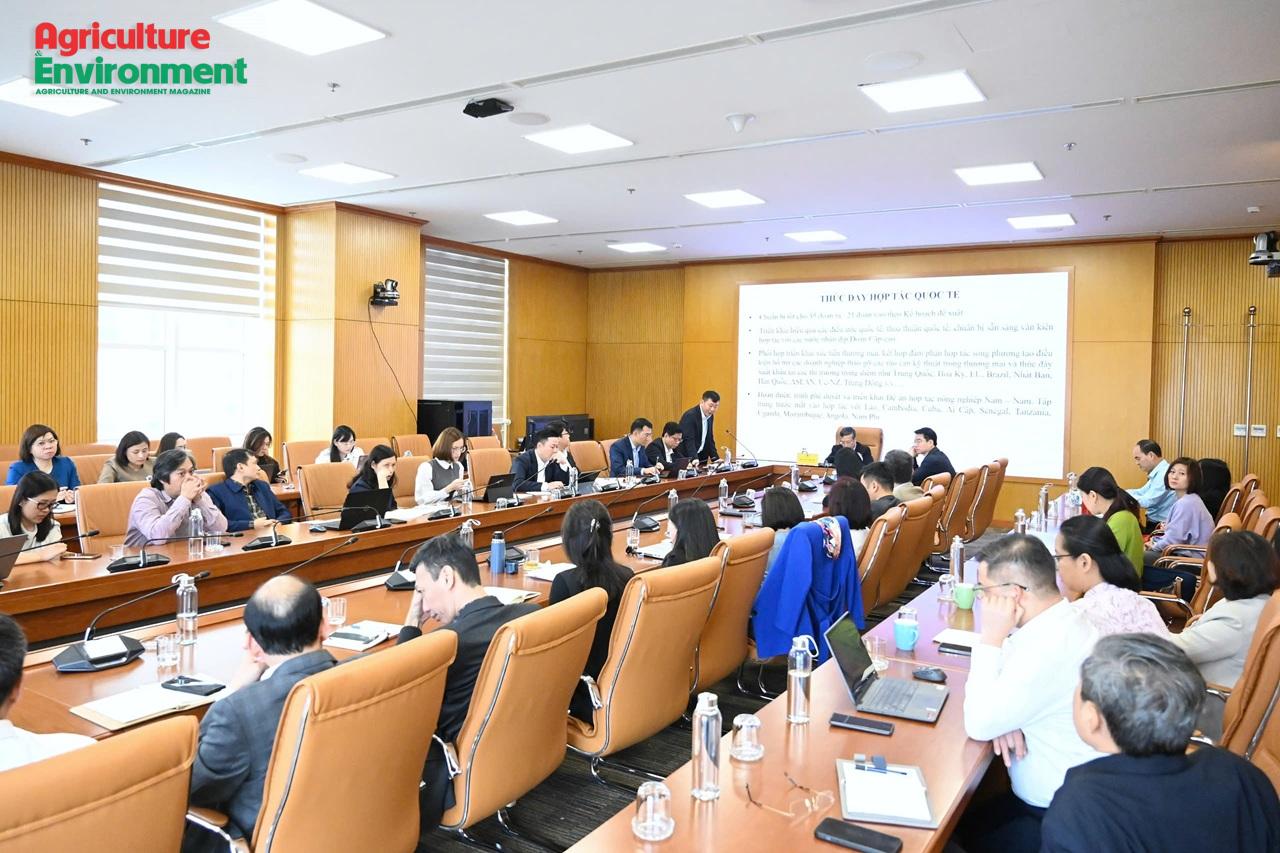
One notable highlight was the Department’s role as the focal point in advising on the implementation of major Party and Government resolutions on international integration. As new-generation free trade agreements continued to take effect, the challenge was no longer simply to broaden cooperation, but to ensure coherence, substance, and effective implementation across the sector. In this context, the Department of International Cooperation led the development and submission of an Action Plan to implement the Politburo’s Resolution No. 59-NQ/TW and the Government’s Resolution No. 153/NQ-CP, providing an overarching framework to guide international integration activities of the sector in the new phase.
Alongside policy work, 2025 also witnessed a high level of external engagement by the Ministry of Agriculture and Environment. The Department advised on, organized, and serviced about 20 official ministerial-level visits, supported 50 ministerial delegations participating in multilateral activities, and hosted numerous working sessions with ambassadors, heads of diplomatic missions, and international organizations. These engagements were increasingly prepared with a focus on concrete cooperation content, aligned with sectoral priorities such as sustainable agriculture, green transition, climate change adaptation, and natural resource and environmental management, rather than remaining purely ceremonial or diplomatic in nature.
At the market level, the Department of International Cooperation continued to play a central role in coordinating market access negotiations with key partners including China, the United States, the European Union, Japan, the Republic of Korea, Australia, and New Zealand. Regular technical exchanges and bilateral working sessions contributed to the gradual removal of technical barriers affecting agricultural, forestry, and fisheries exports, while also safeguarding the legitimate interests of domestic enterprises and producers through trade remedy efforts.
Overall, Deuty Minister Hoang Trung commended the leadership and staff of the Department of International Cooperation for demonstrating a proactive, responsible approach and effective coordination, successfully fulfilling assigned tasks despite heavy workloads, high expectations, and numerous emerging challenges.
Strengthening cooperation mechanisms and policy advisory for deeper integration
Drawing lessons from this pivotal year, a consistent requirement has been identified for the Department of International Cooperation: to further enhance the quality of policy advisory, coordination, and the effectiveness of state management in international cooperation, in line with the sector’s increasingly in-depth integration.
According to the year-end report, alongside implementing major integration orientations, the Department focused on reviewing and strengthening existing bilateral and multilateral cooperation mechanisms, while proactively advising on the development and adjustment of cooperation programs and plans to suit the evolving context. The emphasis shifted from expanding the number of partners to improving substance, effectiveness, and value added for the agriculture and environment sector.
The Department’s coordinating role has become increasingly evident in connecting specialized units of the Ministry with international partners, ensuring timely and consistent information sharing and minimizing duplication during implementation. This approach has helped move international cooperation away from a fragmented model toward a more focused and prioritized framework aligned with the sector’s development objectives in each phase.
Notably, high-level external advisory activities have been more closely linked with substantive cooperation agendas. Visits and working sessions by Ministry leaders and delegations have evolved beyond diplomatic exchanges to become effective channels for promoting technical cooperation, technology transfer, and the sharing of management experience in key areas such as sustainable agriculture, climate change adaptation, natural resource governance, and environmental protection.
Nevertheless, the conference also frankly acknowledged that as integration deepens, coordination among units within and beyond the Ministry requires further improvement, particularly in monitoring, evaluating, and urging the implementation of signed cooperation agreements to ensure that international commitments are translated into tangible outcomes.
Expanding market access while safeguarding sectoral interests and mobilizing resources
Market access negotiations, the resolution of trade barriers, and the protection of legitimate sectoral interests remained a key pillar of the Department of International Cooperation’s work in 2025, against the backdrop of intensifying global competition.
The report noted that regular working sessions and technical exchanges were maintained with major and high-standard markets such as the European Union, the United States, China, Japan, the Republic of Korea, Australia, and New Zealand. Priority was given to addressing technical barriers, sanitary and phytosanitary measures, and environmental standards affecting agricultural, forestry, and fisheries exports, while strengthening information exchange to mitigate the risk of trade disputes.
As trade remedy measures increased, particularly in the U.S. market, the Department enhanced its monitoring, early warning, and coordination with relevant units to protect the lawful rights and interests of domestic enterprises and producers. This approach reflects a shift away from the notion of “market opening at all costs” toward a more balanced perspective that integrates international openness with the protection of national interests.
Alongside market access, mobilizing and coordinating international cooperation resources continued to be identified as a critical task. In the context of constrained state budgets, official development assistance (ODA), concessional loans, grants, and public–private partnerships have been regarded as important supplementary resources for implementing priority programs and projects of the agriculture and environment sector.
Acting as a focal point, the Department advised on connecting development partners, international organizations, and foreign enterprises with areas of high demand for investment, technology transfer, and capacity building. Investment attraction has increasingly focused not merely on capital volume, but on quality, effectiveness, and sustainability, linked to value chains and the sector’s green transition objectives.
Enhancing institutional capacity to deliver effective international engagement
Beyond policy, market, and cooperation outcomes, the year-end conference devoted significant attention to institutional arrangements and implementation capacity—identified as decisive factors for improving the effectiveness of international cooperation in the coming period.
Conference assessments indicated that workloads are growing both in scale and complexity, while human resources dedicated to international cooperation remain limited. Deuty Minister Hoang Trung instructed the Department of International Cooperation to comprehensively review the progress of implementing signed programs and cooperation agreements, and to assign responsibilities based on the principle of “clear tasks, clear accountability,” ensuring each assignment has a specific focal point to avoid overlap and resource dispersion.
Strengthening the presence of the agriculture and environment sector in key international markets and forums was also emphasized. The Department proposed continued advocacy with the Ministry of Foreign Affairs and the Government to increase the number of agricultural and environmental counselors and representatives at Viet Nam’s overseas missions, while effectively implementing the Agricultural Counselor Scheme in five priority markets.
According to Department leadership, this is not solely the responsibility of one unit, but a shared task across the entire Ministry, requiring long-term, systematic preparation in terms of human resources, financing, and coordination mechanisms. Building a professional cadre of external affairs officials with strong sectoral expertise and a solid understanding of international practices has been identified as an urgent requirement to meet the demands of deeper integration.
From formal to substantive integration
In concluding the conference, Deuty Minister Hoang Trung underscored the need to continue leveraging partner groups and bilateral and multilateral cooperation mechanisms, while enhancing the quality of strategic policy advisory commensurate with the role of international cooperation in the overall development of the agriculture and environment sector.
In the period ahead, international integration should be embedded within the sector’s broader sustainable development strategy—not merely as a channel for expanding relations or promoting exports, but as a practical instrument supporting growth model transformation. Effectively utilizing new-generation free trade agreements, attracting high-quality investment, advancing value chain–based public–private partnerships, and meeting increasingly stringent environmental, climate, and sustainability requirements have been identified as key directions.
The 2025 review demonstrates that the Department of International Cooperation is steadily consolidating its role as the strategic advisory hub and coordinating focal point for mobilizing international resources for Viet Nam’s agriculture and environment sector. As integration deepens, the transition from “formal integration” to “substantive integration” is not only an objective necessity, but a critical condition for expanding development space and enhancing the international standing of Viet Nam’s agriculture and environment.
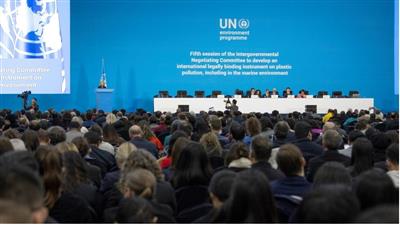
The 5th session of the Intergovernmental Negotiating Committee on the Global Agreement on Plastic Pollution (INC-5) officially opened in Busan, South Korea, with the expectation of concluding negotiations and adopting the Global Agreement on Plastic Pollution. However, the negotiation process faces significant challenges due to differing perspectives among participants.
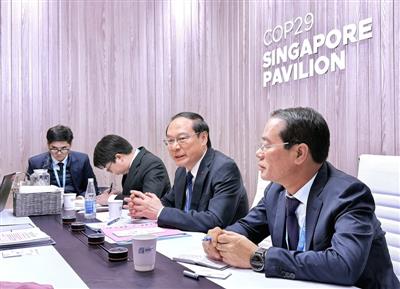
On the sidelines of the 29th Conference of the Parties to the United Nations Framework Convention on Climate Change (COP29) in Azerbaijan, Deputy Minister of Natural Resources and Environment Le Cong Thanh held a bilateral meeting with Mr. Stanley Loh, Permanent Secretary of Sustainability and Environment of Singapore.
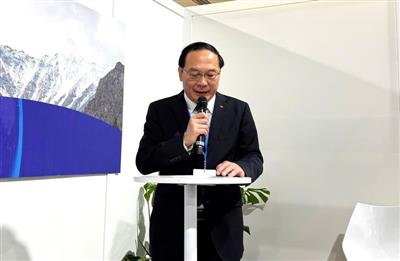
On November 19, at the 29th Conference of the Parties to the United Nations Framework Convention on Climate Change (COP29) in Azerbaijan, Deputy Minister of Natural Resources and Environment, Mr. Le Cong Thanh, presided over a significant event. This event marked the announcement of Vietnam's updated National Adaptation Plan for Climate Change for the 2021-2030 period, with a vision to 2050 (NAP).
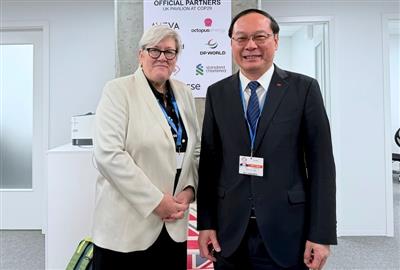
On November 19, on the sidelines of the 29th Conference of the Parties to the United Nations Framework Convention on Climate Change (COP29) in Azerbaijan, Deputy Minister of Natural Resources and Environment, Mr. Le Cong Thanh, held a bilateral meeting with Ms. Rachel Kyte, the UK’s Special Representative on Climate.
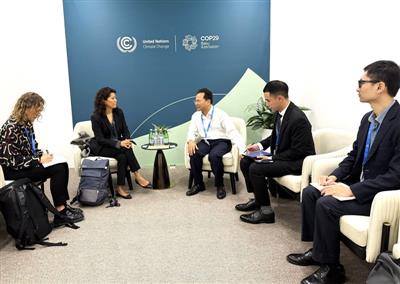
On November 16, in Azerbaijan, Mr. Pham Van Tan, Deputy Director General of the Department of Climate Change under the Ministry of Natural Resources and Environment and Deputy Head of Vietnam's Negotiation Delegation at COP 29, met with Ms. Anne Hammill, Vice President of the International Institute for Sustainable Development (IISD). Their discussion focused on potential areas of cooperation, including implementing climate change adaptation initiatives and developing a carbon market.