



 The implementation of models on plastic smart cities program in Vietnam has demonstrated significant value in raising public awareness and disseminating environmental protection information, especially in a context where environmental consciousness remains limited. These pilot models have yielded positive outcomes, contributing to the reduction of both organic and plastic waste while enhancing community awareness of environmental issues. The most notable achievement of these models lies in their potential to transform public perceptions and behaviors regarding waste management. However, sustaining and scaling up these initiatives will require robust support from local authorities and active community participation.
Each model or group of models presents distinct strengths and weaknesses, aiming to address specific objectives. Therefore, localities should select models that align with their specific needs and strategic goals, particularly in managing household and plastic waste and promoting public awareness. Local governments can also base their decisions on the timeline of their waste management plans, integrating models that correspond to specific objectives at each implementation phase.

Model for mobilizing fishermen to bring waste ashore and collecting recyclable waste for charity fundraising
Once priority models are identified, selection often hinges on the targeted waste type and management priorities—whether focusing on household waste, organic waste, or plastic waste, and whether targeting households, marketplaces, or schools. For instance, to enhance waste segregation at the source and reduce environmental waste, Group 1 models should be prioritized. If a locality focuses on organic waste management, models such as waste separation and composting in markets or at-source organic waste treatment using Indigenous Microorganisms (IMO) should be considered. The final choice between these models will depend on the available resources and whether the focus is on household or market organic waste.
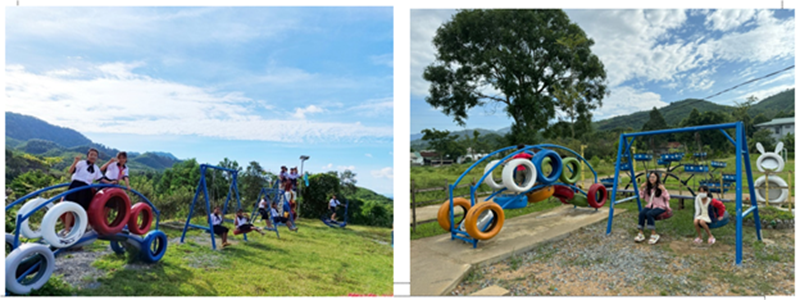
Group 1: Models for Reduction, Recovery, Recycling, and Reuse including models designed to directly bring about both immediate and long-term effects on reducing waste and plastic waste generated in the environment. The models include: (1) Encouraging fishermen to bring waste ashore; (2) Plastic bag free market; (3) Organic waste separation and composting market; (4) Application of indigenous microorganisms (IMO) in household organic waste treatment (5) Reusing old tarpaulin (6) Green house for recyclables (social welfare flower vase) (7) Recycled playground
Similarly, if the objective is to tackle plastic waste, models like plastic bag reduction in markets or social welfare flower vases (green house for recyclables) should be adopted. For localities aiming to boost environmental awareness, communication-centric models like plastic-reduction schools should be implemented.
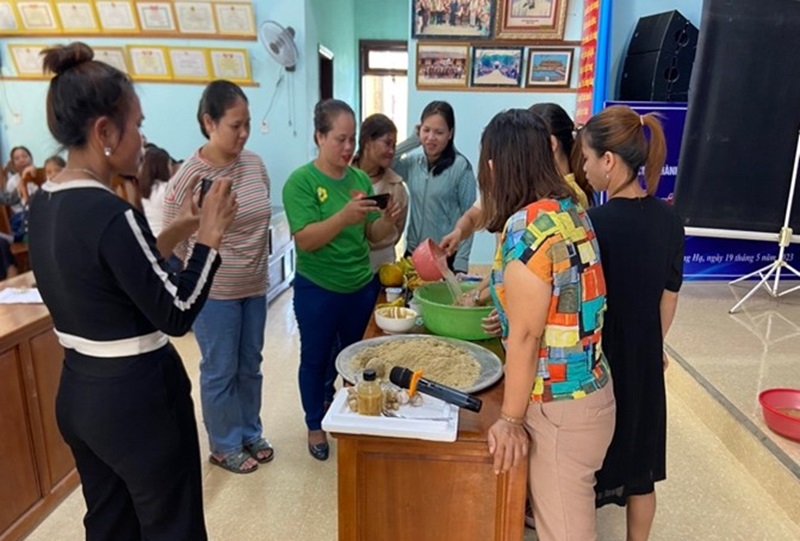
Training on IMO production and application guidance
While some models, such as market waste seperation, plastic bag free in markets, socail welfare flower vases, recycle playgrounds, and plastic-reduction schools, can be broadly applied, others are more context-specific. For example, the model encouraging fishermen to bring waste ashore targets coastal communities. Hotspot elimination and intervention models, along with green collection point models, are necessary for areas grappling with severe pollution or inadequate waste collection systems.
Among the ten evaluated models, the old tarpaulin reuse initiative stands out. Despite its effectiveness, it was piloted with disadvantaged groups, particularly children with disabilities, relying heavily on voluntary contributions from stakeholders. While the model has garnered high social value, its sustainability and potential for broader application remain uncertain.
Fostering community impact
Waste reduction: The models have significantly reduced plastic and organic waste in the environment.
Raising awareness: Educational and communication activities have raised public awareness about the importance of waste reduction, seperation, and recycling.
Creating economic value: Several models have generated economic value by recovering recyclable and reusable material, reusing old tarpaulins for useful products, and composting organic waste.
Creating social value: Some models have made a significant impact on the community, providing social value by creating healthy playgrounds, raising awareness among children and the public about saving, efficiently using, and recycling old materials to useful products, and practically contributing to environmental protection.
Challenges to overcome
Maintaining operations: Some models have difficulties in maintaining operations due to lack of funding and support form local government.
Scaling and transferring models: Scaling up these models requires technical and financial support, as well as strong stakeholder commitment. However, localities must take proactive steps to master technical processes and mobilize resources from both local governmental and community sources.
Community engagement: Public awareness remains limited, and changing habits will take time. Therefore, continuous education and awareness campaigns are essential.
Collaborative efforts for wider impact
To enhance the effectiveness of these pilot models and expand them to other localities, a collaborative approach is essential:
For management units (local authorities and environmental agencies):
For local communities:
For organizations (Social groups, businesses, schools):
Ngoc Huyen
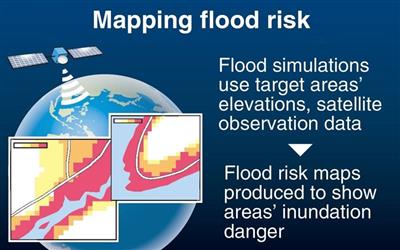
According to the Yomiuri Shimbun, Japan’s Ministry of Land, Infrastructure, Transport and Tourism plans to extend its provision of flood risk maps to Vietnam, Indonesia, Thailand and Cambodia in the upcoming fiscal year. The goal is to assist these Southeast Asian nations in mitigating damage from floods by utilizing satellite observation data to predict heavy rainfall-induced flooding.
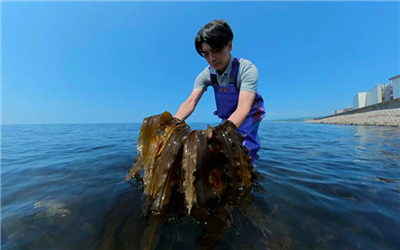
Japan's initiative to plant seaweed as a climate solution is ambitious. By restoring coastal seaweed beds, the country hopes to tap into the potential of 'blue carbon' to mitigate greenhouse gas emissions, aligning with its carbon neutrality goal by 2050. However, questions remain about the practicality and feasibility of this endeavor, raising doubts about its effectiveness in reality.
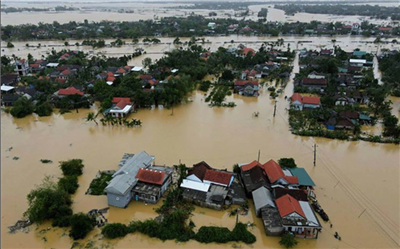
The 4 coastal provinces in north-central Vietnam will receive enhanced capacity and technical support to increase climate resilience through a €156 million project funded by the Vietnamese Government, the European Union (EU), and the French Development Agency (AFD).
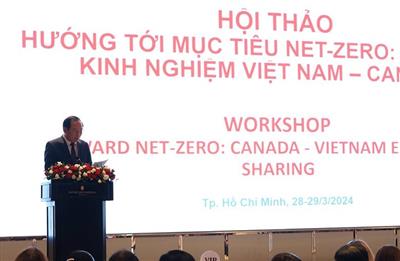
On March 28th, in Ho Chi Minh city, a workshop titled 'Toward Net-Zero: Vietnam - Canada experience sharing' was hosted by the Canadian Embassy in Vietnam in collaboration with the Ministry of Natural Resources and Environment (MONRE). Among the attendees were Canadian Minister of Export Promotion, International Trade, and Economic Development Mary Ng, and Deputy Minister of Natural Resources and Environment Le Cong Thanh, along with representatives from various government departments, local authorities, research institutions, and trade organizations from both countries.
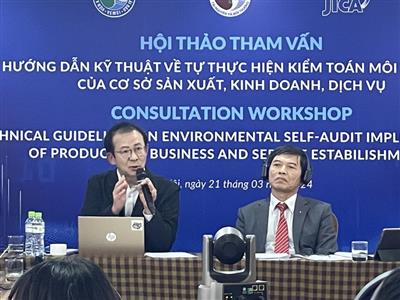
On March 21, in Hanoi, a consultation workshop was held by the Vietnam Institute of Environmental, Marine, and Island Sciences (VEMSI) to discuss the draft technical guidelines for environmental self-auditing implementation of production, business and service establishments.